
Victim or Builder: Choosing Agency When Marriage Feels Hard

In This Article
- The Victim or Builder in Marriage Lens: Why This Cornerstone Matters
- Agency Isn’t Denial: Holding Pain and Power at the Same Time
- Spot the “This Is Happening to Me” Scripts (and What They Cost)
- What You Can Own Today: The Four Zones of Agency in Marriage
- Victim or Builder in Marriage Language: Moving From Assumptions to Requests
- When You Feel Powerless: Micro-Agency Moves That Change the Tone
- Repair Over React: Builder Habits for Conflict (Especially After You Mess Up)
- Meaning-Making and Agency: Don’t Let Pain Be the Author of Your Marriage
- Victim or Builder in Marriage Daily Practices: What Builders Actually Do
- A 7-Day Agency Sprint: Rebuilding Momentum When You Feel Stuck
- Faith and Agency: Grace That Moves Your Feet
- If Your Spouse Won’t Join Yet: Building Without Becoming Bitter
- The Long Game: Turning Agency Into Culture (So This Becomes Your New Normal)
When marriage feels heavy, it’s easy to slip into a quiet sentence that sounds like truth: “This is happening to me.” And sometimes it is. You didn’t choose your spouse’s tone. You didn’t choose their stress. You didn’t choose that comment that hit a nerve. You didn’t choose the season that drained you.
But here’s the problem: that mindset doesn’t just describe pain-it quietly removes your power.
Agency isn’t pretending everything is fine. Agency is choosing what you will build with what’s real. It’s the shift from reacting to creating. It’s learning what you can own, what you can change, what you can request, and what you can practice-starting today. Because “this happened for us” isn’t a slogan. It’s a builder’s posture.
 This cornerstone post is the “home base” for this whole agency series. If you’ve been feeling stuck, read this first, then move into the supporting posts as you need them-especially when you feel frozen, discouraged, or trapped in circular conflict. (And if you’re in a season where your emotions keep telling you you’re powerless, you’ll want to read When You Feel Powerless at https://blog.liveyourbestmarriage.com/agency/when-you-feel-powerless as a next step.)
Ready to identify your next best step?
The United Front Audit gives you a personalized picture of what needs work - and a clear path forward as a couple.
Take the Audit - It's Free →The Victim or Builder in Marriage Lens: Why This Cornerstone Matters
 Most couples don’t fall apart because they “don’t love each other.” They fall into patterns-small, repeatable patterns-that slowly train the relationship to feel unsafe, exhausting, or lonely.
And one of the fastest ways a marriage loses oxygen is when both people start living as victims of the relationship instead of builders of it.
To be clear: being hurt does not make you weak. Being overwhelmed does not make you dramatic. And naming reality is not the same as complaining. There are real seasons where life is unfair, and there are real moments where your spouse is wrong.
But “victim” is not just a description of pain-it becomes a position.
A victim position tends to sound like:
- “If they would change, we’d be fine.”
- “I can’t do anything until they stop.”
- “This is just how marriage is.”
- “Nothing works, so why try-”
- “They always ruin it.”
A builder posture sounds different:
- “This is hard, and I’m still responsible for what I bring.”
- “I can’t control them, but I can choose my response.”
- “I can request what I need clearly.”
- “I can practice what I want our marriage to become.”
- “We can learn a better way to do this.”
The builder posture doesn’t deny pain. It refuses to hand pain the pen.
If you’re already exploring meaning and the stories you attach to hard moments, this cornerstone pairs naturally with your Meaning Cornerstone (start with https://blog.liveyourbestmarriage.com/meaning-making/meaning-cornerstone) because agency and meaning are best friends: the meaning you assign shapes what you practice next.
Agency Isn’t Denial: Holding Pain and Power at the Same Time
 Some people resist “agency talk” because they think it means minimizing hurt.
It doesn’t.
Agency means you can tell the truth without surrendering your future.
Here’s what denial says:
- “It’s not that bad.”
- “I’m fine.”
- “It didn’t hurt.”
- “I shouldn’t need anything.”
Here’s what agency says:
- “That hurt.”
- “This matters.”
- “I need repair.”
- “And I’m willing to build a better next moment.”
Agency is not pretending you’re okay. Agency is refusing to become stuck.
A powerful agency sentence is this: “I can’t control what happened, but I can control what happens next.”
And “what happens next” is where marriages are either slowly built or slowly broken.
Because in real life, your marriage will face:
- Stress you didn’t ask for
- Exhaustion you didn’t schedule
- Miscommunication you didn’t mean
- Old wounds that wake up unexpectedly
- Differences that don’t disappear just because you’re committed
So the question is not, “Will we face hard moments-”
The question is, “When hard moments come, will we collapse into reaction-or will we practice building-”
Spot the “This Is Happening to Me” Scripts (and What They Cost)
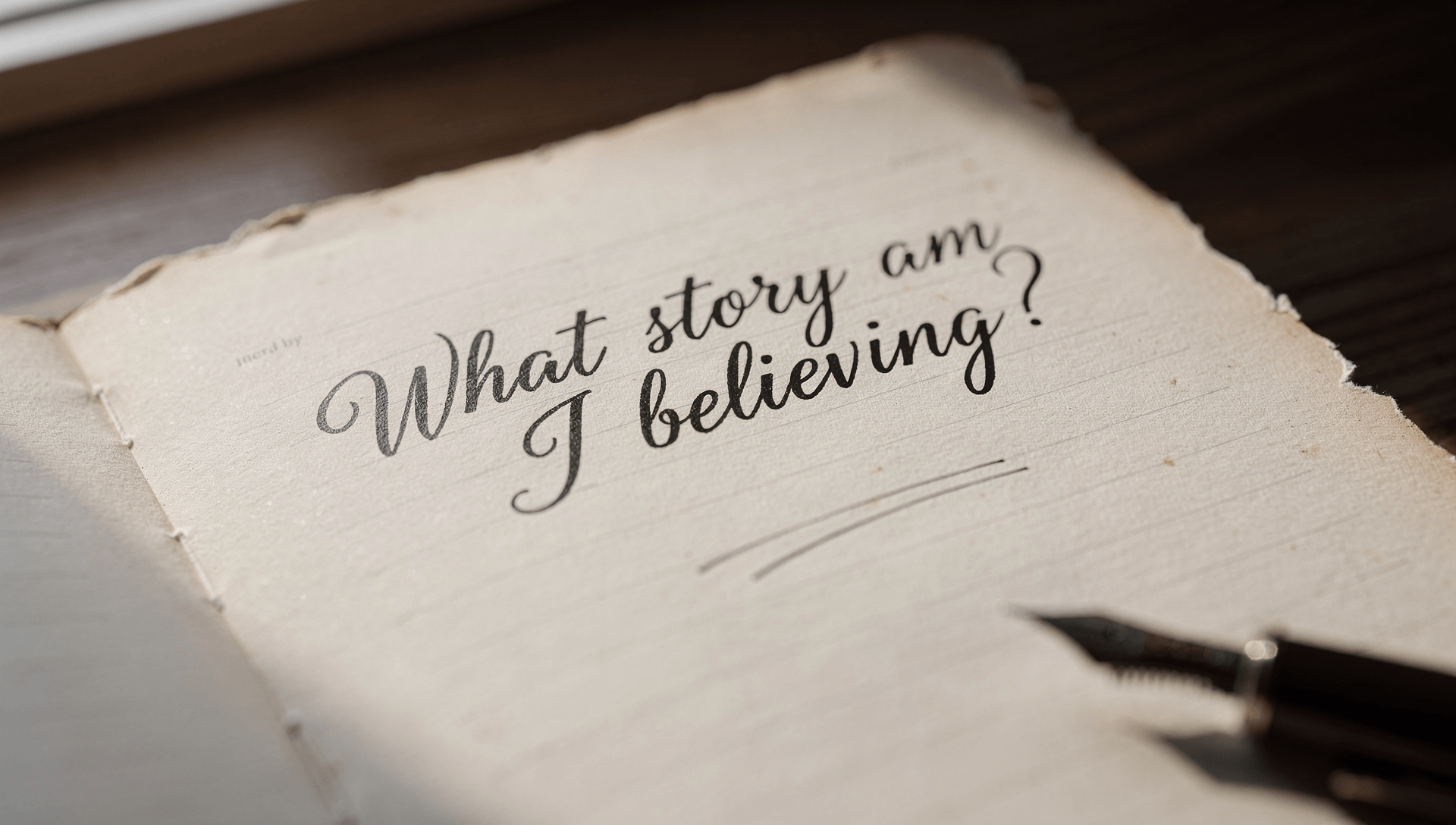 Your brain loves shortcuts. When you feel threatened (emotionally, relationally, spiritually), your mind tries to protect you by writing a fast story.
That story is often incomplete-but it feels convincing.
Some common victim-scripts sound like:
- “They don’t care.”
- “They’re selfish.”
- “I’m alone in this.”
- “They always choose themselves.”
- “They’re never going to change.”
Sometimes those statements are partially true in the moment. But even then, they can become identity statements that lock your marriage into a role-play: one villain, one victim, zero builders.
Here’s the hidden cost of victim-scripts:
- They make you passive.
If you believe you have no power, you stop practicing power. - They make you harsh.
Victim energy often turns into contempt because pain demands a target. - They make requests disappear.
Victim posture assumes instead of asks. - They make small repairs feel pointless.
Because if “they never change,” then why bother repairing- - They make progress invisible.
You stop noticing effort because your story needs “proof” you’re right.
If this is hitting close to home, you don’t need shame-you need awareness. Awareness is the doorway to agency.
A simple practice: When you feel your victim-script rising, pause and ask: “What am I telling myself right now that makes me feel powerless-”
Even that question is an agency move. It interrupts the autopilot.
What You Can Own Today: The Four Zones of Agency in Marriage
 Builders don’t try to control everything. They learn where their power actually is.
Here are four zones that will change your marriage if you practice them consistently:
Zone 1: What I Control (My choices)
This includes:
- My tone
- My timing
- My honesty
- My effort
- My boundaries
- My repairs
- My faithfulness to what I value
This is where agency lives most strongly.
Zone 2: What I Influence (The environment I help create)
You can’t control your spouse’s mood, but you can influence the climate:
- Appreciation vs criticism
- Curiosity vs accusation
- Calm vs escalation
- Clarity vs hints
- Safety vs sarcasm
Influence is powerful because marriages are ecosystems.
Zone 3: What I Can Request (What I need and am willing to ask for)
Requests are not demands. They’re clarity. Builders request because they want the relationship to succeed.
A builder stops saying, “You never…” and starts saying, “I need…”
Zone 4: What I Must Accept (What is real today)
Acceptance is not approval. Acceptance is facing reality without fantasy:
- This is a stressful season.
- My spouse is learning.
- We both have patterns.
- Change is possible, but it’s a process.
Victim posture resists reality with resentment. Builder posture accepts reality and builds anyway.
If you want a companion post specifically about converting mental assumptions into clear communication, you’ll love Assumptions to Requests at https://blog.liveyourbestmarriage.com/communication/assumptions-to-requests because it trains your brain to stop guessing and start asking.
Discover what's fueling tension in your marriage
It's rarely just one thing. The United Front Audit maps the pressure points so you know exactly where to focus.
See Your Results →Victim or Builder in Marriage Language: Moving From Assumptions to Requests
 If you want a fast way to spot whether you’re in victim posture or builder posture, listen to your words.
Victim language often sounds like:
- “You should already know.”
- “If you cared, you would…”
- “I’m not asking-I’m just saying…”
- “It doesn’t matter.”
- “Whatever.”
Builder language sounds like:
- “Can I tell you what I need-”
- “Here’s what that brought up for me.”
- “Can we reset this moment-”
- “Next time, could you…-”
- “I want us to win, not fight.”
This isn’t about being “nice.” It’s about being effective.
Here’s a simple builder framework for requests:
The Clear Request Script
- Name the moment (no blame):
“When you got quiet after I shared…” - Name the impact (your experience):
“…I felt dismissed and started spiraling.” - Name the need (what would help):
“I need reassurance and engagement.” - Make the request (specific, doable):
“Can you look at me and tell me what you heard, and then tell me what you’re feeling-” - Confirm the shared win:
“I’m not trying to control you. I want closeness.”
This is what agency looks like in real time.
And if your brain fights this with, “But I shouldn’t have to ask,” remember: that sentence usually isn’t wisdom-it’s pride dressed as romance.
Builders ask because builders build.
(For deeper training on this shift, weave in the full post Assumptions to Requests here: https://blog.liveyourbestmarriage.com/communication/assumptions-to-requests.)
When You Feel Powerless: Micro-Agency Moves That Change the Tone
 There are moments where you don’t feel like a builder. You feel tired. Triggered. Done.
That’s why agency needs “micro-moves”-small actions you can do even when you’re not at your best.
Here are micro-agency moves that work in real marriages:
1) Name your state without making it a weapon
Try: “I’m getting overwhelmed and I don’t want to say something reckless.”
That sentence alone protects the relationship.
2) Take a pause with a return plan
Try: “Can we take 20 minutes and come back at 7:40- I want to do this well.”
3) Ask one question instead of making one accusation
Replace: “Why are you like this-”
With: “What’s going on inside you right now-”
4) Make the next right request
Even if the whole marriage feels hard, you can request one next step: “Can we pray together-”
“Can we hug before we keep talking-”
“Can you tell me one thing you’re wanting from me-”
5) Repair one line
Sometimes the most powerful thing you can do is repair one sentence: “I don’t like how that came out. Let me try again.”
If you’re in a season where this is your daily struggle, go straight to When You Feel Powerless at https://blog.liveyourbestmarriage.com/agency/when-you-feel-powerless because it’s designed to meet you in the fog and give you traction without fake positivity.
Repair Over React: Builder Habits for Conflict (Especially After You Mess Up)
 A builder doesn’t aim for perfection. A builder aims for repair speed.
The goal isn’t “never fight.” The goal is “fight in a way that doesn’t destroy trust.”
Here’s the builder’s conflict principle: React less. Repair faster.
Because you will:
- misread tone
- interrupt
- get defensive
- say something sharp
- shut down
- come in hot
The difference between couples who grow and couples who harden is what happens next.
The 3-Step Repair (Fast and Real)
- Own it plainly
“That was harsh.” - Name the impact
“I can see that landed like I don’t respect you.” - Reset the direction
“I do respect you. Let me say what I meant without the edge.”
If you want a full reset process for when you slip back into old habits (because you will), connect this section naturally with https://blog.liveyourbestmarriage.com/quitting/slip-back-into-old-habits in the middle of a sentence like this: “When we mess up, we use the reset steps from https://blog.liveyourbestmarriage.com/quitting/slip-back-into-old-habits so a setback becomes data instead of doom.”
That’s agency.
Meaning-Making and Agency: Don’t Let Pain Be the Author of Your Marriage
 One reason marriages feel hopeless is because couples don’t just experience hard moments-they assign meaning to them.
A harsh comment becomes: “See- You don’t value me.”
A forgotten chore becomes: “See- I’m alone.”
A missed anniversary plan becomes: “See- You’re not invested.”
And sometimes those meanings are understandable. But they’re not always accurate-and even when they are partially true, they’re not always the most useful meaning to lock in.
Builders ask: “What meaning am I about to tattoo onto this moment-”
If you’re building out your meaning-making skills, start with the Meaning Cornerstone at https://blog.liveyourbestmarriage.com/meaning-making/meaning-cornerstone and then use the “question the story” tool from https://blog.liveyourbestmarriage.com/meaning-making/question-the-story as a regular practice after conflict.
Here are a few builder questions that protect agency:
- “What else could be true-”
- “What need is underneath this-”
- “What am I assuming without checking-”
- “What request would move this forward-”
- “What would love do next-not what would pride do next-”
When you practice those questions, you stop letting pain be the author.
You become a builder again.
Victim or Builder in Marriage Daily Practices: What Builders Actually Do
 Agency is not a mindset you declare once. It’s a posture you practice daily.
Here are builder practices that change the emotional baseline of a marriage:
Practice 1: The Daily “I’m With You” Moment (2 minutes)
Pick a reliable moment (coffee, bedtime, car ride) and ask: “What’s one thing you’re carrying today-” Then respond with one sentence of support: “I’m with you in that.”
Practice 2: The Appreciation Deposit (specific, not generic)
Instead of “Thanks,” say: “Thank you for taking care of that phone call. It made me feel protected.”
Specific appreciation trains safety.
Practice 3: The Weekly Agency Check-In (15 minutes)
Use three questions:
- “Where did we feel most connected this week-”
- “Where did we drift-”
- “What’s one small practice we want to repeat-”
Builders don’t wait for a crisis to review the system.
Practice 4: The One Request Rule
Before you criticize, make one request. Criticism says, “You failed.”
Request says, “Here’s how we win.”
If you’re strengthening your marriage culture through “repeatable positives,” this is a perfect place to naturally reference https://blog.liveyourbestmarriage.com/sustaining-change/positive-triggers-new-normal inside a sentence like: “We keep our habits simple and repeatable, and we use the ‘positive triggers’ framework from https://blog.liveyourbestmarriage.com/sustaining-change/positive-triggers-new-normal to make connection feel normal again.”
Not sure what's really going wrong?
The United Front Audit helps you pinpoint exactly where your marriage unity is breaking down - in just 3 minutes.
Take the Free Audit →A 7-Day Agency Sprint: Rebuilding Momentum When You Feel Stuck
 Sometimes you don’t need a 12-month plan. You need a 7-day restart that reminds you: we can move again.
Here’s a simple 7-day agency sprint. (Keep it small. Keep it doable. Builders don’t overpromise.)
Day 1: One honest sentence
“I want us to feel like a team again.”
Day 2: One clean request
“Could we talk for 10 minutes tonight with phones away-”
Day 3: One appreciation deposit
Name one specific effort your spouse made.
Day 4: One repair
Fix one moment you’ve left hanging: “I’m sorry I stayed cold. I don’t want that between us.”
Day 5: One shared meaning statement
“This is a hard season, but we’re not enemies.”
Day 6: One future-building question
“What would help you feel loved this weekend-”
Day 7: One ritual
Create a repeatable micro-ritual: prayer before sleep, a 2-minute hug, a weekly coffee walk.
This sprint is not magic. It’s momentum. And momentum restores hope.
Faith and Agency: Grace That Moves Your Feet
 In Christian marriage, some people confuse grace with passivity.
Grace is not avoidance. Grace is power.
Grace tells the truth without condemnation.
Grace forgives without enabling.
Grace builds without keeping score.
Grace can say, “This hurt,” and still say, “We can grow.”
Agency in marriage is not “I can do it all.”
Agency is “With God’s help, I can do my part.”
A builder prays like this: “Lord, show me what to own today. Give me courage to request what’s needed. Give me humility to repair quickly. Help me build peace.”
And then a builder follows prayer with practice.
If your faith is strong but your habits are weak, don’t shame yourself. Just align them:
- Let prayer lead to one apology.
- Let conviction lead to one boundary.
- Let love lead to one request.
- Let humility lead to one reset.
Faith becomes real in the next moment.
If Your Spouse Won’t Join Yet: Building Without Becoming Bitter

One of the hardest agency tests is this: What if I’m trying and they’re not-
First-don’t lie to yourself. That hurts. And it’s lonely.
But second-don’t surrender your power to their pace.
A builder can build two kinds of things even when the spouse is slow:
- A healthier self (tone, boundaries, integrity, maturity)
- A healthier environment (less escalation, clearer requests, faster repair)
Here’s how you stay out of bitterness:
1) Don’t overdo it to earn change
Overfunctioning creates resentment.
2) Request clearly, then release control
“Here’s what I need. Here’s why it matters. Are you willing-”
3) Set boundaries that protect love, not punish
A boundary isn’t a threat. It’s a protection plan: “I’m not going to keep talking if we’re yelling. I’ll come back when we’re calm.”
4) Track reality, not fantasy
If your spouse is making small efforts, notice them. Builders reward movement.
If you’re working on creating a marriage culture where effort is safe, this is where it fits naturally to connect with the “celebration” theme (and you can reference your related content when it’s relevant to your series flow), because honoring effort keeps hearts from shutting down.
The Long Game: Turning Agency Into Culture (So This Becomes Your New Normal)
 The ultimate goal isn’t just “we handled one hard conversation better.”
The goal is culture.
Culture is “what we do here.”
Culture is the baseline you return to.
Culture is the atmosphere your kids feel.
Culture is the tone your home carries.
Victim culture sounds like:
- “Here we go again.”
- “This always happens.”
- “Why bother-”
Builder culture sounds like:
- “Let’s reset.”
- “We can do this better.”
- “We’re learning.”
- “We’re a team.”
- “Let’s make a request, not an accusation.”
This is why Victim or Builder in Marriage is cornerstone content: it’s the root posture that affects every other skill you’re learning-communication, conflict, habits, meaning, intimacy, faith.
If you want to keep building this into something stable and repeatable, it’s worth revisiting https://blog.liveyourbestmarriage.com/sustaining-change/positive-triggers-new-normal as you refine your home rhythms, because agency becomes “normal” when your environment starts supporting your best self instead of your worst reflex.
And when you blow it (because you will), you circle back to repair and reset using https://blog.liveyourbestmarriage.com/quitting/slip-back-into-old-habits so your marriage learns, “We don’t quit-we course-correct.”
That’s the builder’s posture.
That’s agency.Victim or Builder in Marriage


Keep Reading

Compatibility Is Not a Feeling: How Shared Skills Beat “We’re Not Compatible”
“We’re not compatible.” It’s one of the most common sentences people say when marriage feels hard-and one of…

When You Feel Powerless: The One Decision You Still Control
There are seasons where you can’t control your spouse’s mood, schedule, or willingness. You can’t make them talk.…

No More Mind-Reading: Replace Assumptions With Requests
Assumptions feel efficient, but they’re expensive. They save you time in the moment-because you don’t have to ask,…