
Metrics That Keep Firsts Going: Make Progress Visible, Not Pressure-Filled

In This Article
- Why Gentle Metrics Beat Big Goals (So Novelty Stays a Joy, Not a Job)
- The Four Core Metrics That Keep Firsts Going
- Bonus Metrics (Pick One Only If It Helps)
- How to Track Without Making It Weird
- Cadence + Metrics: The Flywheel That Keeps Going
- Live Examples: What the Numbers Actually Tell You
- Tools That Keep It Light (Analog or App-Your Choice)
- Using Metrics to Personalize Your “Firsts” Menu
- Integrate With Your Idea Bank (So You Never Start From Zero)
- The One-Minute Sunday Ritual (Review • Replace • Reserve)
- Troubleshooting: When Metrics Feel Like Pressure
- Case Studies (Names Changed): How Couples Used Metrics That Keep Firsts Going
- 30-Day Challenge: Make Metrics That Keep Firsts Going Your Own
- Closing: Measure What You Want More Of
What gets measured gets repeated-but only if the metrics feel kind. In marriage, the goal of tracking isn’t to “optimize love.” It’s to notice what brings you closer so you can do more of it with less effort. This guide gives you Metrics That Keep Firsts Going-lightweight ways to log tries per month, repair speed after friction, minutes of eye contact, and more-so novelty stays fuel, not a chore. If you want a tiny, repeatable system to support these numbers, block your weekly spark and monthly mini with the prompts inside The First-Time Calendar, and to keep your momentum visible, borrow one or two templates from Build Momentum in Marriage.

Ready to identify your next best step?
The United Front Audit gives you a personalized picture of what needs work - and a clear path forward as a couple.
Take the Audit - It's Free →Why Gentle Metrics Beat Big Goals (So Novelty Stays a Joy, Not a Job)
 Classic goals can turn romance into homework. Gentle metrics do the opposite: they make your favorite moments easier to repeat by surfacing what worked, not what you “should” be doing. Light tracking helps you notice the week you laughed more because your spark was short, nearby, and free; it helps you see that four “firsts” this month felt better than one big night you had to recover from.
Just as a rhythm makes novelty effortless, a kind scoreboard makes momentum obvious. For a simple way to place these moments on rails, you can mirror your tracking lines against the time blocks you’ve saved inside The First-Time Calendar, so your “what we track” lines up with “when it happens.”
The Four Core Metrics That Keep Firsts Going
 These are the lowest-effort, highest-value numbers most couples can keep in under a minute a week. Each exists to reinforce connection, not to score performance.
1) Firsts per Month (Frequency of Novelty)
 What it is: The number of first-time experiences you shared this month-aim for 4 sparks + 1 mini in a typical month.
Why it works: Frequency (not size) keeps anticipation alive.
How to track: Draw four tiny boxes each month; fill one per weekly spark. Circle the box for your monthly mini.
2) Minutes of Eye Contact (Quality of Presence)
 What it is: The 5–10 minutes of sustained eye contact you share during or after a first.
Why it works: Eye contact is a trust signal; it speeds emotional regulation and intimacy.
How to track: Jot “EC 6” or “EC 8” on the calendar event after the date.
3) Repair Speed After Friction (Resilience in Real Life)

What it is: The time from tension to repair-measured in minutes/hours.
Why it works: Over time, couples who try small firsts often repair faster because shared play protects goodwill.
How to track: If there’s a bump, write “RS: 25m” or “RS: 2h” beside the day. Look for the trend, not perfection.
4) Laughter Count (Playfulness You Can Feel)
 What it is: The number of shared laughs you notice during your spark or mini.
Why it works: It’s the simplest joy proxy. Counting it makes you celebrate it.
How to track: Draw three tiny dots; shade how many you hit (0–3). It’s silly-and surprisingly motivating.
Bonus Metrics (Pick One Only If It Helps)
 The magic of Metrics That Keep Firsts Going is their lightness. Consider just one of these add-ons if you’re already consistent with the core four.
- Anticipation Pings: Did one of you send a playful “can’t wait” text before the spark- (Y/N)
- Energy Fit: Did the plan match your energy (Low/Med/High)- (✔/✖)
- Budget Guardrail: Free/Low/Treat. (Tag the event, not your worth.)
- Outside Minutes: How long did you spend outdoors- (15, 30, 60)
- Touch Check: Did you share non-demanding touch (hand-hold, shoulder lean)- (Y/N)
If a mini-dashboard helps you actually enjoy this, try a two-line template from Build Momentum in Marriage and paste it into your month.
How to Track Without Making It Weird
 Make it tiny. One minute on Sundays is enough.
Make it visible. Keep the tally where the plans live-on your shared calendar or a page taped inside a cabinet.
Make it playful. Use stickers, dots, or initials.
Make it mutual. Switch who marks the dots each week.
Keep veto power. Either person can skip tracking any week, no questions asked.
If you want a friction-proof pairing of plans and tracking, drop two A/B options for this month into The First-Time Calendar and add a line under each event for your core metrics-no separate spreadsheet needed.
Cadence + Metrics: The Flywheel That Keeps Going
 Cadence provides the inputs (weekly sparks, monthly minis); metrics amplify the feedback (“that worked-do that again”). Here’s a simple loop you can adopt:
- Plan: Protect time for a spark and mini in your calendar.
- Do: Keep firsts short, nearby, and kind to your budget.
- Note: After each, mark eye contact, laughter, and (if relevant) repair speed.
- Tune: Swap next week’s option if the energy/budget tag felt off.
- Repeat: The dot pattern becomes a story of steady connection.
If you want a deeper primer on cadence, the weekly/monthly/quarterly rhythm in our “how often” guide shows exactly where your Metrics That Keep Firsts Going sit inside the 1–1–1 structure.
Discover what's fueling tension in your marriage
It's rarely just one thing. The United Front Audit maps the pressure points so you know exactly where to focus.
See Your Results →Live Examples: What the Numbers Actually Tell You
 Example A-“Free wins big”
- Firsts: 4 (three free, one low-cost)
- Eye contact: 6–9 minutes each time
- Repair speed: shrank from 2h to 35m across the month
- Laughter: 2 dots on three of four nights
Takeaway: Keep sparks free/nearby. Splurge later on a monthly mini.
Example B-“Too long, too far”
- Firsts: 2 (both 3+ hours away)
- Eye contact: 4–5 minutes; both tired
- Repair speed: 90m → 90m (no change)
- Laughter: 1 dot; felt forced
Takeaway: Shorten to 60–90 minutes, local. Try a two-stop snack crawl or a docent hour.
Example C-“Gentle novelty helped trust”
- Firsts: 4 gentle-stretch ideas
- Eye contact: 7–10 minutes
- Repair speed: 45m → 18m
- Laughter: 1–2 dots (quiet but present)
Takeaway: Keep Low-Risk, High-Delight formats; add one soft monthly mini like tea-blending.
To keep the stories visible, you can adapt the examples in Build Momentum in Marriage and add two lines that motivate you most.
Tools That Keep It Light (Analog or App-Your Choice)
 Analog:
- Bullet journal page taped inside a cabinet
- Wall calendar with colored dots for firsts and micro-annotations (“EC 7,” “RS 25m”)
- Index card on the fridge: four boxes for sparks, one circled for the monthly mini
Digital:
- Shared calendar events with a “Notes” line
- Phone reminders on Sundays (“Mark dots: firsts/EC/RS/laughs”)
- Lightweight notes app with a recurring template (paste once, reuse monthly)
If booking is your bottleneck, the three-tap flow in our tooling guide compresses choosing and ticketing, so your calendar already contains the where/when and your metrics can live right there.
Using Metrics to Personalize Your “Firsts” Menu
 Numbers are only useful if they change your next choice. Use your dots to personalize:
- Low EC + low laughs- Add a conversation prompt or a quieter venue.
- High RS (slow repairs)- Shorten the plan; add a familiar bookend (dessert at your usual spot).
- Firsts boxes empty- Make the spark smaller and closer; protect the time in the calendar first.
- Energy mismatches- Label next week’s option Low/Med/High in the title so you can downshift without canceling.
- Budget stress- Tag next three sparks “Free”; plan one “Treat” for the monthly mini.
This is where Metrics That Keep Firsts Going shine: they turn vague vibes into clear, compassionate tweaks.
Integrate With Your Idea Bank (So You Never Start From Zero)
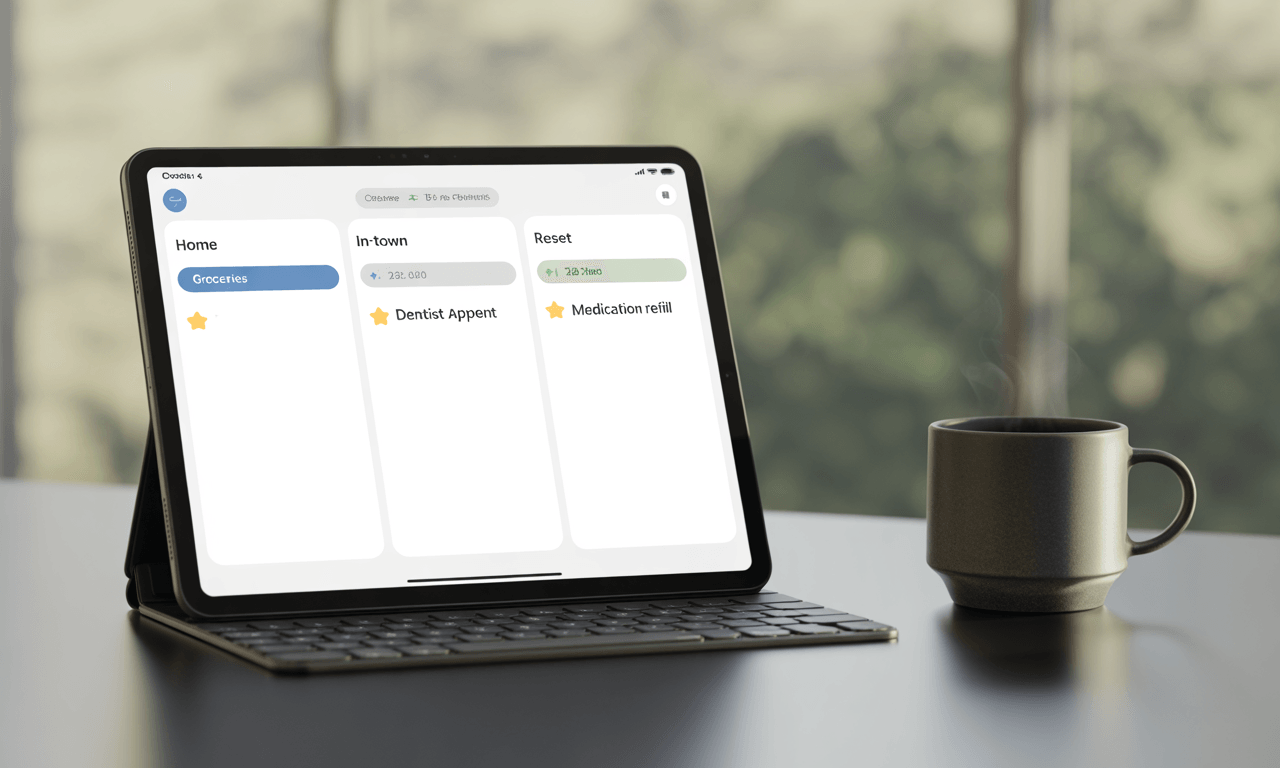 Tracking nudges you to repeat what works. When ideas run low, steal fresh options that match your patterns:
- If you learned you thrive on close, calm nights, borrow from Home & Neighborhood Micro-Adventures-porch tastings, balcony stargazing, shorts festivals.
- If your dots spike with two-hour windows, grab a ready loop from In-Town, 2-Hour Dates-gallery + gelato, docent hour + bookshop.
- If you’re ready for seasonal breathers, turn eye-contact-rich evenings into a 24–36 hour escape using the blueprint in our Quarterly Reset Weekend guide.
The One-Minute Sunday Ritual (Review • Replace • Reserve)
 Keep the habit feather-light:
- Review: Circle the week’s favorite first; underline any dot you want more of.
- Replace: Swap any stale option for a new A/B choice.
- Reserve: Confirm next week’s spark (attach tickets if needed); tag energy/budget.
Done in under a minute. For couples who like a friendly nudge, the templates in Build Momentum in Marriage include one-liners to make this ritual fun, not formal.
Not sure what's really going wrong?
The United Front Audit helps you pinpoint exactly where your marriage unity is breaking down - in just 3 minutes.
Take the Free Audit →Troubleshooting: When Metrics Feel Like Pressure

- Shrink the scope: Track only firsts per month for two weeks.
- Switch the surface: Move from app to paper (or paper to app).
- Drop a metric: If one number nags you, retire it.
- Rename the game: From “tracking” to “treasuring”-same dots, different heart.
- Take a week off: Come back when curiosity returns.
If you’re in a heavy season (grief, illness, caregiving), your whole dashboard might be one dot: “We sat on the porch with a new tea.” That dot counts. Let it be enough.
Case Studies (Names Changed): How Couples Used Metrics That Keep Firsts Going
 The Busy Roommates (M & J).
They tracked only firsts per month and laughs. After four weeks of free, nearby sparks, laughs rose from 1 dot to 2–3. They kept the free/nearby formula and saved splurges for monthly minis.
The Rebuilders (S & L).
They added eye contact and repair speed during a tender season. Eye contact rose from 4 to 8 minutes; repairs shrank from 120 to 30 minutes. They kept Low-Risk, High-Delight dates and added one tea class next month.
The Overthinkers (R & T).
They attached a notes line under every calendar spark. Tracking “EC 6 / Laughs 2 / RS 40m” nudged them to shorten plans to 75 minutes and pick closer venues. Their “firsts” boxes filled for the first time all year.
30-Day Challenge: Make Metrics That Keep Firsts Going Your Own
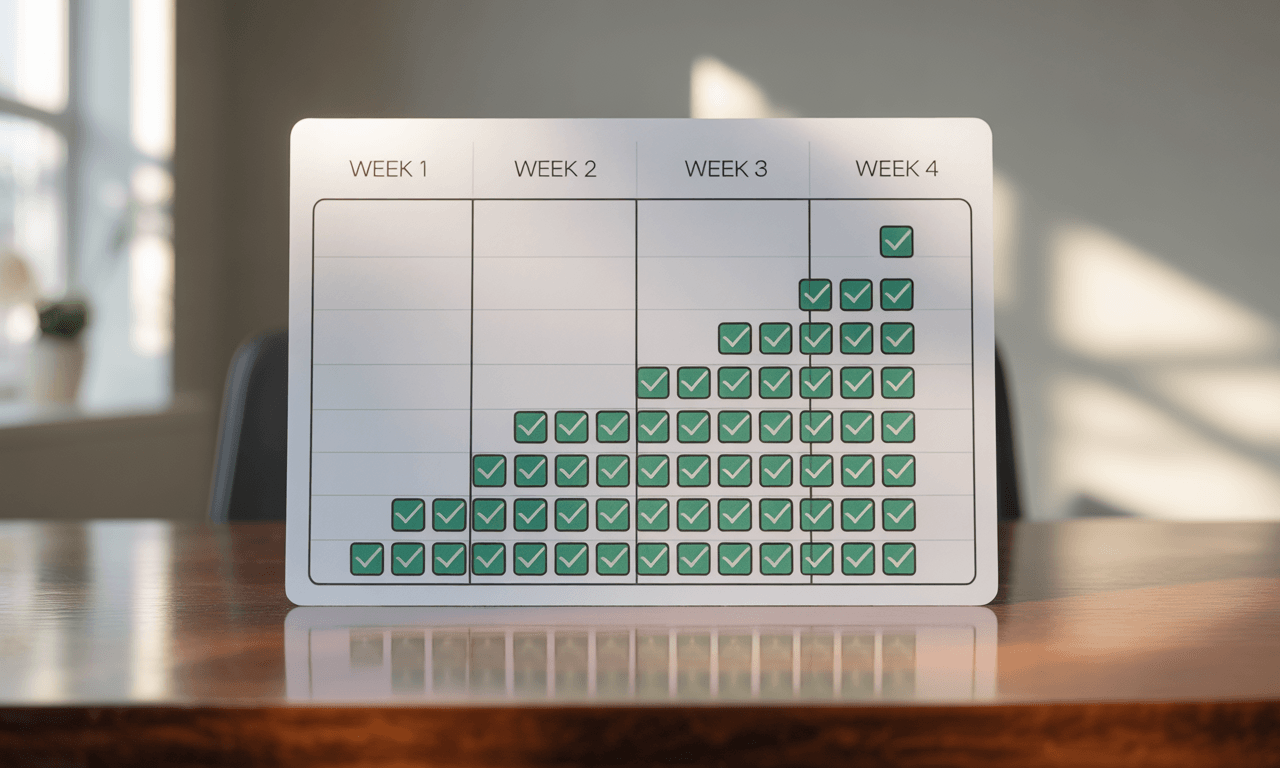
- Week 1: Track firsts per month and add two A/B options to the calendar.
- Week 2: Add eye contact minutes; aim for 5–8 once this week.
- Week 3: Note repair speed if a bump happens; keep plans short and nearby.
- Week 4: Add laughter dots and star your favorite spark; reserve next month’s mini.
At the end, open Build Momentum in Marriage and pick one template you’ll actually enjoy using. Keep only what encourages you.
Closing: Measure What You Want More Of
 Metrics That Keep Firsts Going aren’t about scoring love; they’re about spotlighting joy so it’s easier to repeat. Two dots for laughter. A smaller number for repair. A steady run of “firsts” boxes filled. That is the picture of a relationship paying attention to what works. Protect the time. Keep the dots tiny. Let the numbers cheer you on.


Keep Reading

When Life Is Heavy: Grief, Illness, and the Gentle Art of Newness
Some seasons are so dense that even sunlight feels heavier. In grief, illness, caregiving, or ongoing uncertainty, the…

Consistency + Novelty: The Balanced Marriage Playbook
You don’t need chaos for a vibrant love life; you need choreography. The marriages that feel most alive…