
Catching Problems Early: How a Standing Marriage Meeting Prevents Silent Resentment

In This Article
- Why Catching Problems Early Matters in Marriage
- How a Standing Marriage Meeting Becomes an Emotional Early-Warning System
- Catching Problems Early Without Turning Meetings Into Complaint Sessions
- Practical Scripts for Catching Problems Early in Weekly Check-Ins
- Using a Standing Marriage Meeting to Prevent Silent Resentment Around Logistics
- Reinforcing What Works So Catching Problems Early Stays Hopeful
- Adapting Catching Problems Early to Different Seasons and Personalities
- Getting Started: Your First Standing Marriage Meeting to Catch Problems Early
Resentment rarely explodes out of nowhere. It trickles in-an unspoken “I’ve got this” turning into “I always have to handle this,” a small hurt that never gets named, a misunderstanding that quietly changes how safe you feel bringing things up. When there’s no regular space to talk, those little moments get filed away instead of flagged, and they slowly build a case against your spouse in your mind.
A standing weekly meeting gives you a predictable, low-pressure space to say, “Hey, can we talk about that-” before it hardens into bitterness. It’s not about adding another heavy talk to your calendar; it’s about creating an emotional early-warning system for your marriage.
 In this post, we’ll explore how weekly check-ins act like those early-warning systems. You’ll learn how to bring up small frustrations-like feeling unheard about holiday plans or overloaded with kid logistics-in a calm, scheduled setting, rather than waiting until you’re exhausted and snapping. We’ll connect this with the idea of reinforcing what is working, a theme from our cornerstone It’s Not Just Another Meeting: Why Weekly Check-Ins Keep Your Marriage Off Autopilot, so your meetings don’t become complaint sessions. Instead, they become a rhythm of “flag it, adjust it, move on,” Catching Problems Early and protecting your marriage from the slow drip of unspoken disappointment.
Ready to identify your next best step?
The United Front Audit gives you a personalized picture of what needs work - and a clear path forward as a couple.
Take the Audit - It's Free →Why Catching Problems Early Matters in Marriage
 Catching Problems Early matters because most damage in marriage isn’t caused by one giant blow-it’s caused by a thousand tiny, unspoken cuts.
Think about the patterns that hurt the most:
- The joke that stings every time, but you never say anything.
- The mental load that keeps defaulting to you, even though your spouse doesn’t seem to notice.
- The way decisions get made without your input, and eventually you stop offering it.
Each of those by itself seems too small to “make a big deal about.” So you file it away: “It’s fine. I don’t want to start anything.” But the filing cabinet in your heart doesn’t stay neutral. It gets heavier. Over time, “It’s fine” turns into “Of course they did that-just like always,” and suddenly something tiny (like a forgotten text or a late arrival) unlocks months of stored frustration.
Catching Problems Early through a standing marriage meeting changes that pattern. Instead of letting hurts accumulate in silent storage, you build a rhythm where small things are:
- Noticed – “That moment bothered me more than I expected.”
- Named – “Can I tell you how that landed for me-”
- Negotiated – “What could we try differently next time-”
The goal isn’t to dissect every minor incident. The goal is to create a safe place once a week where you can ask, “Is there anything small we need to clear up before it becomes big-” When you do that regularly, trust stays softer, and your marriage feels safer.
In the cornerstone article on weekly marriage check-ins, we talk about getting your relationship off autopilot. Catching Problems Early is what you do once you’re off autopilot-you look around and say, “Okay, what needs attention before it turns into a bigger problem-”
How a Standing Marriage Meeting Becomes an Emotional Early-Warning System
 A standing marriage meeting is simply a weekly check-in you both expect and plan for. It might be Sunday evening after dinner, Saturday morning with coffee, or another consistent slot that works in your season.
What makes a standing marriage meeting so powerful for Catching Problems Early is its predictability:
- You don’t have to wonder, “Is this a good time to bring this up-”
- You don’t have to ambush your spouse when they’re rushed or tired.
- You both know, “Once a week, we sit down and ask how we’re really doing.”
That predictability turns your weekly check-in into an emotional early-warning system. Instead of waiting until the emotional “smoke alarm” is blaring (shouting, withdrawal, slammed doors), you notice the first faint whiff of smoke:
- “I noticed I felt alone at that family event.”
- “I felt brushed off when I asked about money.”
- “I realized I’m starting to dread weekends, and I don’t want that to grow.”
Because you’ve already agreed on a standing marriage meeting, you can jot those things down as they happen and bring them later. You don’t have to react in the moment; you can respond in the meeting.
This is where the rhythm from From Roommates to Teammates becomes important. A standing marriage meeting is not just about logistics-it’s about treating each other like teammates who want to solve problems together before they explode.
Catching Problems Early Without Turning Meetings Into Complaint Sessions
 One of the biggest fears couples have about a standing marriage meeting is, “Is this just going to become a weekly complaint session-” That’s a valid concern. The good news is, you can build in safeguards that keep your weekly check-in both honest and hopeful.
Here’s a simple structure that supports Catching Problems Early without drowning in negativity:
1. Start With What’s Working
Begin every standing marriage meeting by asking:
- “What went well for us this week-”
- “Where did you feel supported by me-”
- “What did we handle better this time than in the past-”
This part is crucial. When your brain can see what’s working, it’s less defensive when problems are brought up. It’s also easier to adjust behaviors, because you’re not only focusing on what went wrong-you’re naming things you want to keep doing.
This mirrors the reinforcement theme we emphasize in Weekly Marriage Check-Ins: Off Autopilot: don’t just fix problems; repeat wins.
2. Limit the Number of Issues
When you’re first Catching Problems Early, it’s tempting to bring everything. But a standing marriage meeting will feel safer if you agree to something like:
- “Each week, we can each bring up one small concern max.”
- “If it’s a big topic, we’ll schedule a separate time and only preview it here.”
This boundary protects the meeting from feeling like an endless review of everything that’s wrong. It also helps you choose your most important concern instead of dumping every frustration at once.
3. Pair Every Flag With a Hope
When you flag a problem, follow it with a relational “hope”:
- “When you checked your phone during our conversation, my story was that I wasn’t important. My hope is that next time, you can finish the text and then give me eye contact so I know you’re with me.”
- “When plans changed without including me, I felt out of the loop. My hope is that we can make those decisions together, or at least that you’ll circle back and tell me why.”
Now you’re not just offloading complaints; you’re Catching Problems Early and offering a path forward.
Discover what's fueling tension in your marriage
It's rarely just one thing. The United Front Audit maps the pressure points so you know exactly where to focus.
See Your Results →Practical Scripts for Catching Problems Early in Weekly Check-Ins
 One reason couples avoid Catching Problems Early is that they honestly don’t know how to say the thing kindly. They either explode or stay silent.
A standing marriage meeting is the perfect practice ground for simple, non-attacking phrases. Here are some practical scripts you can use and adapt.
Flagging a Small Hurt
- “There’s something small from this week I’d like to flag before it grows. When you ____, I felt _____. Could we talk about it for a minute-”
- “I don’t think you meant it this way, but when ____ happened, my story was that ____. Can you help me understand what was going on for you-”
Example:
“When you agreed to host your family without checking with me, I felt like my voice didn’t matter. Could we talk about how to handle invites next time-”
Naming Overload
- “I’ve been feeling overloaded with ____. I’m starting to tell myself the story that I’m alone in this. Could we look at how we’re dividing this in our standing marriage meeting-”
- “Looking back at this week, I realized I handled ____, ____, and ____ by myself. I’m not trying to blame you, but I need us to look at this as a team.”
This kind of language keeps your weekly check-in focused on Catching Problems Early, not blaming.
Asking for a Small Change
- “Would you be willing to try ____ this week and see if it helps-”
- “Could we experiment with ____ for the next two weeks and talk about it again at our check-in-”
Small, time-bound experiments make change feel less overwhelming and more doable.
If you’re also working on shifting out of roommate mode, you’ll find more language like this in From Roommates to Teammates, where we explore more ways to talk like allies instead of adversaries.
Using a Standing Marriage Meeting to Prevent Silent Resentment Around Logistics
 Some of the most painful resentment in marriage forms around logistics: money, kids, chores, in-laws, schedules. These aren’t “dramatic” issues, but they are daily issues-and daily issues quietly shape how valued and seen you feel.
Here’s how Catching Problems Early works when it comes to logistics:
1. Money
Instead of months of unspoken anxiety, your standing marriage meeting can include:
- “On a scale of 1–10, how stressed do you feel about money right now-”
- “Is there any purchase or bill that’s been silently bothering you-”
You’re not trying to solve your entire financial picture in one sitting. You’re Catching Problems Early by noticing, “Hey, this credit card is starting to feel heavy,” or “That subscription is bothering me.” Then you decide on one small action together.
2. Chores and Mental Load
Silent resentment builds fast when one person feels like the default parent, cleaner, or planner. Use your weekly check-in to ask:
- “Looking at this week, does the division of tasks feel fair to you-”
- “Is there any chore you’re starting to dread that we need to rethink-”
Then, instead of arguing in the middle of an unfinished task (“You never help with this!”), you can calmly adjust roles in your standing marriage meeting. That’s Catching Problems Early in the most practical way.
3. Family and Social Commitments
Holiday plans, extended-family visits, and church or community commitments all carry emotional weight. Before those commitments become a source of silent resentment, ask in your weekly check-in:
- “Is there anything on our calendar that you’re secretly dreading-”
- “Is there anything you’re really looking forward to that you hope we don’t cancel-”
These questions not only prevent resentment-they also help you protect what matters most to each other.
To keep logistics from swallowing your connection, you can borrow ideas from The 20-Minute Marriage Meeting: A Simple Weekly Framework That Actually Sticks, which shows you how to blend “life-management talk” with emotional awareness.
Reinforcing What Works So Catching Problems Early Stays Hopeful
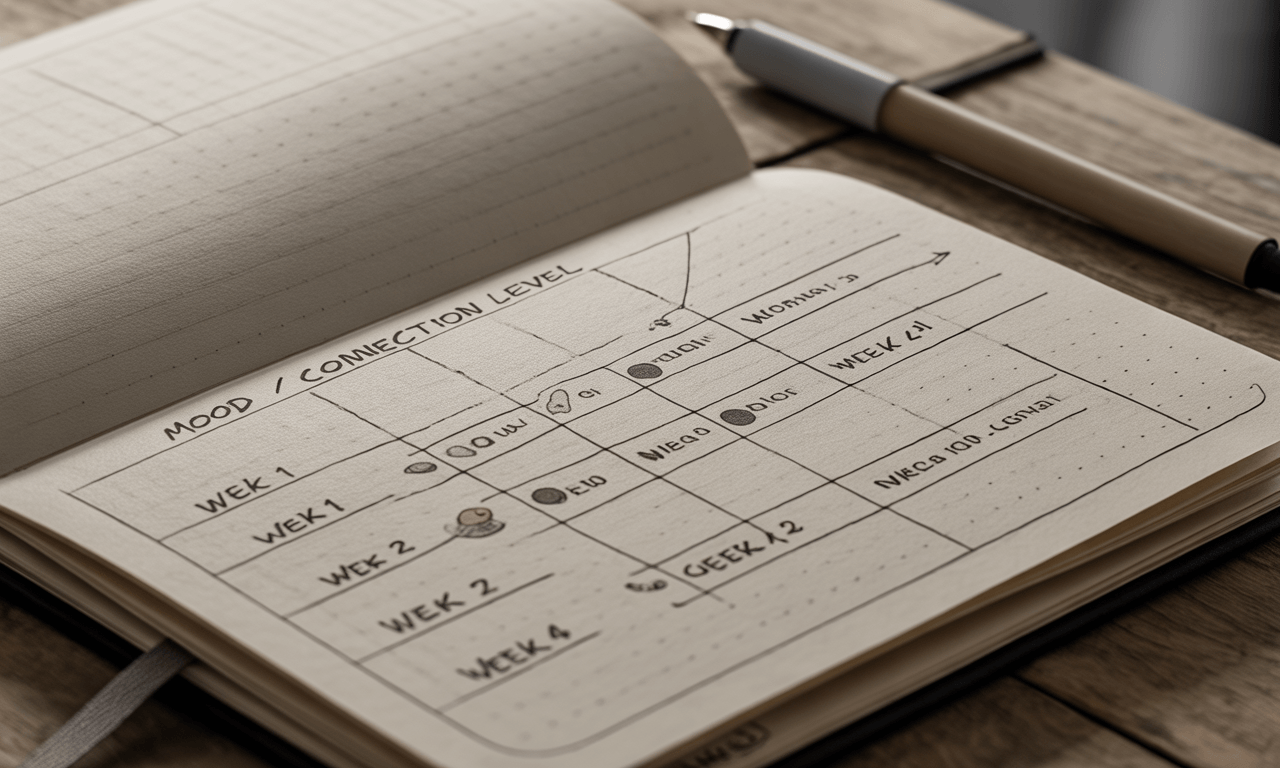 Catching Problems Early can feel scary if all you ever do is bring up what’s not working. That’s why reinforcing what is working is essential. It keeps your standing marriage meeting balanced and hopeful.
Here are ways to reinforce positives during your weekly check-ins:
Celebrate Micro-Changes
If your spouse makes even the smallest shift in response to last week’s concern, name it:
- “I noticed you put your phone away during dinner this week. That made me feel really valued.”
- “Thank you for asking my opinion before you said yes to that thing. I felt like your teammate.”
This does two things:
- It rewards good behavior (we repeat what gets noticed).
- It shows your spouse that Catching Problems Early can lead to quick wins, not just criticism.
Track “Atmosphere” Over Time
Once a month, ask:
- “How does the atmosphere between us feel lately compared to a month ago-”
- “Do you feel more or less safe bringing up small things-”
This encourages you both to notice progress. Maybe the same conflicts still exist, but you recover faster. Maybe you’re less likely to give each other the silent treatment. These are signs your standing marriage meeting and weekly check-ins are slowly shifting the emotional climate.
The cornerstone post on weekly marriage check-ins highlights this idea of “off autopilot” as a gradual shift. Reinforcing progress is how you keep going when growth feels slow.
Not sure what's really going wrong?
The United Front Audit helps you pinpoint exactly where your marriage unity is breaking down - in just 3 minutes.
Take the Free Audit →Adapting Catching Problems Early to Different Seasons and Personalities
 Not every couple will use a standing marriage meeting in the same way. That’s okay. The heart of Catching Problems Early is flexibility plus consistency: same rhythm, adapted format.
For Busy or Exhausted Couples
If you’re in a season of exhaustion (new baby, illness, intense work schedules), your weekly check-in might be:
- 10 minutes, not 30.
- One issue, not three.
- Done on a walk, not at a table.
You might even agree, “In this season, Catching Problems Early means we only bring up things that are really affecting how safe or loved we feel. Small annoyances can wait.”
For Conflict-Avoidant Couples
If you both hate conflict, a standing marriage meeting can feel scary at first. Start by:
- Focusing mostly on positive reinforcement the first few weeks.
- Naming just one tiny, low-intensity concern (“I felt a little rushed when…”).
- Agreeing that no one will “pile on”-if one topic is raised, the other won’t add five more.
As trust grows, you can handle deeper topics.
For High-Conflict Couples
If you tend to fight big and often, a standing marriage meeting can become a safe container if you:
- Set strong boundaries (time limit, no name-calling, one topic at a time).
- Call a “time-out” if either of you feels flooded, and agree to revisit later.
- Keep your tone gentle and use the scripts from earlier to avoid attacking language.
In these situations, Catching Problems Early may also involve outside support from a counselor or mentor. The meeting becomes a place to apply what you’re learning, not a substitute for deeper healing work.
If personality differences are also part of the tension (planner vs. free spirit, extrovert vs. introvert), you might find practical help in The Planner and the Free Spirit: Weekly Rhythms That Honor Both Personalities, which shows how to build a standing marriage meeting that respects both of you.
Getting Started: Your First Standing Marriage Meeting to Catch Problems Early
 You don’t need a perfect system to start Catching Problems Early. You just need one small, honest conversation on purpose.
Here’s a simple way to begin this week:
- Invite Your Spouse into the Idea
You might say:
- “I’ve noticed that some things bother us but we don’t talk about them until it’s really bad. I’d love for us to have one short standing marriage meeting a week where we can bring things up earlier, when they’re still small. Would you be open to trying that for a month-”
- Pick a Time and Protect It
Choose a 15–20 minute slot in the next seven days. Put “Marriage Check-In” on both calendars. Expect it to feel new and a bit awkward. That’s okay.
- Use a Simple Agenda Focused on Catching Problems Early
For your first standing marriage meeting, you could try:
- 5 minutes: What went well for us this week-
- 5–10 minutes: Is there one small thing (big feeling, small moment) that we need to talk about-
- 3–5 minutes: What’s one thing we want to try this week to support each other better-
- End with Gratitude and Hope
Finish with:
- “Thank you for being willing to talk about this.”
- “One thing I appreciate about you this week is…”
- “I’m glad we’re doing this together.”
Then (this is important): show up again next week. Catching Problems Early is less about one super-deep talk and more about a consistent, gentle rhythm of talking before you’re in crisis.
As your standing marriage meeting becomes part of your life, you can deepen and customize it using:
- The foundation in Weekly Marriage Check-Ins: Off Autopilot
- The teamwork focus in From Roommates to Teammates
- The practical structure in The 20-Minute Marriage Meeting
Resentment doesn’t have to sneak up on you. With one small weekly rhythm-a standing marriage meeting-you can start Catching Problems Early, clearing the air in bite-sized pieces, and rebuilding a sense of “We’re in this together” long before the pressure valve explodes.


Keep Reading

Kindness Is Not Weakness: Why Courtesy Is a Marriage Skill, Not a Personality Trait
Many couples abandon small kindnesses once life gets busy or conflict becomes chronic. They stop saying please. They…

Replacing Control With Care: The Shift That Restores Safety and Trust
Control is often a reaction to fear. Fear of being unheard. Fear of being dismissed. Fear of repeating…

When Love Becomes a Transaction: How Marriage Turns Cold Without You Noticing
You don’t wake up one day and decide, “From now on, I’m going to treat my spouse like…