
Dressed for the Marriage You Want: Rituals That Raise the Standard

In This Article
- Why “Dressed for the Marriage You Want” Works (signals, not speeches)
- The Core Idea: Dress the Intention (not just your clothes)
- Ritual 1: The Greeting Routine (two minutes that change the evening)
- Ritual 2: The Tech-Free Meal (20–40 minutes of focused presence)
- Ritual 3: The Five-Minute Evening Reset (end the day on purpose)
- Ritual 4: Dress the Table (standards with zero snobbery)
- Ritual 5: The No-Phone Neighborhood Walk (12 minutes is enough)
- Ritual 6: The Weekly 10-Minute Retro (Sunday steering wheel)
- Ritual 7: Date-Night Pre-Decision (pair rituals with a rhythm)
- How to Start: A 14-Day Standard-Raising Sprint
- Design the Room to Do the Work (cues beat willpower)
- Scripts that Keep Standards Kind (words you can borrow)
- Dress Yourselves (light lift, big signal)
- Metrics That Matter (make the invisible visible)
- Pairing Rituals with Date Night (rhythm keeps standards alive)
- Troubleshooting: When Standards Slip
- Case Studies: Rituals in Real Homes
- Bring It Together: Standards Make Love Easier to Do
- FAQs (fast answers for common concerns)
- Naturally Pairing With Identity and Date Night (interlinking across the series)
You’re always signaling-to each other. Even on ordinary Tuesdays, the way you greet at the door, the way you sit down to eat, the way you reset the room before bed, quietly declares what your relationship is worth. Dressed for the Marriage You Want is not about fancy outfits; it’s about simple, repeatable rituals that raise the standard so your home feels like a place where love is on purpose. In this guide, you’ll build a handful of tiny, sustainable practices-greeting routine, tech-free meal, five-minute evening reset-that upgrade the atmosphere without adding stress.

Ready to identify your next best step?
The United Front Audit gives you a personalized picture of what needs work - and a clear path forward as a couple.
Take the Audit - It's Free →Why “Dressed for the Marriage You Want” Works (signals, not speeches)
 Clothes, space, and small actions are silent signals. When you choose a ritual-even a two-minute one-you’re teaching your marriage what matters here. Instead of long talks, you’re giving your relationship a living example to imitate: the table is set, phones are away, voices soften at the threshold, and the room ends the day in order. These standard-raising rituals are a practical off-ramp from the “small potatoes” identity. If you’ve been minimizing yourselves, you’ll find a mindset upgrade in Small Potatoes, Small Choices: Upgrading Your Couple Identity, which pairs perfectly with the habits you’re building here.
The Core Idea: Dress the Intention (not just your clothes)
 To be dressed for the marriage you want is to make a room, a table, and a tone that match the future you’re practicing. On a practical level, it means you deliberately choose cues that tell your brains, “we’re safe, we slow down, we show up for us.” Rituals are tiny decisions you don’t have to remake. Once set, they carry you.
Ritual 1: The Greeting Routine (two minutes that change the evening)
What it is: A brief doorway ritual that marks the shift from “out there” to “in here.”
How to do it: When the first partner walks in, both pause for a 10–20 second hug, then swap one sentence: “Best part of your day-” or “One thing you need tonight-”
Why it works: Your nervous systems learn that home = welcome, not a second job interview. The greeting routine regulates stress before conversation begins.
 Micro-variants:
- If arrivals are staggered, send a “landing text” before you walk in (“Need quiet- Want to celebrate-”).
- If kids swarm at the door, teach them “hug the grownups first, then bags and snacks.”
If greeting feels awkward at first, remember this script: “Pause, hug, one line, then we move on.” And if old labels like “we never slow down” pop up, borrow the catch–count–commit move from the series’ language guide; you can learn that swap inside The “We Never” Script: How Labels Become Loops in Love.
Ritual 2: The Tech-Free Meal (20–40 minutes of focused presence)
What it is: One daily meal or snack window with devices away and attention together.
How to do it: Phones on silent and face-down on a counter out of reach; table with plates, napkins, water, one candle or soft light. Begin with a one-sentence gratitude: “Today I’m glad for ___.”
 Conversation prompts (pick one):
- “What felt easy today-”
- “What’s a tiny win you want us to notice-”
- “What would make tomorrow 10% lighter-”
Why it works: Attention is intimacy’s oxygen. This ritual says, “you, then everything else.” If your couple identity has been playing small, this signal pairs beautifully with the identity lift described in Small Potatoes, Small Choices.
Ritual 3: The Five-Minute Evening Reset (end the day on purpose)
What it is: A timed, five-minute tidy and tone-down that closes the loop on the day.
How to do it: Set a kitchen timer for 5:00. Together, clear surfaces, start the dishwasher, lay out tomorrow’s mugs, and dim the lights. End with a 30-second appreciation: “Thanks for ___; it helped ___.”
 Why it works: A clean landing zone lowers morning friction and quietly tells your future selves, “We care for tomorrow’s us.” It’s a small act that reads like “dressed for the marriage you want” even when you’re tired.
Ritual 4: Dress the Table (standards with zero snobbery)
What it is: A simple table setup that raises the feel of an ordinary meal.
How to do it: Cloth napkins (wash once a week), water glasses, forks on the left, knives on the right, music low.
Pro tip: Keep a “date-night drawer” with napkins, a tea light, and a tiny speaker so setup takes 60 seconds.
 Why it works: People act up or down to the room. A dressed table invites slower bites, softer voices, and kinder eyes.
Ritual 5: The No-Phone Neighborhood Walk (12 minutes is enough)
 What it is: A 12-minute walk after dinner or dishes, phones left behind.
How to do it: Shoes by the door; timer set; route pre-chosen. One question on the way out the door: “What did you enjoy about today’s us-”
Why it works: A brief walk shakes cortisol loose, gets you shoulder-to-shoulder (literally), and reaffirms your identity as a couple that moves together.
Discover what's fueling tension in your marriage
It's rarely just one thing. The United Front Audit maps the pressure points so you know exactly where to focus.
See Your Results →Ritual 6: The Weekly 10-Minute Retro (Sunday steering wheel)
What it is: A small meeting each week to adjust, not adjudicate.
Script:
- What worked- (name it, keep it)
- What didn’t- (facts, not blame)
- One tweak for next week (shrink it until it’s a sure win)
- One appreciation (close with warmth)
 Why it works: Rituals drift without light maintenance. Ten minutes keeps your “dressed for the marriage you want” system alive and kind.
Ritual 7: Date-Night Pre-Decision (pair rituals with a rhythm)
 Your rituals level up when they live inside a protected weekly rhythm. Choose the night, budget, and backup so you’re never starting from zero. It’s much easier to keep your standards when date night is a decision, not a debate; if you need an uncomplicated, step-by-step setup, the guide in Date Night Is a Decision: Building a Weekly Signal of “Us” will help you lock it in and let rituals shine.
How to Start: A 14-Day Standard-Raising Sprint
 Day 1-Entryway reset: Clear surfaces, add a candle or plant, put a small tray for keys/phones.
Day 2-Greeting routine: Practice the pause-hug-one line.
Day 3-Tech-free dinner: Phones on the sideboard; one gratitude sentence.
Day 4-Evening reset: Five-minute timer; end with appreciation.
Day 5-Walk: Twelve minutes, no phones.
Day 6-Dress the table: Cloth napkins + water glasses + low light.
Day 7-Retro: Ten minutes with the 4-question card.
Day 8-Date-night decision: Choose a night and an at-home backup; add to calendar.
Day 9-Mini wardrobe cue: Change out of work clothes before dinner (fresh tee, scent, hair).
Day 10-Conversation nook: Angle two chairs; add a small lamp.
Day 11-Music cue: Create a “we’re home” playlist for evenings.
Day 12-Kitchen cue: Prep mugs/spoons for tomorrow; leave a brief note by the kettle.
Day 13-Weekend warmup: Brunch or dessert ritual with the date-night drawer.
Day 14-Celebrate: Name three shifts you can feel; choose one ritual to protect for the month.
Design the Room to Do the Work (cues beat willpower)

- Timer on the counter normalizes 5–10 minute rituals.
- Shoes by the door erase walking friction.
- Date-night drawer reduces setup time to under a minute.
- Conversation nook invites short, focused check-ins.
- Sideboard phone tray keeps devices out of your hands during meals.
Scripts that Keep Standards Kind (words you can borrow)
 Greeting: “I’m glad you’re home. Do you need quiet or company-”
Tech-free table: “Let’s park phones for 25; I want to hear your voice.”
Evening reset: “Timer’s on-let’s make tomorrow’s us proud.”
Appreciation: “Thanks for handling that call; it took weight off my shoulders.”
Walk invite: “Shoes at the door- Twelve minutes and we’ll be right back.”
Dress Yourselves (light lift, big signal)
 While this article focuses on rituals, your appearance can quietly match your intention. You don’t need formalwear; you need deliberateness. A fresh shirt, a touch of scent, hair brushed, and a quick mirror check before at-home dinner says, “you’re worth showing up for.” This connects deeply with identity upgrades; if you want to nudge your mindset upward without posturing, the “big-shot micro-moves” inside Small Potatoes, Small Choices give you doable ideas for how to ask, plan, and show up.
Metrics That Matter (make the invisible visible)
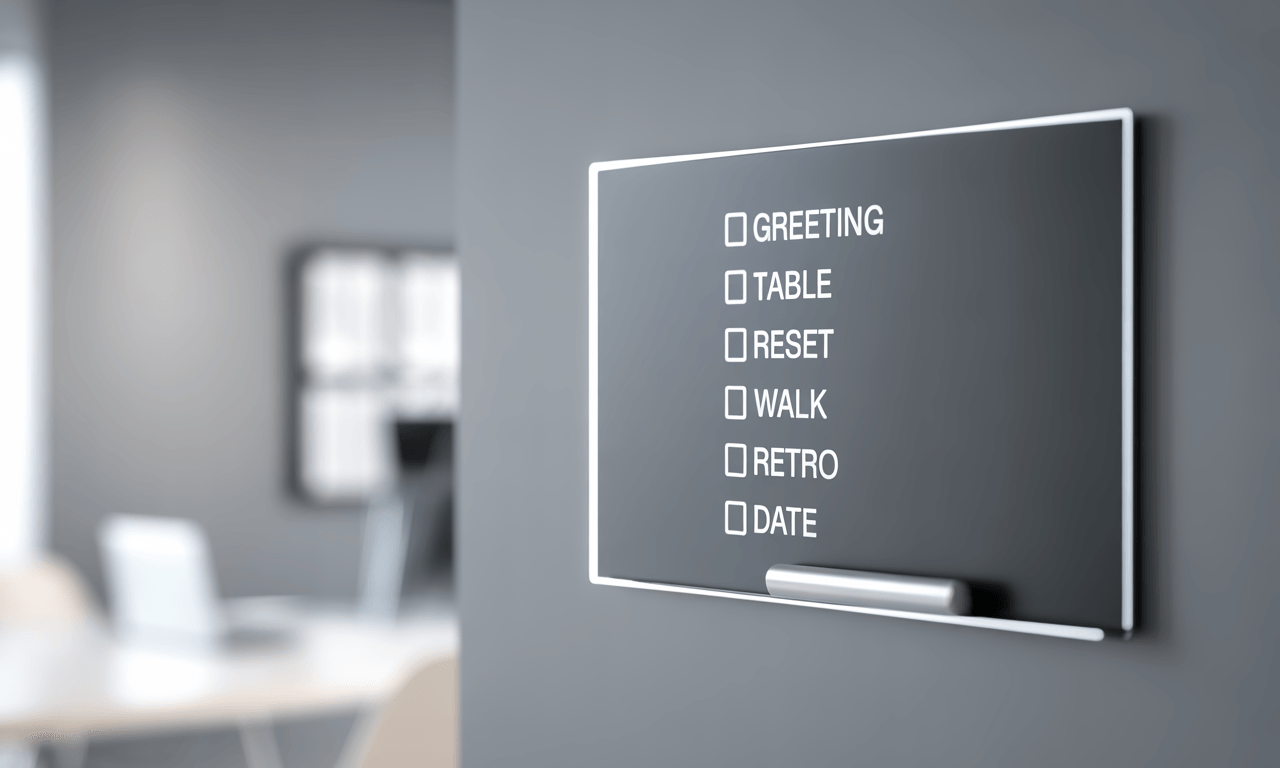 Post a small Ritual Scoreboard on your fridge or inside a cabinet door:
- Greeting routine: □ □ □ □ □ □ □
- Tech-free meals this week: □ □ □
- Evening resets completed: □ □ □ □ □
- Walks (12 minutes): □ □ □
- Retro completed: □
- Date night: □
Don’t grade each other; notice momentum. Any uptick is success. Snap a photo weekly and celebrate.
Not sure what's really going wrong?
The United Front Audit helps you pinpoint exactly where your marriage unity is breaking down - in just 3 minutes.
Take the Free Audit →Pairing Rituals with Date Night (rhythm keeps standards alive)
 Rituals thrive inside a dependable weekly rhythm. When you’ve chosen your standing “us” time, your greeting, table, and reset fall into place. Many couples say their rituals finally stuck after they made date night non-negotiable; if you want a painless installation, the steps inside Date Night Is a Decision walk you from wish to weekly win.
Troubleshooting: When Standards Slip

- Too tired: Shrink the ritual. Two minutes counts.
- Forgot: Late isn’t never; do a half-dose now and mark it done.
- Kids everywhere: Involve them in the reset; give them a “candle lighter” or “napkin captain” job.
- Partner hesitant: Offer two yeses and a no-“Walk or tea- ‘Neither’ is okay.”; then model it yourself without pressure.
- Tension at dinner: Use the five-minute “side-by-side” talk after the meal (sit shoulder-to-shoulder, summarize each other once, decide one tweak).
Case Studies: Rituals in Real Homes
 Cam & Jae (swing shifts):
They installed a greeting text-“landing now: need quiet/company-”-and a five-minute reset before bed. The reset kept mornings smooth, and the greeting often prevented needless friction. Within two weeks, they noticed they fought less because the room felt kinder.
Riley & Noor (two toddlers):
They added “napkin captain” and “candle lighter” roles for the kids and anchored the tech-free meal to snack time when evenings were chaotic. It wasn’t silent or tidy-but it felt together. For date night, they used an at-home backup every other week and still hit their standard.
Zoe & Alex (tight budget):
They kept cloth napkins and a playlist in a drawer and did dessert-only dates. The weekly retro kept small annoyances from stacking. After a month, both said the house felt “lighter,” even though nothing major changed.
Bring It Together: Standards Make Love Easier to Do
 Being dressed for the marriage you want isn’t a costume-it’s a culture. A few small rituals lower the friction to show up, listen, and enjoy each other. Start with one: a doorway hug, a tech-free table, or a five-minute reset. Keep it visible; keep it kind. Then pair your rituals with a weekly date so the standard you set has a place to shine.
FAQs (fast answers for common concerns)
 What if this feels cheesy-
Cheesy for a week beats resentful for a year. Rituals feel natural once your body associates them with relief.
Isn’t this a lot of work-
Each ritual is-sized for tired days: 2–12 minutes. The biggest lift is the first week of setup.
What if we miss a day-
Do a half-dose and move on. Standards settle in through consistency, not perfection.
Can we do this on a tight budget-
Yes. Most cues (timer, playlist, napkins, walk) are free or nearly free; the point is attention, not expense.
Naturally Pairing With Identity and Date Night (interlinking across the series)
 Rituals are easier when your couple identity is lifting alongside them. If you want small, do-able moves that help you ask, plan, and show up without posturing, you’ll get a boost from Small Potatoes, Small Choices: Upgrading Your Couple Identity. And because rituals shine brightest inside a weekly rhythm, you’ll see faster results when you treat date night as a decision; the practical steps are spelled out in Date Night Is a Decision: Building a Weekly Signal of “Us”, which integrates seamlessly with your greeting, table, and reset.


Keep Reading

Momentum > Motivation: The 75-Day “Do First, Feel Later” Plan
Stop waiting to feel ready. The couples who grow aren’t powered by big feelings; they’re powered by tiny,…

Micro-Adventures, Major Signals: New Foods, New Cities, New Us
Novelty trains your identity to expect growth. When you and your spouse explore something new for 30–120 minutes-a…

Date Night Is a Decision: Building a Weekly Signal of “Us”
Date night isn’t a reward for having margin-it’s the way you create margin. When you treat it as…