
The Long Hallway Problem: Lighting, Layout, and Emotional Safety
In This Article
- What the “Long Hallway Problem” Really Means (and Why It’s Fixable)
- Soft Light, Softer Defenses: Lighting for Emotional Safety at Home
- Face the Person, Not the Screen: Layout & Sightlines That Shorten the Walk
- Sound Is a Feeling: Noise, Acoustics, and Psychological Safety
- Privacy, Doors, and Gentle Exits: Layout That Lowers Risk
- Small Space, Big Calm: Emotional Safety Home Design in Studios and Shared Homes
- A Conversation Nook You’ll Actually Use (Cornerstone Support)
- Rituals Anchor the Room: Micro-Habits That Keep Safety on Schedule
- Five Design Levers That Lower Defensiveness (Fast)
- Micro-Cues That Say “Safe” Before You Speak
- Gentle Boundaries for Hot Topics (Repair Without the Edge)
- Kid and Guest Considerations: Safety for the Whole House
- Case Studies: What Changed When Homes Changed
- A 14-Day Emotional Safety Home Design Sprint
- Troubleshooting: When the Room Isn’t Helping (Yet)
- Make It a Culture: Keep Calm on Repeat
- Bringing It All Together
Dark corners-literal and emotional-invite missteps. From lighting and seating to noise and privacy, small layout tweaks can lower defensiveness and raise safety. This guide translates design choices into connection wins, so the path to each other is short, well-lit, and easy to walk. If you’ve ever felt like conflict takes the “long hallway”-lots of distance before you finally meet in the middle-this is how to shorten that walk with emotional safety home design that works in real life.

Ready to identify your next best step?
The United Front Audit gives you a personalized picture of what needs work - and a clear path forward as a couple.
Take the Audit - It's Free →What the “Long Hallway Problem” Really Means (and Why It’s Fixable)
 You meant to have a two-minute conversation. Instead, you passed each other in a dim kitchen, mumbled from opposite ends of a couch pointed at a screen, and raised your voices from different rooms. That’s the Long Hallway Problem: the path to one another feels long-visually, physically, and emotionally.
Design (not willpower) sets your default interaction. Sightlines, glare, noise, and seating angles either shorten or lengthen the walk between you. The good news: emotional safety home design is mostly small moves-light, angle, distance, and cue placement-that make safety felt before a single word is said.
Soft Light, Softer Defenses: Lighting for Emotional Safety at Home
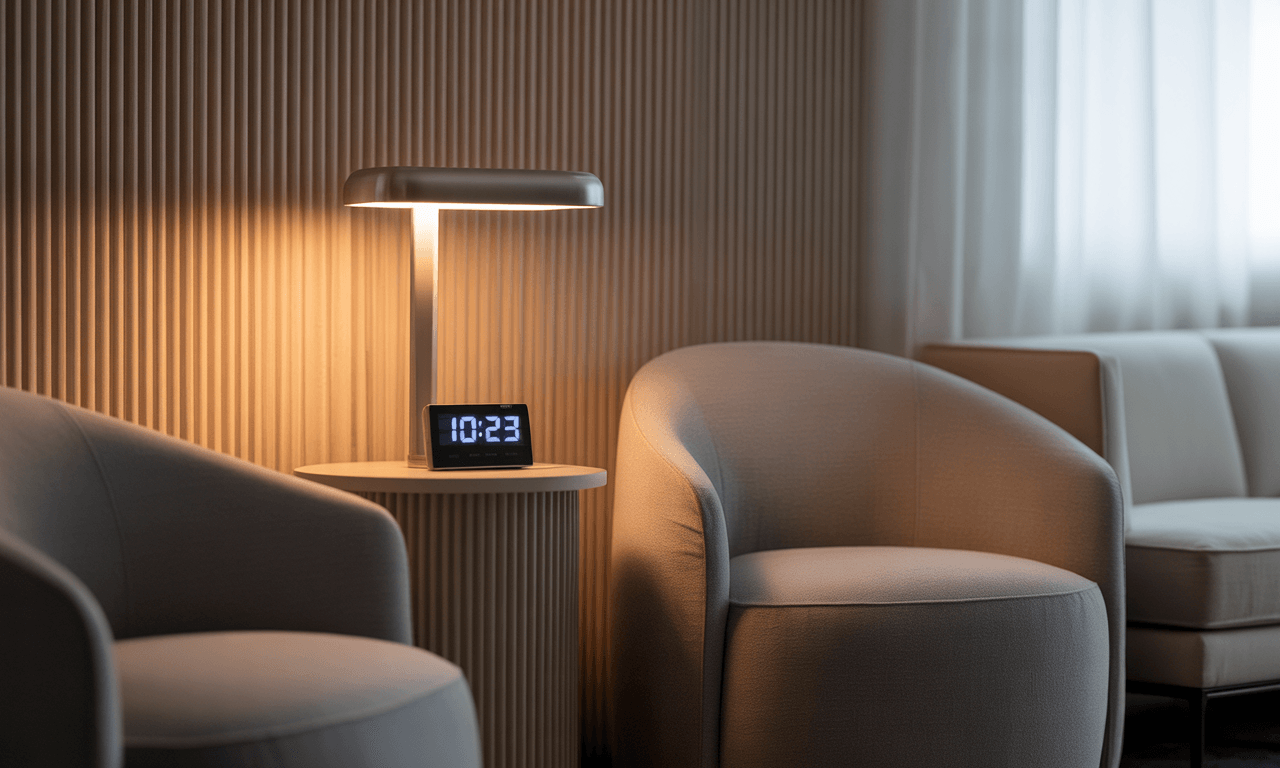 Lighting is the first handshake your nervous system feels. Harsh overheads can amplify defensiveness, while layered warm light signals “you’re safe; lean in.”
Three lighting layers for emotional safety home design:
- Ambient: Soft, indirect glow (lamps, wall sconces) in the 2700–3000K range.
- Task: Focused light where you read or write (a small desk or table lamp).
- Accent: A candle or low dimmer that cues “this is different from scrolling.”
Micro-tweaks tonight:
- Turn off the ceiling light; turn on a lamp.
- Angle lamp shades to reduce glare across faces.
- Add a dimmer plug to one lamp and set it to 70% at “connection o’clock.”
Why it works: softer light narrows visual noise and calms startle responses, so the first 30 seconds of a talk don’t feel like a spotlight interrogation.
Face the Person, Not the Screen: Layout & Sightlines That Shorten the Walk
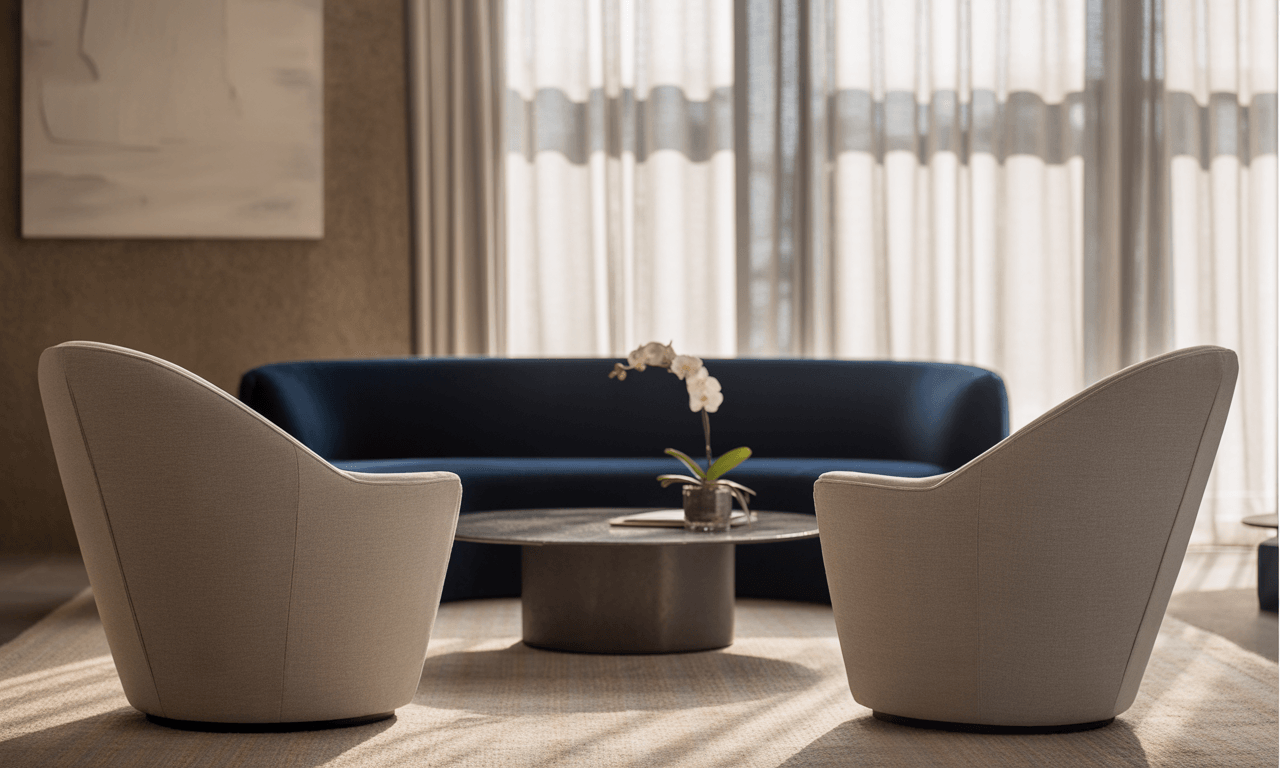 If your furniture faces a TV, your bodies face a distraction-eyes, chins, and torsos all drift away from one another. Instead, ensure there is at least one pairing of seats angled toward each other with a clear approach path.
Layout principles for a safer, shorter approach:
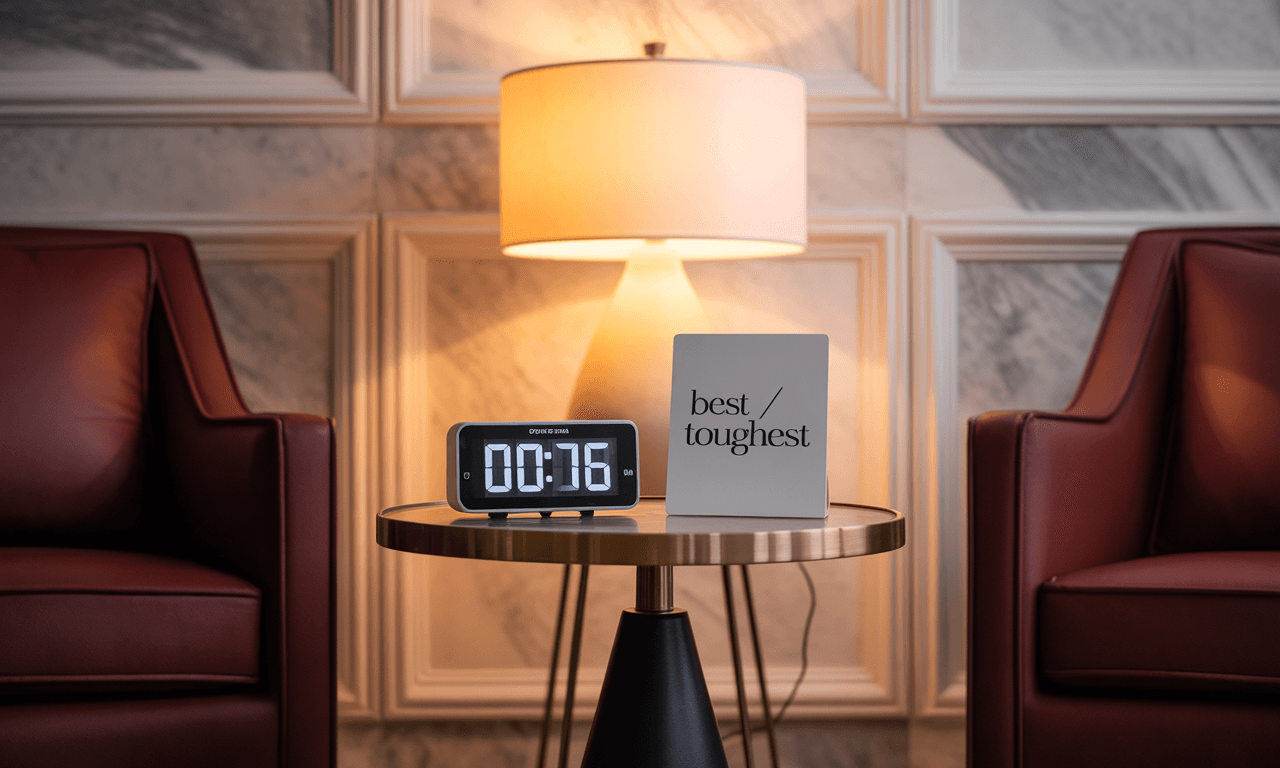
- Two-chair triangle: Place chairs at a soft angle (about 100–120°), with a small table in between for water, a timer, and a notecard.
- Approach path: No obstacles between the kitchen/entry and your conversation spot-no ottoman maze to navigate while you’re tense.
- Low back, high kindness: Chairs with lower arms feel less confining; sit edge-on, then turn to face when you’re ready.
Tonight’s move: Slide one chair 12–18 inches so it gently faces your partner’s chair. You’ll be amazed how fast this small angle reduces the “long hallway” vibe.
Sound Is a Feeling: Noise, Acoustics, and Psychological Safety
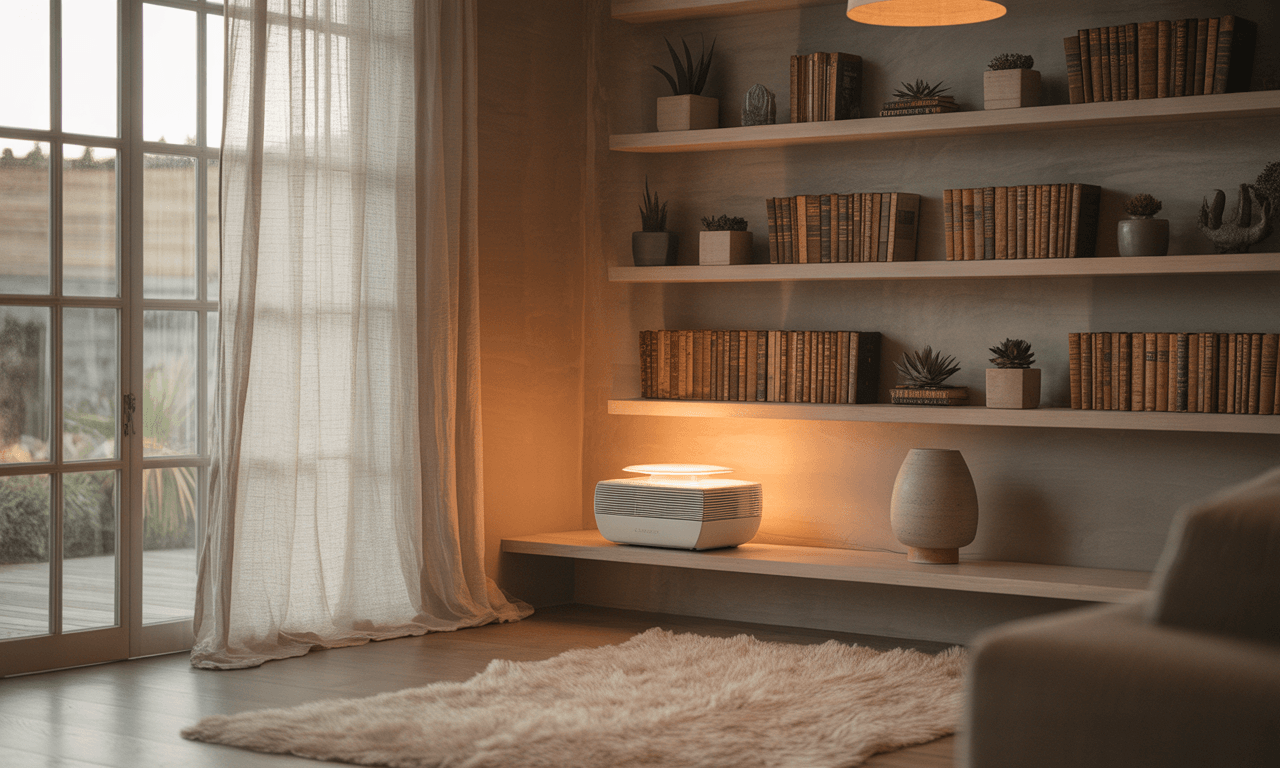 Noise spikes prime fight-or-flight. Mild acoustic comfort-soft textiles, fewer hard echoes, and predictable sound levels-makes listening easier and misinterpretations rarer.
Quick acoustic fixes:
- Mute the spikes: Put felt pads under chair legs; use a small rug near the conversation nook.
- Contain the clatter: If dishes are running, shift talks away from the kitchen or close the door.
- Soundtrack the tone: One instrumental playlist played quietly can lower physiological arousal; if one of you is sound-sensitive, agree to start silent and add music only if both say yes.
“Safe sound” ritual: Before talking, do two slow breaths together and name the environment (“Let’s turn off the vent; lamp on-”). Changing the room’s volume communicates care without a speech.
Privacy, Doors, and Gentle Exits: Layout That Lowers Risk
 It’s hard to be honest if voices carry to kids or guests. Emotional safety home design includes predictable privacy and respectful exits.
Design for privacy:
- Angle + distance: Choose a spot away from thin shared walls; angle seating so you’re not directly facing a hallway.
- Layered doors: A partially closed door-without locking-signals focus and a temporary boundary.
- Soft buffer: A small air purifier or fan outside the door adds sound masking.
Design for exits:
- Visible path: Make sure each of you can stand and step away without squeezing past the other.
- Language posted: A small card behind the lamp: “Pause + return at :30” to normalize brief breaks.
- Return cue staged: Timer on the table preset to 10–15 minutes, so pausing is a bridge, not a cliff.
Small Space, Big Calm: Emotional Safety Home Design in Studios and Shared Homes
 You don’t need a spare room to feel safe. In tight quarters, think portable arenas and visual zoning.
Portable arena:
- Slim rolling cart with a timer, two water glasses, a notepad, and a “Two Questions” card.
- Two lightweight chairs you can unfold, angle, and put away in 60 seconds.
Visual zoning:
- Use a lamp and small rug to “claim” a corner during connection windows, then power down the lamp when done.
- Place the TV remote in a drawer while the lamp is on to reduce cue conflict.
Discover what's fueling tension in your marriage
It's rarely just one thing. The United Front Audit maps the pressure points so you know exactly where to focus.
See Your Results →A Conversation Nook You’ll Actually Use (Cornerstone Support)
 If you want a deeper, room-by-room walkthrough on shaping the bones of your house so connection feels easy, the comprehensive guide Design a Home for Connection shows which lighting, seating, and traffic patterns pay off fastest; you can read it at https://blog.liveyourbestmarriage.com/design-defaults/design-a-home-for-connection to pair this safety-first approach with a full-room plan.
Rituals Anchor the Room: Micro-Habits That Keep Safety on Schedule
 Even great rooms lose to chaos if you rely on memory. Tiny rituals ensure your design gets used.
Four micro-rituals that fit emotional safety home design:
- Morning hello at the coffee station: touch + one question.
- Evening handoff at 7:45: two breaths, two questions, stop on time.
- Gratitude ping once daily: one sentence with a “because.”
- Weekly walk-and-talk: movement makes honesty easier.
If you want plug-and-play scripts and cues, the practical how-to Rituals > Reminders: Build Micro-Habits That Outrun Excuses lives at https://blog.liveyourbestmarriage.com/design-defaults/rituals-over-reminders-micro-habits, and it slots naturally into the space design you’re making here.
Five Design Levers That Lower Defensiveness (Fast)
 1) Light Height. Lamps at seated eye level soften shadows on faces-less glare, fewer flinches.
2) Chair Angle. Side-by-side, slightly turned toward each other invites approach; directly opposite can feel like a standoff.
3) Table Distance. A small table between you holds water and a pen-enough boundary to feel safe, not so much to feel far.
4) Clutter Silence. Clear the nearest horizontal surface to zero; visual noise equals mental noise.
5) Screen Gravity. If a screen is in view, it is in charge. Hide the remote during connection windows.
These are the “low lift, high yield” moves in emotional safety home design; try one tonight and watch how tone shifts with no speech required.
Micro-Cues That Say “Safe” Before You Speak
 Your nervous system reads rooms faster than it reads faces. Leave hints your future self can’t miss.
- Water on the table: “We’re staying; we’re safe.”
- Timer visible: “We’ll stop on time; this won’t sprawl.”
- Two Questions card: “Start is small; stakes are low.”
- Soft object (throw, pillow): “Comfort is allowed.”
Place one cue where your eyes land as you sit. Design is a pre-conversation.
Gentle Boundaries for Hot Topics (Repair Without the Edge)
 Some subjects deserve bumpers. Use the room to set them.
- Time box: Keep difficult talks inside 10–15 minutes; evaluate at the buzzer.
- Topic card: Write the topic on a card; if it wanders, point to the card-not to your partner.
- Pause language: “I want to answer, and I need two minutes to cool my body; back at :30-”
- Chair re-angle: If eye contact heats things up, shift to a 90° angle (L-shape) so you’re not squared off.
Boundaries reduce drama because they reduce fear. The body calms when it can see the edges.
Kid and Guest Considerations: Safety for the Whole House

Design for honesty without exhibition.
- Bedtime buffer: If voices carry, move connection time 20–30 minutes after lights out and use quieter seats farther from bedrooms.
- Guest nights: Shift to the privacy of a short walk or a porch sit; your safest space might be outside the house for a night.
- Teen traffic: Angle your conversation chairs away from the hallway; the message is “we’re talking,” not “we’re hiding.”
Not sure what's really going wrong?
The United Front Audit helps you pinpoint exactly where your marriage unity is breaking down - in just 3 minutes.
Take the Free Audit →Case Studies: What Changed When Homes Changed
 The Echo Chamber (open-plan condo):
Problem: Every talk bounced off hard surfaces; emotions escalated.
Design fix: A 5×7 rug, two curtains, and a bookshelf behind the chairs; lamp at 2700K.
Result: Fewer interruptions, calmer starts, shorter talks with more repair.
The TV Throne (giant sectional):
Problem: Couples sat far apart pointed at the screen.
Design fix: Added two accent chairs off to the side, remote in drawer during 7:30–8:30.
Result: Nightly five-minute handoff that often flowed into a 10-minute tidy sprint-less resentment, cleaner vibe.
The Tight Quarter (studio with toddler):
Problem: No privacy, constant toy noise.
Design fix: Rolling cart, foldable chairs, white noise by the bedroom, “after dishwasher beeps” event anchor.
Result: Two “Two Questions” sessions most nights; arguments got shorter and less global.
A 14-Day Emotional Safety Home Design Sprint
 Day 1: Turn off overheads; use one lamp.
Day 2: Angle two chairs; add a small table.
Day 3: Clear the nearest surface to zero.
Day 4: Hide the remote 7:30–8:30.
Day 5: Place water + timer + Two Questions card.
Day 6: Add a rug or soft throw to cut echo.
Day 7: Stage a 10-minute evening handoff; stop on time.
Day 8: Move chargers out of the bedroom.
Day 9: Add a dimmer plug to your lamp.
Day 10: Create a “Pause/Return at :30” card.
Day 11: Put felt pads under chair legs.
Day 12: Make a portable arena cart (timer, cards, water).
Day 13: Choose a privacy spot for hot topics; try it once.
Day 14: Review what felt safest; keep the top three.
Troubleshooting: When the Room Isn’t Helping (Yet)

- “It still feels tense to face each other.” Try a 90° L-shape or sit side-by-side and turn slightly when ready.
- “We never start on time.” Put the timer on the table and automate a lamp to turn on at 7:40; visibility beats memory.
- “We talk forever and dread returning.” Protect the stop; stand up at the buzzer and say, “Stopping on purpose.”
- “Kids keep interrupting.” Shift to event anchors: after dishwasher beeps, after cartoons end, at the top of the hour.
If you want to bind these safeguards into your daily rhythm, tie the space to the micro-rituals in the Rituals > Reminders guide (naturally described earlier) so the room remembers for you.
Make It a Culture: Keep Calm on Repeat
 Spaces teach. After a month of these small choices, your house will start to recommend connection. Protect it with two habits:
- Nightly Five-Minute Flip: Hide one friction (remote), highlight one thrust (lamp + water + card).
- Weekend Reset for Space: Rescan sightlines, restage the nook, and pick two evening arenas for the coming week.
When you’re ready to install a weekly ritual that keeps the house ready for you, a light 90-minute plan lives in The Weekend Reset; pairing that 7-day rhythm with your emotional safety home design keeps calm predictable.
Bringing It All Together
 The Long Hallway Problem isn’t just about conflict; it’s about distance by design. With emotional safety home design, you shrink that distance using light, angle, sound, privacy, and small cues. You make the first inch easy and the stop certain. You let the room say “you’re safe” before either of you finds the words.
Start with one lamp, one chair angle, and one card. Add water and a timer. Protect a five-minute evening handoff. In a week, the hallway will feel shorter. In a month, it’ll feel like you built a bridge.


Keep Reading

Designing a Home That Makes Connection the Default
Don’t just “try harder”-architect better. This cornerstone shows how to arrange rooms, routines, and reminders so connection is…

The Weekend Reset: Replacing Chaos with Repeatable Calm
Weekends can either heal the week or duplicate its chaos. This guide gives you a 90-minute reset that…

Rituals > Reminders: Build Micro-Habits That Outrun Excuses
Reminders ask you to care in the moment; rituals make caring automatic. This guide installs four tiny rhythms-a…