
Mixed Beliefs, Shared Love: Navigating Faith Differences with Grandparents

In This Article
- When Faith Becomes the Elephant at the Table
- Why Faith Differences Feel So Personal
- Start With Shared Loves, Not Divisions
- Naming Your Non-Negotiables With Grace
- Propose Safe Alternatives Instead of Saying “No”
- Keep the Door Open for Questions
- Avoid the Conversion Competition
- Handling Books, Media, and “Surprise” Gifts
- When You’re the Grandparent Reading This
- Creating “Faith Neutral” Activities Everyone Can Enjoy
- What to Do When Boundaries Are Crossed
- Managing Mixed Services During Holidays
- Teaching Kids to Speak With Respect
- Blended Families, New Marriages, and Faith Complexity
- The 24-Hour Repair Rule for Faith Misunderstandings
- When Silence Is Healthier Than Debate
- Using Written Tools to Prevent Misunderstandings
- Real-Life Scenarios and Responses
- The Fruit of Staying Grounded in Grace
- A Blessing for Mixed-Belief Families
Maybe a second marriage changed the spiritual landscape. Maybe you came to faith later. Either way, you can honor grandparents while staying faithful to your convictions. This piece offers a gentle framework: affirm shared loves, name your non-negotiables, propose safe alternatives, and keep the door open for questions-not indoctrination. You’ll also get “what if” scenarios (books, services, rituals) and how to respond without shaming or surrendering.

Ready to identify your next best step?
The United Front Audit gives you a personalized picture of what needs work - and a clear path forward as a couple.
Take the Audit - It's Free →When Faith Becomes the Elephant at the Table
 Faith is often the invisible thread holding families together-or the quiet wedge pulling them apart. When parents and grandparents believe differently, every bedtime prayer, church service, or holiday meal can become a subtle negotiation.
Maybe your parents once taught you to pray, and now you’re raising your children in a faith they no longer follow. Or maybe they found a new path that feels foreign to you. Either way, the question remains: how do you stay rooted in your convictions without dishonoring theirs-
The goal isn’t conversion; it’s clarity. A family’s peace depends on knowing how to love across difference.
For context on setting relational foundations before spiritual ones, start with The Grandparent Boundary Playbook at https://blog.liveyourbestmarriage.com/Grandparents-Boundaries/boundary-playbook. That cornerstone defines authority, compassion, and repair-the same principles that make interfaith respect possible.
Why Faith Differences Feel So Personal
 Faith isn’t just belief-it’s identity, memory, and meaning. When it changes, people grieve what once felt shared. For grandparents, seeing new beliefs may feel like losing part of their legacy. For parents, pressure to adjust can feel like betrayal of conscience.
Both sides are right to care deeply. The pain usually comes from misunderstanding intent, not malice. Grandparents think, “I just want my grandkids to know God.” Parents think, “I just want to raise my kids consistently.”
The answer isn’t avoidance. It’s honest conversation held in love and anchored in boundaries.
Start With Shared Loves, Not Divisions
 Before you talk about where you differ, affirm where you agree. Most families already share these core loves:
- Love for the child’s well-being
- Value of kindness, honesty, gratitude
- Desire for family connection
- Hope that kids grow up grounded and compassionate
Start here. You might say:
“We both want the kids to feel loved, secure, and kind. That’s the heart of what we’re teaching, even if the language is different.”
When grandparents feel seen for their good intentions, they’re more open to hearing your limits later.
Naming Your Non-Negotiables With Grace
 Faith differences only cause chaos when boundaries are assumed, not stated. Instead of waiting for tension, name your few non-negotiables clearly and kindly.
Example framework:
“Because we’re the parents, we’re choosing church on Sundays and bedtime prayer. That’s part of how we teach gratitude and trust. We’d love your help supporting that.”
Non-negotiables might include:
- Attending your chosen church or faith service
- What books or videos your kids consume
- How prayer, blessings, or grace are done
- Rules around gifts with spiritual meaning
It’s okay to say, “We prefer our faith content come from our home or church.” Clarity honors both belief and peace.
Propose Safe Alternatives Instead of Saying “No”
 Boundaries land best when they include options. Instead of “don’t,” say “how about.”
Example 1:
Grandparent: “Can I read them this meditation book-”
Parent: “Thanks for wanting to share something uplifting. Could you read from their devotional instead- They love hearing your voice.”
Example 2:
Grandparent: “We’d like to take them to our service next weekend.”
Parent: “We appreciate the invite. We’re teaching them to attend one church consistently for now, but lunch afterward would be great.”
It’s substitution, not suppression. You’re still welcoming participation-just within your framework.
Keep the Door Open for Questions
 Kids will notice differences. One set of grandparents may pray differently-or not at all. That’s healthy exposure if handled calmly.
Teach kids to ask and listen:
- “That’s how Grandpa prays. Isn’t it interesting how people show love to God differently-”
- “Grandma doesn’t pray before meals. We still can, and that’s okay.”
When children see respect across differences, they learn maturity. You’re not training fear of difference; you’re modeling discernment within love.
Avoid the Conversion Competition
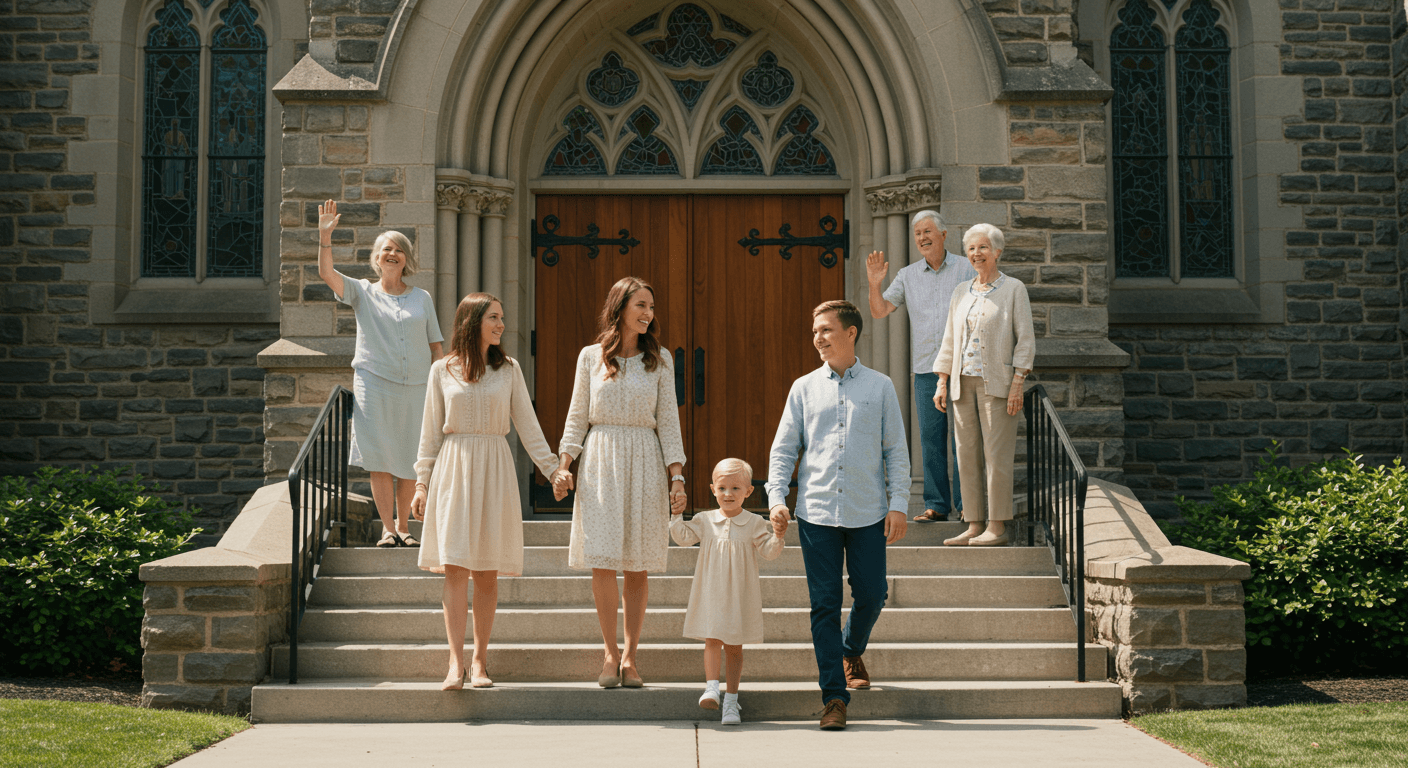 If you sense pressure to let your child attend other services or hear contradictory teaching, respond without judgment:
“We love that you want them to learn about God. For now, we’re keeping things simple and consistent at home, so their foundation is strong. When they’re older, we’ll help them explore respectfully.”
Consistency now prevents confusion later. You’re not rejecting their faith-you’re protecting formation.
For deeper strategies on navigating extended family at holidays and services, read Holiday Without Drama at https://blog.liveyourbestmarriage.com/family-culture/holidays-values-first. That article helps you pre-plan faith activities and avoid conflict during big gatherings.
Discover what's fueling tension in your marriage
It's rarely just one thing. The United Front Audit maps the pressure points so you know exactly where to focus.
See Your Results →Handling Books, Media, and “Surprise” Gifts
 A new spiritual book or video from grandparents might come with good intent-but wrong content. Instead of scolding, redirect.
- Thank the gesture: “Thank you for thinking of their spiritual growth.”
- Redirect gently: “We’re focusing on [our chosen faith material] right now, so we’ll save this one for later.”
- Offer a swap: “Would you like to read this other book with them next time-”
If this happens repeatedly, send a curated list. Many grandparents appreciate knowing what is okay. You’re making it easy for them to succeed.
When You’re the Grandparent Reading This
 If you’re the grandparent and your kids are setting new faith boundaries, know this: your influence hasn’t diminished-it’s evolving. You still hold emotional authority, but now it flows through respect.
The most powerful phrase you can say is:
“How can I help you make your values easy for the kids-”
That one line earns endless trust. It also deepens your legacy-you’re modeling humility and love that transcends differences.
Creating “Faith Neutral” Activities Everyone Can Enjoy
 Not every family moment has to be a theological one. Fill your shared calendar with activities that honor togetherness without triggering belief clashes:
- Family hikes and nature walks (creation appreciation without sermons)
- Baking traditions linked to gratitude
- Storytime about kindness or courage
- Volunteering together
These moments remind everyone that shared love matters more than identical theology.
What to Do When Boundaries Are Crossed
 Even with good communication, someone might cross a line-taking kids to a service unapproved or introducing different beliefs without permission.
When that happens:
- Pause, not explode. Take a breath before reacting.
- Restate your boundary: “We’ve asked to keep church attendance consistent.”
- Offer a repair path: “Let’s plan future visits around shared family time instead.”
For detailed guidance on proportionate, loving repair, the post When They Won’t Respect the Boundary: Consequences, Repair, and a Path Back provides step-by-step clarity on restoring peace without estrangement.
Managing Mixed Services During Holidays
 Holidays magnify every difference-especially faith ones. One family’s tradition is another’s taboo. Avoid last-minute tension by planning ahead:
- Discuss schedules early: “We’ll attend our service at 10, then join you for lunch.”
- Offer options: “Would you like to join us for the family prayer before we eat-”
- Set tone for kids: “We respect everyone’s traditions and keep our own too.”
For an extended framework, visit Holiday Without Drama again for specific scripts on timing and expectation-setting.
Teaching Kids to Speak With Respect
 Your children don’t need to debate theology-they need to learn how to honor difference without confusion. Practice phrases like:
- “That’s what Grandma believes; at our house, we believe this.”
- “We can love people who think differently.”
- “If you’re unsure, ask Mom or Dad.”
It’s the tone that teaches maturity. Children raised to engage kindly become adults who can hold conviction and compassion together.
Blended Families, New Marriages, and Faith Complexity
 Second marriages often bring layered belief systems-step-grandparents with different practices, blended rituals, or new celebrations.
Keep clarity by identifying lowest common values: love, gratitude, respect, service. Then build holiday or weekend activities around those.
A blended-faith home doesn’t need identical worship to stay peaceful. It just needs shared values and clear communication.
Not sure what's really going wrong?
The United Front Audit helps you pinpoint exactly where your marriage unity is breaking down - in just 3 minutes.
Take the Free Audit →The 24-Hour Repair Rule for Faith Misunderstandings
 Even faith-focused families mess up. Someone might say something dismissive (“That’s silly to believe”) or pressure a child unintentionally.
Apply the 24-hour repair rule:
- Name it: “That comment felt hurtful.”
- Restate your why: “We’re teaching respect for all beliefs.”
- Reset: “Let’s try again next time with curiosity, not criticism.”
Quick repair keeps spiritual friction from becoming family fracture.
When Silence Is Healthier Than Debate
 Not every difference needs dialogue. Sometimes silence preserves peace. If conversations about faith repeatedly lead to friction, choose dignity over debate.
You might say:
“We love you, and we prefer to keep faith talk light so we can enjoy family time.”
Then redirect with shared joy-games, cooking, walks. It’s not avoidance; it’s wisdom.
Using Written Tools to Prevent Misunderstandings
 Put your faith rhythms in writing-short, friendly, and accessible. Add a faith section to your family covenant:
- Sunday service time
- Approved devotional or children’s book list
- How questions and prayers are handled
This prevents accidental overreach and gives grandparents a reference point. If they ask “Why so formal-”, you can say,
“It’s part of our family covenant-it keeps everything consistent, so love stays easy.”
The full covenant framework is outlined in Build Your Family Culture at https://blog.liveyourbestmarriage.com/family-culture/family-covenant.
Real-Life Scenarios and Responses
 Scenario 1: The Book Swap
Grandma gifts a mystical storybook with ideas that clash with your beliefs.
Response: “Thanks for sharing! We’ll keep this one for later and read from our devotional together today.”
Scenario 2: The Holiday Invite
Grandpa invites kids to his service.
Response: “We appreciate it! We’ll stick with our usual church, but we’d love to do brunch after.”
Scenario 3: The Over-Curious Comment
An uncle says, “Why don’t your kids believe this instead-”
Response: “We’re focusing on gratitude and kindness right now-plenty to learn for one childhood!”
Faith boundaries don’t need defensiveness-just direction.
The Fruit of Staying Grounded in Grace
 When you honor faith differences with love, something beautiful happens:
- Kids learn respect without fear.
- Grandparents feel included, not exiled.
- Parents lead calmly instead of reacting.
- Family conversations become spaces of grace.
The goal isn’t sameness-it’s peace that outlives disagreement.
A Blessing for Mixed-Belief Families
 May your home be rooted in conviction, watered by compassion, and pruned by humility.
May faith not divide your generations, but refine your love.
And may every difference become an opportunity to practice grace.
For continued balance during holidays, revisit Holiday Without Drama. And for clear structure on authority, boundaries, and repair, keep The Grandparent Boundary Playbook nearby as your steady compass.





Keep Reading

No Bribes, No Battles: Gifts, Sugar, Screens-and the Boundaries That Keep Kids Safe
Love doesn’t need loopholes. When affection turns into sugar highs, surprise iPads, or bedtime creep, kids learn to…

Build Your Family Culture: A Covenant for Kids, Grandparents, and Peace
Boundaries stop harm; culture builds health. This cornerstone walks your family through a simple “Family Covenant” you can…

The Kid-First Calendar: Routines That Travel Between Homes
Family schedules easily become adult-first by accident-built around invitations, traffic, and “what works for us.” A Kid-First Calendar…