
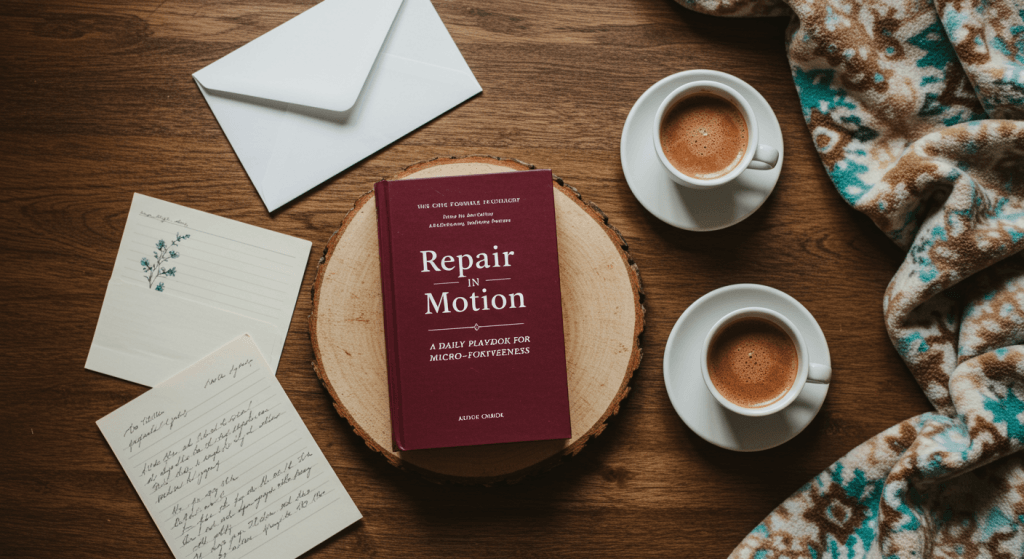
Repair in Motion: A Daily Playbook for Micro-Forgiveness
In This Article
- Why Micro-Forgiveness Matters More Than Big Apologies
- The Slow Answer Rule: The Pause That Prevents Regret
- Naming the Story: What Your Mind Says Before You Do
- The 24-Hour Reset: Release Before You Rest
- Flag It, Don’t File It: Speak Small Truths Early
- How Micro-Forgiveness Protects Emotional Closeness
- How to Build These Habits into Your Routine
- Balancing Softness and Self-Respect
- The Five-Minute Evening Practice: Daily Debrief
- When Micro-Forgiveness Feels Hard
- Living in Repair: The Long Game of Forgiveness in Marriage
- Reflection: Your Daily Repair Checklist
Forgiveness isn’t a dramatic scene; it’s a rhythm. Most couples imagine forgiveness as a single moment-the tearful talk, the big apology, the cinematic resolution. But in real marriages, forgiveness is smaller, steadier, and far more frequent. It’s the quiet practice of noticing tension early and releasing small hurts before they multiply.
This cornerstone guide gives you a daily playbook for micro-forgiveness: practical five-minute habits that keep your heart light and your connection clear. You’ll learn four simple but powerful moves:
- The Slow Answer Rule – pause before you respond to reduce reactivity.
- Name the Story – identify the meaning your mind just created.
- The 24-Hour Reset – end each day with release, even when issues remain unsolved.
- Flag It, Don’t File It – bring up small irritations without building a mental case file.
 Each micro-move honors both truth and tenderness. You’ll find example phrases, one-line boundaries, and built-in reminders to pair grace with self-respect.
If your resentments feel deeper or more narrative-driven-if your inner dialogue sounds like “I’m always the one who cares more” or “They never listen”-start first with our mindset cornerstone, Let Go of the Grudge, Rewrite the Story. Then return here to make micro-forgiveness your daily rhythm. When you’re ready for the first move, explore The Slow Answer Rule-it’s the foundation of emotional safety in every conversation.
Ready to identify your next best step?
The United Front Audit gives you a personalized picture of what needs work - and a clear path forward as a couple.
Take the Audit - It's Free →Why Micro-Forgiveness Matters More Than Big Apologies
 Marriages rarely fall apart from one big offense. More often, they wear down from thousands of small, unrepaired moments-misunderstandings left to marinate, sighs mistaken for disinterest, tones misread as contempt.
Micro-forgiveness is the antidote. It’s what keeps emotional dust from turning into distance. Instead of waiting for an apology or a perfect time to talk, you practice letting go in motion-as life happens.
Think of it like cleaning as you go. You don’t wait until the house is unbearable to tidy; you straighten small things often so the atmosphere stays light.
Couples who practice micro-forgiveness don’t avoid conflict-they process it in real time, staying aligned even when they disagree.
For a closer look at the mindset behind this, revisit From Victim Script to Honest Story: Seeing What Really Happened, which teaches how shifting your story changes your emotional energy instantly.
The Slow Answer Rule: The Pause That Prevents Regret
 The first move in the forgiveness playbook is The Slow Answer Rule. It’s deceptively simple: wait five seconds before responding when emotions spike. Those five seconds are where marriages are saved.
When you rush to defend yourself, you’re reacting from threat, not truth. A slow answer allows your nervous system to downshift from fight to calm, so your words build instead of bruise.
Try this line:
“I want to respond well, so give me a second.”
It communicates care while buying space for clarity.
This habit is the emotional version of braking before a curve-you stay in control even when the road gets tense.
Over time, The Slow Answer Rule rewires your communication habits. It tells your partner, “I value the temperature of our connection more than winning the argument.”
When you’re ready to deepen this practice, read The Slow Answer Rule-a full guide on how pausing before you speak can heal both tone and trust.
Naming the Story: What Your Mind Says Before You Do
 The second move is Name the Story. Every hurt has two layers: what happened and what you told yourself about what happened. When you name that story out loud, it stops driving your reaction from the shadows.
Example:
- What happened: “You checked your phone while I was talking.”
- The story I told myself: “You don’t care about what I say.”
Naming it out loud creates space for truth to breathe. Maybe they were checking a message from work. Maybe they didn’t realize how it looked.
By sharing your story, you invite correction instead of confrontation.
Here’s a sample phrase:
“When that happened, I told myself it meant ___. I just want to check if that’s true.”
That single sentence turns conflict into curiosity.
This micro-forgiveness skill aligns beautifully with the mindset work in When You’re Right and Still Stuck: The Hidden Cost of Being the ‘Injured Party’-it helps you see how clinging to your version of the story can freeze repair.
The 24-Hour Reset: Release Before You Rest
 Some days end with unresolved tension. You tried to stay calm, but words still stung. You feel the ache of “unfinished.” That’s when the 24-Hour Reset comes in.
The goal isn’t to fake peace-it’s to avoid carrying today’s debris into tomorrow. The 24-Hour Reset helps you close the emotional tab so your body can rest and reset.
Here’s how it works:
- Acknowledge what’s still unsolved: “We didn’t finish that talk.”
- Name your choice: “I’m setting this down for the night so we can rest.”
- Signal safety: “I still care. We’ll figure it out tomorrow.”
This micro-forgiveness habit prevents grudges from hardening overnight. It’s not denial-it’s deferral with trust.
For a full bedtime framework that supports this move, read Don’t Go to Bed in Anger- Try This Instead. It’s a gentle guide to turning late-night tension into rest without retreat.
Discover what's fueling tension in your marriage
It's rarely just one thing. The United Front Audit maps the pressure points so you know exactly where to focus.
See Your Results →Flag It, Don’t File It: Speak Small Truths Early
 The fourth move-Flag It, Don’t File It-is about preventing emotional clutter. Most resentment comes not from major betrayals but from unspoken minor irritations that pile up.
“Filing” means storing grievances for future evidence:
“That’s the third time they ignored me.”
“Flagging” means mentioning it lightly, early, and without accusation:
“Hey, when that happened, it stung a bit-can we adjust next time-”
By flagging instead of filing, you build a habit of micro-truths. The relationship stays current; no backlog builds up.
A one-line boundary keeps it balanced:
“I’m not attacking-I just want us to stay connected.”
When you get this right, forgiveness in marriage stops being a chore. It becomes the natural byproduct of continuous honesty.
How Micro-Forgiveness Protects Emotional Closeness
 Each of these four moves works like maintenance for your marriage. They protect the connective tissue-trust, tone, tenderness-from fraying under daily stress.
Micro-forgiveness protects emotional intimacy because it keeps your shared environment emotionally breathable. You can have hard days without losing your bond.
It also trains your nervous system to see your spouse not as the source of pain, but as a partner in repair.
Forgiveness in marriage isn’t about perfection-it’s about rhythm. You fall out of sync, notice it, realign, and move forward. That’s repair in motion.
How to Build These Habits into Your Routine
 To make micro-forgiveness automatic, integrate it into your daily rhythm:
- Morning: Start with The Slow Answer Rule. Commit to pausing before reacting.
- Midday: Practice Name the Story when minor annoyances pop up.
- Evening: Use The 24-Hour Reset before sleep.
- Weekly: Flag It, Don’t File It-review what’s been brewing quietly.
Set reminders in your phone if needed, or use visual cues-a sticky note on the mirror, a phrase on the fridge.
Over time, these micro-practices form the emotional hygiene of your marriage. You’ll notice fewer blowups and faster recoveries.
Balancing Softness and Self-Respect
 One fear couples have when practicing forgiveness in marriage is: “If I keep letting things go, won’t I be walked on-” The answer lies in balance.
Micro-forgiveness doesn’t erase accountability-it creates space for it. When you release anger quickly, you can still uphold boundaries calmly.
It’s the difference between saying, “Forget it,” and saying, “I forgive you, but here’s what needs to change.”
Each micro-move includes an implicit boundary:
- The Slow Answer Rule protects tone.
- Name the Story protects truth.
- The 24-Hour Reset protects rest.
- Flag It, Don’t File It protects transparency.
Softness without boundaries breeds resentment. Boundaries without softness breed coldness. Together, they create resilience.
For more on finding that balance, visit When You’re Right and Still Stuck: The Hidden Cost of Being the ‘Injured Party’-it shows how releasing the need to be right actually restores self-respect, not erases it.
Not sure what's really going wrong?
The United Front Audit helps you pinpoint exactly where your marriage unity is breaking down - in just 3 minutes.
Take the Free Audit →The Five-Minute Evening Practice: Daily Debrief
 Every evening, take five minutes to reflect with your spouse or quietly on your own:
- Notice: Where did tension show up today-
- Name: What story did I tell myself about it-
- Check: Was it worth keeping, or can I release it now-
- Speak (optional): “I felt ___ earlier, but I’m letting it go.”
- Rest: Take a slow breath and intentionally relax your shoulders.
This short ritual teaches your body that forgiveness isn’t a lofty moral act-it’s emotional hygiene. It resets your nervous system for peace.
For deeper nightly structure, pair this with The 24-Hour Reset-a companion guide that walks you through gentle closure language before sleep.
When Micro-Forgiveness Feels Hard
 There will be days when forgiveness feels impossible. When frustration is too fresh or your trust feels shaky, micro-forgiveness can seem unfair-like doing emotional work alone.
On those days, remember this: forgiveness is a self-leadership practice, not a reward for someone else’s perfection. You do it to free your own heart, not to excuse theirs.
If you find yourself looping in pain, return to story work. From Victim Script to Honest Story will help you examine your perspective and find freedom in truth.
And if reactivity keeps hijacking your calm, The Slow Answer Rule offers tangible tools for pausing before the damage begins.
Living in Repair: The Long Game of Forgiveness in Marriage
 When you practice forgiveness in marriage daily, it becomes part of your relational immune system. Instead of fearing conflict, you trust your ability to recover.
Micro-forgiveness doesn’t mean you never get angry. It means anger never becomes your permanent address. You learn to feel deeply, respond wisely, and move forward freely.
Couples who live in repair don’t avoid storms-they learn to dance in them. They measure love not by harmony, but by recovery time.
When you learn to forgive in motion, your home atmosphere changes. Fewer grudges. More laughter. More space for grace.
And that’s the real miracle-not perfect peace, but practiced repair.
Reflection: Your Daily Repair Checklist
 Use this short checklist to stay in rhythm:
- Did I pause before reacting- (The Slow Answer Rule)
- Did I name the story I was telling myself- (Name the Story)
- Did I clear emotional residue before sleep- (24-Hour Reset)
- Did I mention small irritations early- (Flag It, Don’t File It)
If you can say “yes” to even two of these, your marriage is already healing in motion.
When you’re ready for the next step, move deeper with The Slow Answer Rule-the first skill that makes all the others possible.


Keep Reading

Apologies That Land: Moving Beyond “I’m Sorry” to Real Repair
“I’m sorry” is a start. Repair requires more. Most people think an apology is the finish line, but…

Let Go of the Grudge, Rewrite the Story: How Forgiveness Changes Your Marriage Narrative
When you hold a grudge, you’re also holding a story-a narrative where you were wronged, your spouse failed,…

Flag It, Don’t File It: How to Bring Up Small Hurts Without Starting a War
There’s a big difference between noticing a pebble and starting a rock collection. “Flag it, don’t file it”…