
Gratitude Journals, Voice Notes, and Texts: Finding the Format That Keeps You Thankful

In This Article
- Why Format Matters for Gratitude in Marriage
- Gratitude Journals: Writing Your Way into a Thankful Marriage
- Solo Gratitude Lists with a Line for Your Spouse
- Voice Notes: Gratitude Formats for Couples Who Think Out Loud
- Gratitude Texts: Tiny Thank-You Messages That Travel with You
- Keeping Gratitude Journals, Voice Notes, and Texts Light-Not Legalistic
- Matching Gratitude Formats to Your Personality and Season
- When to Switch Gratitude Journals, Voice Notes, and Texts
- Putting It All Together with a Simple Experiment
Some people hear the word “gratitude” and immediately picture a beautiful journal, a favorite pen, and a long, peaceful writing session.
Other people hear “gratitude journal” and immediately feel tired.
They’re not ungrateful. They just don’t connect with that format. They think better out loud, or their life is too full to sit down with a notebook every night. Maybe they want to be more thankful in their marriage, but every time they try to build a gratitude habit, it feels like homework they’re failing.
Here’s the good news:
The best gratitude habit for your marriage is the one you’ll actually use.
You don’t have to force yourself into someone else’s gratitude format. You can choose from gratitude journals, voice notes, and texts-or a mix-and build a simple, realistic rhythm that matches your season and personality.
 In this post, we’ll explore:
- Why the format of your gratitude practice matters more than you think
- How to use gratitude journals without making them rigid or perfectionistic
- How to use voice notes if you think out loud more than on paper
- How to use text messages as tiny, traveling thank-you notes
- How to keep all these gratitude formats light, not legalistic
- When and how to switch formats when what used to work… doesn’t anymore
We’ll also zoom out to show how these practices fit into the bigger picture of your marriage:
- The daily rhythm in “Micro-Thank-Yous, Massive Impact: A Daily Gratitude Plan for Couples” at https://blog.liveyourbestmarriage.com/gratitude/daily-gratitude-plan-for-couples
- The mindset foundation from “Your Marriage Follows Your Focus: How Gratitude Rewires What You See” at https://blog.liveyourbestmarriage.com/gratitude/your-marriage-follows-your-focus
By the end, you’ll have a simple plan to experiment with Gratitude Journals, Voice Notes, and Texts so that thankfulness stops being a good idea you feel guilty about and becomes a quiet strength in your relationship.
Ready to identify your next best step?
The United Front Audit gives you a personalized picture of what needs work - and a clear path forward as a couple.
Take the Audit - It's Free →Why Format Matters for Gratitude in Marriage
 We sometimes treat gratitude like a one-size-fits-all spiritual or emotional discipline:
- “Real” gratitude means writing three things in a journal every day.
- If you’re not filling pages, you must not be serious.
But in real life:
- Some people process best by writing.
- Some people process best by speaking.
- Some people process best in quick, short bursts (hello, texts).
If your natural style is quick and verbal, forcing yourself into long written entries might leave you stalled, frustrated, or inconsistent. If you love writing, a simple text might feel too small or forgettable.
The format you use to practice gratitude shapes:
- How likely you are to stick with it
- How meaningful the habit feels to you
- How much of that gratitude actually spills out into your marriage
That’s why this post is all about Gratitude Journals, Voice Notes, and Texts: Finding the Format That Keeps You Thankful. We’re not chasing the “fanciest” or “most spiritual” format. We’re chasing the one you can keep doing in a real, imperfect season.
And remember: gratitude isn’t just a self-care practice. As you saw in “Your Marriage Follows Your Focus: How Gratitude Rewires What You See,” the things you repeatedly notice become the story you believe about your spouse. The right gratitude format helps you notice the good on purpose-so your heart can actually feel it.
Gratitude Journals: Writing Your Way into a Thankful Marriage
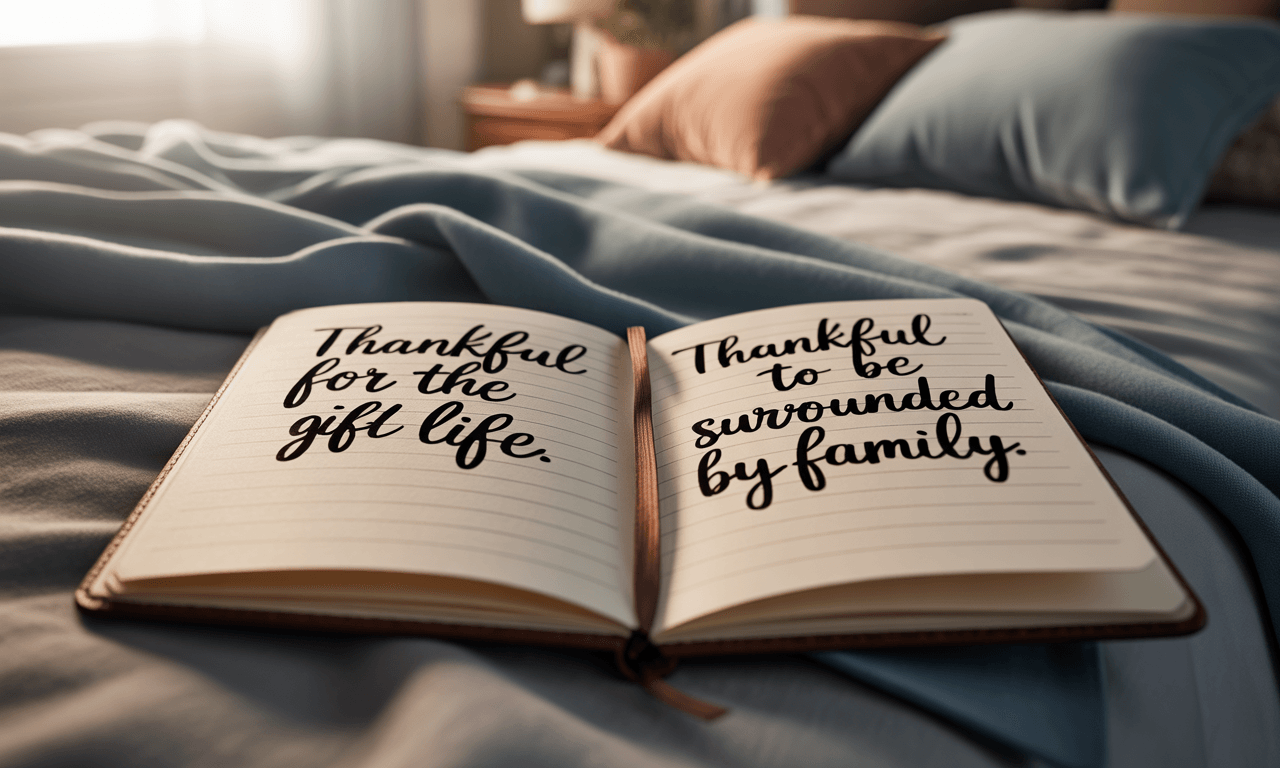 Let’s start with the classic: gratitude journals.
If you naturally enjoy writing, or you process your thoughts by putting them on paper, gratitude journals can be a beautiful way to slow down and really linger on what you appreciate about your spouse and your shared life.
How to Use a Gratitude Journal Without Overcomplicating It
You don’t need:
- A perfect notebook
- Deep paragraphs
- A long quiet time slot
You only need two things:
- A place to capture your gratitude (paper or digital)
- A simple rule you can keep
Here are a few possible rules for gratitude journaling in your marriage:
- “Every day (or a few times a week), I’ll write three things I’m thankful for-and at least one will be about my spouse or our marriage.”
- “Every Sunday night, I’ll write down five specific things from this week that I appreciate about us.”
Examples of gratitude journal entries:
- “Thankful that we laughed about the burnt toast instead of getting snappy.”
- “Grateful that he handled bedtime when I was done.”
- “Thankful that we prayed together this morning, even if it was short.”
Notice how simple and specific these are. Gratitude journals work best when the entries are grounded in real moments, not vague generalities.
Shared Gratitude Journals as a Couple
If you’re both writers-or willing to try-you can use gratitude journals, voice notes, and texts together by making one notebook a shared space.
How a shared gratitude journal might work:
- You keep a notebook on your nightstand or kitchen counter.
- A couple of times a week, each of you writes a short note of appreciation:
- “I’m thankful you made that phone call I was dreading.”
- “Thank you for how patient you were with me when I was stressed.”
- Every so often, you read back through a few pages together.
This isn’t about performance. It’s about creating a physical record of thankfulness that you can both return to on harder days.
If this feels intriguing but heavy, remember: you can adapt it. Maybe your shared gratitude journal is just once a week, with one sentence each. That still counts.
Solo Gratitude Lists with a Line for Your Spouse
Not everyone wants a shared notebook. You might prefer a private space to pour out your thoughts but still want to weave your spouse into the practice.
In that case, a simple gratitude journal rule could be:
- “In my personal gratitude journal, every day I’ll include at least one line about my spouse or our marriage.”
For example, you might write:
- “Thankful the car started.”
- “Thankful for sunshine.”
- “Thankful that my spouse texted to check on me in the middle of a busy day.”
Over time, this means your personal gratitude journal is always training your brain to scan for things you appreciate about your spouse and your relationship-not just your own life.
This is exactly how gratitude formats feed the dynamic in your marriage. When you sit down and answer, “What can I include about my spouse today-” your mind starts noticing more small, positive moments between you throughout the day so you’ll have something real to write later.
Those tiny shifts in attention are a living example of “Your Marriage Follows Your Focus: How Gratitude Rewires What You See”-and gratitude journals are one of the easiest ways to make that rewiring practical.
Discover what's fueling tension in your marriage
It's rarely just one thing. The United Front Audit maps the pressure points so you know exactly where to focus.
See Your Results →Voice Notes: Gratitude Formats for Couples Who Think Out Loud
 What if gratitude journals just aren’t your thing-
Maybe you:
- Hate staring at a blank page
- Have a hard time sitting still
- Think in paragraphs but speak in bullet points
If you’re someone who processes best verbally, voice notes might be the gratitude format that finally sticks.
How to Use Voice Notes for Gratitude
Most phones already have a built-in voice memo app. You can use it to make a quick recording like:
- “Today I’m thankful for… that one moment when we laughed in the kitchen, the way she stuck up for me in that conversation, and the fact that we’re still trying even when we’re tired.”
This can be:
- A private, personal habit
- Or a shared practice where you send each other occasional voice notes
You could decide on a small rule like:
- “On my commute home, I’ll record a 30-second voice note about what I appreciated today-including one thing about my spouse.”
Or:
- “Once a week, I’ll send my spouse a gratitude voice note with three specific thank-yous.”
Voice notes are powerful because:
- You capture tone of voice, not just words.
- Your spouse can hear the warmth and sincerity behind your gratitude.
- You can record them while doing something you already do (driving, walking, folding laundry).
When Voice Notes Might Be the Best Gratitude Format for You
Voice notes may be your best fit if:
- You’re already the person who loves leaving long voicemails or talking things out
- Writing makes you feel stuck or pressured
- Your schedule doesn’t easily make room for journaling, but you have “in-between” moments where your hands are busy and your mind is free
Don’t underestimate how sacred and intimate a 45-second gratitude voice note can be. Hearing “I’m thankful for you” in your spouse’s voice can carry you through really tough afternoons.
Gratitude Texts: Tiny Thank-You Messages That Travel with You
In a world where most of us always have our phones, gratitude texts might be the easiest and most portable gratitude format of all.
A gratitude text is simply:
- A short message that names something you appreciate about your spouse, your marriage, or your shared life.
Examples:
- “Thank you for getting up with the kids this morning. It helped so much.”
- “Just thinking of you-I’m really grateful I get to do life with you.”
- “I noticed how kind you were with your mom on the phone. I love that about you.”
These gratitude texts can:
- Slide into an ordinary day without needing fanfare
- Be sent in real time-right after the moment you’re thankful for
- Be saved and reread by your spouse on harder days
Building a Light, Repeatable Gratitude Text Habit
You might create a simple rule like:
- “At least twice a week, I will send my spouse a gratitude text that mentions one specific thing I appreciate.”
Or:
- “Every weekday, sometime between lunch and dinner, I’ll send a gratitude text, even if it’s only one line.”
Remember, the goal of Gratitude Journals, Voice Notes, and Texts is not to impress each other with poetic language. It’s to build a reliable rhythm of noticing and naming the good.
Gratitude texts work especially well if:
- You and your spouse are often apart during the day
- One of you travels for work
- You’re in a season where quick connection points feel more realistic than long conversations
And because texts are written, they also act like a mini gratitude journal you both carry around in your pockets.
Keeping Gratitude Journals, Voice Notes, and Texts Light-Not Legalistic
 Any good habit can turn into a burden if you load it with pressure.
Gratitude is no exception.
If Gratitude Journals, Voice Notes, and Texts start to feel like:
- A test you keep failing
- A performance you have to keep up
- Homework that never ends
You’ll eventually stop.
Here are a few ways to keep your gratitude formats feeling like gifts, not obligations:
- Allow for missed days.
Skipping a day (or five) doesn’t “break” your gratitude practice. You just pick it back up. No self-shaming required. - Focus on specific and small, not impressive and deep.
“Thankful for the way you made me laugh about the spilled milk,” is just as holy as a long paragraph about your entire history. - Let seasons shape your practice.
New baby- Grief- Major transition- This might be a season where you lean more on quick gratitude texts and voice notes than on long journal entries. That’s okay. - Avoid comparison.
Your gratitude journal doesn’t need to look like someone’s Instagram spread. Your voice notes don’t need background music. Your texts don’t need to be daily love poems. - Keep the “why” in view.
You’re not doing this to be a “good spouse” on paper. You’re doing this because you want your brain and heart to notice the good so your marriage can breathe more safety and connection.
This is exactly the spirit behind “Micro-Thank-Yous, Massive Impact: A Daily Gratitude Plan for Couples.” That article at https://blog.liveyourbestmarriage.com/gratitude/daily-gratitude-plan-for-couples is all about tiny, repeatable gratitude actions-no guilt, just small moves that add up over time.
Not sure what's really going wrong?
The United Front Audit helps you pinpoint exactly where your marriage unity is breaking down - in just 3 minutes.
Take the Free Audit →Matching Gratitude Formats to Your Personality and Season
Let’s pull this together into something you can practically choose from.
If You’re a Writer at Heart
Gratitude journals will probably feel natural. Try:
- Personal daily lists with one line about your spouse
- A weekly shared gratitude journal with your partner
- Occasionally copying a line from your journal into a text or card to share with them
If You’re a Talker or Verbal Processor
Voice notes may be your superpower. Try:
- Recording a gratitude voice memo on your commute
- Sending a short weekly voice note telling your spouse three things you appreciated about them
- Using voice notes after conflict to share, “I’m still processing, but I’m thankful for…”
If You’re a Minimalist or Time-Crunched
Gratitude texts might be the most sustainable. Try:
- One gratitude text a day, tied to something specific you noticed
- Using simple templates like, “I really appreciated when you…”
- Occasionally screenshotting your text thread as a digital gratitude journal
If You’re in a Tender or Difficult Season
You might combine the gentlest forms:
- Short gratitude texts that say, “Thank you for not giving up on us today.”
- Every few days, a quick voice note: “Today was rough. I’m still thankful we’re in this together.”
- Maybe one quiet journal entry a week reflecting on where you see even tiny sparks of hope.
You don’t have to pick one forever. You’re simply choosing a gratitude format that makes sense right now.
When to Switch Gratitude Journals, Voice Notes, and Texts
Even the best gratitude format might stop working in a new season.
You’ll know it’s time to adjust when:
- You dread your current format
- You consistently “don’t have time” for it
- It feels like it belongs to an older version of your routine
Instead of quitting gratitude entirely, see if you can pivot:
- From daily journaling to weekly journaling
- From journaling to short voice notes
- From voice notes to super simple gratitude texts
Ask yourself:
“Given the energy, time, and emotional bandwidth I have this month, what is the smallest, most realistic gratitude rhythm I can keep-”
Then choose one specific expression from Gratitude Journals, Voice Notes, and Texts as your new baseline.
You can always grow it later.
Putting It All Together with a Simple Experiment
Here’s a simple one-week experiment to help you find the gratitude format that keeps you thankful:
- Pick ONE Format to Start With
- Gratitude journal or
- Voice note or
- Gratitude text
- Set a Tiny, Clear Rule
For example:- “Every night for a week, I’ll write three things I’m grateful for, including one about my spouse.”
- “On my drive home, I’ll record a 30-second gratitude voice note each weekday.”
- “Once a day, I’ll send my spouse a gratitude text about something specific.”
- Check In After a Week
Ask yourself:- Did this feel draining or life-giving-
- Was it hard to remember, or did it flow fairly easily-
- Did I feel more aware of what I appreciate about my spouse-
- Adjust Your Format If Needed
- If journaling felt heavy, try voice notes.
- If voice notes felt awkward, try texts.
- If texts felt shallow, try one weekly shared journal entry.
- Connect It to a Larger Plan
As your experiment continues, plug your format into a bigger daily rhythm. “Micro-Thank-Yous, Massive Impact: A Daily Gratitude Plan for Couples” at https://blog.liveyourbestmarriage.com/gratitude/daily-gratitude-plan-for-couples shows you how to pair a morning, midday, and nighttime habit so gratitude becomes woven into your ordinary life.
Whatever combination you land on, remember the heart behind Gratitude Journals, Voice Notes, and Texts: Finding the Format That Keeps You Thankful:
You’re not trying to impress anyone.
You’re training your eyes, your mind, and your heart to see what’s already good.
So your marriage isn’t just something you hope will be beautiful “later”-it’s something you are actively appreciating, today.


Keep Reading

Raising a Thankful Home: Teaching Kids Gratitude by How You Treat Each Other
Kids learn what love looks like less from what we say and more from what we do. You…

When You’re the Only One Trying: Practicing Gratitude When Your Spouse Feels Distant
There’s a special kind of ache that comes when you feel like you’re the only one trying in…

Holiday Gratitude, Everyday Marriage: Bringing Thanksgiving Mindset into the Rest of the Year
Around Thanksgiving, gratitude feels easy. You pass the potatoes and say what you’re thankful for. You write a…