
The Apron Rule: Using Humor to Signal Grace After Hard Days

In This Article
- The Simple Power of a Backward Apron
- Humor as a Language of Grace in Marriage
- Why Grace Needs a Signal
- Creating Your Own Grace Signal
- The Psychology of Strategic Tenderness
- Why Laughter Works Better Than Logic
- Turning Tension into Teamwork
- How Grace Signals Prevent Burnout
- Designing Grace Rituals for Real Life
- Grace, Laughter, and the Long Game of Love
The Simple Power of a Backward Apron
 A husband wore his hat backward when he’d had a rough day. His wife wore her apron backward when she had hers. No words, no long explanations-just a silent signal that said, “Today was heavy. Please be gentle.”
Before either of them spoke, they were already smiling. The silliness of it broke the ice, replacing tension with tenderness. That’s what makes this little ritual so powerful. Humor like this isn’t childish-it’s strategic tenderness.
In every marriage, there are days that take more out of you than you expected. You come home tired, reactive, and emotionally thin. A “grace signal” like the apron rule doesn’t fix everything, but it changes the tone. It helps both partners approach each other with softness instead of stress.
This post will help you design your own version of the apron rule-a lighthearted, loving cue that communicates what words sometimes can’t: “I’m not at my best today, but I still love you.” Because grace, when expressed playfully, becomes unforgettable.
Ready to identify your next best step?
The United Front Audit gives you a personalized picture of what needs work - and a clear path forward as a couple.
Take the Audit - It's Free →Humor as a Language of Grace in Marriage
 In Therapeutic Laughter: Why Couples Who Laugh Heal Faster, we saw how laughter softens defensiveness and accelerates healing. The apron rule builds on that idea. It turns laughter into a language-a way of expressing emotional needs safely and without blame.
Every marriage develops its own shorthand. You might know what your partner’s sighs mean, what their quiet looks communicate, or how their energy changes after a hard day. Humor simply refines that language. It transforms stress signals into grace signals.
By using humor intentionally, you reframe vulnerability as connection instead of weakness. You’re saying, “I trust you enough to let you see my tired, messy self-and I believe we can still smile about it.”
Grace in marriage isn’t about ignoring struggles; it’s about remembering that you’re on the same side, even when you’re exhausted. The apron rule turns that truth into something visible, memorable, and kind.
Why Grace Needs a Signal
 In a perfect world, our partners would always know when to tread softly. But in real life, stress often hides behind silence or snappy comments. Without a clear signal, misunderstanding rushes in.
That’s where a playful ritual like the apron rule comes in-it externalizes emotion. Instead of saying, “Leave me alone,” it communicates, “I’m struggling, but I still want connection.” The difference is everything.
A clear, humorous signal disarms tension before it begins. It’s a gentle preemptive strike against resentment. It lets your partner know what’s happening emotionally without turning it into a confrontation.
Think of it as emotional body language. Just like laughter, these small, intentional acts activate empathy faster than logic. They allow both of you to offer grace before defensiveness kicks in.
The best part- You don’t have to overthink it. A backward apron, a silly hat, or a dramatic sigh with a wink can all serve the same purpose. What matters isn’t the gesture itself-it’s the agreement behind it.
Creating Your Own Grace Signal
 To build your version of the apron rule, start with two key principles: simplicity and consistency.
It should be something easy to do, hard to misinterpret, and repeatable enough to become your shared ritual. Here’s a quick framework for designing one together:
- Pick something visual. It should make you smile when you see it-like mismatched socks, a goofy mug, or even wearing a hat indoors.
- Give it shared meaning. Talk about what it represents. For example, “When I do this, it means I need some softness today.”
- Use it sparingly. This isn’t an everyday thing. It’s special precisely because it’s rare and intentional.
- Respond with warmth. When you see the signal, don’t joke at your partner-join them in the humor. Say something like, “Looks like it’s a backward-apron kind of day, huh-”
The magic lies in what happens next: a laugh, a hug, maybe even a light conversation. Suddenly, what could have spiraled into misunderstanding turns into a shared moment of grace.
Discover what's fueling tension in your marriage
It's rarely just one thing. The United Front Audit maps the pressure points so you know exactly where to focus.
See Your Results →The Psychology of Strategic Tenderness
 Humor works because it lowers physiological arousal-the body’s stress response. When you laugh, your brain releases oxytocin (the bonding hormone) and reduces cortisol. That’s why it feels like warmth spreading through the room.
Strategic tenderness means using that effect on purpose. It’s not manipulation-it’s emotional intelligence in action. You’re creating micro-moments that say, “This is a safe space.”
Over time, couples who use lighthearted rituals like this build a stronger sense of trust. Their homes feel calmer, even when life outside is chaotic. And when conflict does arise, they recover faster because safety is already woven into their daily rhythm.
If you want a marriage that feels emotionally secure, you don’t need grand gestures-you need consistent small ones that anchor grace in humor.
Why Laughter Works Better Than Logic
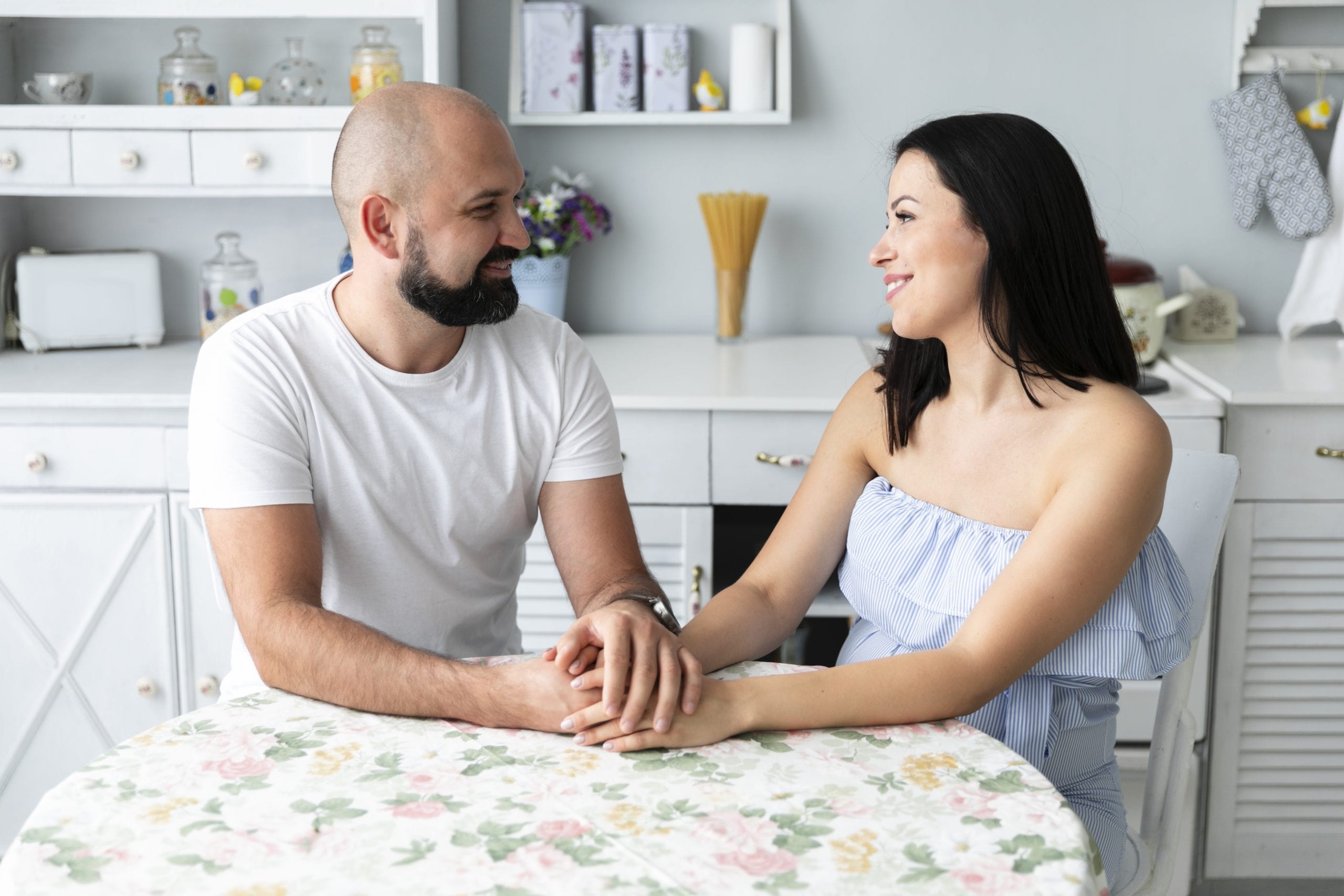 You can’t argue your way into emotional safety. Logic may solve problems, but laughter restores perspective. When you’re both tired or irritated, analysis only deepens the divide. Humor, however, bridges it.
That’s why the apron rule is so effective-it replaces debate with delight. It allows couples to connect emotionally before they even speak logically.
In moments of stress, the nervous system can’t differentiate between emotional danger and physical danger. That’s why small frustrations feel so big. Laughter interrupts that process by signaling, “We’re okay.”
The next time you sense tension rising, pause before you explain or defend. Ask yourself, What if we laughed instead- Even a shared smile can redirect the energy faster than a well-worded explanation ever could.
As couples who practice humor as emotional first aid know, it’s not about avoiding real conversations-it’s about starting them from a softer place.
Turning Tension into Teamwork
 Every marriage has friction-it’s unavoidable. But laughter changes how that friction feels. Instead of seeing each other as opponents, you remember you’re teammates.
The apron rule helps reinforce that mindset. When one partner wears the signal, the other’s job isn’t to fix-it’s to join. You become collaborators in grace, co-creating a gentler evening.
For example, if you see your spouse’s signal, you might respond by doing something unexpectedly kind-making tea, lighting a candle, or simply wrapping them in a hug. The humor invites you to show tenderness without pressure.
Over time, this dynamic rewires how your marriage handles stress. It replaces the old reflex of defensiveness with an instinct toward kindness. The home becomes a soft landing spot instead of another battlefield.
Couples who master this mindset often find that grace becomes second nature-because they’ve practiced it in light, playful ways before life gets heavy.
Not sure what's really going wrong?
The United Front Audit helps you pinpoint exactly where your marriage unity is breaking down - in just 3 minutes.
Take the Free Audit →How Grace Signals Prevent Burnout
 Emotional burnout in marriage often begins with small, consistent neglects-moments when one or both partners push through exhaustion without communicating their limits. Grace signals act as early warnings.
By using humor to express emotional fatigue, you prevent resentment before it builds. Instead of snapping, you’re signaling. Instead of shutting down, you’re reaching out.
This small act of vulnerability keeps the emotional connection alive, even on the hardest days. It reinforces that both of you are allowed to be human-allowed to have limits, moods, and messy moments.
And when those moments are met with laughter instead of frustration, burnout loses its power.
Designing Grace Rituals for Real Life
 Not every couple will connect with aprons or hats-and that’s the beauty of it. Your grace ritual can be anything that fits your personality.
Here are some creative ideas:
- Wear your slippers on the wrong feet.
- Send a silly emoji that says, “Grace needed.”
- Play a “soft day” playlist when you’re overwhelmed.
- Put a funny magnet on the fridge to signal “low battery.”
- Leave a doodle or note that makes your partner smile.
The point isn’t the object; it’s the intention. You’re turning everyday humor into emotional communication.
In The Window Test: How Shared Tasks Can Turn Arguments into Laughter, we’ll explore more ways to turn ordinary actions into connection rituals. But the foundation begins here-with simple, lighthearted grace.
Grace, Laughter, and the Long Game of Love
 At its core, the apron rule isn’t about aprons at all-it’s about understanding that tenderness doesn’t have to wait for perfect timing.
When you choose humor over hardness, you create a love that breathes. You stop expecting your spouse to read your mind and instead offer them a map-one that says, “Here’s how to love me well when I’m running on empty.”
Laughter doesn’t erase the weight of life, but it keeps it from crushing you. Grace doesn’t deny difficulty; it simply refuses to let it define your tone. Together, they form a rhythm of resilience-a way to move through hard days without losing sight of joy.
Because the truth is, great marriages aren’t built on constant harmony. They’re built on the ability to recover quickly-with softness, with humor, and with grace.


Keep Reading

Shoes, Schedules, and Babysitters: The Unseen Logistics Behind a Simple Date Night
“Let’s go on more date nights” sounds so romantic. It feels like a promise: More laughter. More eye…

Date Nights, Big Purchases, and Holiday Plans: Decisions to Save for Your Weekly Meeting
Some decisions are too loaded to toss into a random Tuesday text. “Can we buy this-” “What are…

What’s Coming Up This Week- Turning Logistics Talks Into Moments of Connection
Every couple has to talk logistics. Work schedules, kids’ activities, appointments, bills, trips, church commitments-it all has to…