
After the Storm: Rebuilding Connection Once the Emotions Settle

In This Article
- After the Storm: Why Repair Matters More Than “Being Right”
- Physiology First: Calming Your Body So Your Words Can Work
- The Four R’s of Repair After the Storm
- After the Storm Scripts: Words That De-escalate and Reconnect
- Apologies That Land vs. Apologies That Inflame
- Rebuilding Connection After Conflict: Agreements That Stick
- Tenderness On Purpose: Affection That Reassures Without Papering Over
- After the Storm on Hard Topics: Money, Intimacy, In-Laws, Faith
- Respect During Conflict Becomes Respect After Conflict
- A 24-Hour “After the Storm” Plan: From Raw to Reconnected
- The Weekly Reconnection Huddle (15 Minutes)
- Metrics That Matter: How You’ll Know You’re Rebuilding
- Common Pitfalls (and Clean Repairs) After the Storm
- A 30-Day Reconnection Plan to Make Repair Automatic
- When to Invite Help
- Conclusion
The conversation ended-but the story isn’t over. Repair is where trust grows: apologies that land, agreements you honor, and tenderness that says, “We’re still us.” If the dialogue felt intense, stabilize with From Storm to Calm and review your pre-talk prep in When the Conversation Feels Impossible: Preparing Your Heart Before You Speak. This guide is your step-by-step for After the Storm-how to reset, repair, and reconnect so conflict becomes construction, not corrosion.
Ready to identify your next best step?
The United Front Audit gives you a personalized picture of what needs work - and a clear path forward as a couple.
Take the Audit - It's Free →After the Storm: Why Repair Matters More Than “Being Right”
 When a hard conversation ends, there’s a fragile moment where both of you ask, “Are we okay-” That moment is where couples either drift apart or draw closer. After the Storm work matters because your nervous system remembers the ending of a scene more than the middle. If the ending is cold or unfinished, your body stores conflict as danger; if the ending is warm and clear, it stores conflict as survivable-and even useful. Repair is how you teach your marriage: we can handle turbulence and land safely together.
Physiology First: Calming Your Body So Your Words Can Work
 You can’t reconnect with a storm still inside your chest. Before you speak again:
- Breathe on purpose: Inhale for 4 counts, exhale for 6, ten cycles.
- Ground your body: Notice the chair beneath you; press your feet into the floor.
- Temperature reset: Hold a cool glass to your neck or splash cold water on your wrists.
- Short sentences: When you do speak, keep phrases 10–15 seconds long.
These regulate your nervous system so your repair attempts actually land. For in-the-moment tools, keep From Storm to Calm open on your phone while you debrief.
The Four R’s of Repair After the Storm
 Think of After the Storm as a simple sequence you can reuse:
- Recognize
Name the rupture without turning it into a trial.
“We got loud and talked over each other about the budget.” - Regulate
Take 20–30 minutes apart if needed. Return at a specific time.
“Let’s meet back at 8:30 so we can finish respectfully.” - Reconcile
Use an apology that lands (see below), confirm feelings, and restate care.
“I interrupted and sounded harsh. I’m sorry. You matter more than being right.” - Rebuild
Agree on one tiny behavioral change with a due date, and schedule a check-in.
“Text before purchases over $200; Sunday 6 pm check-in.”
After the Storm Scripts: Words That De-escalate and Reconnect
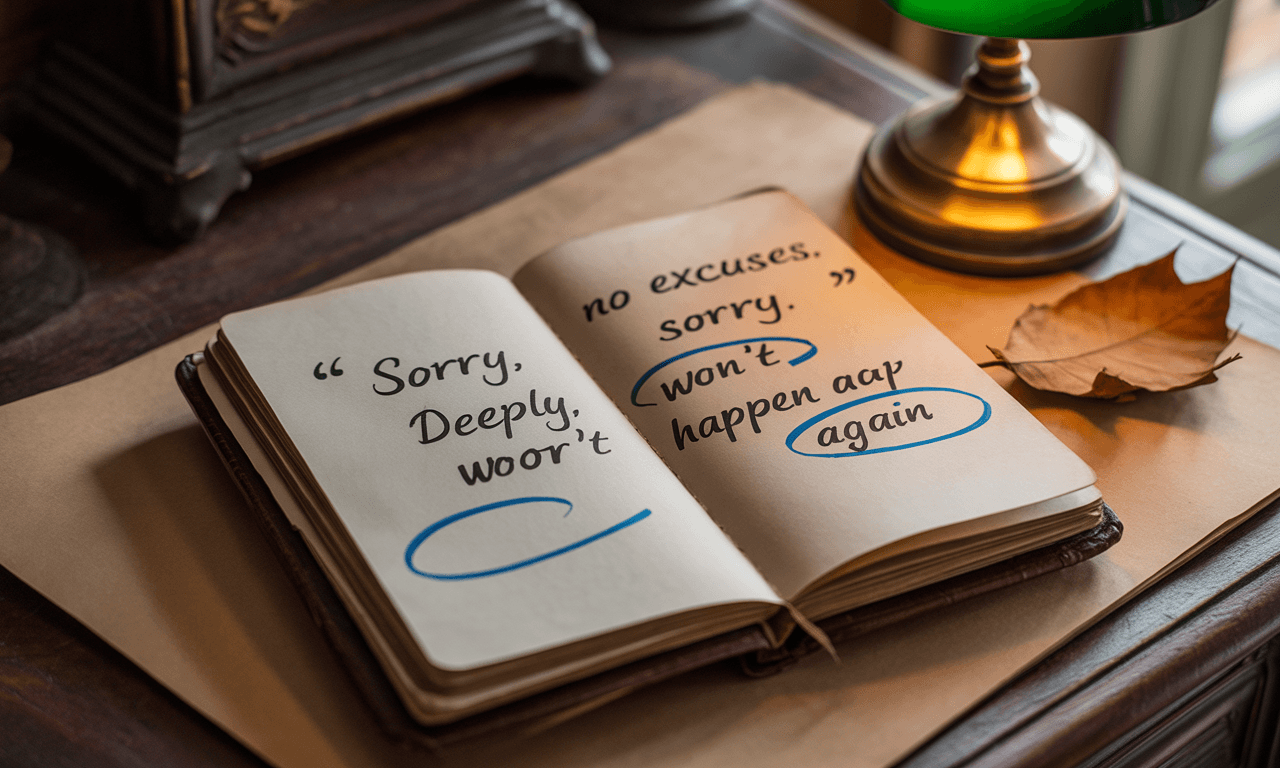 Keep these pocket lines handy so repair doesn’t depend on inspiration:
- Owning impact: “I raised my voice. That made you feel small. I’m sorry.”
- Validating feeling: “Given what I said, it makes sense you felt dismissed.”
- Reopening curiosity: “What did I miss or not hear fully-”
- Reframing aim: “My aim is us as a team, not winning this point.”
- Setting a tiny bridge: “Before Friday, let’s both list two expenses to adjust.”
- Closing with connection: “Thank you for sticking with me. I love you.”
Apologies That Land vs. Apologies That Inflame
 Not all “sorrys” are created equal. Use this template to make your words count:
- Name the behavior (not their character).
“I rolled my eyes and cut you off.” - Name the impact (their experience).
“That made you feel unimportant and unsafe to share.” - State a change (your commitment).
“I’ll pause and summarize before I respond next time.” - Invite feedback (their reality).
“Is there anything else I need to understand-”
Avoid “I’m sorry you feel that way” or adding a “but.” That turns apology into argument. This is where respect during conflict becomes respect after conflict.
Discover what's fueling tension in your marriage
It's rarely just one thing. The United Front Audit maps the pressure points so you know exactly where to focus.
See Your Results →Rebuilding Connection After Conflict: Agreements That Stick
 Connection isn’t only a feeling-it’s a system. Convert insights into agreements:
- One behavior change: Small and visible within seven days.
- Owner + due date: Who does what by when (and how you’ll know).
- Follow-up on the calendar: 10–15 minutes, already scheduled.
- Written summary: Text or shared note to capture what you agreed.
This transforms talk into traction. For agreement language and guardrails, revisit Respect in the Heat of the Moment.
Tenderness On Purpose: Affection That Reassures Without Papering Over
 After hard conversations, many couples long for reassurance but worry it will “erase” the issue. You can do both: keep the agreement and offer tenderness.
- Consent-based touch: “Would a hug feel good right now-”
- Micro-rituals: Tea on the couch, a short walk, sitting close for a few minutes.
- Words of assurance: “We’re on the same team. Thank you for staying.”
Affection is not avoidance when it follows clarity and commitment; it’s the seal that says, “We can disagree and still be us.”
After the Storm on Hard Topics: Money, Intimacy, In-Laws, Faith
 Post-conflict repair is more delicate with high-stakes themes. Use extra structure:
- Money: Share numbers first, stories second. Keep a shared note of thresholds (e.g., “text if > $200”).
- Intimacy: Speak to longing and safety. “I miss feeling wanted and safe to say yes or no.”
- In-laws: Decide your united script-present one message together.
- Faith/values: Name the “why.” “Sunday mornings matter to me because _____. Can we protect that-”
If the conversation was especially intense, stabilize with From Storm to Calm and, next time, consider prepping with When the Conversation Feels Impossible.
Respect During Conflict Becomes Respect After Conflict
 Repair keeps dignity intact. Re-commit to a few guardrails that carry from conflict into the calm:
- Summarize before you respond.
- No character name-calling-ever.
- Time-outs with a return time.
- Repair attempts welcome (“Let me try again”).
House rules aren’t about control; they’re about safety. If you need a refresher, the full guide is in Respect in the Heat of the Moment.
A 24-Hour “After the Storm” Plan: From Raw to Reconnected
 When emotions are still warm, follow this simple day-after sequence:
Hour 0–2: Regulation
Breathe, move, hydrate, journal. No heavy rehashing yet.
Hour 3–6: Acknowledgment Text
“Thank you for sticking with me last night. I want us good.”
Hour 6–12: Repair & Clarify (10–20 minutes)
- One apology that lands (behavior + impact + change).
- One tiny bridge this week.
- Put the follow-up on the calendar.
Hour 12–24: Affection & Normalcy
Coffee on the porch, a short walk, shared music-simple touchpoints that say, “We’re okay and moving.”
The Weekly Reconnection Huddle (15 Minutes)
 Make After the Storm a rhythm, not a rescue:
- Wins: One thing your spouse did that helped.
- Repair: One thing you’d do differently next time.
- Bridge: One action due this week.
- Calendar: Confirm next check-in and any high-stakes talks.
Consistency shrinks the distance between conflict and closeness.
Not sure what's really going wrong?
The United Front Audit helps you pinpoint exactly where your marriage unity is breaking down - in just 3 minutes.
Take the Free Audit →Metrics That Matter: How You’ll Know You’re Rebuilding
 You’ll feel better before you can prove it-but tracking helps confidence catch up to reality:
- Lag Time: Issue → first talk moves from weeks to days.
- Repair Time: Minutes to return to respectful tone.
- Follow-Through: Tiny bridges completed within seven days.
- Relief Curve: Less dread before talks; more relief after.
- Affection Frequency: Small, consent-based touches rise weekly.
If the metrics stall, revisit Breaking the Cycle of Avoidance in Marriage and tighten your follow-through.
Common Pitfalls (and Clean Repairs) After the Storm

- Pitfall: “Sorry… but.”
Clean repair: Remove “but.” Add impact and change: “I’m sorry I shut down. It left you alone with the problem. Next time I’ll ask for a 20-minute break and come back.”
- Pitfall: Over-promising.
Clean repair: Make the bridge smaller and concrete.
- Pitfall: Ending without affection.
Clean repair: Ask for consent; offer a micro-ritual.
- Pitfall: No follow-up.
Clean repair: Put a 10-minute check-in on the calendar before you leave the room.
A 30-Day Reconnection Plan to Make Repair Automatic
 Week 1 – Regulate & Recognize
- Practice the 4-breath/6-breath pattern daily.
- Identify three common rupture points (tone, interruptions, avoidance).
- Agree on two guardrails you’ll honor this week.
Week 2 – Reconcile with Words That Land
- Use the apology template twice (even for small bumps).
- Make one tiny bridge per conflict, due within 7 days.
- Start a shared “Agreements” note.
Week 3 – Rebuild with Systems
- Weekly 15-minute reconnection huddle.
- Calendar follow-ups at the end of each talk.
- Track metrics: lag time, repair time, follow-through.
Week 4 – Reinforce with Tenderness
- Add one daily, consent-based micro-ritual (hug, tea, walk).
- One gratitude per day about how your spouse is showing up.
- Review your month and pick two habits to keep.
When to Invite Help
If you’ve tried the steps here and still find repairs collapsing into blame or shutdown, a couples therapist or wise mentor can serve as a neutral lane-marker while you practice. Bring your 4R framework, your guardrails, and the weekly huddle to that space-they’ll accelerate progress.
Image suggestion: Calm office corner with two equal armchairs facing each other, a small table between them.
Alt text: “Neutral lane-marker-inviting wise help when After the Storm feels hard to do alone.”
Conclusion
Reconnection is a practice, not a one-time promise. Cement new habits with Respect in the Heat of the Moment and broaden your growth mindset in Growth Is Messy: How Discomfort Strengthens Your Marriage. For a next courageous step, revisit the foundation in the cornerstone, The Breakthrough You’re Avoiding. When you treat After the Storm as a rhythm-regulate, repair, rebuild-conflict becomes a way to know each other better, love each other deeper, and live together with steadier peace.





Keep Reading

From Storm to Calm: Navigating the Emotional Chaos of Hard Conversations
Hard talks can sound like thunder-raised voices, raw nerves, and the urge to run. You don’t have to…

The Breakthrough You’re Avoiding: Why Hard Conversations Are the Key to Marriage Growth
Every marriage carries one conversation that feels too heavy to touch-yet it’s the very key to deeper trust…

Respect in the Heat of the Moment: The Unwritten Rule of Hard Conversations
You can’t script a hard conversation-but you can set the guardrails. Respect in the Heat of the Moment…