
Faith, Community, and First-Time Experiences: Refreshing Your Shared Identity

In This Article
- Why Faith, Community, and First-Time Experiences Renew a Marriage
- Redefining “New”: Deeper Roots Count as First-Time Experiences
- The Side-by-Side Effect: Serving Together Without the Stress
- Join and Belong: Small Groups, Classes, and Couples’ Workshops
- Public Rhythm: Arts, Music, and Local Theater as Shared Identity
- Faith, Community, and First-Time Experiences for Interfaith or Differing Tempos
- Micro-Commitments that Build Belonging (90-Day Experiments)
- Budget-Friendly Ways to Engage Faith and Community
- Parenting & Caregiving: Include the Kids (and Keep Your Sanity)
- Quarterly Reset with Purpose (Retreats, Service Trips, Quiet Getaways)
- Small Rituals, Big Identity: Home Practices that Stitch You to Community
- Faith, Community, and First-Time Experiences: Metrics That Encourage, Not Judge
- The 7-Day “Belong Together” Sprint
- Troubleshooting: Common Frictions and Kind Fixes
- Case Stories (Names Changed): How Couples Refreshed Shared Identity
- Closing: A Stronger “We,” One Gentle First at a Time
Sometimes the “new” you need isn’t a thrill; it’s a deeper root-serving side-by-side, joining a small group, attending a local musical, or trying a couples’ workshop. This guide shows how faith, community, and first-time experiences can refresh your shared identity with low pressure and high belonging. As you find ideas that fit, protect time for them by blocking weekly, monthly, and quarterly slots in The First-Time Calendar; then keep the wins visible (without turning love into homework) using the lightweight prompts in Metrics That Keep Firsts Going.

Ready to identify your next best step?
The United Front Audit gives you a personalized picture of what needs work - and a clear path forward as a couple.
Take the Audit - It's Free →Why Faith, Community, and First-Time Experiences Renew a Marriage
 When life is efficient but flat, your relationship can feel like logistics with occasional highlights. Faith, community, and first-time experiences inject belonging and meaning-two forces that research consistently links to resilience and joy. Serving together or stepping into a new community space (a small group, rehearsal night, or neighborhood festival) creates micro-contrasts that pull your attention back toward each other. The novelty is real, but it’s grounded: instead of “performing fun,” you’re connecting to people and purpose.
Redefining “New”: Deeper Roots Count as First-Time Experiences
 If “new” has always meant big trips or pricey tickets, exhale. In this season, new can mean deeper: praying aloud together for the first time, volunteering at a pantry, inviting a neighbor for soup, or attending a choir rehearsal as guests. These first-time experiences work because they add a fresh story to your week while strengthening the ties that hold you. Think of them as firsts of belonging.
The Side-by-Side Effect: Serving Together Without the Stress
 Service can sound heavy. It doesn’t have to be. Start with micro-commitments and clear endings:
- Pack weekend food bags for one hour.
- Sort children’s books at the library “friend” sale.
- Join a neighborhood cleanup for the first 45 minutes.
- Knit one square each for a charity blanket and drop them off together.
Put your pick on the calendar so you show up as teammates; after you serve, debrief for five minutes: “What surprised you-” “What felt light-” Save a dot for it in your gentle dashboard from Metrics That Keep Firsts Going so your heart remembers “this mattered.”
Join and Belong: Small Groups, Classes, and Couples’ Workshops
 Belonging often begins with one “I’ll try it once”. Low-pressure on-ramps:
- Small group visit: choose a gathering that matches your season (newlyweds, empty nesters, interfaith, or service-oriented).
- Faith or formation class: attend the intro session only; decide together after.
- Couples’ workshop sampler: pick a two-hour communication class and leave with one tool.
When you’re ready to move from “we should” to “we did,” use a friction-free booking flow. We outline a three-tap approach in our tools piece so you can discover, decide, and drop the plan into your shared calendar without a planning hangover.
Public Rhythm: Arts, Music, and Local Theater as Shared Identity
 Your shared identity grows when you encounter beauty together-especially in your own town. Try:
- Open rehearsal night at a community choir or orchestra.
- Local musical followed by a snack-bar review you write on the back of the ticket.
- Gallery joy hunt: find three pieces that make you smile; selfie with your winner.
If two hours is your sweet spot, borrow a ready loop from In-Town, 2-Hour Dates-gallery + gelato or docent hour + bookshop-and drop it into next week’s spark slot on The First-Time Calendar.
Discover what's fueling tension in your marriage
It's rarely just one thing. The United Front Audit maps the pressure points so you know exactly where to focus.
See Your Results →Faith, Community, and First-Time Experiences for Interfaith or Differing Tempos
 You can go deep without forcing sameness. Try the 10% rule (just outside your norm):
- Attend each other’s preferred service or practice once; share one thing you appreciated.
- Build a shared reading: one short text from each tradition, read aloud on the porch.
- Serve in a neutral space (garden, pantry, library) where purpose is the center.
If you want a gentle library of low-anxiety firsts, the ideas in our tender-novelty guide were made for mixed-comfort couples; sprinkle two into your month.
Micro-Commitments that Build Belonging (90-Day Experiments)
 Commitment grows best inside clear containers. Try one 90-day experiment (three months, not forever):
- Join a small group for a quarter.
- Volunteer on first Saturdays only.
- Attend a “foundations” class with a defined end date.
- Read one short book together, 10 minutes a week.
Put the start and end on The First-Time Calendar; at the end, hold a 10-minute retro: continue, pivot, or pause. Make the decision together so the commitment serves both of you.
Budget-Friendly Ways to Engage Faith and Community
 Belonging doesn’t require big spend. Use guardrails:
- Free: open rehearsals, public talks, service days, neighborhood concerts.
- Low-cost: community theater, museum discount hours, drop-in classes.
- Treat: couples’ retreat afternoon pass + dessert window.
If money is tight and you still want a rhythm, the free-to-splurge playbook in our budget guide shows how to tag each outing Free/Low/Treat so connection grows while costs stay kind.
Parenting & Caregiving: Include the Kids (and Keep Your Sanity)
 You can model faith, community, and first-time experiences with your kids in tow:
- Market scavenger list (find “something red,” “a new herb”) + porch picnic.
- Garden lantern walk at dusk with cocoa afterward.
- Service light: stock a pantry shelf or make cards for neighbors.
When you want a short family reset that respects bedtime, our family weekends guide offers 36-hour templates that weave gentle novelty into predictable routines.
Quarterly Reset with Purpose (Retreats, Service Trips, Quiet Getaways)
 Every quarter, consider a 24–36-hour reset tied to purpose:
- Quiet retreat day: silence + journaling in a local retreat center.
- Service overnight: help a habitat build or community garden; add a cozy breakfast.
- Arts immersion: small-town theater festival with bookshop and benches.
A minimal itinerary drops easily into our mini-getaway blueprint, and you’ll return with a new story that carries your season.
Small Rituals, Big Identity: Home Practices that Stitch You to Community
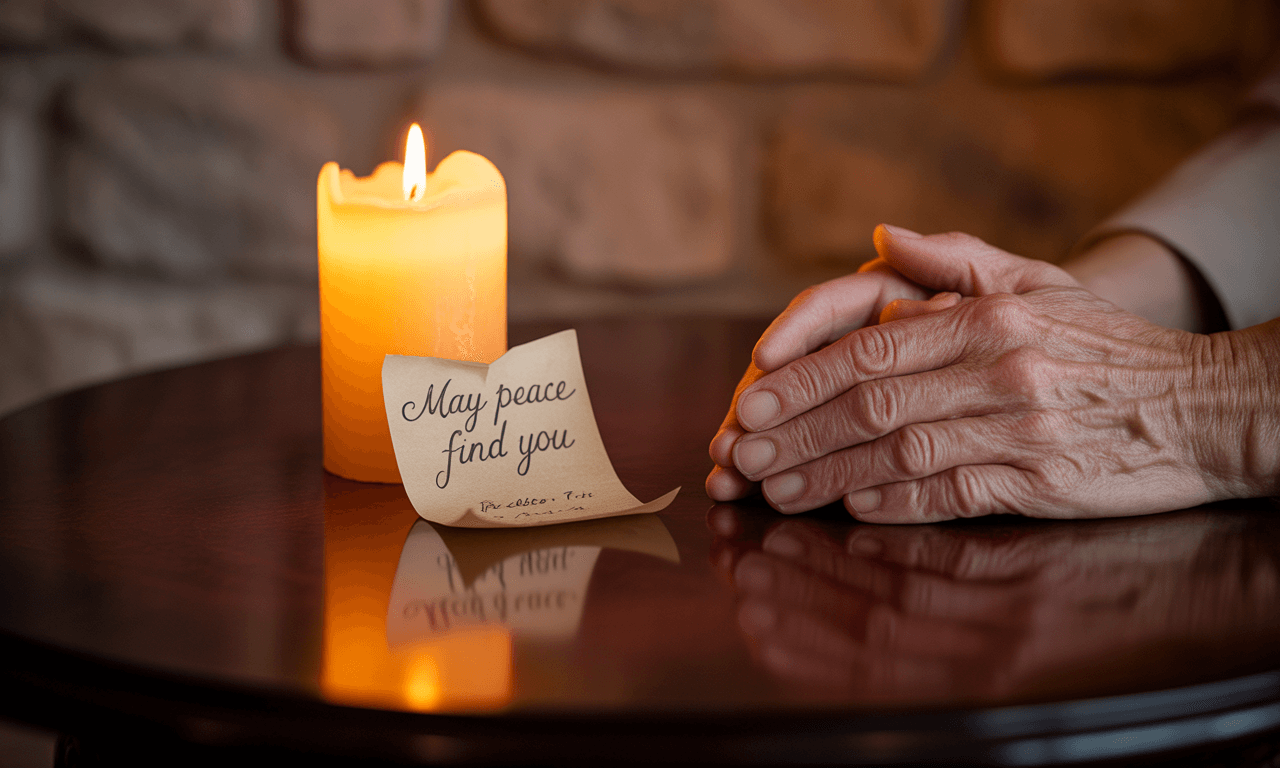 You can weave faith, community, and first-time experiences into your home rhythm:
- Friday gratitude candle: name one neighbor or helper who blessed you this week.
- Soup + story: once a month, invite one new person or couple; ask, “What is life teaching you right now-”
- Porch benediction: before bed, hold hands for 60 seconds and bless the week ahead.
Protect a 15-minute slot for a ritual you’ll actually keep. Two tiny metrics-firsts per month and eye-contact minutes-will make your progress visible without pressure.
Not sure what's really going wrong?
The United Front Audit helps you pinpoint exactly where your marriage unity is breaking down - in just 3 minutes.
Take the Free Audit →Faith, Community, and First-Time Experiences: Metrics That Encourage, Not Judge
 Measure what you want more of:
- Firsts this month: aim for 4 (weekly sparks), plus 1 community-oriented mini.
- Eye-contact minutes: 5–10 during or after each first.
- Repair speed: how quickly you return to each other after friction.
- Names remembered: write three new names after a gathering; it’s a proxy for belonging.
Record dots right on the calendar event. For an encouraging template, lift two lines from Metrics That Keep Firsts Going and paste them where you plan-tracking belongs beside doing.
The 7-Day “Belong Together” Sprint
 Day 1 (10 min): Share one hope for your shared identity this year.
Day 2 (5 min): Pick one drop-in-small group, rehearsal, or service hour.
Day 3 (3 min): Put it on The First-Time Calendar; add a dessert or walk as your cozy bookend.
Day 4 (15 min): Do a home ritual first-tea + two passages read aloud.
Day 5 (60–90 min): Attend the drop-in; write down two names afterward.
Day 6 (5 min): Log dots: firsts, eye contact, laughs. Swap next week’s plan if needed.
Day 7 (10 min): Text one new person from Day 5: “We loved meeting you-thanks for the welcome.”
Troubleshooting: Common Frictions and Kind Fixes

- “I’m shy.” Choose roles that fit-one registers, the other greets. Start with a service hour (task-forward).
- “We’re interfaith.” Alternate spaces; debrief with three appreciations and one “curiosity.”
- “We’re exhausted.” Downshift to a home ritual and a 45-minute community outing; short + near wins.
- “Money’s tight.” Default to free or low-cost; promise one treat next month.
- “We got burned before.” Use 90-day experiments with clear exits; you choose whether to continue.
- “Planning is the worst.” Keep a two-choice A/B menu and flip a coin at go-time.
Case Stories (Names Changed): How Couples Refreshed Shared Identity
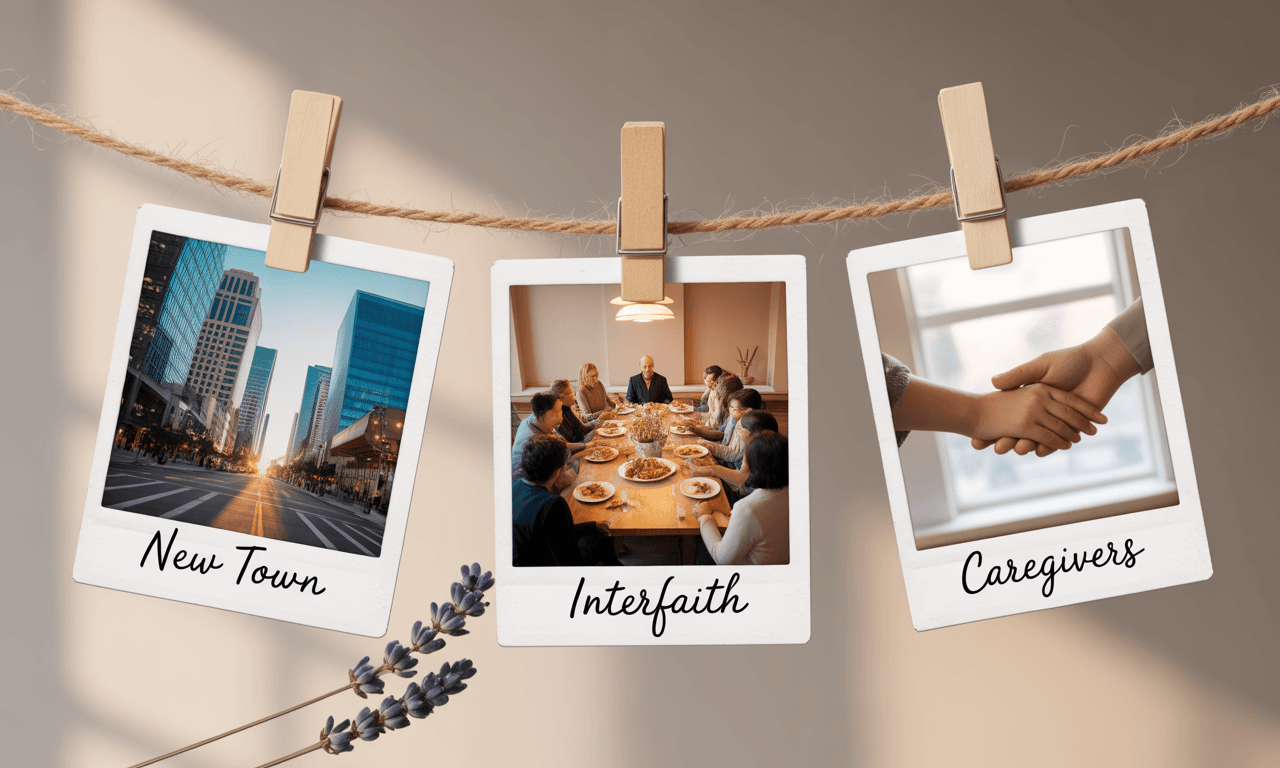 Ari & Mel (New in town): They committed to a 90-day small group experiment and a monthly arts night. Eye-contact minutes rose, and they can now name a dozen people at their gathering.
Dani & Chris (Interfaith): They alternated spaces, read aloud one short text from each tradition weekly, and served at a neutral pantry. Repair speed shrank as curiosity grew.
Jo & Renn (Caregiving season): They adopted two micro-rituals (Friday candle, Sunday soup) and one 45-minute service slot each month. Their calendar dots told a story: fewer plans, deeper roots.
Closing: A Stronger “We,” One Gentle First at a Time
 The fastest way to feel like us again is to belong together-to people, to purpose, to place. Let faith, community, and first-time experiences be the kind of novelty that builds you: short, near, kind to your budget, rich with meaning. Block the time, pick one drop-in, light a simple candle at home. In a year, tonight’s small yeses will read like the table of contents of a better story.


Keep Reading

Review, Reset, Repeat: A Weekly Debrief That Builds Momentum
Growth sticks when you keep it in view. A 10-minute weekly debrief turns last week’s friction into next…

Align Without Agreement: Set Shared “Good Enough for Now” Standards
You don’t need consensus on everything to move forward today. Instead of arguing ideals, define “good enough for…

The 24-Hour Repair Rule: Come Back Together Before Distance Hardens
Arguments aren’t dangerous; distance is. The 24-Hour Repair Rule keeps little ruptures from becoming long-term stories. You’ll learn…