
Who We Think We Are: Self-Signaling and Your Marriage Identity

In This Article
- Self-Signaling and Your Marriage Identity 101
- The Identity Loop: Beliefs → Behaviors → Proof → Stronger Beliefs
- Why Feelings Follow Evidence (and Why That’s Great News)
- Catch the Old Story in Your Words
- The One-Small, Public Promise Method
- Building Your Self-Signaling Menu
- Design Your Environment to Nudge Identity
- Confidence Grows from Kept Promises
- The Language Lab: Rewrite Your Identity Script
- Metrics That Make Identity Visible
- The 7-Day Self-Signaling Quickstart
- Case Studies: How Couples Changed the Loop
- When Your Partner Isn’t On Board (Yet)
- Red Flags vs. Tough Days
- Stack Identity with Rituals (Design a Culture, Not Just Moments)
- Micro-Adventures: Proof with a View
- Dress the Intention: Standards Speak Without Sound
- Identity Dashboard: The Four Numbers That Matter
- The 30-Day Self-Signaling Plan (Cornerstone Edition)
- Troubleshooting: When the Day Goes Sideways
- From Cornerstone to Network: How This Article Interlinks
- Your Next Right Step
What you repeatedly do is teaching your marriage who you are. This cornerstone breaks down self-signaling and your marriage identity-how beliefs → behaviors → proof → stronger beliefs-and shows how to interrupt the loop with one small, public promise at a time so your actions start authoring a truer identity together. Instead of waiting to feel different, you’ll learn to behave different in ways that are small, visible, and repeatable-so your identity follows your evidence.
Ready to identify your next best step?
The United Front Audit gives you a personalized picture of what needs work - and a clear path forward as a couple.
Take the Audit - It's Free →Self-Signaling and Your Marriage Identity 101
 Self-signaling is the process by which your daily actions send messages back to your brain about the kind of person (and couple) you are. Do what “organized people” do, and your brain updates: we’re organized. Skip, delay, and hedge, and the brain nods: yep, that’s us. Over weeks, those messages congeal into a marriage identity-the lived sense of “we always,” “we never,” and “that’s just who we are.”
In a relationship, these signals multiply. One person’s action becomes shared evidence. That’s why a five-minute ritual can feel weightier than a passionate speech-it’s proof, not promise.
The Identity Loop: Beliefs → Behaviors → Proof → Stronger Beliefs
 The loop is simple and stubborn:
- Beliefs (our story): “We’re too busy for us.”
- Behaviors (our choices): skip date night, talk logistics only, collapse on screens.
- Proof (our evidence): “See- No energy, no time.”
- Stronger beliefs (our identity): “We’re not a romantic couple.”
Flip the script:
- Beliefs (a better story): “We protect us in small ways.”
- Behaviors: 12-minute walk after dinner, one question each, phones face-down.
- Proof: “We did it three nights this week.”
- Stronger beliefs: “We follow through-even when tired.”
Your actions are the curriculum your identity studies. The more often you teach “we show up,” the more “we show up” becomes who you are.
Why Feelings Follow Evidence (and Why That’s Great News)
 Waiting to feel ready is a trap. Feelings are lagging indicators; evidence is the leading indicator. Add one piece of concrete proof (we walked, we asked, we cuddled for five minutes, we sat side-by-side to plan) and your nervous system quietly updates its forecast: we can do this again. This is the engine of Self-Signaling and Your Marriage Identity-tiny proofs, stacked.
Catch the Old Story in Your Words
 Language is the front door of identity. Phrases like “we never have time,” “we always fight on Sundays,” or “we’re just not those people” are forecasts your brain tries to fulfill. The moment you catch one of these phrases, you can pivot the story and the day.
If you want a focused guide to swapping those sticky labels, read our companion piece, where we teach a two-minute method to break the loop: in the article on spotting and replacing unhelpful labels, we explain how to “catch–count–commit” so your words stop shrinking your future; you’ll find it here in The “We Never” Script: How Labels Become Loops in Love (see the identity language guide at https://blog.liveyourbestmarriage.com/identity/we-never-script).
The One-Small, Public Promise Method
 Here’s the practical heartbeat of Self-Signaling and Your Marriage Identity: make one small, public promise that is too tiny to fail and so visible you can’t forget it.
Step 1: Choose a promise you can keep on your tired day.
Examples: “After dinner we’ll walk around the block once.” “At 7:30 we’ll sit side-by-side for five minutes to plan tomorrow.” “Before bed I’ll name one specific appreciation.”
Step 2: Make it public, not private.
Write it on the fridge, put it on the calendar, or set a labeled timer. Visibility turns a wish into a commitment.
Step 3: Keep it small, keep it kind, keep it today.
If it feels heroic, shrink it. If it feels vague, time-box it. If it feels future-tense, bring it to tonight.
Step 4: Close with connection.
After you keep it, high-five, hug, or take a photo of the whiteboard. You’re teaching your bodies that proof ends in closeness.
Building Your Self-Signaling Menu
 A self-signaling menu is a short list of five to nine micro-behaviors you can pull from under stress. Keep them on an index card, the fridge, or in a notes app.
Connection (5–12 minutes)
• 12-minute walk after dinner
• 5-minute cuddle before sleep
• One “I see” appreciation (e.g., “I saw you call the dentist-thank you.”)
Operations (5–10 minutes)
• 7-minute tomorrow plan (meals, kid rides, one constraint)
• Two-minute budget peek (one number, no debate)
• 10-minute Sunday huddle
Fun (15–60 minutes, weekly)
• One micro-adventure (new bakery, new park, free community talk)
• Two-Napkin date question swap (each writes a question)
• $10 novelty: buy one unfamiliar item and discuss why you chose it
Design Your Environment to Nudge Identity
 Environments argue loudly. Arrange your space so the next right thing is the easiest thing.
- Timer on the counter (so “five minutes” is real).
- Shoes by the door (walk friction = zero).
- Two chairs angled toward each other (a conversation nook).
- Idea Jar on the counter (short micro-adventures at your fingertips).
- Visible whiteboard (tonight’s promise, this week’s date, one win).
When you’re ready to formalize home cues into ongoing rituals, build on this with the guide to raising standards through simple rhythms at home in Dressed for the Marriage You Want: Rituals That Raise the Standard (you can find those standard-raising rituals at https://blog.liveyourbestmarriage.com/consistency/dress-for-the-marriage-you-want).
Discover what's fueling tension in your marriage
It's rarely just one thing. The United Front Audit maps the pressure points so you know exactly where to focus.
See Your Results →Confidence Grows from Kept Promises
 Confidence isn’t a mood; it’s a memory of kept promises. That’s why the fastest way to feel more capable together is to design tiny, low-friction risks you can succeed at today: try a new tea, change a route, ask a new question, sit in a new room. To go deeper on micro-bravery, you’ll love our guide to building confidence through small experiments in Confidence by Design: Tiny Risks That Teach Your Marriage Who You Are, which shows exactly how to make novelty easy and safe (see https://blog.liveyourbestmarriage.com/identity/confidence-by-design).
The Language Lab: Rewrite Your Identity Script
 Try these swaps this week. Read them aloud; post your favorites.
- From “We never have time” → “We create time in small doses. Tonight at 7:40: walk 12 minutes.”
- From “We always fight on Sundays” → “Sunday at 6:00 we do a 5–5 summary talk and close with one plan.”
- From “We’re not the date-night type” → “We’re the couple that chooses a night and protects a simple plan.”
- From “We never meet new people” → “We sample one new room for 25 minutes this month.”
If your “we never” phrases are entrenched, practice the three-step swap we teach in the label-breaking article referenced above in The “We Never” Script: How Labels Become Loops in Love (naturally woven into your reading flow at https://blog.liveyourbestmarriage.com/identity/we-never-script).
Metrics That Make Identity Visible
 What you measure gains meaning. A self-signaling dashboard turns fuzzy hope into concrete progress.
Track these for two weeks:
- Repair speed: minutes from friction to first repair attempt
- Appreciations: one specific thank-you per day
- Tiny commitments kept: ✔️ marks on the fridge
- Micro-adventures done: count per month
- Date streak: consecutive weeks
You’re not grading each other; you’re noticing momentum. Celebrate any uptick. Those tallies are identity bricks.
The 7-Day Self-Signaling Quickstart
 Day 1 (Name it): Say the identity you’re building: “We protect us in small ways.” Put it on the fridge.
Day 2 (One promise): Choose a 5–12 minute promise for tonight and write it where you’ll see it.
Day 3 (Language): Catch one “we never” and swap it for a tiny commitment today.
Day 4 (Environment): Set the nook, the timer, and the Idea Jar.
Day 5 (Micro-bravery): Try one tiny new thing (route, food, room, question).
Day 6 (Huddle): 10-minute Sunday plan: lock the date, one micro-adventure, two walks.
Day 7 (Celebrate): Name three proofs you gathered this week; choose one habit to keep.
Case Studies: How Couples Changed the Loop
 Cam & Jae (The Time-Starved Parents)
They described themselves as “always behind.” They set one visible promise: 12-minute walks M/W/F at 7:40. After two weeks, they weren’t magically rested-but they had a streak and two more laughs per week. The identity copy shifted from “we never have time” to “we keep small dates.”
Noah & Tori (The Money Dreaders)
Their “we always fight about money” label kept them in avoidance. They tried our three-minute nightly check-in with a single number. No debates, just visibility. The fights didn’t vanish, but dread softened; decisions sped up. Their identity: “We look together.”
Rae & Micah (The Silent Roommates)
They felt like ships passing. A chair-nook, phones face-down, and a 5–5 talk every Sunday brought back a feeling they hadn’t named in months: together. Their loop went from “we’re just busy” to “we create touch points.”
Lena & Drew (The Post-Burnout Rebuilders)
They thought they needed a huge relational overhaul. Instead, they stacked tiny victories-two appreciations a day, one micro-adventure per month, and a rotating at-home date. Trust returned as a memory, not a theory.
When Your Partner Isn’t On Board (Yet)
 You can still set the temperature of the room:
- Model the promise aloud: “I’m writing ‘walk 7:40’ on the board, join me if you want.”
- Shrink the experiment: two minutes counts.
- Offer two yeses and a no: “Tea on the porch or a five-minute cuddle- ‘Neither’ is okay.”
- Praise attempts: “Thanks for trying; keep or tweak-”
Over time, safety breeds curiosity. Curiosity breeds participation.
Red Flags vs. Tough Days
 Self-Signaling and Your Marriage Identity works best inside safety. If there’s contempt, chronic stonewalling, or any emotional/physical abuse, get qualified help. This framework is not a substitute for safety planning or therapy. It is a way to turn everyday intent into everyday proof-once safety exists.
Stack Identity with Rituals (Design a Culture, Not Just Moments)
 Proofs are the bricks; rituals are the mortar. Lock one weekly date (protect it like a standing appointment), one 10-minute Sunday huddle, and one nightly appreciation. If you want a step-by-step rhythm that “just runs,” pivot to the 90-day plan that shows you how to create time instead of waiting for it in Stop Waiting for Time: Create It Together (A 90-Day Identity Reset)-it’s the Series-2 cornerstone that operationalizes your identity (walk through that actionable blueprint at https://blog.liveyourbestmarriage.com/consistency/create-time-90-day-reset).
Not sure what's really going wrong?
The United Front Audit helps you pinpoint exactly where your marriage unity is breaking down - in just 3 minutes.
Take the Free Audit →Micro-Adventures: Proof with a View
 Novelty is rocket fuel for identity. The nervous system wakes up when you step into a new alley, taste a new pastry, or sit in a new room. After you’ve built a base of tiny promises, graduate to micro-adventures (30–120 minutes, low cost, local). If you want a curated list and a debrief script that turns fun into closeness, head to our companion article on bite-sized adventures that build momentum in Micro-Adventures, Major Signals: New Foods, New Cities, New Us (explore that next step at https://blog.liveyourbestmarriage.com/consistency/micro-adventures-major-signals).
Dress the Intention: Standards Speak Without Sound
 How you show up-groomed, present, prepared-broadcasts value to each other. You don’t need luxury; you need deliberateness. If you’d like help turning that into effortless habits, see the standard-raising rituals guide referenced above for simple, repeatable ways to elevate the feel of home (in Dressed for the Marriage You Want, at https://blog.liveyourbestmarriage.com/consistency/dress-for-the-marriage-you-want).
Identity Dashboard: The Four Numbers That Matter
 Don’t let progress hide. Pick four numbers for the next month and post them where you live:
- Promises kept / week (target: 3–7)
- Repair speed (average minutes to first repair attempt)
- Date streak (consecutive weeks)
- Firsts count (micro-adventures this month)
At the end of the month, ask: What worked- What will we keep- What will we tweak- That question is an identity in motion.
The 30-Day Self-Signaling Plan (Cornerstone Edition)
 Week 1 – Start Small, Start Tonight
• Write the identity: “We protect us in small ways.”
• Keep three tiny promises (walk, cuddle, appreciate).
• Catch two “we never” phrases and swap each for one specific, time-boxed act.
• Create your environment: nook, timer, Idea Jar, shoes by the door.
Week 2 – Install the Ops
• Add a 10-minute Sunday huddle.
• Try two micro-bravery moments (new food, new room).
• Start the identity dashboard; tally daily.
• One at-home date (Two-Napkin questions).
Week 3 – Sample the Wider World
• One micro-adventure in your city (30–60 minutes).
• Pilot the 5–5 conversation structure on a tough topic.
• Keep the three tiny promises.
• Refresh your self-signaling menu with two new options you actually enjoyed.
Week 4 – Lock the Culture
• Choose a standing date night and set it to repeat.
• Plan a 30-day celebration ritual (photo strip, postcard, or playlist).
• Review the dashboard; pick one habit to protect next month.
• Make one public statement to yourselves: “We show up for us-small and steady.”
If you’re ready to stretch beyond 30 days into a proven cadence, the Series-2 cornerstone offers a 90-day identity reset that weaves these elements into a simple operations system for your relationship (you’ll find it in Stop Waiting for Time: Create It Together, at https://blog.liveyourbestmarriage.com/consistency/create-time-90-day-reset).
Troubleshooting: When the Day Goes Sideways
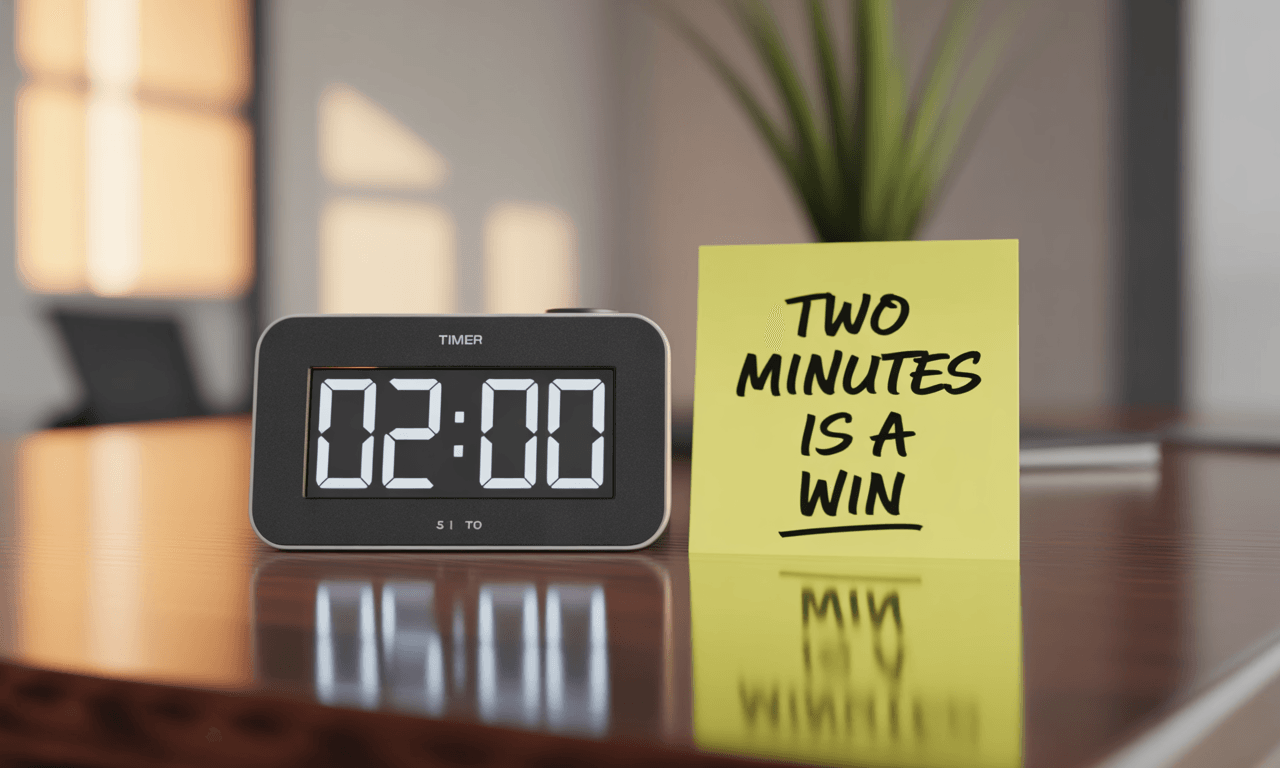
- Too tired- Shrink the promise. Two minutes counts.
- Forgot the promise- Late isn’t never. Do a half-dose and mark it done.
- Fought mid-promise- Name it, own a slice, restart a smaller version.
- Partner declined- Keep your side-kindly-and invite again tomorrow.
- Shame spiral- Name one proof from the last seven days. Shame hates evidence.
From Cornerstone to Network: How This Article Interlinks
 Because this is a cornerstone for Self-Signaling and Your Marriage Identity, it’s meant to be your hub:
- When you catch shrinking labels in your language, the in-depth language rescue is in the We Never Script guide-woven above as part of the language sections (see the identity language guide at https://blog.liveyourbestmarriage.com/identity/we-never-script).
- When you’re ready to operationalize your identity with a 90-day plan, we pointed you to the Series-2 cornerstone-embedded in our sections on rituals and planning (walk through that blueprint at https://blog.liveyourbestmarriage.com/consistency/create-time-90-day-reset).
- As confidence grows, you can add tiny risks and micro-adventures at your own pace; those posts are referenced naturally in the confidence and fun sections (see the micro-bravery guide at https://blog.liveyourbestmarriage.com/identity/confidence-by-design and the adventure companion at https://blog.liveyourbestmarriage.com/consistency/micro-adventures-major-signals).
- To elevate the feel of home with standard-raising rituals, we linked you to the rituals resource inside the environment section (browse those rituals at https://blog.liveyourbestmarriage.com/consistency/dress-for-the-marriage-you-want).
- If momentum is your next challenge, we recommend the 75-day “do first, feel later” plan as a streak builder; you can slot it after your 30-day start (dig into that plan at https://blog.liveyourbestmarriage.com/consistency/momentum-over-motivation-75-day-do-first).
This is the hub; those are the spokes. Move between them as your season allows.
Your Next Right Step
 Pick one sentence, one timer, one walk, one cuddle, one question-tonight. Write it where you will see it. Keep it even if you keep nothing else. Smile and call it “proof.” Tomorrow, repeat.
That humble pattern is how Self-Signaling and Your Marriage Identity becomes more than a phrase. It becomes you.


Keep Reading

Review, Reset, Repeat: A Weekly Debrief That Builds Momentum
Growth sticks when you keep it in view. A 10-minute weekly debrief turns last week’s friction into next…

Align Without Agreement: Set Shared “Good Enough for Now” Standards
You don’t need consensus on everything to move forward today. Instead of arguing ideals, define “good enough for…

The 24-Hour Repair Rule: Come Back Together Before Distance Hardens
Arguments aren’t dangerous; distance is. The 24-Hour Repair Rule keeps little ruptures from becoming long-term stories. You’ll learn…