
Stop Waiting for Perfect Conditions: Start Where You Stand

In This Article
- Stop Waiting for Perfect Conditions: Why “Later” Quietly Erodes Love
- Start Where You Stand: Two Moves That Matter More Than Motivation
- When You Stop Waiting for Perfect Conditions, Safety Grows First
- The Perfection Trap: Five False Rules to Break Today
- Stop Waiting for Perfect Conditions: The Mindset Shift
- Scripts You Can Use Tonight (Start Where You Stand Language)
- Build Slack So You Don’t Need Excuses
- A 30-Day “Start Where You Stand” Plan
- Three Case Studies: Imperfect Starts That Worked
- Morning, Midday, Evening: Micro-Starts That Fit Your Day
- “But What If We’re in a Rough Patch-” Start Smaller, Not Later
- Metrics That Encourage (Not Shame)
- Stop Waiting for Perfect Conditions in High-Weather Seasons
- How Weekly Date Night Helps You Start Where You Stand
- How “Keep the Promise, Change the Plan” Unlocks Action
- Common Pushbacks (and Friendly Reframes)
- Your Tiny Toolkit: Start Where You Stand Tonight
- A Final Nudge: Begin Before You Believe
If you only love when everything aligns, you won’t love often. Great marriages grow in crosswinds. Stop Waiting for Perfect Conditions is your nudge to begin-imperfectly, today-with one micro-connection and one calendar block. Not a manifesto, not a five-year plan. Two moves. You can make both in the next ten minutes. From there, momentum-not motivation-does the heavy lifting.

Ready to identify your next best step?
The United Front Audit gives you a personalized picture of what needs work - and a clear path forward as a couple.
Take the Audit - It's Free →Stop Waiting for Perfect Conditions: Why “Later” Quietly Erodes Love
 “Later” sounds reasonable. After the deadline. After the baby sleeps. After the house is clean. But “later” is a subtle deal that trades today’s warmth for a hypothetical tomorrow. Perfect conditions are a mirage; they recede as you walk. Stop Waiting for Perfect Conditions because normal weeks carry built-in resistance-fatigue, logistics, mismatched moods. If you insist on ideal, you’ll connect less, not better.
Great marriages aren’t made by flawless Saturdays; they’re made by small, faithful choices on ordinary Tuesdays. That’s why weekly beats monthly for date night, buffers beat excuses, and micro-connections beat grand intentions that never launch. When you accept the headwind, you design around it. For the simple math behind that truth, the site’s master idea is a helpful primer: The Headwind Principle.
Start Where You Stand: Two Moves That Matter More Than Motivation
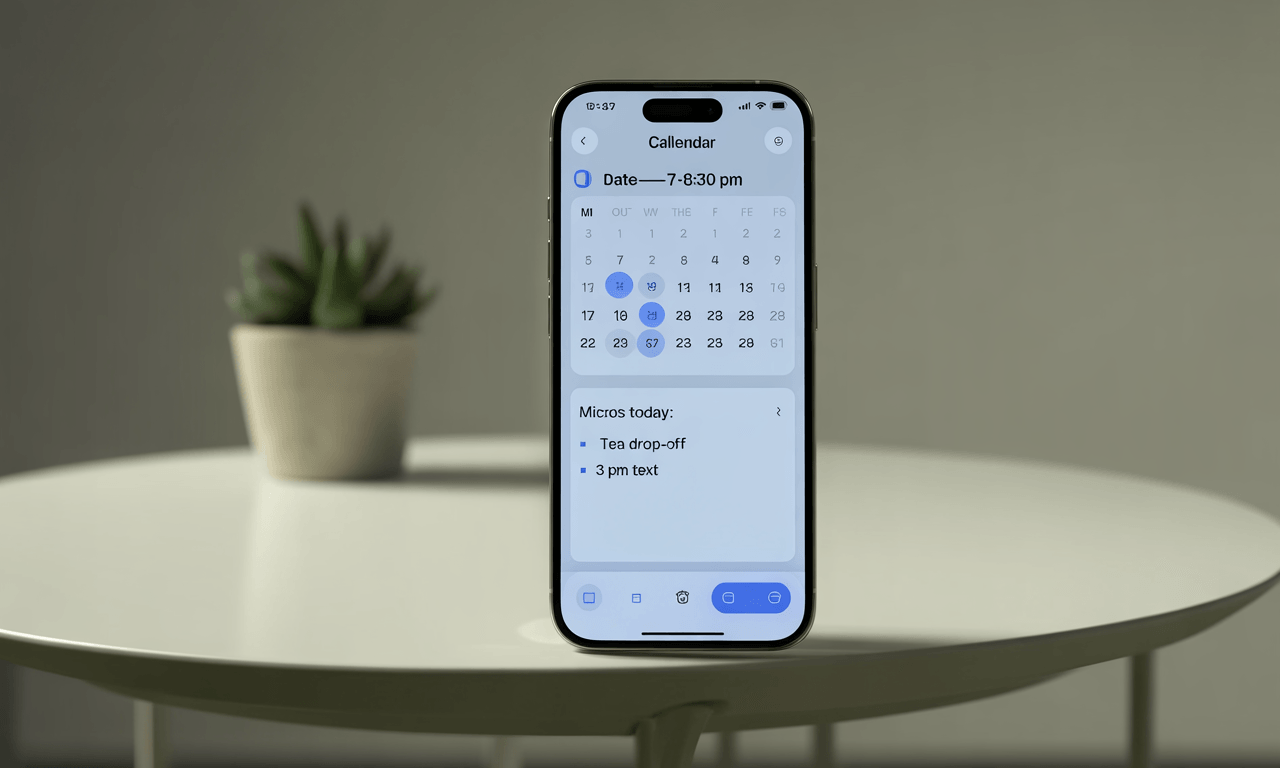 You don’t need a reboot; you need a foothold. Start where you stand with two moves:
- One micro-connection today (≤5 minutes).
Text two questions at 3 PM (“Energy 1–5- What would help tonight-”), deliver a tea with a sticky note, or offer a 30-second hug that lasts past the awkwardness. If you want a ready menu, keep this handy resource open: Micro-Connections: 5-Minute Plays. - One calendar block this week (90 minutes).
Put a weekly date on a recurring day/time. Add two backups you actually like (Saturday brunch; living-room picnic). You’ll find a step-by-step here: Weekly Date Night Works Because Life Won’t.
That’s the whole launch kit. You didn’t fix everything; you started the engine.
When You Stop Waiting for Perfect Conditions, Safety Grows First
 Couples often chase spark and get discouraged. Ironically, when you Stop Waiting for Perfect Conditions, the first thing that grows isn’t fireworks-it’s safety. Safety comes from predictability: a small gesture most days and time together most weeks. Safety lowers defensiveness, raises curiosity, and gently turns up desire over time. Spark returns when the room is consistently warm.
If you like guarding that warmth with minimums that survive messy weeks, skim the protective logic in Raise the Floor, Not Just the Ceiling-you’ll define one weekly date attempt, one check-in, one act of service, and one daily thank-you so your floor is higher.
The Perfection Trap: Five False Rules to Break Today
Perfection whispers rules that stall action. Replace each with a gentler truth:
- False rule: If we can’t go out, it’s not a real date.
Truth: Couch dessert with phones away counts. Weekly wins beat monthly maybes. - False rule: If we’re not in the mood, we should cancel.
Truth: Keep the promise; change the plan. A calm at-home version honors your energy and keeps trust warm. Learn the tone here: Keep the Promise, Change the Plan. - False rule: If a gift arrives late, the moment is ruined.
Truth: Use a reveal night (dessert + note), then celebrate again when the gift lands. - False rule: If we’re fighting today, date night is pointless.
Truth: Call a 20-minute reset and pivot to a gentler Plan B. Loving presence often softens the snag. - False rule: If it’s not special, it doesn’t count.
Truth: What counts is kept promises. Keep enough small ones, and special returns on its own.
Stop Waiting for Perfect Conditions: The Mindset Shift
 You can practice two sentences that rewire your reflex:
- “Let’s keep the promise and change the plan.”
You’re signaling that the commitment matters more than the specific route. - “What’s the lightest-lift version that still feels like love-”
You’re choosing “bare-minimum beautiful” over canceling entirely.
These are not loopholes; they’re fuel lines that make consistency possible.
Scripts You Can Use Tonight (Start Where You Stand Language)
- 3 PM text: “Energy check 1–5- What would feel helpful tonight-couch dessert or a short walk-”
- Invite: “Could we claim Friday 7–8:30 as ours- Brunch tomorrow as Plan B-”
- Pivot: “I want to keep the promise even if out feels heavy-home picnic after bedtime-”
- Repair micro: “My tone was sharp. It makes sense you felt dismissed. Can we reset and still keep our time-”
- Admiration: “I noticed your steadiness with the kids tonight. Thank you.”
Keep these in a shared note called “Start Where You Stand.”
Discover what's fueling tension in your marriage
It's rarely just one thing. The United Front Audit maps the pressure points so you know exactly where to focus.
See Your Results →Build Slack So You Don’t Need Excuses
 Excuses say “we tried.” Buffers say “we prepared.” A little margin around your plans lets you Stop Waiting for Perfect Conditions and start enjoying real connection:
- Time buffer: Reserve 2.5 hours around a 90-minute date so lines and traffic don’t steal the night.
- Sitter slack: Book 30 minutes longer than you think.
- Home date kit: Snacks, candle, blanket, playlist-so Plan C feels like Plan A.
- Celebration drawer: Cards, ribbon, chocolate, a framed photo-so late deliveries don’t sour the memory.
- Energy buffer: Ten minutes solo before your check-in or date so you arrive kind.
If margin doesn’t come naturally, the logistics playbook is here: Build Buffers, Not Excuses.
A 30-Day “Start Where You Stand” Plan
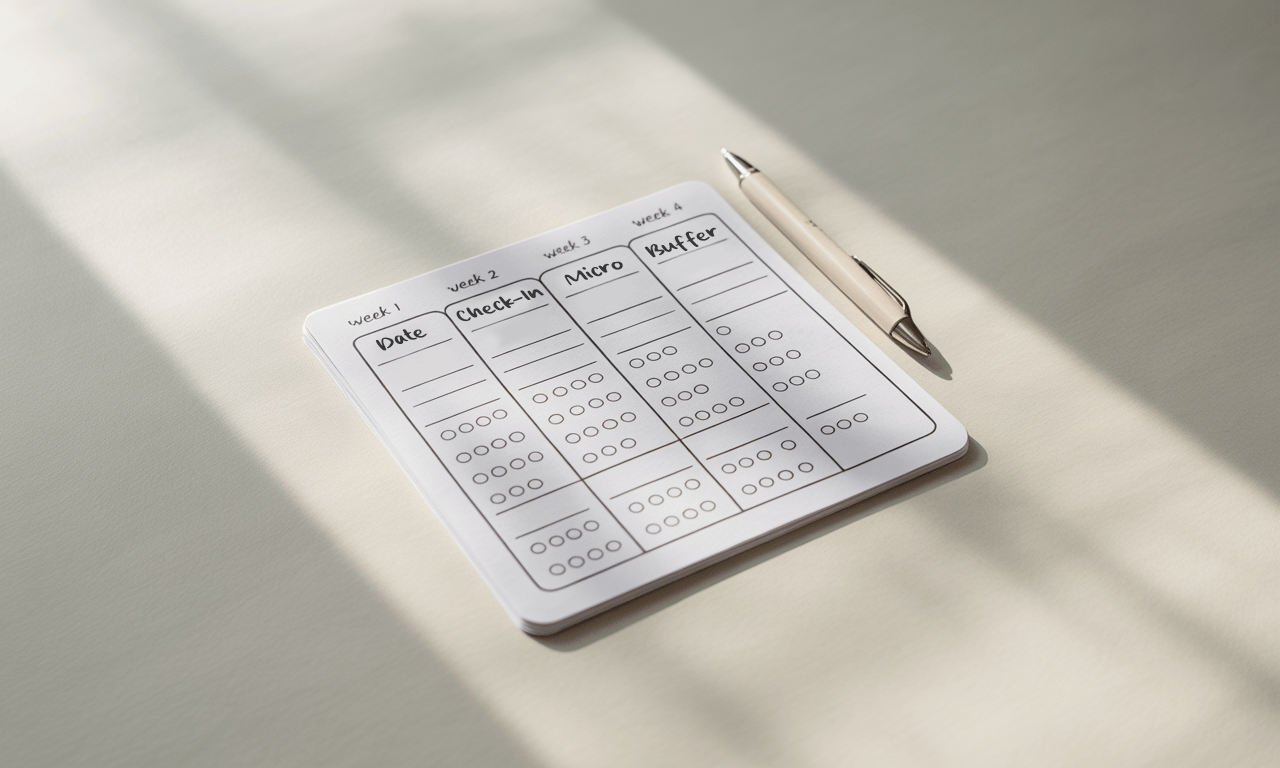 You don’t need a full remodel-just a staircase. Take one small, repeatable step each week.
Week 1: Make Two Tiny Moves
- Put one 90-minute date block on the calendar; add two backups you actually like (Saturday brunch; living-room picnic).
- Do one micro-connection today: tea drop-off with a sticky note or the two-question text.
- Optional: Read the quick weekly rhythm guide in Weekly Date Night Works Because Life Won’t.
Week 2: Add a 10-Minute Check-In
- Agenda: calendar, money, mood, gratitude, next steps.
- Decide where buffers belong and which nights become screen-light.
- If you need an agenda you can save, grab it here: The Check-In Habit.
Week 3: Normalize Pivots
- If Plan A looks shaky, call it at 5 PM and switch to the brunch rain date or the at-home picnic.
- Use the sentence: “Let’s keep the promise and change the plan.”
- Notice how your body relaxes when you don’t have to choose between “perfect” and “nothing.”
Week 4: Raise the Floor 1 Point
- Define your minimums: one date attempt, one check-in, one act of service, one daily thank-you.
- Make one part 1 point easier (earlier reservation, closer spot, or simpler at-home ritual).
- For a friendly framework, see Raise the Floor, Not Just the Ceiling.
By day 30, you won’t be waiting for the ideal mood or schedule. You’ll be living like connection already belongs-because it does.
Three Case Studies: Imperfect Starts That Worked
Case A: “Not in the Mood” Friday
- Old reflex: Cancel and hope next week is better.
- New move: Pivot to Plan C-couch dessert with the first-five-minutes ritual (30-second hug + “one win/one appreciation”).
- Result: Gentle connection, quick repair, a warmer Saturday.
Case B: The Late Gift
- Old reflex: “This ruins the night.”
- New move: Reveal night (dessert + letter) and a “promise date” on the calendar; the gift gets its own mini-moment later.
- Result: Meaning preserved. The story becomes sweet, not sour.
Case C: The Sitter Snafu
- Old reflex: Call the night lost.
- New move: Trade with friends next week; tonight, 45-minute porch date while kids watch a movie.
- Result: Kept promise, less resentment, real smiles.
Each win started with Stop Waiting for Perfect Conditions and a willingness to Start Where You Stand.
Morning, Midday, Evening: Micro-Starts That Fit Your Day
Morning:
- Two-minute “What’s your one win for today-” at breakfast.
- Doorway blessing: Hand on shoulder-“I’m in your corner.”
Midday:
- Two-question text (energy 1–5; what helps tonight).
- 60–90 second voice note: “Proud of how you handled that call.”
Evening:
- Five-minute “high/low/thank you” on the couch-phones away.
- Two-song slow dance in the kitchen after the dishes.
None of these demand perfect energy. That’s why they work.
If you want a lightweight list to glance at, the menu lives in Micro-Connections.
“But What If We’re in a Rough Patch-” Start Smaller, Not Later
 When the air is thin, shrink the practice, not the promise.
- Date shrinks to 20 minutes at the kitchen island (dessert + one question).
- Check-in becomes voice notes answering the five prompts asynchronously.
- Repair micro replaces a full debrief: “I’m sorry for the snap. Reset at 8:30-”
The point is presence. Presence repairs what perfect planning never starts.
Metrics That Encourage (Not Shame)
You don’t need a spreadsheet-just three gentle gauges to peek at during your check-in:
- Date attempts kept (out of 4): Aim for 3/4.
- Micro-connection days: Did you do one small thing on 5+ days-
- Repair speed: How quickly did you move from tension to a micro-repair-
If a number dips, don’t scold-adjust the design. Add buffer. Switch to a simpler Plan B. Move the date earlier in the day. That’s how you keep momentum without perfection pressure.
Not sure what's really going wrong?
The United Front Audit helps you pinpoint exactly where your marriage unity is breaking down - in just 3 minutes.
Take the Free Audit →Stop Waiting for Perfect Conditions in High-Weather Seasons
Travel week: Make your date a 20-minute lobby dessert or sunrise walk with coffee.
New baby: One-sentence gratitude at bedtime + 10-minute couch dessert once this week.
Holidays: Choose one moment that matters most and call everything else “bare-minimum beautiful.”
High weather needs higher slack, not higher shame. For padding ideas, peek at Build Buffers, Not Excuses.
How Weekly Date Night Helps You Start Where You Stand
The reason Weekly Date Night Works Because Life Won’t is simple: frequency beats spectacle. With four chances a month, one snag still leaves three wins. Weekly rhythm turns “I hope it works out” into “It usually does, because we designed it.” That confidence changes the feel of your week. Details and menus live here: Weekly Date Night Works Because Life Won’t.
How “Keep the Promise, Change the Plan” Unlocks Action
 You’ll try to start, and life will swerve. That’s when most couples go back to waiting. Instead, say, “Same promise, different path,” and pivot with kindness. The more you practice it, the more natural it feels. If you need simple language and examples, spend ten minutes with Keep the Promise, Change the Plan.
Common Pushbacks (and Friendly Reframes)
“We’re too busy to start right now.”
Busyness is why you start small. A five-minute micro plus one 90-minute block is designed for busy.
“It won’t feel special.”
Waiting is what kills “special.” Regular presence makes room for delight to return.
“We’ll just cancel anyway.”
That’s why you pre-decide Plan B and Plan C. You’re not locking into a route; you’re protecting the promise.
“We don’t have money.”
Presence is free. The best dates often cost less than $10 when you design for attention, not extravagance.
“What if we fail-”
You won’t. You’ll gather data, adjust, and try again. Fewer heroics, more humility.
Your Tiny Toolkit: Start Where You Stand Tonight

- Two-question text ready to paste at 3 PM.
- Tea + sticky note next to the kettle.
- Calendar block for a 90-minute date this week with two backups.
- One sentence for pivots: “Let’s keep the promise and change the plan.”
That’s enough to get your week moving in a kinder direction.
A Final Nudge: Begin Before You Believe
 Confidence follows action. When you Stop Waiting for Perfect Conditions, you learn by doing: five minutes of presence, one weekly window, and a willingness to pivot. You’ll still have messy evenings, missed signals, and days when you feel off. But you won’t be waiting on a perfect mood to love someone you already chose.
If you want a simple next step, send the two-question text right now. Then open your calendar and reserve your first 90-minute window with two backups. For practical rhythm, the how-to is in Weekly Date Night Works Because Life Won’t. When reality swerves, practice the grace of Keep the Promise, Change the Plan. Start where you stand. The rest gets easier once you’re moving.


Keep Reading

100% Responsibility Doesn’t Mean 100% Blame: A Healthier Way to Show Up After Conflict
Taking responsibility in marriage doesn’t mean taking the fall for everything. It means owning your contribution - your…

“They Don’t Appreciate Me”: Loving Well When You Feel Invisible
Few things sting like pouring yourself out and feeling like your spouse barely notices. You cook, you clean,…

“I’m Tired” and Other Reasons That Quietly Kill Connection
Of course you’re tired. Life is full. Work is demanding. The kids need rides, homework help, snacks, emotional…