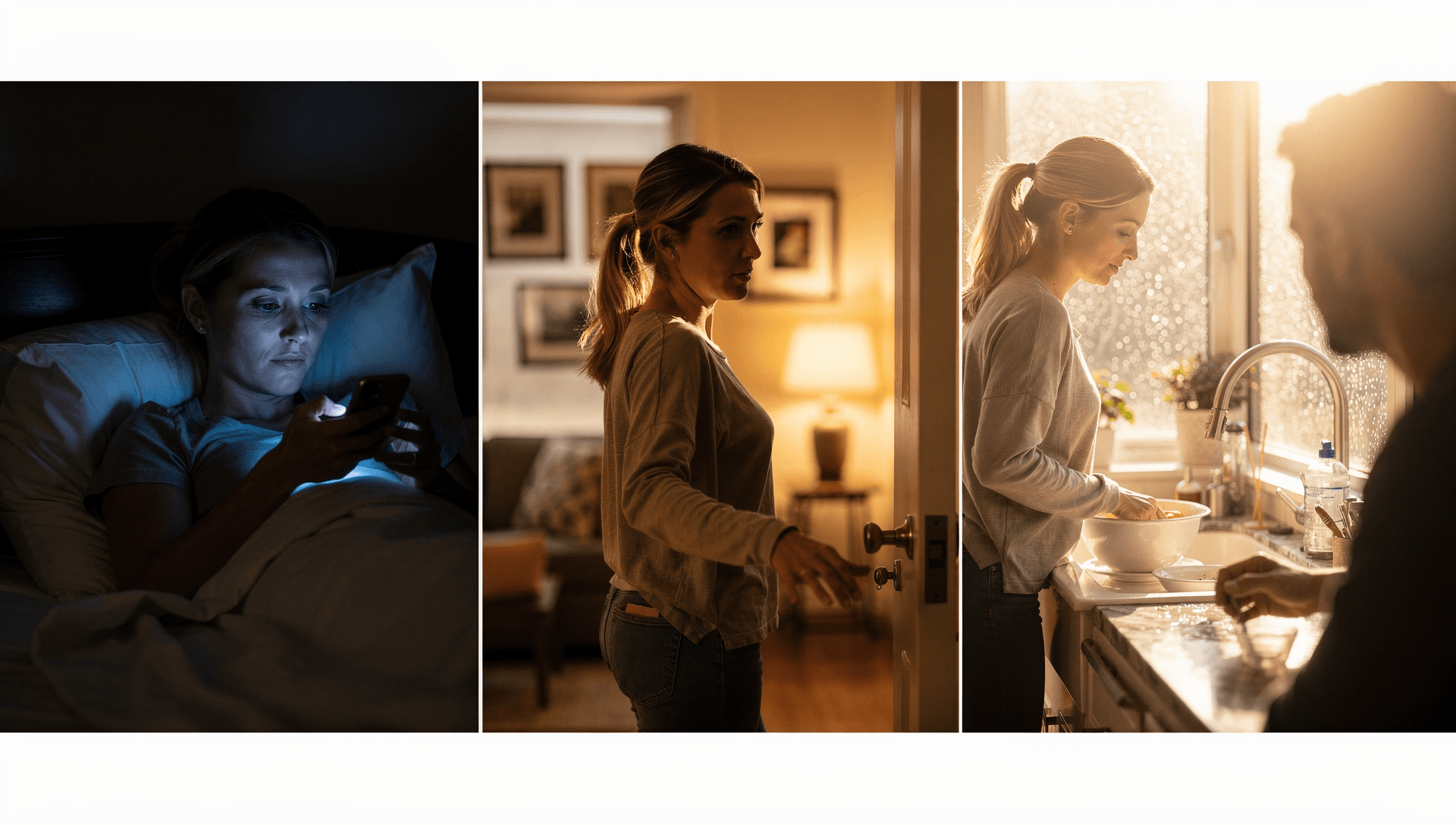
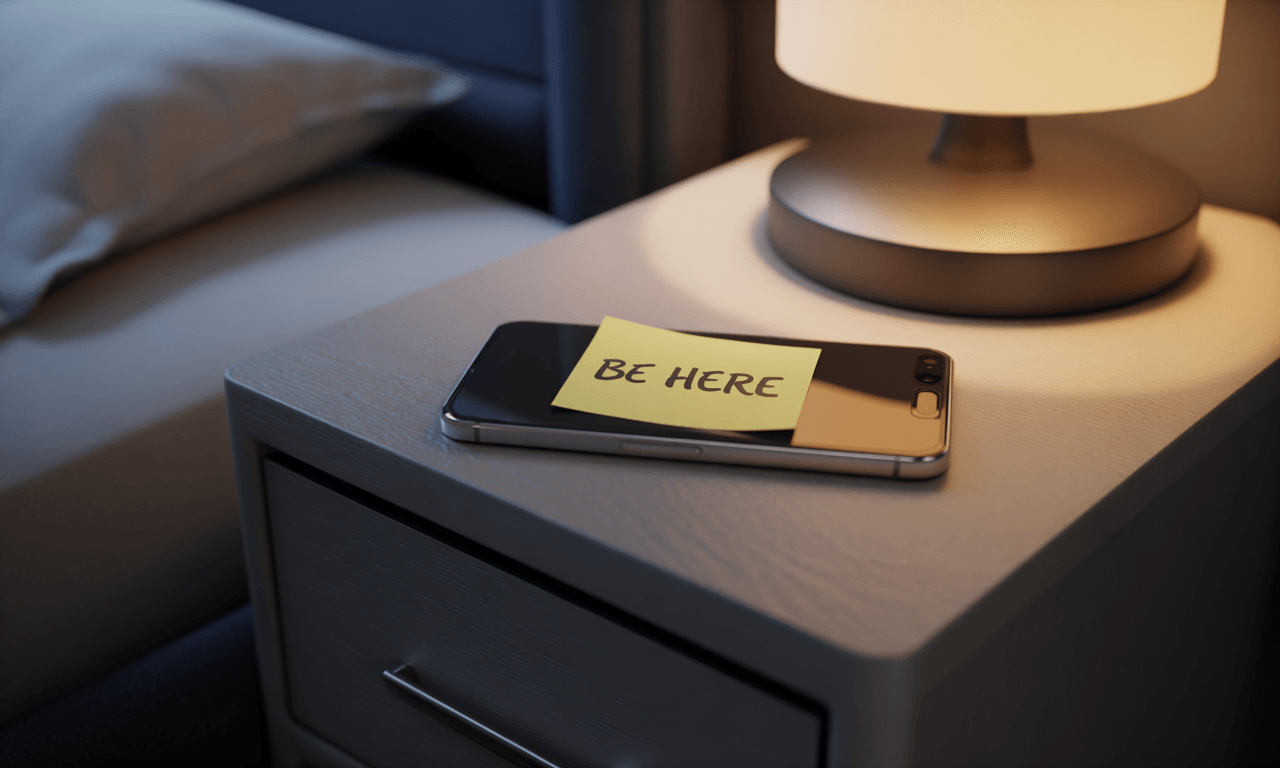
At the beginning, it all feels a little weird.
You’re moving your phone chargers out of the bedroom.
You’re rearranging the living room so the couch faces each other instead of the TV.
You’re trying to breathe before snapping, or saying, “Can we reset-” instead of storming out.
It feels like an experiment:
- “Let’s see if this helps.”
- “Let’s try this for a week.”
- “Let me see what happens if I respond differently.”
But if you keep going, something quiet and beautiful can happen.
Those experiments stop feeling like “projects.”
They start feeling like who you are and how your home works.
The transition From Experiment to Culture is when:
- Turning your phone face-down is just what you do
- Sitting close on the couch is the default, not the exception
- Saying “I’m sorry” or “Can we reset-” is baked into your rhythm
- Your home is full of positive triggers that pull you toward each other
This capstone article, From Experiment to Culture: Making Positive Triggers the New Normal in Your Home, weaves together the core ideas from:
- Be the Trigger: How to Stop Letting Your Environment Run Your Marriage
- 100% In: Why Your Full Commitment Can Change the Atmosphere at Home
- Designing a Home That Pulls You Together, Not Apart
- When You’re the Only One Trying: Staying Hopeful Without Becoming Resentful
 We’ll walk through how to:
- Review your environment with fresh eyes
- Protect the positive triggers you’ve created
- Refresh your rituals during busy or hard seasons
- Recommit to being the trigger so your new habits become your new normal
You’ve been experimenting long enough.
It’s time to let this become your culture.
From Experiment to Culture: Why This Journey Matters
 Let’s zoom out for a second.
At the start of this trigger journey, Be the Trigger invited you to flip the script: instead of letting your environment and moods boss you around, you started asking:
“What if I became the trigger- What if I intentionally set the tone in my home-”
Then, in 100% In, you explored what it looks like to bring your full commitment-showing up as the kind of spouse you want to be, even when your partner isn’t moving at your pace.
Later, Designing a Home That Pulls You Together, Not Apart helped you see your physical space as a quiet teammate, shaping your connection every day.
And in When You’re the Only One Trying, you faced the emotional reality of going first: the ache, the hope, and the boundaries needed to sustain that effort.
Now, in From Experiment to Culture, we’re asking a different set of questions:
- How do we protect what we’ve started-
- How do we keep positive triggers from fading when life gets busy again-
- How do we move from “trying things” to “this is just how we do life here”-
This matters because, without this shift:
- The habits you started can quietly disappear.
- The environment you redesigned can slowly drift back to old patterns.
- The emotional growth you’ve worked on can get buried under stress and schedules.
From Experiment to Culture is about building a baseline-a new default-that you can return to even when things get chaotic.
From Experiment to Culture in How You See Yourself
 Culture doesn’t start with furniture or phone rules.
It starts with identity.
Back in Be the Trigger, you shifted from “I’m a victim of my triggers” to:
“I am someone who influences the environment. I can set a tone.”
In 100% In, you shifted from “I’ll give more when they give more” to:
“I choose who I want to be in this marriage, regardless of perfect conditions.”
And in When You’re the Only One Trying, you added:
“I can stay hopeful and honest, even when effort feels lopsided.”
Now, moving From Experiment to Culture means you begin to see yourself not just as someone who tries new things, but as someone who actually lives differently:
- “In our home, I am a person who apologizes quickly.”
- “I am a spouse who notices micro-wins, not just failures.”
- “I am someone who values closeness over convenience.”
When you see yourself this way:
- Positive triggers feel less like “extra work” and more like “this is what I do.”
- Reset routines (like the ones from When Old Triggers Come Back) feel less like emergency tools and more like normal relational maintenance.
- Your environment choices feel less like a temporary experiment and more like an expression of your values.
From Experiment to Culture starts inside:
“This isn’t just something I’m trying.
This is who I’m becoming.”
Positive Triggers and the Power of Your Environment
 Positive triggers are anything in your environment that:
- Makes connection easier
- Reminds you of who you want to be
- Nudges you toward your spouse instead of away
In Designing a Home That Pulls You Together, Not Apart, you explored how:
- Screen placement
- Furniture direction
- Clutter vs clear surfaces
…all quietly teach you what’s “normal.”
From Experiment to Culture with positive triggers means:
- The coffee maker becomes a morning connection cue: “We hug before we sip.”
- The couch becomes a place for closeness, not separate scrolling.
- The dining table becomes a space where phones don’t live.
- The bedroom becomes a place for rest, affection, and soul talk instead of endless social media.
These aren’t one-time experiments. They become standing agreements in your culture:
- “In our home, we sit together on the couch instead of opposite ends of the room.”
- “In our home, phones sleep somewhere other than the bed.”
- “In our home, when we walk in the door, we greet each other on purpose.”
The more your environment supports these choices, the easier it is to live them without constantly battling your willpower.
From Experiment to Culture in Your Daily Rhythms
 Culture is what you do on autopilot.
So to move From Experiment to Culture, your daily rhythms need to support positive triggers.
You saw this idea in action with:
- Pre-Deciding Your Evenings: Simple Rituals That Trigger Closeness on Busy Days
- From Scroll to Soul Talk: Turning Distraction Moments into Conversations
- Trigger Stacking for Good: How Tiny Cues Can Build Big Intimacy Over Time
These posts showed you how to:
- Choose small rituals ahead of time
- Turn existing habits (coffee, bedtime, TV time) into connection cues
- Attach simple “micro-moments” of closeness to things you already do
Now, From Experiment to Culture means those rhythms become:
- Your standard evening flow
- Your typical way of walking in the door
- Your regular method of winding down together
A few examples of daily culture-level rhythms:
- Evening Reset: After dinner, you each share one “high/low” of the day for 5 minutes before any screens turn on.
- Bedtime Cue: When the bedroom light goes off, that’s your trigger for one question like, “Anything still on your heart tonight-”
- Leave/Return Ritual: When someone leaves or comes home, a hug and a greeting is non-negotiable-no matter how brief.
It’s not about perfection. Some nights you’ll be tired. Some days you’ll forget.
But over time, these positive triggers stop feeling like “new things we’re trying” and start feeling like:
“This is just how our evenings go in this house.”
Protecting the Culture You’ve Built in Busy Seasons
 Every marriage goes through intense seasons:
- New babies
- Job changes
- Illness or caregiving
- Big projects or travel
- Emotional or spiritual valleys
In those times, it’s easy for your positive triggers to get squeezed out:
- You stop doing the evening check-in because you’re exhausted
- Phones creep back into the bedroom
- The couch slowly reorients toward the TV again
- Arguments escalate faster because everyone’s depleted
This is where the sustaining-change side of your journey matters.
Posts like When You’re the Only One Trying, From Nagging to Nudging, and When Old Triggers Come Back remind you:
- Setbacks are part of the process
- One person’s steady intention really can stabilize the atmosphere
- You can reset without giving up on what you’ve built
To protect your culture in busy seasons, try:
- Minimums instead of maximums:
Instead of a 30-minute talk every night, keep a 3-minute check-in. That tiny positive trigger protects the connection “thread” even when you’re maxed out. - Non-negotiable micro-rituals:
Maybe you can’t do long date nights for a while, but hugging at the door is non-negotiable. Or saying “I love you” before sleep is non-negotiable. - Gentle reminders, not guilt trips:
When one of you notices the culture slipping, say, “Hey, I miss our evenings. Can we bring back just one small thing this week-” rather than, “See, we never stick with anything.”
From Experiment to Culture doesn’t mean you never wobble.
It means you have enough identity, environment, and rhythm to make your way back.
Refreshing Your Rituals Without Starting Over
 Even the best rituals can get stale.
You might find:
- Your bedtime question feels repetitive
- Your couch conversations keep drifting into logistics, not connection
- Your “no phones” rule quietly turns into “sometimes phones” and then “always phones”
Instead of declaring, “This isn’t working,” you can do a simple culture refresh:
- Name what feels stale.
- “Our evening check-ins feel rushed.”
- “Our coffee talks turned into to-do lists.”
- Ask what you actually want.
- “I want to feel close, not just informed.”
- “I want more softness, less business meeting.”
- Tweak one thing, not everything.
- Change the question (“What made you smile today-” instead of “How was your day-”)
- Change the location (move from the kitchen to the couch).
- Change the timing (from late-night when you’re fried to earlier).
- Recommit to the spirit, not the exact form.
- The culture isn’t “we always ask THIS exact question.”
- The culture is “we always make some intentional space to connect.”
From Experiment to Culture doesn’t mean your rituals never change.
It means your commitment to positive triggers doesn’t change, even as the specific forms evolve.
Inviting Your Spouse Into the Culture (Without Forcing It)
 Culture is most powerful when both of you own it.
But if you’ve been the one leading most of the experiments, you might be tempted to push:
- “You never help protect what we’ve built.”
- “You’re messing up the systems I created.”
- “You don’t care about our new normal.”
This is where From Nagging to Nudging and Silent Sermons are your friends.
Instead of lecturing your spouse about your culture (“We said we’d do it this way!”), you can:
- Model the culture consistently.
You keep being the trigger-calmer tone, reset rhythms, positive triggers-without turning yourself into the household police. - Invite, don’t indict.
“Hey, I miss our little couch talks. Could we bring those back for 10 minutes tonight-” - Ask for their ideas.
“When you imagine what ‘normal’ should feel like in our home, what’s one thing you’d love us to keep or add-” - Celebrate their contributions.
“When you moved your charger out of the bedroom, that made it easier for me too. Thank you-that’s a big culture win for us.”
Your spouse is more likely to engage in a culture they feel part of creating, not just one they feel forced to obey.
From Experiment to Culture in this sense means:
“We’re building this together, even if one of us got the ball rolling.”
Living From Your New Baseline
 The beautiful thing about culture is this:
Once it’s established, you don’t have to think about it every second.
You still make choices.
You still have to reset sometimes.
You still have days when old patterns tug at you.
But your baseline has changed.
Living From Experiment to Culture looks like:
- Automatically reaching for each other at the end of a long day
- Feeling “off” when you go too long without talking, because connection is normal now
- Noticing quickly when your home feels more like a locker room or a bus station than a place that pulls you together-and having language and tools to address it
You’ll still have:
- Busy seasons
- Emotional dips
- Unexpected triggers
But you’ll face them from a different starting point:
- “We know how to design our space on purpose.”
- “We know how to go 100% in without losing ourselves.”
- “We know how to reset when old triggers come back.”
- “We know how to celebrate micro-wins so we don’t lose sight of growth.”
The experiments brought you here.
Now, the culture keeps you anchored.
This is the shift:
From “We’re trying this new thing right now…”
to
“This is who we are and how our home works.”
You won’t always get it right.
But as you keep looping back through the tools from Be the Trigger, 100% In, Designing a Home That Pulls You Together, Not Apart, When You’re the Only One Trying, When Old Triggers Come Back, and Celebrating Micro-Wins, you’ll look up one day and realize:
“Our home really does have a different feel now.
This isn’t a phase.
This is our new normal.”
And that is the quiet victory of moving From Experiment to Culture: Making Positive Triggers the New Normal in Your Home.