Tag: emotional resilience

  • When You Feel Powerless: The One Decision You Still Control

    When You Feel Powerless: The One Decision You Still Control

    There are seasons where you can’t control your spouse’s mood, schedule, or willingness. You can’t make them talk. You can’t make them soften. You can’t make them apologize. You can’t force them to take your pain seriously. And that’s where people start giving up-not because they don’t care, but because they feel trapped.

    This post is for that exact place.

    When you feel powerless in marriage, choosing agency and calm reflection during a hard season.We’re going to name what’s real, grieve what you can’t force, and focus on the one decision no one can take from you: the kind of partner you will be while you wait. That’s not weakness. That’s agency. Agency can exist even in uncertainty.

    Because the truth is: you may not control what your spouse chooses today, but you still control what you build in yourself-and what you contribute to the marriage atmosphere-right now. And that one choice, repeated daily, changes more than you think.


    When You Feel Powerless in Marriage: Why This Feeling Hits So Hard

    When you feel powerless, finding direction and hope even when the path ahead is unclear.Feeling powerless doesn’t just hurt emotionally-it drains your energy. It makes everything feel heavier. You can be doing the same life tasks you always do, but now they feel exhausting because your heart is carrying uncertainty.

    Powerlessness in marriage often sounds like:

    • “I don’t know what to do anymore.”
    • “No matter what I say, it gets twisted.”
    • “They won’t meet me halfway.”
    • “I’m always the one trying.”
    • “If I push, they shut down. If I wait, nothing changes.”
    • “I can’t live like this forever.”

    And maybe the hardest part is that you can love your spouse and still feel stuck with them. You can want your marriage to win and still feel like you’re losing.

    This is the emotional danger zone where people don’t just struggle-they start making quiet internal decisions:

    • to withdraw
    • to stop asking
    • to stop hoping
    • to stop trying to be warm
    • to stop believing change is possible

    If that’s you, you’re not alone. But you also don’t have to live in that place.

    We’re going to work with reality, not fantasy. Builders don’t deny what’s hard-they build with what’s true.

    And if you need the big picture of what “builder posture” actually means, this post connects naturally to the cornerstone at https://blog.liveyourbestmarriage.com/agency/victim-or-builder because that framework shows you how to hold pain without handing your power away.


    The One Decision You Still Control When You Feel Powerless

    When you feel powerless, choosing the one decision you control-your direction and character in marriage.Here’s the decision no one can take from you:

    You still control the kind of partner you will be while you wait.

    Not the kind of partner you feel like being.
    Not the kind of partner your spouse “deserves” on their worst day.
    Not the kind of partner your mood naturally produces.

    The kind of partner you choose-on purpose.

    This is where agency lives.

    Because powerlessness often tries to convince you: “If I can’t control them, I can’t control anything.”

    That’s not true.

    You still control:

    • your integrity
    • your tone
    • your willingness to repair
    • your honesty
    • your boundaries
    • your consistency
    • your self-respect
    • your spiritual posture
    • your next right step

    You still control whether you become bitter or become better.

    That doesn’t mean you accept mistreatment. It means you refuse to become someone you don’t respect just because your spouse is being difficult.


    When You Feel Powerless: Naming What You Can’t Force (Without Giving Up)

    When you feel powerless, shifting from control to influence in your marriage.One reason people stay stuck is they either:

    • deny reality (“It’s fine, I’m fine”), or
    • drown in reality (“Nothing will ever change”)

    Agency lives in the middle: honest grief + purposeful action.

    Let’s name what you cannot force:

    • you cannot force your spouse to be emotionally available
    • you cannot force them to communicate respectfully
    • you cannot force them to process at your pace
    • you cannot force them to validate your feelings
    • you cannot force them to want growth
    • you cannot force them to choose humility

    If you’ve been trying to force those things, you’re likely exhausted.

    So here’s the shift: Stop trying to control their internal world. Start stabilizing your own.

    This is not resignation. This is wisdom.

    Because once you stop trying to control what you can’t control, you recover energy for what you can do:

    • communicate clearly
    • set boundaries
    • request specific steps
    • choose your tone
    • build routines that keep you grounded
    • invite teamwork without begging for it

    Powerlessness often comes from pouring effort into the wrong bucket.


    When You Feel Powerless in Marriage, Grief Is Part of Agency

    When you feel powerless, using journaling to grieve honestly and choose agency in marriage.This might surprise you: grief is not the enemy of agency. Avoiding grief is.

    If you are in a season where your spouse is distant, harsh, or unwilling, you may need to grieve:

    • the marriage you thought you’d have by now
    • the ease you hoped would come with time
    • the tenderness you feel you’ve been missing
    • the partnership you longed for in hard seasons

    Grief is simply love recognizing loss.

    And if you skip grief, you usually don’t skip pain-you just convert it into resentment.

    So let yourself name it: “This isn’t what I hoped.” “This hurts.” “I miss us.” “I’m tired.” “I wish you wanted this too.”

    That honesty is not weakness. It’s clean. And clean pain is easier to carry than poisoned pain.

    Then, after grief, you choose: “And I’m still going to be a builder.”


    When You Feel Powerless, Don’t Let the Story Decide Your Future

    When you feel powerless, pausing to question the story before reacting in marriage.Powerlessness is fertile soil for dangerous stories.

    Stories like:

    • “This is who they are.”
    • “This will never change.”
    • “I’m wasting my life.”
    • “I’ll always be lonely.”
    • “Nothing I do matters.”

    Sometimes those stories feel protective-like if you expect disappointment, it won’t hurt as much.

    But stories that erase hope don’t protect you. They freeze you.

    This is where meaning-making becomes practical. When you feel your brain writing a verdict, you need a tool to slow it down. A natural companion to this section is https://blog.liveyourbestmarriage.com/meaning-making/question-the-story because it teaches you how to question the automatic meaning you’re about to lock in.

    Try these questions in the powerless moment:

    • “What else could be true-”
    • “What do I actually know, and what am I assuming-”
    • “What’s my need underneath this-”
    • “What would a builder do next-”
    • “What request could create clarity-”

    Powerlessness thrives in unanswered questions. Agency grows when you ask better ones.


    Disappointments Are Data: What This Season Is Trying to Teach You

    Disappointments are data-when you feel powerless, using disappointment to learn and build better patterns in marriageWhen you feel powerless, disappointment can feel like proof: “See- It’s hopeless.”

    But builders treat disappointment differently.

    Builders say: “Disappointments are data.”

    Not data about your worth.
    Not data about your future being doomed.
    Data about what needs attention.

    Disappointment can reveal:

    • unmet expectations that were never spoken
    • needs you’ve been minimizing
    • patterns you’ve been tolerating too long
    • boundaries you haven’t enforced
    • communication habits that create defensiveness
    • environments that trigger the worst in both of you

    The goal isn’t to become cynical. The goal is to become clear.

    If you’re building out this “data mindset” more deeply, it fits naturally to read https://blog.liveyourbestmarriage.com/meaning-making/disappointments-are-data as a next step because it helps you stop treating disappointment like a final verdict and start treating it like information.

    A simple data practice: Instead of “This always happens,” say: “What exactly happened-” “What do I need-” “What do I want to request next time-” “What boundary would protect us-”

    That is agency in action.


    When You Feel Powerless, Build a Daily Reframe Ritual

    Daily reframe ritual for when you feel powerless-choosing agency and a builder mindset each morning.Powerlessness is not just a moment-it’s a mental environment. And if you don’t intentionally interrupt it, your brain will default to the same hopeless loops every day.

    That’s why you need a Daily Reframe Ritual.

    Not something complicated. Something repeatable.

    Here’s a simple Daily Reframe Ritual you can do in 3–5 minutes:

    1. Name reality
      “Today feels hard because ______.”
    2. Name what you can’t control
      “I can’t control ______.”
    3. Name the one decision you still control
      “I can control the kind of partner I will be.”
    4. Choose a builder identity for today
      “Today, I will be a partner who is ______.”
      (Examples: calm, honest, respectful, consistent, clear, courageous, kind-with-boundaries)
    5. Choose one action
      “One action I will take today is ______.”
      (Example: make one request, initiate one repair, speak appreciation, set a boundary, pause before reacting)
    6. Close with a grounding statement
      “Agency can exist even in uncertainty.”

    If you have a dedicated post on this ritual in your series (Daily Reframe Ritual), this is the perfect anchor point to interlink it. Use it naturally like: “If you want a simple script you can repeat each morning, the Daily Reframe Ritual at https://blog.liveyourbestmarriage.com/agency/daily-reframe-ritual gives you a structured way to reset your mindset before the day starts.”


    When You Feel Powerless, Stop Over-Explaining and Start Making One Clean Request

    When you feel powerless, making one clean request to rebuild clarity and teamwork in marriage.”In powerless seasons, many people over-explain because they’re trying to be understood.

    They give paragraphs, history, context, examples, evidence.

    But overwhelmed spouses don’t hear paragraphs. They hear pressure.

    So here’s a builder move: Make one clean request.

    Short. Clear. Doable.

    Examples:

    • “Can we talk for 10 minutes tonight with phones down-”
    • “Can you tell me what you heard me say before you respond-”
    • “Can you let me finish before you explain-”
    • “Can you hug me before we problem-solve-”
    • “Can we take a 20-minute break and come back calmer-”

    If your spouse says no, you didn’t fail. You got data.

    And if you need help converting assumptions into requests (especially when you’re feeling emotionally flooded), tie this section into https://blog.liveyourbestmarriage.com/agency/assumptions-to-requests because that post gives you the practical language to move from mind-reading to clarity.

    Powerlessness often decreases when clarity increases.


    When You Feel Powerless: Micro-Agency Moves for the Next 10 Minutes

    When you feel powerless, using micro-agency in the next 10 minutes to stay calm and choose a builder posture.Sometimes the future feels too big. “What if this never changes-” is a heavy question.

    So shrink the time frame.

    Instead of trying to solve the marriage today, choose micro-agency for the next 10 minutes.

    Here are micro-agency moves that protect your heart and the relationship:

    Micro-move 1: Lower your voice

    Not because your spouse “deserves it,” but because you do.

    Micro-move 2: Slow down your response

    Pause before you answer. Your pause is power.

    Micro-move 3: Name your intention

    “I want closeness, not a fight.”

    Micro-move 4: Choose respect even while you disagree

    “I hear you. I don’t agree, but I’m listening.”

    Micro-move 5: Refuse the spiral

    “I’m not going to keep arguing in circles. Can we take a break and come back to the real issue-”

    Micro-agency doesn’t feel dramatic, but it’s how you rebuild a sense of control inside your own body again.


    Boundaries Are Agency: What You Do When the Conversation Isn’t Safe

    Agency boundaries in marriage-protecting respect and connection when you feel powerless.This matters: agency is not just “be nice.” Agency includes boundaries.

    If your spouse is:

    • yelling
    • insulting
    • mocking
    • threatening
    • stonewalling for days
    • punishing with cruelty

    Then you don’t need more patience-you need protection.

    A boundary is not a punishment. It’s a plan to keep love from being destroyed.

    Examples of builder boundaries:

    • “I’m willing to talk when we’re not yelling. I’m taking a break and we can try again at 8:00.”
    • “I won’t stay in a conversation where I’m being called names. If that happens again, I’m stepping away.”
    • “I want to resolve this, but I’m not going to chase you. When you’re ready to talk respectfully, I’m here.”

    Boundaries are agency because they keep you from becoming a person you don’t respect.

    They also give the relationship structure. Without structure, emotions run the house.


    When You Feel Powerless, Don’t Become Someone You’ll Regret

    When you feel powerless, choosing integrity and stability instead of reacting in marriage.This is one of the most important builder truths:

    In powerless seasons, the temptation is to “match energy.”

    If they’re cold, you get colder.
    If they’re sarcastic, you get sharper.
    If they withdraw, you punish with silence.
    If they won’t try, you stop trying too.

    That feels fair.

    But fairness is not the same as wisdom.

    The goal isn’t to win the standoff. The goal is to protect the marriage and your integrity.

    Ask yourself: “If this season lasts longer than I want, who do I want to be inside it-”

    That question is agency.

    And it’s deeply aligned with the cornerstone framework in https://blog.liveyourbestmarriage.com/agency/victim-or-builder because builder posture is not about being cheerful-it’s about refusing to surrender your character to the worst moment.


    How to Keep Trying Without Losing Yourself

    When you feel powerless, choosing steady effort and healthy structure in marriage.Trying can become unhealthy if it turns into chasing.

    Agency is not chasing. Agency is faithful, clear, and grounded.

    Here are three rules to keep trying without losing yourself:

    1) Try with structure, not desperation

    Structure means:

    • pick a time to talk
    • make one request
    • take breaks when needed
    • return to the conversation as agreed

    2) Try with self-respect

    Self-respect means:

    • no begging
    • no groveling
    • no shrinking
    • no self-betrayal to keep peace

    3) Try with realistic expectations

    One good conversation doesn’t erase a pattern. One bad day doesn’t erase progress.

    If you keep a “data mindset,” disappointment becomes information, not identity.

    And when you need to reset your mind daily, you return to your Daily Reframe Ritual.

    This is what builders do: they keep showing up without bleeding out emotionally.


    When You Feel Powerless, Hope Is a Practice (Not a Personality)

    When you feel powerless, practicing hope and agency in marriage one small step at a time.Some people think hope is something you either have or don’t have.

    But in hard seasons, hope is a practice.

    Hope looks like:

    • making one request instead of making one accusation
    • repairing one sentence instead of escalating
    • pausing instead of punishing
    • grieving honestly without becoming cynical
    • doing the Daily Reframe Ritual even when you don’t feel like it
    • treating disappointments as data instead of proof

    Hope is not pretending. Hope is building.

    And you may not see results immediately. But you will feel something shift inside you: steadiness. Clarity. Self-respect. A return of agency.

    The powerless season might still be real. But you won’t be powerless inside it.

  • Build While You’re Blessed: Why Gratitude Is Preparation, Not Celebration

    Build While You’re Blessed: Why Gratitude Is Preparation, Not Celebration

    It’s easy to give thanks when life is sweet. But gratitude isn’t just for reflection – it’s for preparation. In this post, you’ll learn how to treat gratitude as training, not sentimentality. When you consistently name your blessings, you’re building a resilient mindset that can face loss, disappointment, or conflict without collapsing.

    Couple holding hands at sunrise symbolizing gratitude and awareness during peaceful times.


    Gratitude Is a Muscle, Not a Mood

    Couple writing gratitude lists symbolizing intentional daily practice.Most people think of gratitude as a reaction – something you feel after something good happens. But in strong marriages, gratitude is proactive. It’s a discipline you practice daily, whether the day feels easy or exhausting.
    Gratitude works like a muscle. The more you use it, the stronger it gets – and the easier it becomes to lift heavy emotional weights later.
    When life is good, you have an opportunity to build that muscle. Gratitude then becomes more than appreciation – it becomes preparation.

    To see how these habits form the foundation of stability, read Momentum That Protects: Why Good Habits Are Your Marriage Insurance, which explains how small, consistent actions compound into lasting connection.


    Build While You’re Blessed: A New Way to See Gratitude

    Couple enjoying breakfast symbolizing everyday gratitude moments.Most people express gratitude as a form of celebration – something done after the breakthrough. But gratitude was never meant to stop at reflection; it’s a builder.
    When you build while you’re blessed, you’re doing two things at once:

    1. Anchoring joy – locking in the awareness of goodness while it’s present.
    2. Preparing for resilience – training your heart to look for light even when darkness comes.
      This kind of gratitude doesn’t wait for the highlight reel. It takes ordinary moments – your spouse’s kindness, a quiet morning, a shared laugh – and turns them into bricks of emotional security.


    Gratitude as Preparation for Hard Seasons

    Couple under umbrella symbolizing steadiness in difficult seasons.When tough seasons arrive, gratitude acts like an anchor. It keeps you from being swept away by disappointment or fear.
    If you’ve already trained your mind to see what’s good, even in small things, it becomes easier to find peace in uncertainty. Gratitude doesn’t deny pain – it balances it with perspective.
    In marriage, this matters deeply. Gratitude during good seasons prepares your relationship to stay grounded when stress, fatigue, or conflict hits.

    This echoes the truth in Energy Isn’t Forever: Use Your Strong Seasons Wisely, which reminds couples to use high-energy periods strategically, building habits that endure through fatigue or frustration.


    Why Gratitude Feels Hard When Life Is Good

    Couple walking in nature representing mindfulness and presence.You’d think gratitude would come naturally during easy seasons – but comfort can dull awareness. When things are going well, we stop noticing.
    Gratitude requires attention. You have to pause long enough to see the beauty in your spouse’s small gestures, the simplicity of your routine, or the grace in your conversations.
    Without practice, even blessings can feel invisible. Gratitude is the habit that keeps your eyes open when comfort tries to close them.


    Training Your Eyes to See the Good

    Couple reminiscing on good memories reinforcing shared gratitude.Building gratitude while you’re blessed means developing awareness. Here are simple ways to strengthen your gratitude muscle:

    1. Keep a shared gratitude journal. Each of you lists one thing daily you’re thankful for in the other.
    2. Say it out loud. Verbal gratitude strengthens connection faster than silent appreciation.
    3. Notice the unnoticed. Thank your partner for everyday things – taking the trash out, handling bedtime, or listening to your worries.
    4. Pray or reflect together. Spiritual gratitude deepens emotional intimacy and perspective.
    5. Revisit past wins. Reflecting on challenges you’ve overcome reinforces gratitude for growth.


    Gratitude Builds Emotional Reserves

    Couple budgeting together symbolizing emotional investment through gratitude.Think of gratitude as emotional savings. Every time you express thanks, you deposit positivity into your relationship account.
    When stress or misunderstanding arrives, those deposits protect you from emotional overdraft.
    A grateful mindset keeps resentment from growing because it consistently reminds you of what’s still good.
    In this way, gratitude doesn’t just feel good – it does good. It actively maintains your marriage’s emotional balance.


    From Gratitude to Generosity

    Couple serving together symbolizing generosity born from gratitude.When gratitude becomes your default state, generosity naturally follows.
    You start giving more grace, more affection, and more patience – not because you must, but because you’re overflowing.
    Gratitude opens your hands; resentment closes them.
    A grateful couple gives more to each other and to the world because they see life as abundant, not scarce.


    Gratitude During Disagreements

    Couple smiling gently after an argument showing gratitude in repair.It may sound unrealistic, but gratitude is most powerful when conflict shows up.
    When emotions rise, consciously remembering what you appreciate about your spouse calms defensiveness and restores perspective.
    Even in disagreement, gratitude says, “We’re on the same team.”
    Start arguments with empathy, end them with appreciation – and you’ll find the recovery time between conflicts shrinking dramatically.

    For a practical framework on how connection habits like gratitude become resilience, see The Marriage Muscle: How Habits Make Love Last. It explains how repetition – not perfection – is what keeps love strong.


    Gratitude Is a Daily Rehearsal of Truth

    Couple writing gratitude reflections representing daily rehearsal of perspective.Gratitude rehearses the truth: that your partner is not your enemy, that your blessings outweigh your struggles, that love is still worth effort.
    It’s easy to forget these truths under stress. Gratitude keeps them close to the surface.
    That’s why gratitude is preparation. It reminds your soul of reality before emotion distorts it.


    Gratitude Protects Against Comparison

    Couple laughing together symbolizing contentment and real connection.One of the silent threats to modern marriages is comparison – the illusion that someone else’s relationship, body, or lifestyle is better.
    Gratitude is the antidote. When you train your heart to recognize what’s already beautiful in your marriage, you stop chasing validation elsewhere.
    You stop saying, “If only,” and start saying, “Even now.” That shift is powerful – it keeps your love rooted in reality, not fantasy.


    The Spiritual Depth of Gratitude

    Couple praying outdoors symbolizing spiritual gratitude.True gratitude transcends circumstance. It’s more than optimism – it’s worship.
    When you build gratitude while you’re blessed, you acknowledge the Source behind every blessing.
    That spiritual posture creates humility and peace. You stop fearing change because your security no longer depends on outcomes – it depends on faith.


    Gratitude Creates a Resilient Mindset

    Couple hiking together symbolizing perseverance and resilience through gratitude.A grateful heart doesn’t deny hardship; it sees beyond it.
    When you regularly practice gratitude, you train your brain to focus on abundance instead of scarcity.
    This mindset keeps your marriage grounded. You learn to say, “We’ve faced hard things before – and we’re still standing.” That perspective gives strength during uncertainty.


    Teaching Gratitude to Each Other

    Couple giving gifts symbolizing shared expression of appreciation.Model gratitude, don’t just mention it.
    Say “thank you” often. Celebrate small wins. Respond with grace instead of sarcasm. Gratitude, like kindness, multiplies when it’s witnessed.
    When one partner practices it consistently, the other usually mirrors it. Over time, gratitude becomes part of your shared language.


    Gratitude in Parenting and Partnership

    Family preparing food together symbolizing generational gratitude and joy.

    If you have children, your gratitude habits become their blueprint for love.
    They learn how to see goodness, how to express appreciation, and how to stay grounded when life feels chaotic.
    In this way, building gratitude isn’t just preparing your marriage – it’s preparing your legacy.


    Gratitude as a Protection Against Drift

    Couple on a porch swing representing steadiness through gratitude.Marriages don’t usually fail from one big betrayal – they fade through drift. Gratitude disrupts that drift by forcing attention back to what matters.
    When you actively name your blessings, you’re saying: “I see you. I value us.”
    That focus is what prevents slow erosion over time. Gratitude is how you stay awake to the good.


    Building Gratitude Habits That Last

    Couple filling a gratitude jar symbolizing consistent thankfulness.Here are a few simple gratitude-building routines to integrate:

    1. The Two-Minute Blessing Check: Every night, each person names one moment they’re thankful for from the day.
    2. Weekly Gratitude Walk: Take a short walk and talk about what you appreciate about your season together.
    3. Thank-You Notes: Leave handwritten gratitude messages once a week.
    4. Gratitude Jar: Drop short notes of appreciation throughout the month and read them later.
    5. Shared Reflection Prayer: End the week by thanking God for the small ways He showed up.

    If you want to integrate gratitude into your broader habit structure, revisit Train on the Good Days: Momentum That Carries You Through the Hard Ones – it shows how simple consistency builds resilience that sustains love.


    Gratitude and Growth: What You Focus On Expands

    Couple gardening together symbolizing cultivating growth through gratitude.Where focus goes, energy flows. Gratitude magnifies what you want more of.
    If you focus on flaws, they expand. If you focus on blessings, they multiply.
    That’s why gratitude during good seasons is strategic – it turns abundance into preparation. You’re training your heart to notice growth instead of gaps, which changes everything about how you respond to stress later.


    Final Reflection: Gratitude as a Daily Builder

    Couple sitting together in gratitude symbolizing enduring connection and peace.Gratitude is more than saying “thank you.” It’s how you build emotional endurance before the storm.
    When you build while you’re blessed, you’re not waiting for struggle to teach you strength. You’re preparing with awareness, faith, and love today.
    The couples who practice gratitude daily are the ones who stay steady when life shifts – because they never stopped noticing what was already good.
    Gratitude is your preparation. Gratitude is your training. Gratitude is how love lasts.

  • Daily Reframe Ritual: 5 Minutes to Choose Meaning Together

    Daily Reframe Ritual: 5 Minutes to Choose Meaning Together

    Intentionality isn’t a personality trait-it’s a practice.

    Some couples seem naturally “positive.” Others seem naturally “heavy.” But most of what we call “personality” in marriage is actually practice-what you repeat, what you reinforce, what you reward, and what you rehearse in your mind together.

    Because the truth is: meaning will be made either way.

    If you don’t choose meaning on purpose, stress will choose it for you. Fatigue will choose it for you. Anger will choose it for you. Disappointment will choose it for you. And the meanings stress chooses are rarely generous. They’re usually harsh, hopeless, and isolating:

    • “We’re failing.”
    • “This is who we are.”
    • “Nothing changes.”
    • “We’re alone.”
    • “This is too much.”

    Daily reframe ritual-five-minute nightly check-in to choose meaning together in marriage.The Daily Reframe Ritual is a simple five-minute habit that helps couples choose meaning on purpose instead of letting stress assign it. You’ll learn a quick check-in that asks: What happened today-
    What meaning are we tempted to make-
    What meaning would strengthen us instead-

    Tiny, consistent reframes become a shared language-and shared language becomes culture.


    Daily Reframe Ritual: Why Meaning-Making Is the Hidden Driver of Your Marriage

    Daily reframe ritual-how meaning-making shapes marriage atmosphere and daily habits.Most couples don’t realize they’re not just living events-they’re living interpretations.

    Two couples can face the same stress:

    • a tight budget
    • a sick kid
    • a demanding work season
    • a hard conversation
    • a disappointment
    • a conflict loop

    …and one couple grows closer while the other grows bitter.

    Often, the difference is meaning.

    Meaning is the story you tell yourselves about what’s happening:

    • “This is proof we can’t do this.” (doom meaning)
    • “This is data. We can learn.” (builder meaning)

    Meaning determines:

    • your tone
    • your effort
    • your patience
    • your willingness to repair
    • your hope for the future
    • the emotional atmosphere in your home

    That’s why a Daily Reframe Ritual is so powerful. It’s not just a “nice habit.” It’s a culture-building practice that trains your marriage to interpret life in a way that strengthens you.


    Daily Reframe Ritual: The Problem Isn’t the Stress-It’s the Default Story

    Daily reframe ritual-changing the emotional climate of marriage by choosing a better daily story.Stress is inevitable. Misunderstandings are inevitable. Hard days are inevitable.

    But the default story is optional.

    When couples don’t have a reframe habit, the default story usually becomes:

    • blame (“If you would just…”)
    • hopelessness (“Here we go again.”)
    • harsh identity (“You’re selfish.” “I’m invisible.”)
    • emotional distance (“It’s easier not to care.”)

    That’s why you can’t build a healthy marriage only by addressing big crises. You have to address the daily stories that quietly shape the emotional climate.

    This is where the language foundation matters: the phrases you use become the beliefs you live from. That’s why it fits naturally to anchor this ritual to the cornerstone framework at https://blog.liveyourbestmarriage.com/language/language-that-builds, because micro-phrases help you practice reframes in real time-especially when emotions run hot.


    Daily Reframe Ritual: The 5-Minute Check-In (Simple Script)

    Daily reframe ritual script-five-minute marriage check-in: what happened, what meaning, what strengthens us.This is the ritual. Five minutes. No lecture. No debate. No fixing each other. Just meaning-making on purpose.

    Here’s the script:

    Step 1: What happened today- (1 minute)

    Each person shares one moment:

    • a stressor
    • a disappointment
    • a win
    • a hard interaction
    • a moment of distance Keep it short. One moment.

    Example: “Today felt rushed and disconnected.” “Today I felt overwhelmed by work.” “Today I felt hurt by that comment.” “Today I felt proud of us with the kids.”

    Step 2: What meaning are we tempted to make- (2 minutes)

    This is the honesty step. You name the story your mind wants to lock in.

    Example meanings:

    • “We’re failing.”
    • “We’re drifting.”
    • “They don’t care.”
    • “This will never change.”
    • “I’m alone.”

    Don’t argue the meaning. Just name it. This step is about awareness, not agreement.

    Step 3: What meaning would strengthen us instead- (2 minutes)

    Now you choose a better meaning-truthful and buildable.

    Example strengthening meanings:

    • “We’re stressed, not doomed.”
    • “We had a hard moment, and we can repair.”
    • “This is data that shows what we need.”
    • “We’re learning skills.”
    • “We’re on the same team.”

    Then end with one sentence of connection: “I’m with you.”
    “We can do this.”
    “Let’s reset tomorrow.”
    “I love you.”

    That’s it.

    Five minutes.

    This is how couples stay intentional without needing a two-hour talk every time life gets heavy.


    Daily Reframe Ritual: How to Keep It from Turning Into Another Fight

    Daily reframe ritual-use a five-minute timer to keep the check-in calm and prevent it from turning into another fight.A lot of couples avoid rituals like this because they fear it will become a conflict.

    So here are the guardrails that keep it safe:

    Guardrail 1: No fixing, no coaching

    You are not your spouse’s therapist. You’re their partner. The goal is shared meaning, not correction.

    Guardrail 2: One moment each

    If you open the whole day, you’ll spiral. Keep it focused.

    Guardrail 3: No global language

    Avoid “always” and “never.” Use “today” and “lately.”

    Guardrail 4: End with connection

    Even if you don’t fully resolve the issue, end with warmth: “Thank you for telling me.”
    “I’m with you.”
    “Let’s revisit this tomorrow.”

    Guardrail 5: Time limit is sacred

    Set a timer. Five minutes protects the ritual from becoming a courtroom.

    This ritual is not where you solve everything. It’s where you stop stress from writing the story.


    Daily Reframe Ritual: The “Question the Story” Step That Changes Everything

    Daily reframe ritual-question the story by asking what else could be true after a hard moment in marriage.If you want the ritual to go deeper without getting longer, add one simple question during Step 2 or Step 3:

    “What else could be true-”

    That question interrupts doom stories and opens curiosity.

    Instead of: “They ignored me.”
    Try: “What else could be true- Maybe they’re overwhelmed.”

    Instead of: “We’re drifting.”
    Try: “What else could be true- Maybe we need a plan.”

    Instead of: “They don’t care.”
    Try: “What else could be true- Maybe they care but don’t know what I need.”

    This is why the post https://blog.liveyourbestmarriage.com/meaning-making/question-the-story fits naturally as a companion-because it gives you the exact questions that interrupt automatic narratives and turn pain into wisdom.

    When you question the story, you stop letting your first interpretation be your final truth.


    Daily Reframe Ritual: Examples for Real Marriage Situations

    Daily reframe ritual examples-real marriage scenarios and better meanings that strengthen connection.Let’s make it tangible. Here are a few real scenarios and how the ritual sounds.

    Scenario 1: Disconnected evening

    What happened: “Tonight we were on our phones and barely talked.”
    Tempted meaning: “We’re drifting.”
    Strengthening meaning: “We’re tired. We can create a small plan for connection tomorrow.”

    Scenario 2: Snappy tone

    What happened: “I snapped at you when you asked a simple question.”
    Tempted meaning: “I’m a bad spouse.”
    Strengthening meaning: “I was stressed. I can repair quickly and practice a calmer tone.”

    Scenario 3: Forgotten task

    What happened: “You forgot the thing you promised.”
    Tempted meaning: “I don’t matter.”
    Strengthening meaning: “This is data: I need a clearer request and we need a reminder system.”

    Scenario 4: Parenting pressure

    What happened: “We disagreed about discipline.”
    Tempted meaning: “We’re not compatible.”
    Strengthening meaning: “We’re learning shared parenting skills. We can talk calmly tomorrow.”

    Scenario 5: Financial stress

    What happened: “Money felt tight and tense today.”
    Tempted meaning: “We’ll never get ahead.”
    Strengthening meaning: “We can plan and prioritize. Stress is real, but it’s not destiny.”

    This ritual doesn’t erase problems. It keeps problems from becoming a doom identity.


    Daily Reframe Ritual: Why Tiny Reframes Create a New Baseline

    Daily reframe ritual-tiny daily reframes raise the baseline and create a new normal in marriage.”Most couples think a “new normal” happens when life gets easier.

    But a new baseline is built when your responses get wiser.

    Baseline is what your marriage returns to after stress:

    • Do you return to connection or cold distance-
    • Do you return to repair or replay-
    • Do you return to hope or helplessness-

    The Daily Reframe Ritual trains your marriage to return to a better baseline. You begin to default to:

    • “What’s the data here-”
    • “What do we need-”
    • “What’s a better meaning-”
    • “How can we be a team today-”

    And over time, that becomes your new normal.

    That’s why it fits naturally to connect here to a “New Baseline” resource: “If you’re working toward a healthier default after hard seasons, the concept of raising your baseline in https://blog.liveyourbestmarriage.com/culture/new-baseline pairs perfectly with this ritual, because consistent reframes are one of the fastest ways to change what ‘normal’ feels like.”

    Tiny, consistent reframes become shared language. Shared language becomes culture. Culture becomes baseline.


    Daily Reframe Ritual: How It Builds Culture by Design

    Daily reframe ritual-culture by design through shared language and intentional meaning-making.Culture isn’t what you say you value. Culture is what you practice.

    If you practice:

    • doom stories
    • criticism
    • avoidance
    • sarcasm
    • emotional shutdown

    That becomes culture.

    If you practice:

    • repair
    • clarity
    • reframing
    • teamwork
    • gentleness under stress

    That becomes culture.

    The Daily Reframe Ritual is Culture by Design in five minutes a day. It’s you and your spouse saying: “We are not letting stress narrate our marriage.” “We are choosing meaning together.” “We are building a shared language.” “We are designing a better atmosphere.”

    This is especially powerful because it’s so doable. Five minutes is accessible. It doesn’t require perfect schedules. It doesn’t require a babysitter. It doesn’t require a weekend retreat.

    It requires intention.


    Daily Reframe Ritual: If You Only Do One Thing, Do This

    Daily reframe ritual-five minutes at the end of the day to choose meaning and stay connected as a couple.If your marriage feels heavy, don’t wait for a miracle day with no stress.

    Start choosing meaning together in small moments.

    Because the story you tell after the day is the story you live tomorrow.

    The Daily Reframe Ritual gives you a simple way to:

    • validate what was hard
    • expose the doom story
    • choose a strengthening meaning
    • end the day connected

    It’s five minutes.

    But five minutes done consistently becomes a marriage identity: “We’re learning.”
    “We’re a team.”
    “We can repair.”
    “We don’t let stress be the author.”

    That is how intentionality becomes a practice-not a personality trait.

  • Proof of Life: Finding What’s Still Working When Everything Feels Off

    Proof of Life: Finding What’s Still Working When Everything Feels Off

    When a marriage feels “off,” our first instinct is to panic. The laughter is quieter, the affection feels thinner, and conversations that used to flow now hit invisible walls. But disconnection doesn’t always mean death-it often means dormancy. Just as first responders look for signs of breath and pulse before declaring life lost, couples can learn to look for proof of life: the small but steady rhythms that show love is still present beneath the noise.

    This post helps you shift your focus from what’s broken to what’s breathing. You’ll learn a simple Proof of Life Scan-a three-step exercise that trains your attention to notice quiet care, subtle connection, and micro-moments of grace that keep your marriage alive even in the hardest seasons.

    Couple finding proof of life in marriage by noticing subtle signs of love and connection during hard times.


    Why We Miss the Signs of Life

    Everyday signs of love and normalcy as proof of life in a marriage that feels distant.When relationships enter rough waters, your brain switches into survival mode. You scan for threats-tone shifts, withdrawal, changes in patterns-and your focus narrows to what’s missing. Over time, you stop noticing what’s still working because your emotional radar is tuned to danger.

    This is what psychologists call negativity bias-the human tendency to register pain more vividly than pleasure. In marriage, it looks like remembering the argument word-for-word but forgetting the kind gesture that followed.

    The truth is, marriages rarely stop breathing overnight. They suffocate slowly under unacknowledged goodness. Learning to spot signs of life isn’t denial-it’s the first step toward recovery.


    This perspective connects beautifully with The Evidence File: Building Proof That Love Still Lives Here. While that post teaches you how to record evidence of love, this one teaches you how to notice it in real time before you even document it.


    The “Proof of Life” Mindset Shift

    Hopeful signs of renewal representing proof of life in marriage.

    The phrase “proof of life” usually applies to hostage situations-something used to confirm that the missing person is still alive. In marriage, emotional distance can feel similar: one or both partners feel unseen, unheard, or unsure if affection remains.

    But here’s the good news: if you’re reading this, there’s still a pulse. The fact that you care enough to wonder, to question, or to work means there’s still movement. The key is retraining your perception to notice micro-evidence of love instead of magnifying absence.

    Think of your marriage like a winter tree. The branches may look bare, but life still flows underneath. You don’t resurrect the tree by shouting at it to bloom-you nurture it, water it, and wait for warmth to return.

    In that waiting, proof of life becomes your faith-builder.

    For another re-centering tool, explore When You Can’t See a Way Forward: How Looking Back Rebuilds Hope. It offers a complementary way to borrow strength from your shared past when the present feels frozen.


    Step One: Recalibrate Your Eyes

    Recognizing small gestures of connection as proof of life in marriage.Before you can see proof of life, you must retrain what your eyes look for. Start by slowing down your internal commentary.

    Instead of saying, “We never connect anymore,” say, “Where did we last connect, even a little-”

    This question does two things:

    1. It moves your brain from accusation to curiosity.
    2. It opens a path to gratitude without minimizing pain.

    Maybe your spouse still makes your coffee. Maybe they texted you when they saw something funny. Maybe you caught them smiling at your child. Those aren’t small-they’re sacred.

    This practice pairs perfectly with Celebrate the Ordinary: How Noticing Small Joys Changes the Mood of Your Home. That post teaches daily gratitude habits that make subtle love easier to see.


    Step Two: Scan for Quiet Care

    Everyday acts of care as quiet proof of life in a struggling marriage.Proof of life isn’t about fireworks; it’s about fingerprints. When love feels hidden, look for quiet care-the small, consistent actions that keep your partnership functioning.

    Here’s a sample checklist:

    • Who handled something you usually stress about-
    • What routine keeps running because someone still shows up-
    • Where did kindness slip through unannounced-

    Examples:

    • He remembered to fill the gas tank.
    • She double-checked your calendar before scheduling something.
    • Someone folded the towels the “right” way.
    • You both instinctively looked for each other at a family event.

    These are not chores-they’re signals. They whisper, I still see you. I still care.

    Recording these discoveries in your Evidence File turns fleeting moments into lasting reminders.


    Step Three: Listen for Emotional Pulse

    Couple reconnecting emotionally by noticing peaceful moments together.

    Not all signs of life are physical. Sometimes, it’s the tone shift, the soft sigh, the way your spouse responds differently than before. Emotional pulse moments sound like:

    • “I didn’t mean it like that.”
    • “I’m tired, but I still want to watch a movie with you.”
    • “That was funny.”
    • “Let’s start over.”

    These are not magic fixes-they’re micro-signs of willingness. And willingness, in marriage, is sacred oxygen.

    Try this tonight: after dinner, ask, “What moment today felt peaceful to you-” You’ll be amazed at how this small question can reset tone and draw out proof of life you didn’t notice.

    Pair this with The Five-Minute Rewind: A Micro-Practice for Hard Days for a quick daily rhythm that restores perspective when emotions run low.


    Step Four: Separate Silence from Absence

    Couples embracing silence as a form of connection and proof of life.When things feel distant, silence can feel like rejection. But often, silence isn’t absence-it’s processing. It’s fatigue. It’s waiting.

    One of the greatest proofs of life in marriage is endurance-the fact that you’re both still here. Not every day will feel emotionally full, but consistency itself is evidence.

    Think of long marriages that have outlasted storms. They weren’t sustained by constant bliss, but by a thousand quiet “stills”:

    • We’re still praying.
    • We’re still showing up.
    • We’re still choosing grace.

    Those “stills” are your lifeline.

    If you want a faith-based way to strengthen this endurance mindset, visit Faithful Remembering: Spiritual Practices to Recall God’s Goodness in Marriage. It offers monthly and weekly ways to rehearse God’s faithfulness-turning “still here” into “still held.”


    Step Five: Reframe “Nothing’s Changing”

    Symbol of slow growth and proof of life during hard marriage seasons.When couples say, “Nothing’s changing,” what they often mean is, “Nothing’s changing fast enough.” But proof of life reminds you that slow progress is progress.

    Ask yourself:

    • Are our arguments shorter-
    • Do we apologize quicker-
    • Are we laughing, even occasionally-

    Each of these is a sign of renewal-small shoots pushing through hard soil.

    To make these changes more visible, you can combine this practice with Build Your Highlight Reel: A 30-Photo Project to Carry You Through Storms. Visual evidence reinforces what words can’t always prove.


    The Faith Perspective: God’s Proof of Life in You

    Faith-based proof of life showing God’s grace sustaining a couple through difficulty.Even in the toughest seasons, God leaves traces of His presence-tiny mercies, timely words, softened hearts. The same Spirit that resurrected Jesus is quietly working resurrection in your marriage.

    Look for:

    • Unexpected calm in the middle of conflict.
    • Forgiveness that didn’t come from your own strength.
    • Provision that met you right before you broke.

    These are divine proofs of life.

    When you start naming them, despair gives way to reverence. It’s not just that your marriage is still alive-it’s that grace keeps breathing through it.

    This mirrors the rhythm described in When Hope Feels Impossible: Why Future-Visualization Backfires (and What Works Instead), where couples learn to use real memories as fuel instead of forcing imagined hope.


    Creating Your Own “Proof of Life” Ritual

    Married couple practicing a weekly proof of life ritual to track love and gratitude.

    To make this perspective practical, try building a weekly ritual. Every Sunday or Friday evening, spend 10 minutes together answering these three questions:

    1. Where did we notice care this week-
    2. Where did we sense peace or laughter-
    3. Where did we see God show up-

    Write one sentence for each answer and keep them in a shared note or journal. Over time, these entries form a living record of resilience.

    If you already keep The Memory Bank: Saving Good Moments for the Days You Forget, you can add these proofs of life as a special “hard days” category. When the next difficult season comes, you’ll have a ready-made file of reminders that life and love are still moving beneath the surface.


    Why Proof of Life Beats Perfection

    Celebrating imperfect love as proof of life in marriage.Perfection says, “We’re fine when nothing’s wrong.”
    Proof of life says, “We’re alive even when everything feels wrong.”

    That distinction saves relationships. Because it replaces the fantasy of constant harmony with the miracle of endurance.

    Perfection wants control. Proof of life invites faith.
    Perfection fears mess. Proof of life honors repair.
    Perfection chases certainty. Proof of life celebrates persistence.

    Marriages that last aren’t perfect-they’re practiced. They keep breathing, loving, forgiving, and trying, long after feelings fluctuate.

    This mindset connects beautifully to Anchor Objects: Little Things That Trigger Big Love-because when you anchor your attention to tangible reminders of affection, you reinforce that life still pulses between you.


    A Final Word: You’re Still Here

    Couple moving forward together, holding onto small proofs of love as signs of life in marriage.Every relationship goes through seasons that test its heartbeat. When connection feels faint, remember this: the fact that you’re still showing up means life remains.

    You don’t have to manufacture magic. You just have to protect the pulse.

    Start today-pause, look around, and name one sign that love still breathes here. Maybe it’s the way they smiled at you, or how you both kept your promise to try again. That’s your proof of life.

    And tomorrow, you’ll find another.

  • The Hope Loop: How Remembering Yesterday Fuels Tomorrow

    The Hope Loop: How Remembering Yesterday Fuels Tomorrow

    Hope isn’t built from prediction-it’s built from pattern. When life feels uncertain, imagining a better tomorrow can feel hollow, but remembering how God has shown up before changes everything. The Hope Loop helps you notice the repeat evidence that love and grace have always returned, even after silence. By tracing answered prayers, repaired connections, and laughter that reappeared after conflict, you’ll learn to see your marriage not as a series of isolated events but as a loop-proof that light keeps finding you. This isn’t blind optimism; it’s a grounded confidence built on the data of your own shared story.

    Couple rediscovering hope by remembering past faithfulness and how God’s patterns fuel tomorrow.


    Why Hope Isn’t Prediction-It’s Pattern

    Remembering God’s consistent faithfulness builds hope through recognizable patterns.When people lose hope, it’s rarely because of what’s happening right now. It’s because they’ve forgotten the patterns that prove change is possible. Hope doesn’t grow from guessing the future-it grows from remembering how often love and grace have returned before.

    Every couple has these rhythms: the time you thought the argument was the end, but it wasn’t. The season when finances felt impossible, but provision came. The stretch when you couldn’t feel close, yet laughter still found its way back.

    Hope is pattern recognition. It’s realizing that the same God who helped you then is still in the room now.

    This truth echoes the cornerstone post When You Can’t See a Way Forward: How Looking Back Rebuilds Hope-which teaches that reflection isn’t retreat; it’s strategy. The Hope Loop takes that one step further by showing you how to turn reflection into momentum.


    What the Hope Loop Is (and Why It Works)

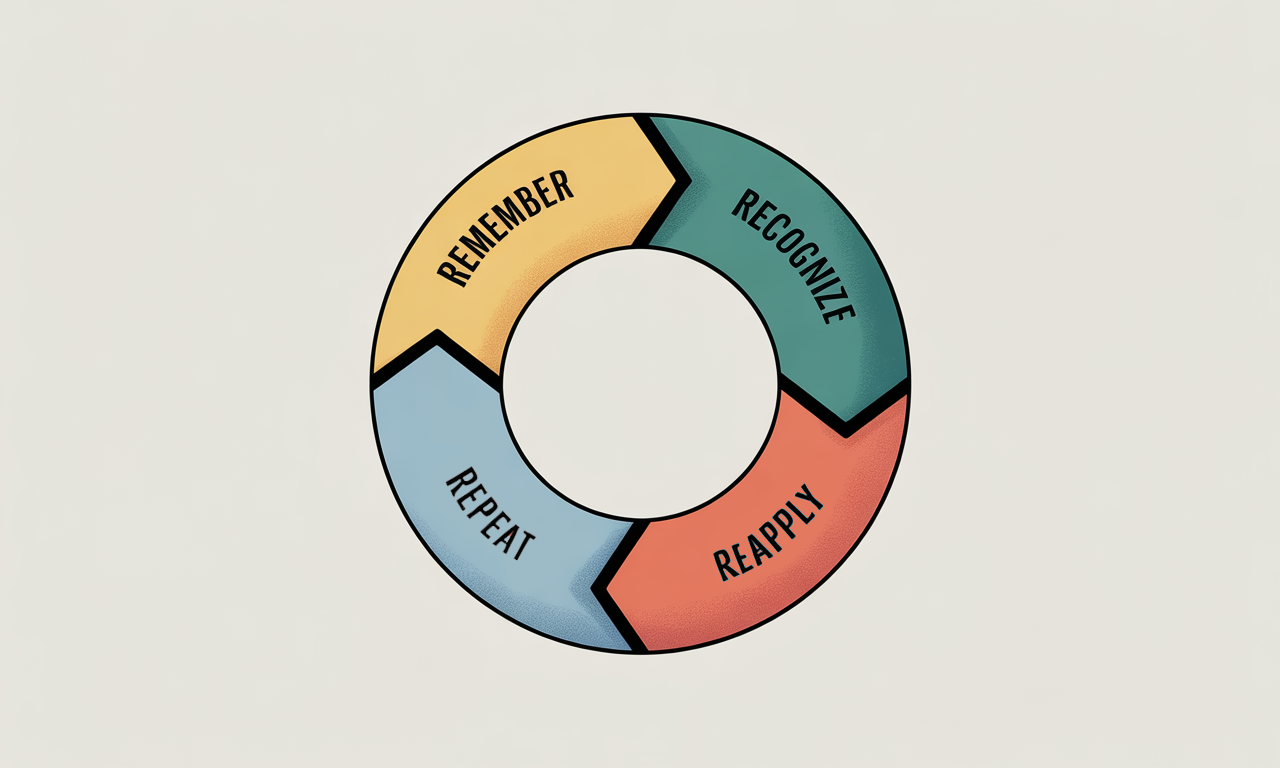
    The Hope Loop visualized as a simple four-step cycle that strengthens marriage through remembrance.The Hope Loop is a spiritual practice of recalling the cycles of goodness that keep repeating-so you stop treating every setback like the first one. It’s noticing, naming, and looping back to evidence of grace until faith becomes muscle memory.

    Here’s the pattern:

    Remember → Recognize → Reapply → Repeat

    1. Remember how God has carried you before.
    2. Recognize similar patterns of help showing up now.
    3. Reapply faith by responding with gratitude instead of panic.
    4. Repeat the process when the next uncertainty arrives.

    Over time, this cycle turns despair into data. Your hope stops being theoretical-it becomes measurable.

    This concept aligns with The Evidence File: Building Proof That Love Still Lives Here. Both are about building emotional and spiritual case files that remind your heart that grace has a track record.


    Step One: Remember Where Hope Has Shown Up Before

    Married couple revisiting past memories to identify recurring patterns of hope and grace.Start your Hope Loop by recalling specific instances when hope seemed gone-but wasn’t.

    Ask yourselves:

    • What was a time we thought something was over but it wasn’t-
    • When did peace return after we stopped trying to control everything-
    • Where did we see God’s fingerprints only in hindsight-

    These answers are the raw materials of your Hope Loop. You’re not rewriting the past; you’re mining it for proof.

    Write them down. Speak them out loud. Even if the memory feels small-like the night you laughed after a tense day-it counts.

    That moment was your marriage remembering how to breathe.

    If you’ve already created The Memory Bank: Saving Good Moments for the Days You Forget, review it through this lens. Every “deposit” is a receipt of God’s reliability.


    Step Two: Recognize the Recurring Rhythms

    Recognizing recurring rhythms of love and hope in marriage as evidence of divine faithfulness.Every couple has recurring grace rhythms-patterns of healing, laughter, timing, or peace that return like seasons. Once you spot them, you’ll realize they were never coincidences; they were consistency disguised as chance.

    Look for these categories:

    • Emotional Patterns: How calm returns after chaos.
    • Spiritual Patterns: How prayer or Scripture brings clarity.
    • Relational Patterns: How repair happens even after tension.

    The Hope Loop works because it turns vague memories into concrete evidence. You stop saying “maybe it’ll get better someday” and start saying “it’s gotten better before, and this looks like the beginning of that again.”

    This mindset pairs naturally with Proof of Life: Finding What’s Still Working When Everything Feels Off-where couples learn to spot subtle signs of love in the middle of difficulty. Together, they form a twin practice of recognizing what’s alive instead of rehearsing what’s wrong.


    Step Three: Reapply Faith Through Gratitude

    Reapplying faith through gratitude strengthens marriage and reactivates the hope loop.Once you see the pattern, the next step is response. Gratitude reactivates the circuit. It tells your nervous system, “We’re safe; we’ve seen this ending before-and it was good.”

    When you notice old evidence resurfacing (like calm after tension or unity after prayer), say it aloud:

    “This feels familiar. We’ve been carried like this before.”

    Speaking faith aloud isn’t forced positivity-it’s pattern awareness. Gratitude turns remembrance into momentum.

    This step mirrors the posture described in Celebrate the Ordinary: How Noticing Small Joys Changes the Mood of Your Home. Both use micro-gratitude as a tool to reset emotional tone. The Hope Loop just roots it deeper in faith history.


    Step Four: Repeat the Loop Until Hope Feels Automatic

    Daily visual reminders help couples repeat the hope loop and sustain long-term faith.Hope strengthens through repetition. The more you cycle through remembering, recognizing, and reapplying, the less fragile it feels.

    Soon, you won’t need to force perspective-you’ll have built it. Your reflex will shift from “What if this goes wrong-” to “We’ve been through worse-and came out stronger.”

    This is the miracle of the Hope Loop: it doesn’t erase hardship; it reframes it as the middle of a familiar story.

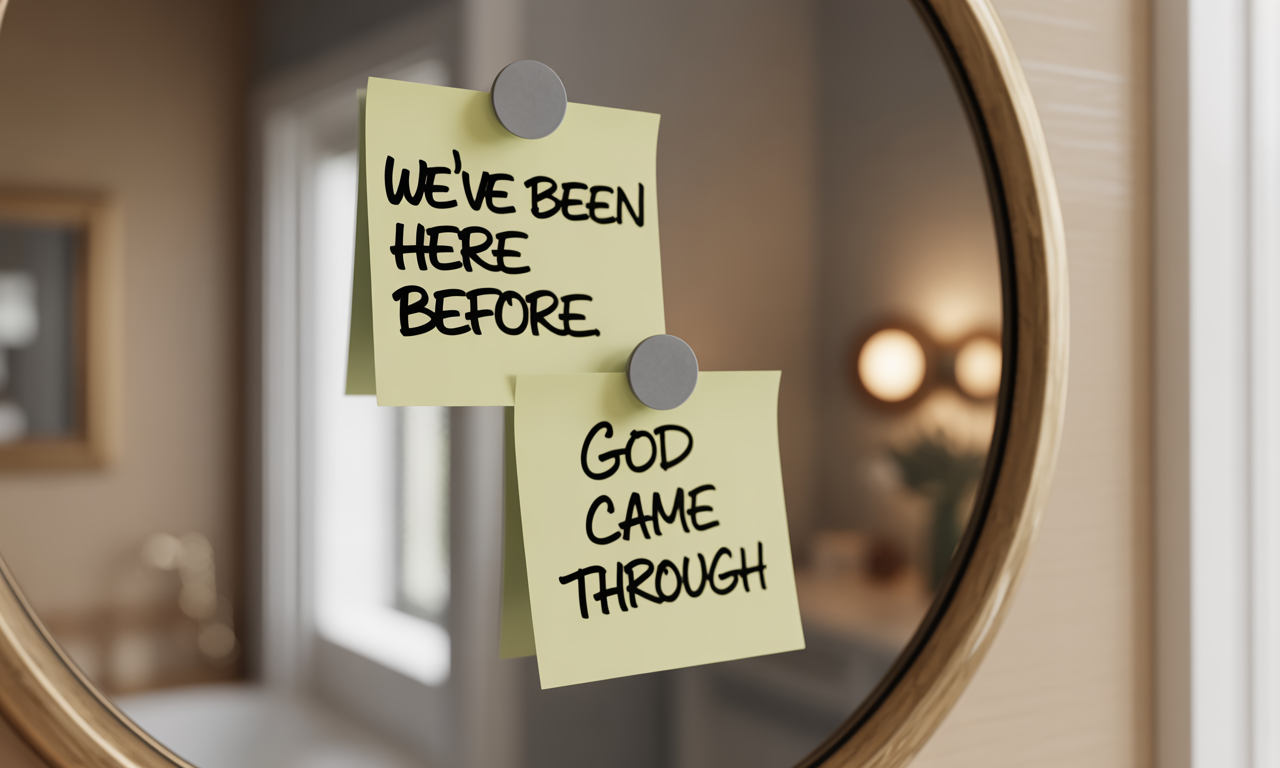
    You can reinforce this mindset by creating a visual cue-a note on your wall that reads, “We’ve seen this before.” Pair it with Anchor Objects: Little Things That Trigger Big Love for tangible reminders of recurring faithfulness.


    Step Five: Spot God’s Signature Across the Seasons

    Recognizing God’s signature across marriage seasons strengthens the hope loop.When you step back, the Hope Loop reveals God’s signature written across your timeline. He’s been showing up with the same character-steady, creative, precise-no matter the circumstances.

    Take time to trace His consistency:

    • How did He use old wounds to produce new wisdom-
    • How did He turn delays into preparation-
    • How did He pair His timing with your readiness-

    You’ll begin to see that your story isn’t random-it’s rhythmic.

    This recognition turns prayer from pleading to partnership. Instead of asking, “Will You-” you begin saying, “You always have.”

    That’s the language of mature hope.

    If you want to take this reflection deeper, explore Faithful Remembering: Spiritual Practices to Recall God’s Goodness in Marriage. Together, these practices become a lifestyle of noticing divine patterns and responding with worship.


    Step Six: Use the Hope Loop in Real Time

    Applying the hope loop in real time helps couples restore peace and perspective quickly.When new challenges appear-tight finances, emotional distance, or uncertainty about the future-activate your Hope Loop:

    1. Pause.
    2. Ask, “When have we felt this way before-”
    3. Recall what eventually shifted.
    4. Speak gratitude before panic has a chance to speak fear.

    You’ll find that your faith doesn’t disappear during hardship-it just forgets where it last saw the evidence. The Hope Loop helps you relocate it fast.

    Pair this step with The Five-Minute Rewind: A Micro-Practice for Hard Days to create a quick emotional reset when tension rises.


    Step Seven: Teach Each Other How to Spot the Loop

    Couples supporting each other by recalling past grace to reignite hope in the present.One of the best ways to strengthen your marriage is to become witnesses of each other’s faith. When your spouse starts to spiral, you can say, “This looks familiar-remember how it ended last time-”

    You’re not minimizing their pain-you’re pointing to proof. The Hope Loop works best when practiced together. It’s a shared language for recognizing God’s fingerprints.

    Here’s a quick couple’s cue:

    • When one person says, “This feels hopeless,”
    • The other responds, “What did we learn the last time it felt like this-”

    That small question reopens the loop.

    If you’ve been doing Past Grace, Present Strength: How to Borrow Faith from What You’ve Survived, this step will feel natural. Both are about gathering evidence that what’s been true before will be true again.


    Step Eight: Let the Hope Loop Become Your Testimony

    Married couple sharing hope loop testimony to strengthen others’ faith in marriage.Once you’ve lived through a few cycles of remembering and renewal, your testimony changes. You stop saying, “We hope God shows up,” and start saying, “He always does.”

    That statement isn’t arrogance-it’s evidence. It’s the result of years of documented faithfulness.

    You can even share your Hope Loop story with other couples who are struggling. Testimony transforms remembrance into ministry.

    If you’re ready for that stage, visit Remembered on Purpose: How Couples Can Reclaim Joy Through Shared Testimony for practical ways to turn your story into encouragement for others.


    Step Nine: Keep the Loop Open

    Symbolic image of marriage as an unbroken loop of faith, grace, and lasting hope.The Hope Loop never ends-it grows. Every time you walk through a storm, you add another turn to the spiral of faith.

    One day, when another couple feels hopeless, you’ll be able to say, “We’ve seen this pattern too. It always ends with peace.”

    That’s the power of hope rooted in history-it multiplies.

    So today, ask yourselves:

    “What are the three patterns of grace that keep showing up in our story-”

    Write them down. Speak them often. Because those patterns are the map you’ll follow when tomorrow feels dark.

    The loop isn’t a theory-it’s your proof.

  • The Memory Bank: Saving Good Moments for the Days You Forget

    The Memory Bank: Saving Good Moments for the Days You Forget

    Bad days spend your hope like cash. Good days need to make deposits. A “Memory Bank” is a living archive of micro-wins-photos, 10-second clips, one-line notes you drop in when life is light. Later, when stress shrinks your perspective, you pull a few “receipts” and remember who you are together. This post shows you how to set up simple capture habits (no perfection), a weekly 5-minute “balance check,” and prompts that recover the feelings you want to keep-friendship, play, and faith that carried you before and can carry you now.

    Couple creating a memory bank to save good moments for the days they forget.


    Why Every Couple Needs a Memory Bank

    Memory Bank practice helps couples look back and rebuild hope together.Every marriage faces seasons when optimism runs low. Bills pile up, misunderstandings linger, and exhaustion erases the sweet details that once felt automatic. When you’re in that fog, trying to “think positive” doesn’t work-it feels hollow. That’s where a Memory Bank steps in.

    A Memory Bank is your marriage’s emergency fund for hope. It’s a practical way to capture proof of connection before life gets noisy again. Because when stress hits, your brain forgets what safety and joy feel like. Having reminders stored and ready to replay isn’t sentimental-it’s strategic.

    This concept is rooted in emotional neuroscience. Positive memories activate the same brain regions that calm the nervous system. By intentionally revisiting those memories, you lower defensiveness and reawaken affection. It’s like having a photo album that doubles as emotional first aid.

    For a deeper foundation on this approach, see our cornerstone post When You Can’t See a Way Forward: How Looking Back Rebuilds Hope. That framework-remember → relive → restore-is what powers your Memory Bank to transform stress into connection.


    The Marriage Math of Hope: Why You Need More Deposits

    Small joyful moments are memory bank deposits that build long-term hope.Think of marriage like an emotional economy. Arguments, stress, and unmet needs withdraw emotional balance from your shared account. The only way to stay solvent is to make consistent deposits.

    Small deposits matter more than grand gestures. Research from the Gottman Institute shows that healthy couples maintain a 5:1 ratio-five positive interactions for every one negative. Your Memory Bank ensures those small positives don’t evaporate after the moment passes.

    When you intentionally capture smiles, acts of care, or laughter, you give yourself a backlog of reassurance. On hard days, you won’t have to “believe” you’re okay-you’ll see it.


    How to Set Up Your Memory Bank (Without Perfection Pressure)

    Creating a shared digital Memory Bank with photos and notes.

    You don’t need fancy tools-just a simple system you’ll actually use.

    Step 1: Choose Your Format
    Pick one or more of these:

    • A shared phone album titled “Us-Evidence”
    • A notes app or Google Doc labeled “Receipts of Good”
    • A small notebook or jar for written notes

    Step 2: Set Your Deposit Habit
    Once a week, spend five minutes making a deposit. Add:

    • One photo from that week that felt real and warm
    • One 10-second video of something funny or ordinary
    • One line describing what made that moment matter

    Step 3: Keep It Imperfect
    Your Memory Bank isn’t an aesthetic project-it’s a truth project. Messy, blurry, or small moments count. Think “Tuesday night tacos,” not “vacation sunset.”

    If you enjoy more structured rituals, pair this with Photo Rituals That Heal: Turning Your Camera Roll into Connection. It shows how to turn your camera roll into a connection tool instead of a cluttered archive.


    The 5-Minute Weekly Balance Check

    Weekly balance check helps couples review their Memory Bank deposits together.

    The goal of your Memory Bank isn’t just collecting-it’s checking your balance regularly. Every Sunday (or any calm day), take five minutes to review a few entries together.

    Ask these three questions:

    1. Which moment still makes you smile the fastest-
    2. Which one surprised you when it happened-
    3. What emotion do you want to feel more often next week-

    This small review rewires your brain to notice and repeat what’s working. It keeps gratitude current instead of theoretical.

    To make this moment deeper, combine it with the Five-Minute Rewind: A Micro-Practice for Hard Days. Use one photo from your Memory Bank and relive the emotion it captures, then express that feeling in a small action.


    Prompts to Capture the Good Stuff

    Using prompts to record positive moments in your marriage Memory Bank.When you first start your Memory Bank, you might draw a blank: “What counts as a good moment-” Here are 10 easy prompts to spark deposits:

    1. A time you made each other laugh this week.
    2. A meal you cooked (or ordered) that felt like teamwork.
    3. A small prayer, hug, or text that shifted your mood.
    4. A time you caught yourself choosing patience instead of snark.
    5. A gesture from your spouse that surprised you.
    6. A moment you felt proud of your family or home.
    7. A quiet hour that reminded you peace exists.
    8. A problem you solved together without realizing it.
    9. A shared joke that’s now part of your “us” language.
    10. Something your spouse did that reminded you of who they are at their best.

    Over time, these micro-moments add up to a living portrait of resilience. They become your evidence that love still breathes between grocery lists and deadlines.

    For an even gentler version of this reflection, see Celebrate the Ordinary: How Noticing Small Joys Changes the Mood of Your Home. It offers a 7-day “ordinary joy audit” that trains your attention toward gratitude.


    How the Memory Bank Lowers Defensiveness

    Revisiting your Memory Bank lowers defensiveness and builds empathy.Defensiveness is a sign your nervous system feels unsafe. When you recall or view positive shared memories, your body automatically releases tension. You remember not just cognitively but physiologically: “This person is safe. We’ve been okay before.”

    Looking at your Memory Bank during conflict doesn’t erase the issue-but it keeps you from turning your spouse into the enemy. It reactivates your team identity. You’re not two people fighting each other; you’re two people fighting a problem together.

    You can even agree on a “pause and pull” rule: during an argument, take 60 seconds to scroll your shared Memory Bank. You’ll be amazed how often a smile sneaks back in.

    If you want to anchor this in daily rhythm, pair it with Design Your Marriage Rhythms: The Rituals & Resets Handbook for weekly connection structure.


    Make Deposits Easier with Simple Capture Habits

    Setting reminders to make regular deposits in your marriage Memory Bank.

    The biggest barrier isn’t willingness-it’s forgetfulness. Life moves fast, and unless you build capture habits, good moments fade before you can record them.

    Here’s how to automate deposits:

    • Pin a note on your phone’s home screen titled “Receipts.”
    • Set a 2-minute reminder on Sunday evenings: “Add one memory.”
    • Use voice notes when typing feels like work-say one sentence about something good.
    • Share album access with your spouse so they can add their perspective too.

    You don’t need to log every moment-just enough to build a balanced emotional portfolio.


    When You Don’t Feel Like Depositing

    Making small deposits in your Memory Bank even during hard weeks.There will be weeks when everything feels heavy, and you’ll resist making a deposit. That’s actually the week you need it most.

    Start small. If you can’t think of a moment from this week, pull one from your past. The goal isn’t to force gratitude-it’s to keep the practice alive. Even a neutral entry counts, like “We sat quietly after dinner.”

    If you’re facing ongoing stress or relational distance, use the Memory Bank as an act of faith, not a summary of feelings. It becomes a statement: We still have something worth remembering.

    When you’re ready to strengthen that mindset, the post From Friends to Forever: Using Your Origin Story to Stabilize Today can help you reframe your shared history as an anchor.


    What to Do During a “Withdrawal” Season

    Using your Memory Bank to find strength during hard seasons.Sometimes life hits hard-loss, illness, finances, burnout-and it feels like you’re constantly withdrawing from your emotional reserves. The Memory Bank is not a fix, but it is a fuel source.

    In those seasons, open your archive once a day for five minutes. Scroll through slowly. Let your heart catch up. Don’t analyze-just absorb. Each photo or note is a small transfusion of steadiness.

    To bring faith into those moments, try a “Thank You, God” scroll. Each time you see a picture, whisper thanks for the moment it represents. This connects gratitude with worship, turning memory into prayer.

    For more spiritual integration, read Faithful Remembering: Spiritual Practices to Recall God’s Goodness in Marriage.


    From Memory to Movement: Acting on What You Recall

    Turning memories into small intentional actions that build momentum.

    The goal of the Memory Bank isn’t just nostalgia-it’s activation. Once you revisit good memories, use them as cues for micro-actions:

    • Saw a photo from your last walk- Take a 10-minute one tonight.
    • Remembered that spontaneous dinner- Try recreating it this weekend.
    • Read an old gratitude note- Add one more line to it now.

    This is how memory becomes momentum. You’re not just remembering-you’re rehearsing connection.

    If you want to see how these micro-actions form long-term growth, explore Build Momentum in Marriage: Small Metrics That Keep Love Moving. It teaches you how to track consistency without pressure.


    A 30-Day Memory Bank Challenge

    Building consistency through a 30-day Memory Bank challenge.Want to make the habit stick- Commit to 30 days of Memory Bank deposits.

    Week 1: Add one moment per day-photo, line, or clip.
    Week 2: Share one memory each night before bed.
    Week 3: Do your 5-minute Sunday balance check.
    Week 4: Review all entries and reflect: What patterns of gratitude do you notice-

    By day 30, you’ll have a custom highlight reel of encouragement-and a nervous system that trusts you can find good even in chaos.

    To layer in other healing habits, you can integrate your Memory Bank challenge with the Photo Rituals That Heal framework. Both reinforce the same truth: memory isn’t just for looking back-it’s for stabilizing now.


    Closing Thought: Your Marriage Deserves Proof of Joy

    Memory Bank reminders help couples find joy and proof of love in hard seasons.When hard days come-and they will-you need more than optimism. You need proof.

    Your Memory Bank becomes that proof. It’s the receipts of your love story: the everyday evidence that laughter existed, care was given, grace was shared, and you showed up.

    Hope doesn’t grow in the dark; it grows in remembrance. So make your deposits when the light is bright. Those memories will carry you through the shadows later.