Tag: gratitude

  • Kindness Is Not Weakness: Why Courtesy Is a Marriage Skill, Not a Personality Trait

    Kindness Is Not Weakness: Why Courtesy Is a Marriage Skill, Not a Personality Trait

    Many couples abandon small kindnesses once life gets busy or conflict becomes chronic.

    They stop saying please. They stop saying thank you. They stop greeting each other warmly. They stop offering small touches. They stop softening their tone. They stop noticing effort. They stop giving the benefit of the doubt.

    Not because they stopped loving each other, but because they started living under pressure.

    And under pressure, couples often treat courtesy like fluff. Like something you do when life is easy. Like something you do when you feel romantic. Like something you do when your spouse deserves it.

    kindness is not weakness shown through everyday courtesy in marriageBut courtesy is not fluff.

    Courtesy is structure.

    It’s one of the most practical ways you protect emotional safety in marriage. It’s one of the simplest ways you prevent escalation. And it’s one of the clearest signs that your marriage is being preserved rather than squeezed.

    This post will show you why kindness is not weakness, why courtesy is a marriage skill, and how strong couples treat it as a discipline, not a mood.


    Kindness Is Not Weakness in Marriage: The Lie That Makes Love Harder

    kindness is not weakness because it protects emotional safetyThe idea that kindness is weakness is one of the most damaging lies couples believe.

    It usually sounds like:

    If I’m kind, they’ll think it’s okay. If I’m gentle, they’ll never change. If I’m polite, I’m letting them off the hook. If I soften, I lose power. If I go first, I become a doormat. If I act warm, they’ll take advantage.

    So people become “strong” by becoming harsh. They become “wise” by becoming cold. They become “protected” by becoming distant.

    But that version of strength doesn’t protect the marriage. It protects pride.

    Kindness is not weakness because kindness does something powerful:

    It keeps the relationship safe enough to grow.

    And growth requires safety.

    When kindness disappears, the marriage becomes reactive. When the marriage becomes reactive, every conversation becomes harder. Even simple requests feel like attacks. Even small misunderstandings become big fights.

    Kindness doesn’t remove truth. It makes truth possible.

    If you want the bigger framework for why protecting the relationship comes before extracting outcomes, the cornerstone post “Protect the Goose: How to Put Your Marriage Before the Benefits It Produces” explains why courtesy is part of preservation, not just “being nice”: https://blog.liveyourbestmarriage.com/foundation/protect-the-goose-marriage


    Courtesy Is a Marriage Skill: Not a Personality Trait

    courtesy is a marriage skill practiced daily not a personality traitSome people assume kindness is a personality trait.

    They say: I’m just not a soft person. That’s not how I was raised. I’m not naturally affectionate. I’m not good with words. I’m more direct.

    But courtesy is not about personality.

    Courtesy is a skill.

    And skills can be practiced.

    You don’t have to become a different person to become more courteous. You just have to decide that courtesy is part of the marriage you’re building.

    Strong couples treat courtesy like brushing your teeth.

    You don’t brush your teeth only when you feel like it. You do it because it protects what matters.

    Courtesy works the same way.

    A polite tone. A warm greeting. A quick thank you. A gentle repair. A respectful request.

    These are skills that protect connection.

    They are not emotional decorations. They are relational structure.

    If you’ve noticed your marriage has turned cold and transactional, courtesy is often the first “skill” to disappear. The post “When Love Becomes a Transaction: How Marriage Turns Cold Without You Noticing” shows how that happens gradually and why courtesy is the antidote: https://blog.liveyourbestmarriage.com/connection/love-becomes-transaction


    Why Everyday Kindness Protects Emotional Safety

    everyday kindness builds emotional safety in marriageEmotional safety is the sense that your spouse is a safe place to be human.

    And everyday kindness is one of the fastest ways to build emotional safety.

    Here’s why.

    Kindness signals: I’m not your enemy. I see you. You matter. I’m for you. We can handle conflict without destroying each other.

    When spouses feel emotionally safe, they are more open, more cooperative, and more willing to change.

    When spouses do not feel safe, they become defensive or withdrawn.

    That’s why everyday kindness is not optional for a strong marriage.

    It’s the atmosphere.

    It’s the difference between: “Can we talk-” feeling like an invitation and “Can we talk-” feeling like a threat

    If you want to see how safety gets destroyed, the post “Control Levers in Marriage: The Hidden Ways We Manipulate Instead of Connect” explains how silence, pressure, withholding, and urgency turn conflict into fear. Courtesy is the opposite of control levers: https://blog.liveyourbestmarriage.com/communication/control-levers-marriage


    Kindness Prevents Escalation: The Small Moves That Stop Big Fights

    courtesy in marriage prevents escalation and protects loveMost couples don’t plan to escalate.

    They just get tired. They get triggered. They get defensive. They feel disrespected. They feel unheard.

    Then tone sharpens. Words get heavier. Faces harden. Voices rise.

    Escalation often begins with the absence of courtesy.

    Courtesy prevents escalation in three ways:

    Courtesy lowers threat
    A soft tone reduces defensiveness.

    Courtesy slows the pace
    When you speak respectfully, the conversation stays manageable.

    Courtesy preserves dignity
    Dignity is a big deal in marriage. When dignity is protected, people can hear feedback without needing to fight back.

    That’s why strong couples treat courtesy like a protective fence around the relationship.

    The fence doesn’t eliminate conflict. It keeps conflict from becoming destructive.


    The Courtesy Breakdown: How Couples Lose Kindness When Life Gets Busy

    busy life causing courtesy breakdown and loss of kindnessIt’s not random that kindness disappears.

    It usually breaks down in predictable ways.

    1. Exhaustion
      When you’re tired, you default to efficiency.
    2. Familiarity
      You stop treating your spouse like someone you should impress.
    3. Unresolved resentment
      Resentment makes kindness feel unfair.
    4. Chronic conflict
      When fights repeat, courtesy feels pointless.
    5. Outcome pressure
      You get so focused on results that you forget relational health.

    Outcome pressure is one of the biggest reasons courtesy disappears. Couples start chasing the golden eggs and forget to protect the goose. That pattern is explained deeply in the cornerstone post about chasing results: https://blog.liveyourbestmarriage.com/connection/goose-and-golden-eggs-marriage


    When Courtesy Feels Fake: The Difference Between Niceness and Kindness

    kindness is not weakness because it allows truth with respectSome people resist courtesy because they fear it’s fake.

    They say: I’m not going to be nice when I’m upset. I’m not going to pretend. I’m not going to sugarcoat.

    That’s understandable.

    But courtesy is not pretending. Courtesy is not denying feelings. Courtesy is not being fake.

    Courtesy is choosing how you deliver truth.

    You can be honest and courteous at the same time.

    Example: I’m upset about what happened. I’m still going to speak respectfully.

    That is maturity.

    Not fake. Not weak. Not dishonest.

    It’s emotional discipline.

    Courtesy is the difference between: “I’m hurt, so I’m going to hurt you back” and “I’m hurt, and I’m going to protect us while we work through it”

    That’s why kindness is not weakness. It is strength under control.

    If you struggle with going first because you fear becoming a doormat, the post “Emotional Leadership in Marriage: Caring First Without Becoming a Doormat” offers a framework for leading with kindness without surrendering boundaries: https://blog.liveyourbestmarriage.com/communication/emotional-leadership-marriage


    Courtesy Is a Discipline: What Strong Couples Practice on Purpose

    courtesy as a discipline keeps emotional warmth aliveIf courtesy is a marriage skill, what does it look like as a discipline-

    Here are practices strong couples do consistently.

    Warm greetings
    They greet each other like they matter. Not like roommates.

    Respectful requests
    They ask instead of demand.

    Gratitude language
    They say thank you even for small things.

    Soft tone under stress
    They protect tone when tired.

    Quick repair
    They restart quickly after sharp moments.

    Assume the best when possible
    They do not default to negative intent.

    Small acts of service
    They do small helpful things without needing applause.

    Physical warmth
    They keep small touches alive.

    These practices are not about romance. They’re about structure.

    Structure creates safety. Safety creates connection. Connection makes change possible.

    If your marriage has become rigid because of proof hunting, where every mistake feels like evidence and every conversation feels like a trial, courtesy is one of the fastest ways to restore humanity. This post explains that destructive habit and how to replace it: https://blog.liveyourbestmarriage.com/conflict/proof-hunting-marriage


    Practical Examples: Courtesy Phrases That Change the Atmosphere

    Here are phrases that protect emotional safety and keep conflict from escalating.

    Instead of: “You never listen.”
    Try: “I don’t feel heard. Can we try again-”

    Instead of: “Why are you like this-”
    Try: “Help me understand what’s going on for you.”

    Instead of: “Fine, whatever.”
    Try: “I need a break. I want to come back calmer.”

    Instead of: “You’re so selfish.”
    Try: “I’m feeling overwhelmed and I need more support.”

    Instead of: “Here we go again.”
    Try: “I don’t want this to turn into a fight. Let’s slow down.”

    Instead of: “You always ruin everything.”
    Try: “This matters to me, and I want us to handle it better.”

    These phrases aren’t magic. They are tools.

    And tools are what mature marriages use.


    The Kindness Reset: 10 Minutes a Day That Restores Warmth

    If your marriage has been tense, here’s a simple kindness practice:

    For 7 days, spend 10 minutes a day doing one of these:

    A short walk together A check-in question: “What was the hardest part of your day-” A gratitude share: “One thing I appreciate about you today is…” A small act of service done quietly A gentle touch with no agenda A prayer together if you’re faith-centered A laughter moment, even a short video or memory

    The goal is not to fix the whole marriage in a week.

    The goal is to restore warmth.

    Warmth makes everything else easier.


    When Courtesy Doesn’t Mean You Avoid Boundaries

    courtesy with boundaries protects emotional safety in marriageSome spouses worry that courtesy means tolerating disrespect.

    It doesn’t.

    Courtesy and boundaries can coexist.

    You can say: I’m not okay with being spoken to like that. and still say it with respect.

    You can say: I will not continue this conversation if we’re yelling. and still say it without threats.

    Courtesy does not remove boundaries. It changes the tone of boundaries.

    It makes boundaries protective rather than punitive.

    This matters because harsh boundaries often become control levers. If you want to understand that difference more clearly, revisit the post on control levers and notice how punishment masquerades as boundaries: https://blog.liveyourbestmarriage.com/communication/control-levers-marriage


    Conclusion: Kindness Is Not Weakness, It’s the Framework of a Strong Marriage

    Marriages don’t stay warm by accident.

    They stay warm because couples protect the daily atmosphere.

    Courtesy is not fluff. Courtesy is not fake. Courtesy is not weakness.

    Courtesy is structure. Courtesy is protection. Courtesy is discipline.

    When couples treat kindness as a marriage skill, the relationship becomes safer. When the relationship becomes safer, conflict becomes easier. When conflict becomes easier, repair becomes faster. When repair becomes faster, intimacy grows. When intimacy grows, the marriage feels human again.

    If your marriage has been tense or cold, don’t start with big speeches.

    Start with small courtesies.

    Protect the tone. Protect the greeting. Protect the gratitude. Protect the humanity.

    Because strong marriages don’t extract.

    They preserve.

  • Praise Over Criticism: How Gratitude Changes the Tone of Your Marriage

    Praise Over Criticism: How Gratitude Changes the Tone of Your Marriage

    Criticism creates tension; gratitude creates warmth. When couples intentionally notice and name what’s good, they re-train their focus and rebuild safety.

    This article explores how to form a “gratitude bias” in marriage-training your brain to look for progress instead of proof of failure. You’ll get practical daily practices to swap complaint for appreciation, from a simple nightly “thank you ritual” to writing quick gratitude texts.

    When you shift your attention from what’s wrong to what’s working, your tone changes, your patience grows, and your home begins to feel lighter again.


    Why Praise Over Criticism Matters

    Couple sharing warmth and gratitude during a calm morning.Most marriages don’t fall apart because of one big betrayal-they fade from a thousand small criticisms. Each judgment, sigh, or sarcastic remark becomes another brick in a wall of distance.

    Criticism promises to fix things, but it actually hardens hearts. Praise, on the other hand, softens them.

    When you practice praise over criticism, you’re not pretending everything’s perfect-you’re choosing to see what’s good even while working on what’s hard. Gratitude doesn’t erase problems; it reframes them.

    In “Wait Before You Speak: The Discipline That Protects Love”, we saw how restraint protects peace. Praise takes that same maturity and fills silence with encouragement instead of critique.

    Every couple faces daily choices: highlight flaws or highlight effort. The tone of your marriage depends on which one you choose more often.


    The Hidden Cost of Criticism

    Emotional distance caused by habitual criticism.Criticism feels productive because it points out problems-but it rarely inspires change. When one spouse constantly corrects the other, defensiveness replaces desire. Instead of motivating growth, criticism breeds resistance.

    Each critical remark tells your partner, “You’re not enough.” Over time, they stop hearing your words and start hearing only rejection.

    This emotional erosion happens slowly. What began as small suggestions turn into habitual fault-finding. Soon, appreciation disappears altogether.

    The irony- Most criticism comes from love-a desire for improvement or harmony. But when expressed without care, it sends the opposite message.

    Choosing praise over criticism doesn’t mean ignoring issues. It means approaching them through encouragement, not embarrassment.

    In “Seeing with Kind Eyes”, we explored how perception changes communication. The same principle applies here: when you choose to see differently, you start to speak differently.


    How the Brain Responds to Praise and Criticism

    Positive emotions and brain chemistry triggered by gratitude.Neuroscience reveals that our brains respond to criticism like a threat. When your spouse feels judged, their body releases stress hormones, preparing for defense or withdrawal. That’s why even mild critique can trigger a big reaction-it’s not just emotional; it’s physiological.

    Praise, however, releases dopamine and oxytocin-the brain’s bonding chemicals. These foster trust, openness, and connection. Gratitude literally rewires your brain to notice more positives, which in turn creates more positivity in your interactions.

    That’s how a “gratitude bias” forms. The more you appreciate, the more you see things worth appreciating.

    Shifting your focus doesn’t mean forcing positivity; it means training awareness. You stop scanning for what’s broken and start noticing what’s beautiful.


    The Gratitude Bias: How to Rewire Your Focus

    Daily gratitude journal for building appreciation in marriage.Human beings are wired for negativity-it’s how we survived danger for millennia. But that same survival instinct becomes toxic in relationships when we’re always scanning for flaws.

    A gratitude bias flips that instinct. Instead of asking, “What’s wrong today-”, you begin asking, “What’s right-”

    Here’s how to build it:

    1. Start small. Notice one thing your spouse did right each day.
    2. Name it out loud. Gratitude unspoken is gratitude unfinished.
    3. Be specific. “Thank you for handling dinner” is nice, but “I loved how you made time for us even though you were tired” builds connection.
    4. Keep a gratitude log. Write one line each night about something your spouse did that made life better.

    Gratitude doesn’t grow by chance-it grows by practice.


    Turning Complaints into Compliments

    Turning complaints into compliments through gratitude and teamwork.It’s not always easy to break the habit of criticism. But with intentional language shifts, even complaints can become compliments in disguise.

    • Instead of “You never help around the house,” say, “I really appreciate when you help me with dishes-it makes a big difference.”
    • Instead of “You’re always late,” try, “I love when we’re on time together-it helps me feel calm.”
    • Instead of “You don’t listen,” use, “I feel cared for when you make eye contact as we talk.”

    Each reframe keeps the message intact but delivers it with grace. Your spouse is more likely to engage because they feel respected, not attacked.

    This is how gratitude turns tension into teamwork.


    The Nightly “Thank You Ritual”

    Nightly thank-you ritual to strengthen gratitude in marriage.One of the simplest ways to practice praise over criticism is to create a nightly gratitude ritual. Before bed, take one minute to thank your spouse for something specific from that day.

    It doesn’t have to be profound. It might sound like:

    • “Thanks for texting me today-it made me smile.”
    • “I noticed you filled up the car; that was really thoughtful.”
    • “I appreciate how patient you were with the kids tonight.”

    These moments re-anchor your marriage in appreciation. They shift the emotional tone before sleep and remind both of you that love still lives beneath the daily noise.

    Over time, these nightly affirmations become emotional armor against stress, criticism, and misunderstanding.


    How Gratitude Softens Difficult Conversations

    Gratitude softening tension during a difficult marriage conversation.Even hard topics feel lighter when gratitude leads the way. A simple “thank you” can disarm defensiveness faster than logic ever could.

    For example:

    • “I know this isn’t easy to talk about, but thank you for being willing.”
    • “I appreciate that you’re listening even though this is uncomfortable.”
    • “Thanks for being patient while I find the right words.”

    These small expressions of gratitude shift the emotional climate from combat to cooperation. They tell your spouse, “I see your effort.”

    In “Wait Before You Speak”, we saw how silence helps wisdom grow. Gratitude does the same for empathy-it clears the air so understanding can breathe.


    The Power of Gratitude Texts

    Texting gratitude messages to stay connected throughout the day.Modern love needs modern tools. Gratitude texts are one of the easiest ways to keep appreciation alive throughout busy days.

    Send messages like:

    • “Thinking about how much I appreciate you today.”
    • “Thanks for all the ways you make life easier.”
    • “Just wanted to say I’m grateful for you.”

    You might not think a quick text matters-but it does. It reminds your spouse that they’re seen and valued even when life feels chaotic.

    Gratitude expressed in real time has an exponential effect: one small message can shift the emotional energy of an entire day.


    How Praise Changes Your Own Heart

    Feeling peace and joy after practicing daily gratitude.The beauty of gratitude is that it transforms the giver as much as the receiver. When you choose to praise over criticize, you free yourself from resentment.

    Criticism drains; gratitude refills.

    Each time you focus on what’s good, your nervous system relaxes. You become more patient, more hopeful, and more forgiving. You stop keeping score and start keeping perspective.

    Your spouse may not change overnight-but you will. And that often changes everything.

    In “Speak to Build, Not to Break”, we explored how language creates emotional safety. Gratitude strengthens that safety by adding warmth to your words.


    When Gratitude Feels Forced

    Practicing gratitude even during difficult seasons in marriage.Let’s be honest-some days, gratitude feels fake. You’re frustrated, exhausted, or disappointed. Finding something to praise can feel impossible.

    That’s when gratitude becomes most powerful. Choosing thankfulness in frustration isn’t hypocrisy; it’s faith. It’s saying, “I’ll focus on the good because I believe it’s still there.”

    If you can’t find gratitude for your spouse, start with gratitude for God’s grace to keep trying. Gratitude doesn’t deny pain-it redefines it through hope.

    Even in hard seasons, there’s always something to appreciate: effort, survival, presence, or persistence. Start there, and let it grow.


    The Ripple Effect of Gratitude

    Gratitude creating warmth and joy in family life.When one spouse begins practicing gratitude, the atmosphere shifts. The other often starts mirroring that energy.

    Gratitude spreads because it feels safe. It invites softness without demanding it.

    As praise replaces criticism, laughter returns. Small gestures feel bigger. Home feels lighter. Gratitude changes not just your words, but your culture-the way you live, work, and relate to each other.

    That’s the miracle of choosing praise over criticism: it multiplies.


    A Marriage Built on Praise

    Couple feeling close and grateful after choosing appreciation over criticism.Every couple builds something with their words. Some build tension; others build trust.

    When you speak gratitude, you’re building a foundation of peace. When you lead with appreciation, you teach your spouse how to trust your tone again.

    Praise over criticism isn’t about pretending-it’s about prioritizing what truly strengthens your bond.

    Start today. One kind word. One thank-you text. One moment of appreciation. These small acts add up to something sacred: a marriage that feels like home again.

  • The Criticism Trap: Why Your Words Are Costing You Connection

    The Criticism Trap: Why Your Words Are Costing You Connection

    Every marriage has moments when one spouse feels the urge to “fix” the other. It often starts with something small-a tone, a habit, a forgotten task-but ends with distance instead of closeness. That’s the hidden cost of criticism: it promises improvement, but it delivers resentment.

    This cornerstone post unpacks why criticism backfires even when our intentions are good. You’ll learn how it threatens a partner’s sense of dignity, why defensiveness rises instantly, and how restraint can actually deepen respect. We’ll explore simple shifts-from judgment to curiosity, from fault-finding to understanding-that rebuild emotional safety and intimacy.


    The Silent Damage of Constant Criticism

    Couple feeling distant after repeated criticism in marriage.Criticism is often disguised as concern. You might think, “I’m only saying this because I care.” But to your spouse, it can feel like rejection dressed in logic. Over time, those “helpful corrections” begin to sound like disapproval, not love.

    In marriage, repeated criticism chips away at three vital foundations: safety, trust, and respect. When one partner constantly points out flaws, the other begins to anticipate judgment. Every conversation feels like a test to be passed rather than a connection to be enjoyed.

    Even if your spouse stays silent, criticism leaves a mark. It creates invisible walls-the kind that aren’t built overnight but become harder to tear down with each “You should’ve…” or “Why didn’t you…”

    Emotional safety is what allows partners to open up, take risks, and admit mistakes. Criticism turns that safety into surveillance. Instead of asking, “Can I share my heart-” your spouse begins to think, “Will this be used against me-”


    Why Criticism Backfires Even When You Mean Well

    Visual contrast between loving communication and criticism in marriage.At its core, criticism places one partner above the other. It says, “I see your flaw, and I know better.” Even if you don’t mean to sound superior, criticism carries that tone because it points downward rather than reaching across.

    When criticized, most people’s first instinct is self-defense. The brain perceives criticism as a threat to identity and belonging-two of the deepest emotional needs. That’s why even mild complaints can ignite arguments or withdrawal.

    The paradox is painful: the more you criticize, the less your spouse listens. Instead of inspiring change, it inspires protection. Criticism doesn’t correct behavior; it triggers justification.

    That’s why in our article, “When Words Wound”, we explore how “constructive feedback” can often mask deeper frustration or superiority. Learning to spot the difference between correction and condemnation can save couples years of emotional distance.

    If you’ve ever said something “for their own good” and watched it backfire, you’ve already experienced this trap. The goal isn’t to never speak truth-it’s to learn how and when to speak it so that love doesn’t get lost in translation.


    The Pride Beneath the Problem

    Reflection of self-awareness as key to reducing pride and criticism.Criticism often hides behind pride. You might not even realize it’s pride because it feels like “helpfulness” or “high standards.” But when you correct your spouse primarily to prove your own competence or to feel in control, pride has taken the wheel.

    Pride says: “If they would just do things my way, everything would be fine.”
    Humility says: “Maybe there’s more than one way to be right.”

    When pride leads the conversation, empathy disappears. We stop asking questions and start giving orders. But real love is rooted in mutual respect, not moral superiority.

    Before speaking, ask: Am I trying to understand my spouse-or am I trying to win- That one question can shift the entire tone of your marriage.


    The 24-Hour Rule: Learning to Wait Before You Speak

    Taking time to pause and reflect before responding to your spouse.One of the simplest yet hardest disciplines in marriage is waiting. When you’re angry, every word feels urgent. But urgency is the enemy of understanding.

    The 24-hour rule means resisting the urge to criticize or correct until you’ve cooled off for at least a full day. In that time, emotions settle, and perspective returns. Often, what felt like a major offense in the moment becomes something minor-or even forgivable-after rest.

    This practice doesn’t mean ignoring real issues. It means giving your better self time to show up before you speak.

    Our companion post, “Wait Before You Speak”, walks you through practical ways to apply this in daily life-like writing down your frustrations before voicing them, praying for peace, or rehearsing how to phrase concerns with gentleness.

    The most loving words are the ones spoken with wisdom, not impulse.


    How Criticism Creates Emotional Distance

    Emotional distance forming between spouses due to chronic criticism.Criticism doesn’t only hurt in the moment-it rewires how couples perceive each other. The more often criticism shows up, the more likely your spouse is to anticipate it.

    This expectation leads to emotional guarding. You may notice your spouse avoiding conversations, changing subjects, or responding defensively even when you mean well. That’s because criticism teaches the nervous system to prepare for attack.

    Eventually, partners stop sharing altogether. Vulnerability becomes too risky. Intimacy withers-not from lack of love, but from fear of judgment.

    In healthy marriages, both partners feel safe enough to be imperfect. The goal isn’t perfection; it’s partnership. When criticism replaces compassion, the marriage becomes a competition for who’s more “right.”

    That’s why this series continues with “Respond, Don’t React”-a post that retrains how you handle frustration by slowing your emotional reflexes. The shift from reaction to reflection is one of the most mature forms of love.


    Curiosity: The Cure for Quick Judgment

    Choosing to see your spouse through eyes of kindness instead of judgment.Curiosity changes everything. When you feel the urge to criticize, ask instead, “I wonder why that happened-” or “What might they be feeling-” That mental shift turns judgment into inquiry and opens the door to connection.

    Curiosity doesn’t excuse poor behavior-it helps you understand it. And understanding builds compassion, which leads to cooperation.

    Here’s a quick exercise: the next time your spouse forgets something or makes a decision you disagree with, pause and ask one gentle question instead of giving one harsh statement. Watch how the energy shifts from confrontation to collaboration.

    Our article “Seeing with Kind Eyes” dives deeper into this skill-how to notice flaws without shaming, and how empathy often leads to self-correction more effectively than criticism ever could.


    Replacing Criticism with Respectful Communication

    Couple practicing respectful and kind communication.Respectful communication isn’t about staying silent-it’s about speaking life. Every phrase either plants peace or provokes pain. The key is learning to phrase truth in a way your spouse can actually hear it.

    Instead of “You never listen,” try “I feel unheard when I share something important.”
    Instead of “You always mess that up,” try “Can we try a different approach together-”

    These small shifts turn conflict into collaboration. The difference isn’t just in wording-it’s in posture. You move from an accuser’s stance to a partner’s stance.

    You can find more practical language shifts in “Speak to Build, Not to Break”, which expands on how respect transforms both the tone and outcome of every marital conversation.


    Gratitude: The Antidote to Fault-Finding

    Simple daily gratitude note showing appreciation in marriage.You can’t criticize and appreciate at the same time. The human mind is wired to focus on one frame at a time-fault or gratitude. If you want to weaken the power of criticism, strengthen the habit of gratitude.

    Start small. Compliment your spouse’s effort even when the result isn’t perfect. Say thank you for the ordinary. Express appreciation aloud for what they did right.

    When gratitude becomes your default, the entire emotional climate of your home changes. You begin to notice how much good is quietly present in your marriage.

    In “Praise Over Criticism”, you’ll find a step-by-step routine for building a daily gratitude practice that rewires how you both perceive each other. It’s one of the simplest and most powerful ways to reset connection.


    The Emotional Maturity of Withholding Words

    Couple walking peacefully after resolving conflict with maturity.It takes real maturity to stay quiet when you could be right. Silence, in the right moment, is not avoidance-it’s protection.

    Choosing restraint doesn’t mean you don’t care. It means you care too much to let anger choose your words. Emotional maturity means thinking beyond the momentary satisfaction of being right and focusing on the long-term health of the relationship.

    This kind of maturity grows with practice. Each time you hold back criticism and replace it with prayer, patience, or perspective, you’re building self-control-the foundation of lasting love.

    “The Maturity Move” explores how emotional restraint can become your greatest act of strength, not weakness.


    Healing After Years of Criticism

    Rebuilding trust and safety in marriage after years of criticism.If you’ve spent years in a cycle of criticism, don’t despair. Healing is possible-but it starts with awareness. Acknowledging that your tone, not just your words, has hurt your partner is an act of humility that begins to rebuild trust.

    Start by apologizing sincerely-not for what your spouse did wrong, but for how you’ve contributed to disconnection. Replace defensiveness with ownership. Then, commit to practicing empathy and restraint.

    Over time, your spouse will notice the shift. They may even mirror it. Safety rebuilds slowly but powerfully when one person leads with gentleness instead of judgment.

    You might revisit “Respond, Don’t React” and “Wait Before You Speak” together as a couple. Use them as conversation starters about how to handle conflict differently going forward.


    Why The Criticism Trap Is a Choice-And So Is Freedom

    Couple reconnecting emotionally after replacing criticism with compassion.Every word you speak either reinforces fear or builds love. The choice to criticize or to connect is one you make hundreds of times a day. But with awareness, you can catch yourself before falling into the same old patterns.

    Freedom begins with noticing your triggers-the moments when you feel superior, frustrated, or disappointed-and choosing curiosity instead of condemnation. It’s about becoming intentional with tone, timing, and tenderness.

    In healthy marriages, partners become one another’s safe mirrors-reflecting truth with gentleness and grace. That’s how love matures.

    The good news- Every couple can step out of the criticism trap and into compassion, starting today. It begins with the next sentence you speak.

  • The Complaining Club: Why It Feels Good and How It Destroys Intimacy

    The Complaining Club: Why It Feels Good and How It Destroys Intimacy

    Introduction

    Couple bonding over complaints, symbolized by stormy reflections in coffee cups.There’s a strange comfort in complaining together. It can feel like a shared sigh-proof that your spouse “gets it.” Maybe it’s about the kids, money, work, or just how exhausted you both are. For a few moments, venting feels like bonding. But over time, this habit quietly rewires your relationship to notice problems instead of people.

    The Complaining Club is easy to join and hard to leave because it gives instant connection with zero vulnerability. But what it takes from your marriage-hope, perspective, tenderness-costs more than it gives.

    This post will help you recognize when venting has turned into your relationship’s default reward system. You’ll learn how to spot subtle complaint loops, create replacement habits that keep honesty intact without poisoning intimacy, and practice three-sentence conversation shifts that turn complaint into curiosity.


    Why Complaining Feels So Good (At First)

    Illustration of couple stuck in a routine of mutual complaining.Complaining is a release valve. When you vent, your brain rewards you with dopamine-the same chemical that fuels social media “likes.” You feel heard, validated, and temporarily lighter.

    In marriage, shared complaining adds another layer of reward: agreement. “You’re right, that was unfair.” “I know, they never listen.” It feels like teamwork, but what you’re teaming up against isn’t the problem-it’s your peace.

    This is how emotional drift starts:

    1. You bond over frustration.
    2. That bond becomes your easiest form of connection.
    3. The brain starts scanning for new material to maintain it.

    The Complaining Club doesn’t announce itself with a membership card. It begins with subtle invitations-“Can you believe she said that-” “Why does he always forget-”-and before long, negativity becomes the couple’s love language.


    The Hidden Cost: How Complaining Destroys Intimacy

    Emotional distance growing between couple due to chronic complaining.The price of chronic complaint is intimacy erosion. Each small rant tells your brain to look for what’s wrong instead of what’s working.

    Complaining changes your filter:

    • You stop noticing generosity because you’re scanning for inconsistency.
    • You remember slights longer than kindnesses.
    • You interpret neutral actions as intentional neglect.

    This emotional drift can show up as “functional distance”-you still handle logistics together but have no space for wonder, play, or grace.

    When partners spend more time co-authoring grievances than co-designing growth, the marriage becomes a partnership of pain management instead of purpose.

    To start breaking that pattern, revisit the cornerstone post When Arguing Becomes a Racket: How to Stop the Patterns That Keep Repeating. It explains how complaint-based habits often disguise emotional rackets-loops that deliver comfort through chaos.


    The Three Types of Complaining That Wreck Connection

    Illustration showing different types of complaints couples use.Not all complaining sounds the same. Some wear humor. Some wear exhaustion. But all lead to the same place: disconnection.

    1. Bonding Complaints

    This is the “we’re on the same side against the world” version. It feels like loyalty but often trains you to find camaraderie only in opposition.
    Example: “Everyone else is clueless-we’re the only ones who get it.”

    2. Deflective Complaints

    Used to avoid vulnerability. Instead of saying “I’m scared,” you say, “This is ridiculous.” You vent frustration to dodge admitting fear.
    Example: “Why do they keep making changes-” instead of “I’m overwhelmed by all this uncertainty.”

    3. Comparative Complaints

    The most corrosive kind. It pits your marriage-or your spouse-against an idealized “other.”
    Example: “They never fight like we do.”

    Each form feeds ego while starving empathy. And empathy is the oxygen intimacy breathes.


    Why Honesty Isn’t the Same as Complaint

    Contrast between destructive complaint and constructive honesty.One common defense in the Complaining Club is, “I’m just being honest.”
    But honesty without hope isn’t intimacy-it’s exposure.

    Honesty builds when it leads somewhere. Complaining keeps you circling the same block.

    The test is simple: after a “truthful” conversation, do you feel closer or heavier- If you feel heavier, you probably offloaded frustration without re-centering connection.

    Authentic honesty includes hope. It’s the difference between “You never help” and “I’d love for us to share this load differently.”

    The goal isn’t silence-it’s stewardship of tone. Your words can tell the truth and still make room for peace.


    How to Know You’ve Joined the Complaining Club

    You might not realize how much you’ve normalized complaint until you listen for it. Try this short self-check:

    • Do most of your conversations start with what went wrong-
    • Do you talk about people more than to them-
    • Do positive moments feel awkward or forced-
    • Do you feel closer after venting-or just more justified-

    If yes to three or more, your relationship might be using complaint as connection currency.

    The good news- The same energy that fuels complaint can power curiosity. You just need to rewire your default reward loop.

    For help identifying repetitive communication patterns that keep you locked in negativity, revisit When Arguing Becomes a Racket. It’s a map for interrupting loops before they solidify.


    The Science Behind the Habit: How Your Brain Rewards Negativity

    Neural reward pathway lighting up from validation during complaining.Neuroscience explains why you can’t just “decide to stop.” Each time you complain and your partner agrees, your brain releases a dopamine hit for validation. It feels good-briefly.

    But over time, your brain becomes tolerance resistant. You need bigger complaints to get the same emotional charge. What used to be a minor annoyance becomes “proof” of deeper failure.

    This dynamic is why couples can feel like their marriage has “soured” even though nothing major changed. The brain’s reward system has simply shifted from connection to criticism.

    Replacing complaint means replacing the reward. You can’t just remove the vent-you must insert new habits that satisfy the same emotional need for recognition and belonging.


    Step One: Replace Complaint With Curiosity

    Curious conversation replacing complaint in marriage.Curiosity disarms defensiveness because it transforms judgment into discovery.

    Here’s a three-sentence shift:

    1. Start with observation, not accusation.
      • “You seemed quiet at dinner.”
    2. Add curiosity, not conclusion.
      • “Was something on your mind-”
    3. End with connection, not control.
      • “I want to understand, not fix it right away.”

    These microshifts train your brain to associate understanding with relief, not complaining.

    It’s one of the simplest ways to exit the Complaining Club without losing the sense of emotional closeness that made you join.


    Step Two: Use the 5:1 Rebalance Rule

    Scale illustrating ratio of positive to negative interactions in marriage.Psychologist John Gottman found that thriving marriages have roughly five positive interactions for every one negative one. You don’t have to count them-but you do need to rebalance the scale.

    For every complaint that comes naturally, intentionally name five small gratitudes:

    • “Thank you for handling that call.”
    • “I liked how you laughed just now.”
    • “You looked peaceful tonight.”

    This isn’t denial-it’s direction. It trains your attention to notice life’s balance, not just its burdens.

    When you start looking for moments to appreciate, complaint loses its monopoly on conversation.


    Step Three: Build a No-Vent Zone for 24 Hours

    Household reminder for couples practicing a 24-hour no-vent experiment.Pick one day a week where neither of you vents-about work, family, or each other. You can acknowledge frustration, but you must end the sentence with a question or a solution.

    For example:

    • Instead of “My boss is impossible,” say “My boss is difficult-how do you think I should handle it-”
    • Instead of “You always leave messes,” say “I get overwhelmed when things pile up-can we find a better rhythm-”

    After 24 hours, debrief. You’ll likely feel lighter, not restricted. The experiment teaches your brain that peace isn’t silence; it’s selective focus.


    Step Four: Create a Celebration File

    Couple’s celebration file capturing small joyful moments.Every couple needs evidence that good things are still happening. Start a shared folder-digital or physical-where you collect small proofs of joy: photos, texts, notes, jokes.

    On hard days, review the file instead of venting. It becomes an emotional counterbalance that helps you remember the bigger picture.

    You can even tie it into your nightly ritual from The Five-Sentence Night Check. End the night by adding one small “proof of life” moment.


    Step Five: Reconnect Through Shared Purpose, Not Shared Problems

    Couple rebuilding connection through shared purpose instead of complaint.One reason couples slip into the Complaining Club is that it feels like teamwork. You’re collaborating-just on the wrong mission.

    Redirect that collaboration toward something constructive:

    • Volunteer together.
    • Take a walk and brainstorm one family goal.
    • Pray for others instead of gossiping about them.

    Shared purpose gives you something new to bond over-and it satisfies the same belonging need that complaining once did.


    Step Six: Practice the 30-Second Repair

    Couple using humor and awareness to repair after complaint.When you catch yourself complaining, stop mid-sentence and pivot:

    • “Wait-let me rephrase that.”
    • “I’m venting. What I meant is I need help.”
    • “That sounded critical; I’m just tired.”

    Each repair teaches your nervous system that change doesn’t require shame-just awareness. Over time, these small recoveries build relational trust faster than long apologies ever could.


    The Faith Perspective: From Complaint to Contentment

    Couple finding peace through prayer instead of complaint.Complaining is ultimately a trust issue-horizontal and vertical. It says, “If I don’t control the narrative, no one will.”

    But faith reframes control as surrender.
    When you invite God into your frustrations, complaint transforms into confession. Confession leads to cleansing, and cleansing leads to connection.

    Pray together when the urge to vent arises:
    “Lord, teach us to trade bitterness for better awareness. Help us notice blessings before burdens.”

    Spiritual alignment doesn’t erase problems, but it reminds you that gratitude and grace grow best in the soil of humility.


    What Happens When You Leave the Complaining Club

    New day symbolizing fresh start for couples leaving the cycle of complaint.When you start choosing curiosity and gratitude over complaint, you’ll notice surprising side effects:

    • You’ll laugh more often.
    • Disagreements end faster.
    • Daily interactions feel lighter.
    • Your spouse starts mirroring your energy instead of your irritation.

    You’ll rediscover that intimacy grows not through perfect circumstances but through practiced attention.

    To deepen this transformation, combine what you’ve learned here with the insights from From Sarcasm to Signal: Replacing Passive-Aggressive Habits with Clear Requests. Together, these posts turn emotional honesty into connection rather than corrosion.


    Final Thought: Gratitude Is the Real Bond

    The strongest marriages aren’t complaint-free-they’re gratitude-rich. They still discuss problems, but they refuse to build their identity around them.

    Leaving the Complaining Club doesn’t mean you stop caring about what’s wrong. It means you start building your life around what’s right.

    Because when you choose gratitude as your meeting place, intimacy stops being a struggle and becomes a sanctuary.

  • Micro-Repairs: Five Daily Moves That Keep Little Things Little

    Micro-Repairs: Five Daily Moves That Keep Little Things Little

    Why Micro-Repairs Matter More Than Apologies After the Fact

    Everyday scene showing the simplicity and regularity of micro-repairs.Most fractures come from repeated stress, not one blow. Relationships work the same way: tension builds in tiny, fixable moments-unanswered bids, abrupt transitions, predictable weak spots-until the small things feel big. Micro-Repairs are two-minute practices that keep everyday stress from setting like a cast. In this guide, you’ll learn five simple moves-clarify bids, narrate transitions, pre-apologize for known weak spots, celebrate tiny wins, and a two-line gratitude close-that together reduce friction, increase warmth, and keep both of you available for connection. Each move is fast, repeatable, and sized for real life.


    The Traffic-Light Key

    Quick reference legend for color signals in conversation.

    • Green = resourced and ready. You have enough bandwidth for the planned time/topic.
    • Yellow = tender but willing. You’re open with limits-go slower, keep scope small, comfort first.
    • Red = pause and return. Take a short break with a specific resume time (e.g., “Red-back at 7:40, I’ll initiate.”).


    The Case for Micro-Repairs (Not Mega Gestures)

    Consistent, light adjustments preventing big problems down the road.Grand gestures feel dramatic. But nervous systems change through frequent, low-threat experiences. That’s why Micro-Repairs are so powerful: they deliver dozens of safe, successful interactions your bodies can trust. Rather than waiting for a blowup (and a long apology), you’ll gently deflate pressure in the moment, long before it escalates. When you want to move from protection back into performance, pair this daily approach with the training plan in After the Cast Comes Strength: Moving from Protection to Performance: https://blog.liveyourbestmarriage.com/habits/strength-after-cast


    The Five Micro-Repairs at a Glance

    A pocket-sized checklist of daily micro-repair moves. 

    • Clarify bids: Ask whether a comment is about information or connection.
    • Narrate transitions: Say where your attention is going and when you’ll be back.
    • Pre-apologize for known weak spots: Name your likely miss and your prevention plan upfront.
    • Celebrate tiny wins: Reinforce effort and rhythm, not just outcomes.
    • Two-line gratitude close: End the day with one thanks and one hope.


    Micro-Repairs #1: Clarify Bids Before You Answer

    Visual cue to identify what a partner is really asking for before responding.A “bid” is any small request for attention-“Listen to this,” “Look at this meme,” a sigh in the doorway. We often miss bids because we mislabel them. Clarifying prevents the classic mismatch (you give advice when they wanted affection, or you offer a hug when they needed a quick solution).

    Try this 10-second script:

    • “Is this for connection or information-”
    • If connection: “I’m in-30 seconds now or 10 minutes later-” (If you’re Yellow = tender but willing, say so and offer the slower timeline.)
    • If information: “Got it-I can answer in two minutes.” (If you’re Green = resourced and ready, answer now; if Red = pause and return, name the resume time.)

    Why it works: Clarifying a bid reduces threat and increases the odds of meeting the right need the first time. This is a core Micro-Repair because it turns tiny moments into hits instead of misses.
    Pro tip: If bids feel scary or you’ve been bracing emotionally, rebuild safety with the 7-day tenderness ladder from Relearning Vulnerability: https://blog.liveyourbestmarriage.com/vulnerability/relearn-vulnerability


    Micro-Repairs #2: Narrate Transitions So Your Partner Isn’t Guessing

    Intentional pause with a promised return time to keep connection intact.Abrupt gear changes-walking in the door, leaving a conversation to check a text, switching from chores to couch-often create micro-fractures. Narrating transitions keeps the channel warm.

    Try these one-liners (with color + meaning as needed):

    • “Switching from work-brain to us-brain-give me five minutes.” (Yellow = tender but willing-I’ll go slow.)
    • “Two texts to send; then I’m all yours.” (Green = resourced and ready-short task, then full attention.)
    • “I need a bathroom break; back at 8:15 to finish this.” (Red = pause and return-here’s the resume time.)

    Why it works: The story your partner tells themselves during your silence determines how safe they feel. Narration gives a better story-one that says “you matter and I’ll be right back.”
    For more on safe pacing and reliable repair, visit Reopening the Heart-Safely: https://blog.liveyourbestmarriage.com/vulnerability/reopen-heart-safely


    Micro-Repairs #3: Pre-Apologize for Known Weak Spots (and Name Your Plan)

    Simple pre-apology template that converts predictable misses into shared plans.Everyone has predictable weak spots-interrupting, lateness, “I’ve got it” fixes. Pre-apologies disarm them before they bruise.

    Use this structure (add color to pace if helpful):

    • Name it: “I often jump in with solutions.”
    • Own it: “That leaves you feeling unseen.”
    • Plan it: “Tonight I’ll mirror once before I respond.” (Yellow = tender but willing-I’ll go slow.)
    • Offer a repair clause: “If I slip, I’ll reset and try again.” (Red = pause and return if needed-“Back at 8:00.”)

    Why it works: Pre-apologies turn a likely miss into a shared experiment. You’re not promising perfection; you’re promising a process. If you want to formalize the learning into a short shared narrative, write a 150-word “we story” with Reframing Hurt into Help: https://blog.liveyourbestmarriage.com/vulnerability/reframe-hurt-into-help


    Micro-Repairs #4: Celebrate Tiny Wins So Your Bodies Want to Repeat Them

    Quick celebration signaling that small positive behaviors matter.What gets rewarded gets repeated. Tiny wins-keeping the timer, mirroring once, sending an ETA-are the reps that strengthen your bond.

    Celebrate like this (under 15 seconds):

    • “High-five for landing one decision kindly.”
    • “I noticed you mirrored first-thank you.”
    • “Three tenderness minutes today; I felt it.” (Green = resourced and ready enough to notice and name what worked.)

    Why it works: Micro-celebrations provide dopamine for the behaviors that keep you close. They also undo the “nothing we do is enough” story that makes people give up. For proof-of-progress under real-life conditions, run gentle Pressure Tests: https://blog.liveyourbestmarriage.com/trust/pressure-tests


    Micro-Repairs #5: Two-Line Gratitude Close (Every Night)

    Nightly gratitude prompt that ends the day with warmth and intention.End the day in 30 seconds with:

    • “One thing I appreciated today was ____ because ____.”
    • “One small hope for tomorrow is ____.”

    Keep it short-no feedback sandwich, no fixes. You’re closing the loop warmly so your bodies go to sleep in “we’re okay” mode. If you’re Yellow = tender but willing, say it and keep the tone slow; if you’re Red = pause and return, name the time you’ll finish the close.
    Why it works: Sleep cements the day’s story. The Micro-Repairs gratitude close ensures the story your body stores is connection, not criticism.


    How Micro-Repairs Fit Into Progressive Loading

    Visual progression showing micro-repairs as the foundation of gradual capacity growth.If you’ve been healing from a breach or a rough season, don’t leap to deep talks and big goals overnight. Use Micro-Repairs as your daily Very Light load while you gradually add Light and Moderate reps (e.g., a 10-minute budget sprint, a 30–45 minute light-load date, a screen-free evening). Choose loads by color: Green = resourced and ready to add a little; Yellow = tender but willing means keep it small; Red = pause and return before ramping up. For a complete, stepwise plan, see Progressive Loading for Trust: https://blog.liveyourbestmarriage.com/trust/progressive-loading-trust\


    Micro-Repair Form Checks (Technique Before Intensity)

    Handy technique card to keep micro-repairs smooth and effective. Before you try any micro-repair, run this 20-second form check:

    • Breath: One slow inhale, longer exhale.
    • Body: Unclench jaw, drop shoulders, feel your feet.
    • Scope: One sentence, one ask, one win.
    • Tone: Slow by 10%; you can’t rush safety.
    • Return plan: If flooded, say “Red = pause and return” with a specific resume time. If you’re Yellow = tender but willing, say so and keep it small; if Green = resourced and ready, proceed as planned.

    Form checks prevent accidental re-injury. If a wall of over-protection has crept back in, learn to replace barricades with smart doors and clear keys in Take Down the Walls, Not the Wisdom: https://blog.liveyourbestmarriage.com/vulnerability/take-down-walls


    A Day in the Life of Micro-Repairs (Sample Rhythm)

    Simple daily checklist embedding micro-repairs into ordinary life.

    • Morning: Narrate a transition. “I’m on a 20-minute focus sprint. At 8:45, I’m all yours.” (If you feel wobbly: “Yellow = tender but willing-just need the sprint first.”)
    • Midday: Clarify a bid. “Is this for connection or information- I can do 60 seconds now.” (Green = resourced and ready for a short turn-toward.)
    • Afternoon: Pre-apology in advance. “I’m heading into a tough meeting and might be short; if I am, I’ll circle back at 6:10.” (Red = pause and return if you get flooded-state the time now.)
    • Evening: Celebrate a tiny win. “Thanks for the quick mirror-kept me calm.”
    • Night: Gratitude close. “Loved our walk because I felt you near. Tomorrow: propose two date windows.”

    Five small touches. Under two minutes each. Micro-Repairs at work.


    Troubleshooting: When Micro-Repairs Feel Awkward or Get Missed

    Choosing a smaller step instead of skipping connection after a difficult day.

    • “This feels cheesy.” Say that truth kindly and do it anyway. Cheesy just means “new but harmless.”
    • “We forgot today.” Do two tomorrow; effort counts.
    • “One of us is faster.” Pace to the slowest nervous system: if one is Yellow = tender but willing and the other Green = resourced and ready, run Yellow pace.
    • “We keep turning a micro-repair into a big talk.” Set a timer for 60–90 seconds; end on a warm phrase (“thanks for hearing me”).
    • “Old triggers flare.” Say your color early. If Red = pause and return, propose a resume time before stepping away.

    If you’ve had a heavy month, schedule a deload week-half the duration, keep the rhythm. See the how-to in After the Cast Comes Strength: https://blog.liveyourbestmarriage.com/habits/strength-after-cast


    The Micro-Repairs Metrics That Actually Matter

    Lightweight tracker that celebrates rhythm and effort over perfection.Measure capacity, not perfection. Track weekly:

    • Bid response rate: % of bids you turned toward (aim 60–80%).
    • Time-to-repair: minutes/hours, not days.
    • Tenderness minutes: affection without agenda (20–40 per week).
    • Micro-rep count: how many of the five you did (success optional).
    • Rhythm kept: check-ins, light-load date, Sunday reset.

    When these numbers move, your bodies relax. The data tells a reassuring story: Micro-Repairs are working.


    Micro-Repairs in Harder Seasons (Travel, New Baby, Caregiving)

    Remote-friendly way to keep micro-repairs alive during demanding seasons.

    • Travel: Swap in one 60-second audio daily (one appreciation, one small hope). Begin with color-“Green = resourced and ready for a 60-second voice note.”
    • New baby: Narrate transitions religiously; gratitude close from bed. “Yellow = tender but willing-I have 30 seconds for a thank-you.”
    • Caregiving: Pre-apologize for “exhausted tone” and name the return time by default. If Red = pause and return, write the resume time on a sticky note.
    • Holidays: Clarify bids at gatherings (“connection or information-”), celebrate tiny wins in the car ride home.

    Micro-Repairs scale down beautifully-especially when stress is high.


    Case Studies

    Case Study A: The “I’m Busy” Spiral → Bid Clarity in Action

    Visible cue that boosts bid clarity and turn-toward rates.Starting point (the felt problem):
    Afternoons were a minefield. One partner (A) would say, “Look at this,” or sigh in the kitchen doorway. The other (B), mid-task, would mutter “busy,” and the room went cold. Resentment built from a dozen small misses, not one big fight.

    Constraints (real-life limits):
    Staggered work blocks, kids’ homework hour, and a 6:30–7:15 dinner rush. Both admitted evenings often felt Yellow = tender but willing at best.

    Intervention (what they installed):

    • Bid clarity question: “Is this for connection or information-” (asked gently within five seconds).
    • Color + timing: If Green = resourced and ready, turn toward now for 30–60 seconds. If Yellow = tender but willing, offer a near-term window (“10 minutes-”). If Red = pause and return, name the exact resume time (“Back at 6:50; I’ll come find you”).
    • Celebration: A quick “thanks for asking what I needed” to reinforce the rep.

    One week timeline (how it played out):

    • Mon: A: “Connection,” B: “Yellow = tender but willing-5 minutes after this email.” They actually connected at the promised time.
    • Wed: A: “Info,” B: “Green = resourced and ready-give me the detail.” 40 seconds later, the topic was closed kindly.
    • Fri: A: “Connection,” B: “Red = pause and return-back at 7:10.” They returned on time, and B opened with a validating sentence.

    Results after two weeks (measured):

    • Bid turn-toward rose from ~30% to ~70%.
    • Time-to-repair on small misses dropped from half a day to under an hour.
    • Both reported “less walking on eggshells,” which made bigger connections more likely.

    Why it worked:
    Clarity lowered misreads, colors paced expectations, and the return times made Red feel safe-not like abandonment.


    Case Study B: Transition Whiplash → Narrated Returns that Stick

    Simple return promise that calms the nervous system during transitions.Starting point (the felt problem):
    In 10-minute check-ins, B would glance at texts and disappear for “just a second.” A felt dropped and got sharp. The check-ins stretched, soured, or ended defensively.

    Constraints:
    A’s window for talks was tiny after caregiving; B’s phone was tied to on-call work. Most evenings started Yellow = tender but willing for both.

    Intervention:

    • Narrate-and-return rule: Two sentences, max-“I’m checking this alert; Red = pause and return-back at 8:15.” Phone face-down on return.
    • Form check on re-entry: breath, eye contact, “I’m back,” mirror the last sentence before adding anything.
    • Repair clause printed on a card on the table: “Name the miss → Validate impact → Confirm next rep.”

    Week-by-week (the arc):

    • Week 1: They practiced when calm. In live moments, B said “Back at 8:10” and actually returned; A started soft with “What I said was…”
    • Week 2: Only one derail; B called Red = pause and return, came back at the named time, and used the repair card.
    • Week 4: Check-ins consistently ended inside 10 minutes, even on Yellow = tender but willing nights.

    Results:

    • Time-to-repair fell from ~12 hours to ~45 minutes.
    • Rhythm kept: 3 weekly check-ins completed for three consecutive weeks.
    • A felt held by the predictability; B felt trusted because Red no longer meant “we’ll never finish.”

    Why it worked:
    Narration replaced guessing with a reliable story. The color language set an agreed pace, and the physical return time converted “absence” into “structured pause.”


    Case Study C: Old Weak Spot → Pre-Apology Plan that Changes the First Minute

    Pre-apology plan that swaps reflexive fixing for early listening.Starting point (the felt problem):
    She solved fast; he needed comfort first. The first minute of any hard talk went sideways-she offered fixes, he felt unseen, and connection collapsed.

    Constraints:
    Evenings were short; mornings were chaotic. Both felt Yellow = tender but willing for serious conversations most days.

    Intervention:

    • Pre-apology script at the start: “I tend to fix. Yellow = tender but willing-I’ll mirror once before I suggest.”
    • Mirror-first rule: One reflective sentence before any idea.
    • Repair clause: If she slipped into fixing, she’d say, “Caught it-reset,” mirror properly, then proceed.

    Month in motion:

    • Week 1: She slipped twice per talk, but the “Caught it-reset” line kept the moment safe.
    • Week 2: He reported feeling “heard the first time.”
    • Week 3: They added a Green = resourced and ready signal for nights they both had more bandwidth, allowing a bit more problem-solving.
    • Week 4: Arguments shortened; decisions increased.

    Results:

    • Time-to-de-escalate (first-minute spike) dropped from ~6 minutes to ~90 seconds.
    • Tenderness minutes rose from ~10/week to ~28/week-because the first minute went well.

    Why it worked:
    The pre-apology reframed a reflex as a team experiment. Colors sized expectations; the repair clause restored trust when the reflex slipped out.


    Micro-Repairs + Boundaries That Breathe

    Time-bound boundary review keeping protection adaptive.Tiny fixes work best inside boundaries that pace, not barricade:

    • “One topic, one decision.”
    • “Timer 10 minutes.”
    • “If Red = pause and return, resume at 8:15.”
    • “No name-calling; if it happens, we pause.”

    To replace rigid walls with living agreements, explore Take Down the Walls, Not the Wisdom: https://blog.liveyourbestmarriage.com/vulnerability/take-down-walls


    A 7-Day Micro-Repairs Challenge

    Week-long plan to turn small moves into a sustainable habit.

    • Day 1: Clarify one bid (connection vs information). End with two-line gratitude.
    • Day 2: Narrate at least one transition with a return time.
    • Day 3: Pre-apologize for one known weak spot (name → own → plan → repair clause).
    • Day 4: Celebrate one tiny win out loud.
    • Day 5: Combine two micro-repairs (bid clarity + tiny win).
    • Day 6: Add a 5-minute check-in (comfort only). Start by naming color with meaning (e.g., Yellow = tender but willing-go slow).
    • Day 7: Keep the two-line gratitude and pick next week’s single focus.

    Then repeat with 10% upgrades (slightly clearer, slightly faster repair).


    Gentle Interlinks Placed Where They Help

    Wayfinding from micro-repairs to capacity and real-life verification.As your daily rhythm stabilizes, graduate from protection to capacity with After the Cast Comes Strength: https://blog.liveyourbestmarriage.com/habits/strength-after-cast

    If you feel over-armored, trade barricades for breathing boundaries in Take Down the Walls, Not the Wisdom: https://blog.liveyourbestmarriage.com/vulnerability/take-down-walls

    When you’re ready to test new skills under real life, run Pressure Tests: https://blog.liveyourbestmarriage.com/trust/pressure-tests


    Read Next

    Visual of moving from protection to active strength in your relationship.Continue turning stabilization into performance with After the Cast Comes Strength: https://blog.liveyourbestmarriage.com/habits/strength-after-cast


    Your Takeaway

    Big love is built out of small moves done consistently. Micro-Repairs-clarifying bids, narrating transitions, pre-apologizing for weak spots, celebrating tiny wins, and the two-line gratitude close-take less than two minutes each and change how safe closeness feels. Keep the reps light and frequent, pace to the slowest nervous system (remember: Green = resourced and ready; Yellow = tender but willing; Red = pause and return), and track effort over perfection. That’s how little things stay little-and love grows strong.

  • The Hope Loop: How Remembering Yesterday Fuels Tomorrow

    The Hope Loop: How Remembering Yesterday Fuels Tomorrow

    Hope isn’t built from prediction-it’s built from pattern. When life feels uncertain, imagining a better tomorrow can feel hollow, but remembering how God has shown up before changes everything. The Hope Loop helps you notice the repeat evidence that love and grace have always returned, even after silence. By tracing answered prayers, repaired connections, and laughter that reappeared after conflict, you’ll learn to see your marriage not as a series of isolated events but as a loop-proof that light keeps finding you. This isn’t blind optimism; it’s a grounded confidence built on the data of your own shared story.

    Couple rediscovering hope by remembering past faithfulness and how God’s patterns fuel tomorrow.


    Why Hope Isn’t Prediction-It’s Pattern

    Remembering God’s consistent faithfulness builds hope through recognizable patterns.When people lose hope, it’s rarely because of what’s happening right now. It’s because they’ve forgotten the patterns that prove change is possible. Hope doesn’t grow from guessing the future-it grows from remembering how often love and grace have returned before.

    Every couple has these rhythms: the time you thought the argument was the end, but it wasn’t. The season when finances felt impossible, but provision came. The stretch when you couldn’t feel close, yet laughter still found its way back.

    Hope is pattern recognition. It’s realizing that the same God who helped you then is still in the room now.

    This truth echoes the cornerstone post When You Can’t See a Way Forward: How Looking Back Rebuilds Hope-which teaches that reflection isn’t retreat; it’s strategy. The Hope Loop takes that one step further by showing you how to turn reflection into momentum.


    What the Hope Loop Is (and Why It Works)

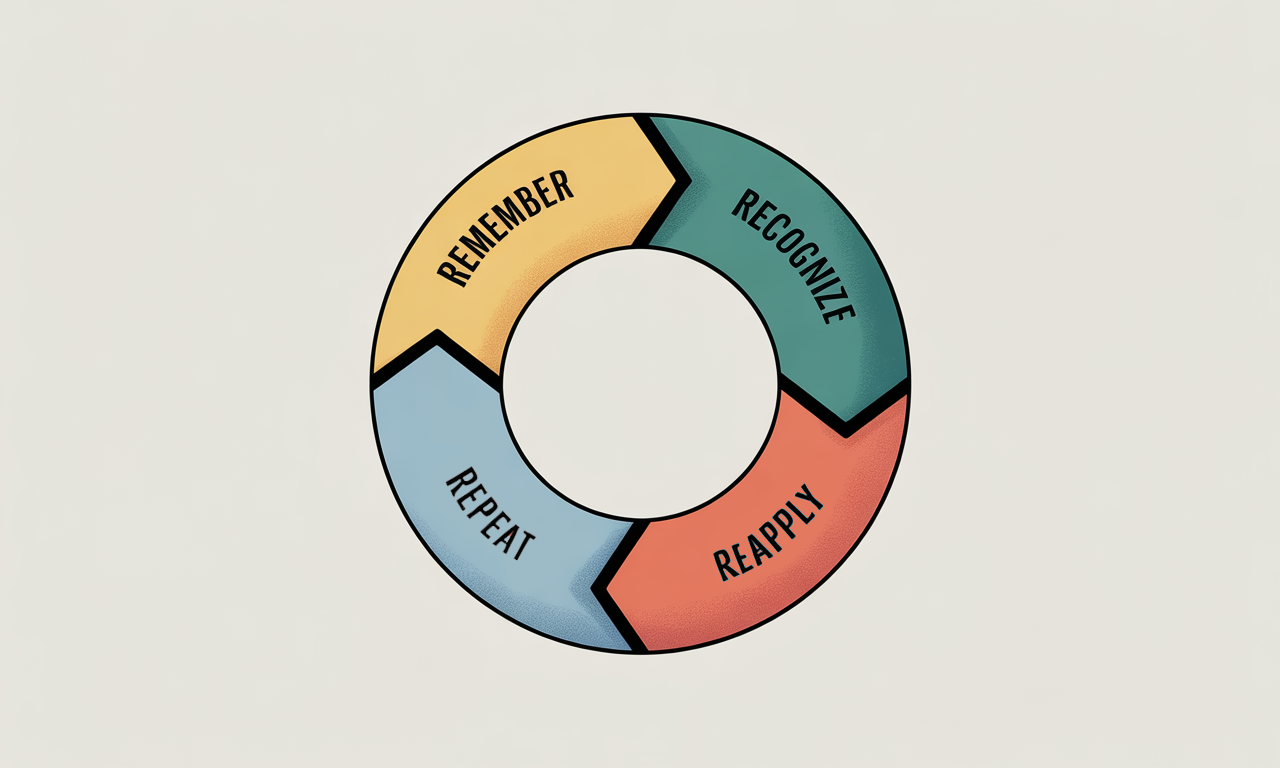
    The Hope Loop visualized as a simple four-step cycle that strengthens marriage through remembrance.The Hope Loop is a spiritual practice of recalling the cycles of goodness that keep repeating-so you stop treating every setback like the first one. It’s noticing, naming, and looping back to evidence of grace until faith becomes muscle memory.

    Here’s the pattern:

    Remember → Recognize → Reapply → Repeat

    1. Remember how God has carried you before.
    2. Recognize similar patterns of help showing up now.
    3. Reapply faith by responding with gratitude instead of panic.
    4. Repeat the process when the next uncertainty arrives.

    Over time, this cycle turns despair into data. Your hope stops being theoretical-it becomes measurable.

    This concept aligns with The Evidence File: Building Proof That Love Still Lives Here. Both are about building emotional and spiritual case files that remind your heart that grace has a track record.


    Step One: Remember Where Hope Has Shown Up Before

    Married couple revisiting past memories to identify recurring patterns of hope and grace.Start your Hope Loop by recalling specific instances when hope seemed gone-but wasn’t.

    Ask yourselves:

    • What was a time we thought something was over but it wasn’t-
    • When did peace return after we stopped trying to control everything-
    • Where did we see God’s fingerprints only in hindsight-

    These answers are the raw materials of your Hope Loop. You’re not rewriting the past; you’re mining it for proof.

    Write them down. Speak them out loud. Even if the memory feels small-like the night you laughed after a tense day-it counts.

    That moment was your marriage remembering how to breathe.

    If you’ve already created The Memory Bank: Saving Good Moments for the Days You Forget, review it through this lens. Every “deposit” is a receipt of God’s reliability.


    Step Two: Recognize the Recurring Rhythms

    Recognizing recurring rhythms of love and hope in marriage as evidence of divine faithfulness.Every couple has recurring grace rhythms-patterns of healing, laughter, timing, or peace that return like seasons. Once you spot them, you’ll realize they were never coincidences; they were consistency disguised as chance.

    Look for these categories:

    • Emotional Patterns: How calm returns after chaos.
    • Spiritual Patterns: How prayer or Scripture brings clarity.
    • Relational Patterns: How repair happens even after tension.

    The Hope Loop works because it turns vague memories into concrete evidence. You stop saying “maybe it’ll get better someday” and start saying “it’s gotten better before, and this looks like the beginning of that again.”

    This mindset pairs naturally with Proof of Life: Finding What’s Still Working When Everything Feels Off-where couples learn to spot subtle signs of love in the middle of difficulty. Together, they form a twin practice of recognizing what’s alive instead of rehearsing what’s wrong.


    Step Three: Reapply Faith Through Gratitude

    Reapplying faith through gratitude strengthens marriage and reactivates the hope loop.Once you see the pattern, the next step is response. Gratitude reactivates the circuit. It tells your nervous system, “We’re safe; we’ve seen this ending before-and it was good.”

    When you notice old evidence resurfacing (like calm after tension or unity after prayer), say it aloud:

    “This feels familiar. We’ve been carried like this before.”

    Speaking faith aloud isn’t forced positivity-it’s pattern awareness. Gratitude turns remembrance into momentum.

    This step mirrors the posture described in Celebrate the Ordinary: How Noticing Small Joys Changes the Mood of Your Home. Both use micro-gratitude as a tool to reset emotional tone. The Hope Loop just roots it deeper in faith history.


    Step Four: Repeat the Loop Until Hope Feels Automatic

    Daily visual reminders help couples repeat the hope loop and sustain long-term faith.Hope strengthens through repetition. The more you cycle through remembering, recognizing, and reapplying, the less fragile it feels.

    Soon, you won’t need to force perspective-you’ll have built it. Your reflex will shift from “What if this goes wrong-” to “We’ve been through worse-and came out stronger.”

    This is the miracle of the Hope Loop: it doesn’t erase hardship; it reframes it as the middle of a familiar story.

    You can reinforce this mindset by creating a visual cue-a note on your wall that reads, “We’ve seen this before.” Pair it with Anchor Objects: Little Things That Trigger Big Love for tangible reminders of recurring faithfulness.


    Step Five: Spot God’s Signature Across the Seasons

    Recognizing God’s signature across marriage seasons strengthens the hope loop.When you step back, the Hope Loop reveals God’s signature written across your timeline. He’s been showing up with the same character-steady, creative, precise-no matter the circumstances.

    Take time to trace His consistency:

    • How did He use old wounds to produce new wisdom-
    • How did He turn delays into preparation-
    • How did He pair His timing with your readiness-

    You’ll begin to see that your story isn’t random-it’s rhythmic.

    This recognition turns prayer from pleading to partnership. Instead of asking, “Will You-” you begin saying, “You always have.”

    That’s the language of mature hope.

    If you want to take this reflection deeper, explore Faithful Remembering: Spiritual Practices to Recall God’s Goodness in Marriage. Together, these practices become a lifestyle of noticing divine patterns and responding with worship.


    Step Six: Use the Hope Loop in Real Time

    Applying the hope loop in real time helps couples restore peace and perspective quickly.When new challenges appear-tight finances, emotional distance, or uncertainty about the future-activate your Hope Loop:

    1. Pause.
    2. Ask, “When have we felt this way before-”
    3. Recall what eventually shifted.
    4. Speak gratitude before panic has a chance to speak fear.

    You’ll find that your faith doesn’t disappear during hardship-it just forgets where it last saw the evidence. The Hope Loop helps you relocate it fast.

    Pair this step with The Five-Minute Rewind: A Micro-Practice for Hard Days to create a quick emotional reset when tension rises.


    Step Seven: Teach Each Other How to Spot the Loop

    Couples supporting each other by recalling past grace to reignite hope in the present.One of the best ways to strengthen your marriage is to become witnesses of each other’s faith. When your spouse starts to spiral, you can say, “This looks familiar-remember how it ended last time-”

    You’re not minimizing their pain-you’re pointing to proof. The Hope Loop works best when practiced together. It’s a shared language for recognizing God’s fingerprints.

    Here’s a quick couple’s cue:

    • When one person says, “This feels hopeless,”
    • The other responds, “What did we learn the last time it felt like this-”

    That small question reopens the loop.

    If you’ve been doing Past Grace, Present Strength: How to Borrow Faith from What You’ve Survived, this step will feel natural. Both are about gathering evidence that what’s been true before will be true again.


    Step Eight: Let the Hope Loop Become Your Testimony

    Married couple sharing hope loop testimony to strengthen others’ faith in marriage.Once you’ve lived through a few cycles of remembering and renewal, your testimony changes. You stop saying, “We hope God shows up,” and start saying, “He always does.”

    That statement isn’t arrogance-it’s evidence. It’s the result of years of documented faithfulness.

    You can even share your Hope Loop story with other couples who are struggling. Testimony transforms remembrance into ministry.

    If you’re ready for that stage, visit Remembered on Purpose: How Couples Can Reclaim Joy Through Shared Testimony for practical ways to turn your story into encouragement for others.


    Step Nine: Keep the Loop Open

    Symbolic image of marriage as an unbroken loop of faith, grace, and lasting hope.The Hope Loop never ends-it grows. Every time you walk through a storm, you add another turn to the spiral of faith.

    One day, when another couple feels hopeless, you’ll be able to say, “We’ve seen this pattern too. It always ends with peace.”

    That’s the power of hope rooted in history-it multiplies.

    So today, ask yourselves:

    “What are the three patterns of grace that keep showing up in our story-”

    Write them down. Speak them often. Because those patterns are the map you’ll follow when tomorrow feels dark.

    The loop isn’t a theory-it’s your proof.