Tag: healthy marriage habits

  • What Your Marriage Is Teaching Your Children About Love

    What Your Marriage Is Teaching Your Children About Love

    Children don’t learn what love is from a single conversation.

    They learn it from an environment.

    They learn it from tone more than words. From patterns more than promises. From what happens after conflict more than what happens before it. From what is repaired, what is ignored, and what is repeated.

    Long before your children ever date, marry, or build relationships of their own, they are already being trained.

    what your marriage is teaching your children about love through everyday interactionThey are being trained by your marriage.

    Not in a dramatic, obvious way. But in quiet, daily, formative ways that shape how their nervous system understands connection, safety, trust, and intimacy.

    This is why your marriage is not just a private relationship between two adults. It is the emotional classroom your children live in every day.

    And whether you realize it or not, your marriage is teaching them something about love.

    The question is not whether they are learning. The question is what they are learning.


    Children Learn Love by Watching, Not by Listening

    children learning love by watching their parents’ marriageMost parents care deeply about what they say to their children.

    They want to teach values. They want to give good advice. They want to model respect. They want to guide wisely.

    But children don’t primarily learn love from lectures.

    They learn it from observation.

    They watch how you speak to each other when you are tired. They watch how you respond when plans fall apart. They watch how you handle disagreement. They watch how you repair after harsh words. They watch how affection is given or withheld. They watch how safe it feels to make a mistake.

    And they absorb those moments as truth.

    They don’t think, “This is my parents’ conflict style.” They think, “This is what relationships are like.”

    That belief settles deep. It becomes familiar. And familiarity often becomes destiny.


    What Your Marriage Teaches When Love Feels Conditional

    what your marriage is teaching your children about conditional loveWhen a marriage becomes transactional, children notice.

    They may not know the word transactional, but they feel it.

    They feel when affection depends on behavior. They feel when kindness is earned. They feel when warmth disappears after conflict. They feel when silence becomes punishment. They feel when love feels fragile.

    In transactional marriages, children learn subtle lessons:

    Love must be earned. Mistakes cost connection. Conflict is dangerous. Safety depends on performance. People withdraw when they are disappointed.

    Some children respond by becoming people-pleasers, constantly scanning for approval. Others respond by pulling away emotionally, deciding that closeness is too costly.

    Neither response is a failure of the child. It is an adaptation to the environment.

    If transactional patterns have crept into your marriage, it often happened quietly, under stress, without intention. The post “When Love Becomes a Transaction: How Marriage Turns Cold Without You Noticing” explains how easily this happens and why it matters so much.


    What Children Learn When Marriage Uses Control Instead of Care

    children absorbing control-based marriage patternsControl in marriage often comes from fear.

    Fear of being unheard. Fear of losing influence. Fear of repeating pain. Fear of chaos.

    But when control becomes the dominant way parents interact, children internalize powerful lessons.

    They learn: Power matters more than understanding. Silence is safer than honesty. Strong emotions lead to punishment. Authority wins, not connection. Love can be withdrawn.

    Children raised in controlling relational environments often become hyper-aware of emotional shifts. They learn to read moods. They learn to manage tension. They learn to stay small or stay guarded.

    Others grow up modeling what they see, using control in their own relationships because it feels familiar.

    If control shows up in your marriage through silence, pressure, urgency, withholding, or emotional withdrawal, those patterns are not just affecting your spouse. They are shaping how your children understand relationships.

    The post “Control Levers in Marriage: The Hidden Ways We Manipulate Instead of Connect” explores these behaviors in depth and why they damage emotional safety.


    Emotional Safety in Marriage Creates Emotional Security in Children

    emotional safety in marriage creates security for childrenEmotional safety is the sense that you can be human without being punished.

    When children grow up in a home where emotional safety exists between parents, they feel it even if they cannot articulate it.

    They feel: The house is stable. Conflict does not mean abandonment. Love does not disappear when things get hard. Repair is possible. Feelings are allowed.

    Emotional safety between parents becomes emotional security for children.

    They relax. They regulate more easily. They explore more freely. They trust more deeply.

    This is why protecting the marriage relationship itself matters so much.

    When parents protect emotional safety in their marriage, they are not just investing in their relationship. They are shaping the emotional climate their children live inside.

    The foundation of this idea is explained deeply in “Protect the Goose: How to Put Your Marriage Before the Benefits It Produces,” which shows why relationship preservation comes before outcomes.


    What Children Learn When Parents Proof Hunt Instead of Repair

    what your marriage is teaching your children about mistakes and blameProof hunting happens when parents stop listening to understand and start listening to confirm.

    Every mistake becomes evidence. Every disagreement becomes a case. Every conversation becomes a trial.

    Children who grow up in this environment learn:

    Being wrong is unsafe. Admitting mistakes is dangerous. Honesty leads to shame. Defense is necessary. Love is fragile under scrutiny.

    They may become secretive. They may avoid accountability. They may struggle to apologize. They may fear conflict deeply.

    Not because they are dishonest, but because they learned that mistakes cost connection.

    If proof hunting has become part of your marriage dynamic, it doesn’t just affect intimacy between spouses. It shapes how children relate to truth, responsibility, and vulnerability.

    The post “Proof Hunting: Why Looking for Evidence You’re Right Is Poisoning Your Marriage” explains why this habit is so damaging and how to replace it with curiosity and repair.


    Children Learn More From Repair Than From Perfection

    children learning repair by watching parents reconcileMany parents believe the goal is a conflict-free home.

    It is not.

    The goal is a repair-filled home.

    Children do not need parents who never disagree. They need parents who know how to come back together.

    Repair teaches children:

    Conflict does not destroy love. Apologies are possible. People can change. Humility is strength. Relationships can heal.

    When children see parents say, “I’m sorry,” they learn accountability. When they see parents restart conversations, they learn resilience. When they see parents soften tone, they learn emotional regulation.

    Repair builds hope.

    It tells children that relationships are workable, not disposable.

    Repair is also a central part of emotional leadership in marriage. Emotional leadership means choosing connection over pride and repair over ego, without absorbing all the blame.

    The post “Emotional Leadership in Marriage: Caring First Without Becoming a Doormat” explores how this leadership looks in real life.


    Courtesy Between Parents Teaches Children What Respect Feels Like

    courtesy in marriage teaching children respect and warmthCourtesy is not fluff.

    Courtesy is structure.

    When children see parents speak with basic respect, even during stress, they learn:

    Respect is normal. Tone matters. Kindness does not disappear under pressure. Love has manners.

    Small courtesies teach powerful lessons:

    A warm greeting. A gentle tone. A thank you. A respectful request. A soft touch.

    These moments may feel insignificant to adults, but they create emotional safety for children.

    When courtesy disappears, children feel it as tension.

    If kindness has faded in your marriage because life is busy or conflict has become chronic, that does not mean love is gone. It means structure has weakened.

    The post “Kindness Is Not Weakness: Why Courtesy Is a Marriage Skill, Not a Personality Trait” explains why courtesy is one of the strongest stabilizers in both marriage and family life.


    Your Marriage Is Teaching Your Children How Power Works

    modeling healthy power dynamics in marriage for childrenChildren are always learning about power.

    Who has it. How it is used. What happens when someone disagrees. Who gets heard. Who gets dismissed.

    If power in marriage looks like control, dominance, or punishment, children learn that power is something to fear or wield.

    If power in marriage looks like responsibility, restraint, and care, children learn that strength can be safe.

    Replacing control with care does not make parents weak. It models maturity.

    Care says: We can address issues without harming each other. We can set boundaries without cruelty. We can protect connection while holding truth.

    The post “Replacing Control With Care: The Shift That Restores Safety and Trust” explores why this shift is so transformative for both marriages and families.


    How Your Marriage Shapes Your Children’s Future Relationships

    The patterns your children see at home often become their default expectations later.

    They may not consciously choose them, but they recognize them as familiar.

    Children raised in emotionally safe marriages often grow into adults who: Communicate openly. Repair quickly. Set healthy boundaries. Value mutual respect. Trust that love can handle conflict.

    Children raised in emotionally unsafe marriages often struggle with: Avoidance or anxiety. Fear of conflict. Difficulty trusting. Harsh self-criticism. Repetition of familiar but unhealthy patterns.

    This is not destiny, but it is influence.

    And influence matters.

    The good news is that change in the present reshapes the future. Children are incredibly adaptive when the environment shifts.


    How to Change What Your Marriage Is Teaching Without Being Perfect

    Many parents feel guilt when they read something like this.

    They think: We’ve already messed up. They’ve already seen too much. It’s too late.

    It is not too late.

    Children benefit more from visible growth than from a flawless past.

    Here are practical ways to shift what your marriage is teaching starting now.


    Model Respectful Tone, Even When Upset

    You do not need to suppress emotion. You do need to protect tone.

    Say: I’m upset, but I want to speak respectfully. I need a moment to calm down. Let me restart that.

    This teaches emotional regulation.


    Name Repair Out Loud

    Let children hear you repair.

    Say: I didn’t like how I spoke earlier. I’m sorry. We had a disagreement, but we’re okay. We’re working through it together.

    This reassures them.


    End Withdrawal as Punishment

    If you need space, explain it.

    Say: I need a break to calm down. I’ll be back.

    This teaches that space is for regulation, not abandonment.


    Practice Daily Courtesy

    Courtesy stabilizes the home.

    Warm greetings. Thank yous. Gentle touches. Respectful requests.

    These moments rebuild warmth.


    Choose Care Over Control

    Ask: What protects our relationship right now- What keeps this home safe-

    This single question can shift the environment dramatically.


    What to Say to Children After Conflict

    Children often don’t need details. They need reassurance.

    Say: Mom and Dad disagreed, but we love each other. We’re learning how to handle hard moments better. It’s okay to have big feelings. It’s not okay to hurt each other. Our relationship is safe.

    These statements protect their nervous system.


    Conclusion: Your Marriage Is Writing Their First Love Story

    Your children are learning love at home.

    They are learning what safety feels like. They are learning how conflict works. They are learning whether mistakes cost connection. They are learning whether repair is possible. They are learning what strength looks like.

    When you protect your marriage, you protect your children’s emotional world.

    When you replace control with care, you teach safety. When you practice repair, you teach resilience. When you show courtesy, you teach respect. When you lead emotionally, you teach courage.

    Your marriage is teaching your children about love.

    And the lessons you model today shape the relationships they build tomorrow.

  • No More Mind-Reading: Replace Assumptions With Requests

    No More Mind-Reading: Replace Assumptions With Requests

    Assumptions feel efficient, but they’re expensive.

    They save you time in the moment-because you don’t have to ask, clarify, or risk vulnerability. You just “know.” You assume you know what that tone meant, why they forgot, what that look implied, what the silence proved. Then you react to a story, not a spouse.

    And that’s where so many marriages get stuck: not because the issue is impossible, but because the couple is fighting a narrative instead of solving a problem.

    Replace assumptions with requests in marriage through calm conversation and clear communication.Requests are slower, but they’re cleaner. They require courage. They require humility. They require you to admit, “I don’t actually know what’s going on inside you right now… so I’m going to ask.”

    This post is about the shift from “If you loved me you would…” to “Here’s what I need-can we try this-” That one switch turns confusion into clarity and resentment into teamwork. It is one of the most powerful agency habits you can build in your marriage, because it keeps small moments from becoming permanent conclusions.


    Replace Assumptions With Requests: Why Mind-Reading Feels So Tempting

    Replace assumptions with requests by shifting from mind-reading to clear communication.Mind-reading feels like love at first. It feels romantic to believe, “My spouse should just know.” It feels efficient to interpret tone and move on. It feels protective to assume the worst before you can be disappointed.

    But mind-reading is usually not love-it’s fear wearing a crown.

    We assume because:

    • We don’t want to look needy
    • We don’t want to risk rejection
    • We don’t want to start a fight
    • We don’t want to admit we’re unsure
    • We’re tired and our brain wants shortcuts
    • We’ve been hurt before, so we “pre-decide” what things mean

    The problem is that assumptions don’t just fill in blanks. They fill in blanks with your current mood.

    When you’re stressed, assumptions skew negative.
    When you’re insecure, assumptions skew personal.
    When you’re exhausted, assumptions skew hopeless.
    When you’re resentful, assumptions skew accusatory.

    That’s why the habit to replace assumptions with requests matters so much. It interrupts the automatic story and makes room for the truth.

    A marriage can survive hard seasons. What it struggles to survive is years of unchallenged assumptions.


    The Hidden Price Tag of Assumptions in Marriage

    Assumptions in marriage create distance and resentment when couples react to stories instead of facts.Assumptions may feel quick, but they charge interest.

    Here’s what they cost over time:

    1) They create fights about things that aren’t even true

    You’re not arguing about what happened-you’re arguing about what you think it meant.

    2) They turn your spouse into a character

    Instead of “a person with complexity,” they become:

    • “the selfish one”
    • “the cold one”
    • “the irresponsible one”
    • “the dramatic one”

    Once your spouse becomes a character, you stop staying curious.

    3) They train your brain to look for proof

    Assumptions don’t want correction. They want confirmation.

    So you start scanning for evidence that supports the story: “See- They did it again.”

    4) They block teamwork

    You can’t work as a team if you’re reacting to a version of your spouse that exists mostly in your head.

    5) They poison intimacy

    Emotional closeness requires safety. Assumptions create suspicion, and suspicion kills softness.

    This is why the instruction is so simple but so life-changing: replace assumptions with requests. You’re not just changing communication-you’re changing the emotional environment.

    If you want the big-picture foundation for why this matters, interlink this early section naturally to the cornerstone: “This shift is part of choosing agency, and the cornerstone at https://blog.liveyourbestmarriage.com/agency/victim-or-builder explains why builders ask instead of assume.”


    Replace Assumptions With Requests: The Builder’s Shortcut to Clarity

    Replace assumptions with requests using a simple marriage conversation plan and written clarity.Here’s the paradox: requests are slower in the moment, but they’re faster in the long run.

    Assumptions create:

    • conflict
    • defensiveness
    • emotional spirals
    • days of tension
    • cold shoulder
    • rehashing the past

    Requests create:

    • clarity
    • correction
    • shared understanding
    • repair
    • problem-solving
    • closeness

    So if you’re serious about building a healthy marriage culture, the builder’s shortcut is this:

    Stop guessing. Start requesting.

    Builder posture says: “I’d rather feel awkward for 20 seconds than resentful for 2 days.”

    And that sentence is more mature than most people realize.

    Because maturity isn’t “not needing anything.”
    Maturity is knowing what you need and asking for it with respect.


    The “Assumption Ladder”: How You Go From Tone to Verdict in 3 Seconds

    Replace assumptions with requests by spotting the assumption ladder and slowing down your story.Assumptions often happen so fast you don’t even notice them. It’s like your brain climbs a ladder:

    1. Observation: “They sighed.”
    2. Interpretation: “They’re annoyed.”
    3. Meaning: “I’m a burden.”
    4. Conclusion: “They don’t care.”
    5. Reaction: sarcasm, shutting down, snapping, withdrawing

    That entire ladder can happen in three seconds.

    And here’s what’s wild: your spouse might have sighed because their back hurts, the day was long, or they’re thinking about a deadline. But your brain-trying to protect you-turns the moment into a verdict.

    Replacing assumptions with requests means you learn to pause on the ladder.

    A simple interrupting phrase is: “I’m noticing I’m telling myself a story.”

    Then you ask a clean question: “Hey, I heard that sigh-are you feeling frustrated with me, or is something else going on-”

    That one question can prevent a spiral.

    This is also where meaning-making matters. If you want a strong companion tool for catching your story before it hardens, weave in https://blog.liveyourbestmarriage.com/meaning-making/question-the-story like this: “When you feel yourself climbing the assumption ladder, use the questions from https://blog.liveyourbestmarriage.com/meaning-making/question-the-story to slow the story down before it becomes ‘proof.’”


    Replace Assumptions With Requests in Conflict: The Exact Switch to Practice

    Replace assumptions with requests by shifting from accusing language to clear requests for connection.Let’s make this extremely practical.

    Here’s the switch:

    Assumption language:

    • “You don’t care.”
    • “You always do this.”
    • “You’re being selfish.”
    • “You’re mad at me.”
    • “If you loved me, you would…”

    Request language:

    • “Can you tell me what you meant by that-”
    • “I need reassurance right now-can you help me-”
    • “Next time, could you give me a heads up-”
    • “Can we talk about what just happened-”
    • “Here’s what would help me feel loved-can we try this-”

    Assumptions accuse character.
    Requests name needs.

    Assumptions escalate.
    Requests clarify.

    Assumptions isolate.
    Requests invite teamwork.

    This is why the habit to replace assumptions with requests is so powerful. It doesn’t just change what you say-it changes what kind of marriage you’re building.


    Replace Assumptions With Requests: 10 Clean Request Starters That Actually Work

    Replace assumptions with requests using 10 simple request starters for better marriage communication.If you grew up around passive communication, conflict avoidance, or criticism, asking directly can feel unnatural. So here are clean request starters you can practice verbatim.

    Try these:

    1. “Can I tell you what I need right now-”
    2. “Can you help me understand what you meant-”
    3. “When you said that, I felt ___-is that what you intended-”
    4. “I’m making an assumption and I want to check it.”
    5. “Would you be willing to try something different next time-”
    6. “Can we reset this moment- I want to stay close.”
    7. “Here’s what would make me feel cared for-can we do that-”
    8. “Can you reflect back what you heard me say-”
    9. “Can we solve this as a team instead of debating-”
    10. “I need reassurance-can you speak to that-”

    These requests are not weak. They are strong. They are adult. They are builder language.

    And if you’re building a whole marriage culture around how your words shape the environment, this is a natural spot to interlink to Language That Builds at https://blog.liveyourbestmarriage.com/communication/language-that-builds inside a sentence like: “If you want more examples of builder phrases that reduce defensiveness, the framework in https://blog.liveyourbestmarriage.com/communication/language-that-builds gives you language you can borrow until it becomes your own.”


    The Two Types of Requests: Emotional Requests and Practical Requests

    Emotional requests help replace assumptions with requests and rebuild closeness in marriage.A lot of couples do practical requests fairly well:

    • “Can you pick up milk-”
    • “Can you take the trash out-”
    • “Can you text me when you’re leaving work-”

    But emotional requests feel harder:

    • “Can you reassure me-”
    • “Can you slow down and listen-”
    • “Can you stay present with me-”
    • “Can you hold me for a minute-”
    • “Can you apologize without explaining-”

    If you want to replace assumptions with requests consistently, you need both kinds.

    Because many fights that look practical are actually emotional:

    “We’re always late.” (practical)
    …often means…
    “I feel like I don’t matter.” (emotional)

    “You didn’t help with the kids.” (practical)
    …often means…
    “I feel alone.” (emotional)

    “You’re on your phone again.” (practical)
    …often means…
    “I miss you.” (emotional)

    Builder posture learns to request the real need, not just fight the surface issue.


    Replace Assumptions With Requests When You’re Triggered (Because That’s When It’s Hardest)

    Replace assumptions with requests using a pause protocol when you feel triggered in marriage.The hardest time to request is the moment you most need to.

    When you’re triggered, your body wants to protect you. Your brain wants to conclude. Your emotions want to punish.

    So here’s a simple “trigger protocol” for replacing assumptions with requests:

    Step 1: Name the trigger

    “I’m feeling activated.”

    Step 2: Name the story you’re tempted to believe

    “I’m telling myself you don’t care.”

    Step 3: Ask the clarifying question

    “Is that true, or is something else going on-”

    Step 4: Make the request

    “What I need right now is ____.”

    Step 5: Confirm the goal

    “I want closeness, not a fight.”

    That’s it.

    It won’t feel smooth at first. But it will feel cleaner.

    And if you’re thinking, “My spouse will mock me if I talk like that,” that’s important data. Builders don’t ignore that. They address it-with boundaries, timing, and clear conversation.

    If this habit is new to your marriage, you may want to start in low-stakes moments first. Practice requesting during calm moments, so you’re not trying to learn the skill while the house is on fire.


    The “If You Loved Me You Would” Trap (and the Better Sentence)

    Replace assumptions with requests by swapping ‘If you loved me you would’ for a clear request“If you loved me you would…” is one of the most expensive sentences in marriage.

    Because it turns love into a test. And tests create pressure, not partnership.

    That sentence usually hides a real need:

    • safety
    • reassurance
    • consideration
    • priority
    • affection
    • support

    So here’s the better builder sentence:

    “Here’s what helps me feel loved-can we try this-”

    Notice what changes:

    • You stop accusing their heart.
    • You start naming your need.
    • You invite partnership.
    • You create a doable next step.

    Replace assumptions with requests means you stop using love as a weapon and start using clarity as a bridge.


    Replace Assumptions With Requests Without Sounding Controlling

    Replace assumptions with requests to create teamwork and fit needs together without controlling each other.Some people avoid requests because they’re afraid of being controlling.

    But control and clarity are not the same.

    Control says: “You have to do it my way.”

    Clarity says: “This is what I need to thrive with you.”

    Here’s a healthy request posture:

    • respectful tone
    • specific ask
    • openness to negotiation
    • willingness to hear “not right now”
    • commitment to the relationship’s good

    Healthy requests leave room for your spouse’s humanity.

    For example: “Could you check in with me before you make weekend plans- It helps me feel like we’re a team. If that feels hard, can we talk about what would work-”

    That’s not control. That’s teamwork.

    And if your spouse responds defensively to any request, that becomes the next conversation: “I notice when I ask for something, it feels like you hear it as criticism. I want us to learn how to request without attacking.”

    That’s builder work.


    When Requests Fail: What to Do If Your Spouse Doesn’t Respond Well

    Replace assumptions with requests and keep trying with calm persistence after a hard conversation.Sometimes you make a clean request… and it still goes sideways.

    Maybe your spouse:

    • gets defensive
    • shuts down
    • jokes it off
    • flips it back on you
    • says “Here we go again”

    If that happens, don’t retreat back into assumptions. Stay in builder posture.

    Here’s the move:

    1. Validate the difficulty without abandoning the request
      “I hear this feels like pressure. I’m not trying to attack you.”
    2. Restate the need calmly
      “This is still something I need us to work on.”
    3. Offer a smaller next step
      “Can we start with one thing-like checking in once a day-”
    4. Choose timing if the moment is too hot
      “We don’t have to solve it right now. Can we talk tonight after dinner-”

    And if your marriage is in a season where setbacks happen often, it helps to have a reset plan. You can weave in https://blog.liveyourbestmarriage.com/quitting/slip-back-into-old-habits naturally like this: “When a conversation collapses, we use the reset steps from https://blog.liveyourbestmarriage.com/quitting/slip-back-into-old-habits so we don’t turn one rough moment into a week-long freeze.”

    Builders don’t panic when a request fails. They adjust and try again.


    Replace Assumptions With Requests: A Simple Daily Practice That Rewires Your Marriage

    Replace assumptions with requests using a daily habit that converts stories into clear communication.If you want this habit to become your new normal, you need repetition-small, not dramatic.

    Try this daily practice for one week:

    The One-Assumption Check

    Once per day, ask yourself: “What assumption did I make today about my spouse-”

    Then convert it into a request.

    Examples: Assumption: “They don’t care about my day.”
    Request: “Can I tell you about my day for two minutes, and can you ask me one question-”

    Assumption: “They’re ignoring me.”
    Request: “Can we have 10 minutes without phones tonight-”

    Assumption: “They think I’m incompetent.”
    Request: “Can you tell me what you appreciated about how I handled that-”

    This practice is simple-but it is one of the fastest ways to replace assumptions with requests consistently.

    Because you’re training your brain to do the conversion automatically.


    The Bigger Why: Requests Build the Kind of Marriage You Actually Want

    Replace assumptions with requests to build a bridge of clarity and connection in marriage.At the root, this is about what kind of marriage you’re building.

    Assumptions create a marriage where:

    • people defend themselves
    • people hide
    • people keep score
    • people punish with silence
    • people feel lonely in the same house

    Requests create a marriage where:

    • needs are safe to name
    • clarity is normal
    • repair happens faster
    • teamwork is possible
    • closeness grows

    Requests don’t guarantee your spouse will respond perfectly.

    But requests do guarantee this: you’re dealing with reality, not fantasy.

    And that is what builders do.

    If you want the cornerstone framework for why this shift is a major agency move, circle back and read https://blog.liveyourbestmarriage.com/agency/victim-or-builder because builder posture is not just about optimism-it’s about choosing actions that create a better next moment.

    And when your mind starts writing a story again (because it will), keep https://blog.liveyourbestmarriage.com/meaning-making/question-the-story close so you can slow down, ask better questions, and stay connected to truth.

  • The Commitment Mirror: Your Marriage Reflects What You Prioritize

    The Commitment Mirror: Your Marriage Reflects What You Prioritize

    Introduction

    Married couple reflecting on their relationship and priorities in a mirror.Have you ever looked at your marriage and wondered, How did we get here- Maybe the passion has faded, the conversations feel shallow, or the emotional distance has grown. And yet, if you step back and truly examine what’s been taking up your time, energy, and focus, the answer becomes clear: your marriage is reflecting what you’ve prioritized.

    Your marriage isn’t a mystery-it’s a mirror. It’s showing you exactly what you’ve been committed to, consciously or not. If peace, connection, and intimacy are missing, it’s likely not because your spouse stopped trying. It might be because-without realizing it-you’ve been more committed to comfort, control, work, distraction, or even conflict avoidance.

    In this blog post, we’ll explore how the current state of your marriage is not random. It’s the result of what you’ve been choosing day after day. And if you want to change the reflection, it starts by changing your focus.


    Your Marriage Is the Mirror of Your Daily Commitments

    Marriage de-prioritized in daily routine, reflecting current focus.Your marriage isn’t built on the wedding day. It’s built on what happens every day after. And what shows up-whether it’s tension or tenderness-is a reflection of what each partner is prioritizing.

    Think about it:

    • If you prioritize screen time over conversation, expect disconnection.
    • If you prioritize control over cooperation, expect power struggles.
    • If you prioritize external success over internal peace, expect emotional burnout.

    Whatever you’re consistently giving your attention to becomes the atmosphere of your marriage.

    This isn’t about blame-it’s about awareness. Your relationship will always reflect your real commitments, not your ideal intentions.


    When You Prioritize Comfort, You Risk Connection

    Emotional disconnect in marriage caused by over-prioritizing comfort and routine.It’s easy to confuse peace with passivity. Many couples drift into a cycle where they avoid hard conversations to “keep the peace,” but end up living in quiet tension.

    When comfort becomes the goal, connection often suffers. That might look like:

    • Avoiding deep conversations because they’re “too emotional”
    • Keeping conflict at bay by walking on eggshells
    • Retreating into routines rather than risking vulnerability

    True intimacy requires courage. It asks us to choose discomfort for the sake of growth. If your marriage feels emotionally stale, it may be time to ask: Have we been prioritizing ease over engagement-


    The Hidden Cost of Prioritizing Control Over Connection

    Power struggles in marriage created by control and emotional dominance.Control is often a disguised form of fear. One partner may try to manage everything-finances, schedules, the emotional climate-to feel safe. But control comes at a high relational cost.

    You might be:

    • Talking at your spouse instead of with them
    • Dismissing their emotions as “overreactions”
    • Keeping score in arguments to maintain the upper hand

    When control takes priority, trust erodes. Your spouse stops opening up. They stop offering their thoughts and feelings. Eventually, they may stop showing up emotionally altogether.

    If you’ve been the one clinging to control, ask yourself: Am I more committed to feeling in charge than to feeling close-


    Prioritizing Work, Kids, and Everything But Each Other

    Busy life pushing marriage to the background in daily priorities. Let’s be honest-life is busy. Between careers, parenting, finances, and personal goals, marriage can quickly fall to the bottom of the priority list.

    But here’s the truth: if your marriage only gets the scraps of your energy, it will only grow in scraps.

    You might think:

    • “We’ll reconnect after the kids are older.”
    • “My spouse understands-I’m doing this for the family.”
    • “Once things slow down, I’ll invest more.”

    But life rarely slows down on its own. If you don’t fight to prioritize your spouse now, the marriage may not be strong enough to weather future seasons.


    Conflict Avoidance: The Illusion of Peace

    Emotional distance created by avoiding necessary conflict in marriage.Avoiding conflict doesn’t create peace-it creates distance.

    When couples prioritize avoiding discomfort over working through hard emotions, they unknowingly build walls. Over time, communication becomes surface-level. Resentments fester. Issues go unresolved.

    Conflict handled with respect can build intimacy. But unaddressed conflict leads to isolation.

    Ask yourself:

    • Am I prioritizing short-term calm over long-term closeness-
    • What conversations are we avoiding that we need to have-

    Facing conflict with humility and empathy may be one of the most loving things you do for your relationship.


    Your Emotional Habits Reflect Your True Priorities

    Emotional habits in marriage revealing underlying relational priorities.Words, tone, facial expressions, and daily responses all reveal what we truly value.

    Are you:

    • Quick to criticize but slow to compliment-
    • More likely to vent about your spouse than speak to them-
    • Emotionally reactive instead of responsive-

    These habits speak louder than any love letter or anniversary post. They show whether we’re prioritizing connection, empathy, and grace-or whether we’re just surviving the relationship.

    Changing your emotional tone starts with awareness. How do you show up when you’re tired, frustrated, or feeling misunderstood- That’s when your priorities are clearest.


    How to Use the Mirror to Shift Your Marriage

    Reflections of personal values and relational priorities in marriage.Now that you see how your marriage reflects your priorities, what can you do-

    Start here:

    1. Take inventory: Honestly evaluate your time, attention, and energy. What’s getting the best of you-
    2. Ask your spouse: “Do you feel prioritized by me-” Then listen without defensiveness.
    3. Name what matters: Get clear on what kind of marriage you want. Peace- Playfulness- Depth- Start naming that as your goal.
    4. Change one habit: Shift one daily behavior to reflect your new priority. Maybe it’s putting your phone down during dinner. Or asking, “How can I support you today-”
    5. Repeat. Daily. Small actions, done consistently, transform the reflection.


    When Priorities Clash: Aligning as a Couple

    Aligning values and walking forward together in marriage.Sometimes the issue isn’t neglect-it’s misalignment. One spouse is prioritizing connection, while the other is prioritizing independence. One wants emotional vulnerability, the other prefers calm and distance.

    If this is you, don’t panic. Alignment can be built with conversation and curiosity.

    Start by discussing:

    • What does “feeling loved” look like to you-
    • What do you need more of in this season-
    • What priorities feel most important for us right now-

    Even if you begin with different priorities, you can grow toward shared values. The goal isn’t to think the same-but to build something strong together.


    Reflections Aren’t Always Comfortable-But They’re Necessary

    Clarity in marriage achieved by confronting uncomfortable truths.Looking into the commitment mirror can be uncomfortable. It requires honesty, humility, and a willingness to admit when you’ve gotten off track.

    But without reflection, there’s no real change. And without change, relationships stagnate.

    If your marriage feels distant, disjointed, or just blah-don’t blame the mirror. Instead, ask: What am I prioritizing- What am I willing to shift-

    You don’t need to be perfect. You just need to be present, intentional, and willing to adjust the lens.


    Your Marriage Will Reflect What You Choose From Here

    A healthy, connected marriage reflecting shared values and daily commitment.Every marriage reflects something. The question is-what do you want yours to reflect-

    Do you want it to reflect love, faith, joy, and connection- Or will it reflect unchecked stress, silence, resentment, or busyness-

    You get to choose. Not once. But every day.

    Your marriage will show the world what you truly value-not just in what you say, but in how you live, lead, listen, and love behind closed doors.

    Let today be the day you begin to see your marriage not as a problem to fix, but as a mirror to clean, polish, and realign. Because the image staring back at you isn’t just your relationship-it’s a reflection of your choices. And you have the power to change what you see.

  • The 100/100 Rule: Why Both Spouses Are Fully Responsible for their Marriage

    The 100/100 Rule: Why Both Spouses Are Fully Responsible for their Marriage

    In marriage, we often hear about “50/50 partnerships,” but that mindset might be holding your relationship back. At Live Your Best Marriage, we believe in the 100/100 Rule-where both partners take full responsibility for the state of their marriage. It’s easy to blame your spouse for the problems you’re facing. But real transformation starts when each person accepts that they contribute to the dynamic-both positively and negatively. This post will explore how radical responsibility can breathe new life into your relationship and help you build a stronger, more honest foundation together.


    What Is the 100/100 Rule-

    Married couple walking hand-in-hand toward a bright horizon, representing mutual commitment and accountability.The 100/100 Rule is the idea that each spouse is responsible for 100% of their side of the relationship. It’s not about dividing duties or tracking who did what. It’s about showing up with the mindset that “I am fully responsible for my part in this marriage.”

    This principle flies in the face of the traditional “50/50” mindset. In that model, there’s a built-in expectation of keeping score: “I’ll do my half if you do yours.” But marriage isn’t a contract of minimum effort. It’s a covenant of full commitment. The 100/100 Rule means that regardless of what your spouse does or doesn’t do, you bring your best self-your full self-into the relationship every day.


    Why the 50/50 Mindset Falls Short

    At first glance, 50/50 seems fair. Split the chores. Share the decisions. Take turns making sacrifices. But when stress hits or resentment builds, this math quickly becomes emotional accounting. One person feels like they’re doing more, giving more, sacrificing more. And that perceived imbalance starts to breed bitterness.

    In the 50/50 mindset:

    • You’re always measuring whether your spouse is pulling their weight.
    • You justify your inaction when you feel like they’ve dropped the ball.
    • You withhold love or affection as a form of silent protest.

    When both spouses do this, the relationship stalls. The connection weakens. And trust becomes conditional.


    The Power of Radical Responsibility

    Side-by-side images showing a couple in conflict and in joyful connection, symbolizing the impact of personal responsibility.Radical responsibility is the game-changer. It’s the practice of taking ownership-not just for your actions, but also for how you respond, how you show up emotionally, and how you contribute to the environment of the relationship.

    You can’t control your spouse’s choices, but you can control:

    • Your tone of voice
    • Your patience (or lack of it)
    • Whether you choose to forgive
    • Whether you listen or dismiss
    • Whether you contribute to peace or conflict

    When both partners operate from this mindset, something beautiful happens: no one waits for the other to go first. Both are all-in. Both are proactive. Both own the outcome.


    Accountability Doesn’t Mean Taking the Blame

    It’s important to note that the 100/100 Rule doesn’t mean one spouse takes the blame for everything or accepts mistreatment. Accountability isn’t about shame. It’s about empowerment. It says, “I may not be the cause of every issue, but I will take full ownership of my part in it-and I will take the initiative to grow.”

    When things go wrong in a relationship, it’s often because both partners are unintentionally reinforcing unhealthy cycles:

    • One shuts down, the other lashes out.
    • One avoids, the other chases.
    • One criticizes, the other withdraws.

    When each person starts to ask, “What’s my part in this pattern-” healing begins.


    Personal Reflection: The Turning Point

    Open journal on a table with a note reading ‘Own Your Role,’ encouraging self-reflection and personal responsibility in marriageThink back to the last conflict you had with your spouse. What were you feeling- What were you thinking- How did you react- Now-here’s the hard part-how did your reaction contribute to what happened next-

    The turning point for many couples is the moment they stop pointing fingers and start looking in the mirror. That level of honesty is hard-but it’s the key to real growth.

    You might discover:

    • You spoke out of frustration instead of vulnerability.
    • You expected your spouse to read your mind.
    • You were focused on being right rather than being loving.

    These insights are not weaknesses-they’re opportunities.


    The Gift of Humility in Conflict

    Humility is the doorway to intimacy. When you take ownership of your flaws, you create space for your spouse to do the same. Imagine a disagreement where instead of defending your position, you said:

    “I see how I contributed to this.”
    “I realize I wasn’t fully present.”
    “I reacted instead of responding. I’m sorry.”

    That posture disarms defensiveness. It invites connection. It builds trust. And it shifts the entire emotional tone of your marriage.


    Building a Culture of Accountability

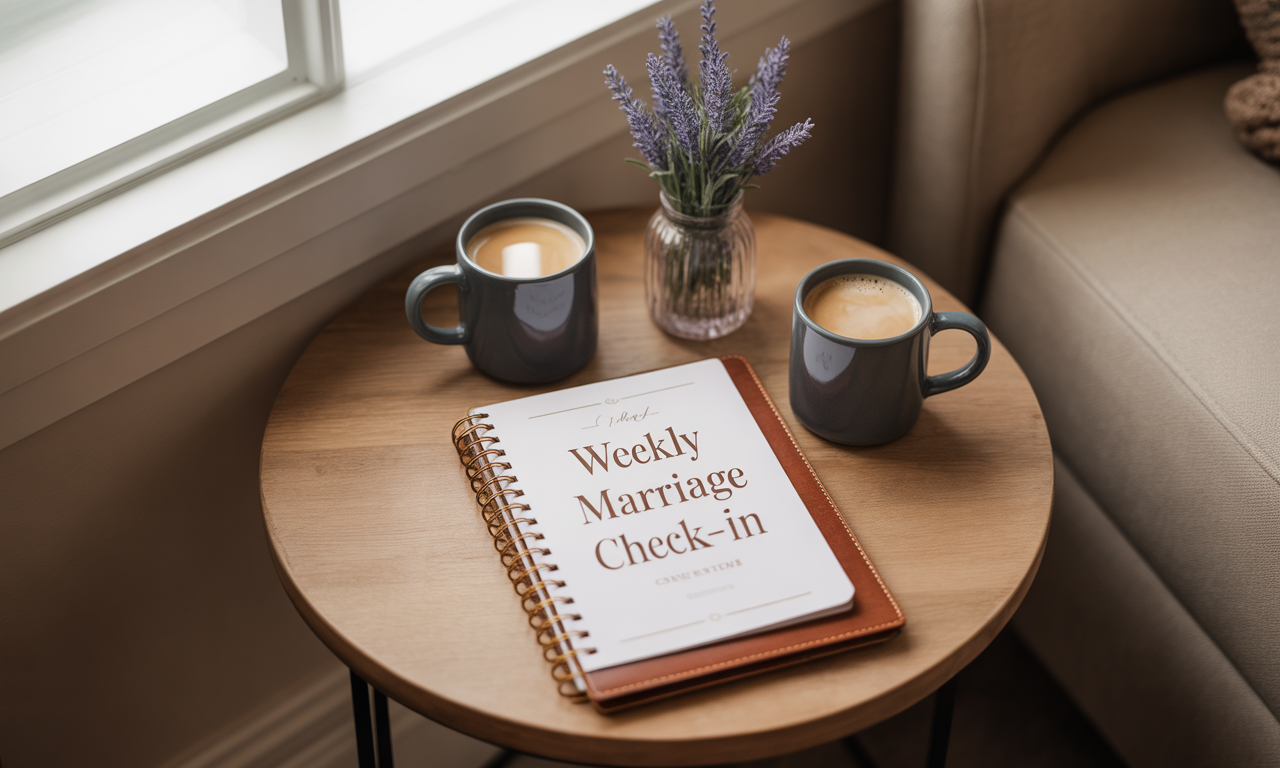
    Notebook with a weekly marriage check-in template, promoting intentional conversation and accountability.

    Accountability in marriage isn’t just a one-time admission. It’s a culture you build-through daily habits, language, and shared values. Here are some ways to cultivate it:

    1. Start with “I” statements
      Instead of “You always…” say, “I feel…” or “I realize…”
    • Practice self-check-ins
      Regularly ask yourself, “What kind of energy am I bringing into this moment-”
    • Create accountability rituals
      Weekly check-ins, gratitude journals, or a simple end-of-day debrief can keep communication clear and honest.
    • Celebrate ownership
      When your spouse admits a shortcoming or apologizes, thank them for being honest. Don’t punish their vulnerability.


    When One Spouse Is Resistant

    Let’s address a common frustration: “What if I’m the only one taking responsibility-”

    It’s painful when you feel like you’re doing the inner work and your spouse isn’t. But here’s the truth-real accountability is never wasted. When you own your part, you:

    • Regain your peace of mind
    • Model maturity
    • Break toxic cycles
    • Keep your heart soft and open

    Often, your consistency will eventually invite your spouse to match your energy. And even if it takes time, you’ll know you’re acting in alignment with your values.


    Accountability and Forgiveness Go Hand in Hand

    Once you begin taking ownership, you’ll realize how much room there is for grace. You’ll understand your own blind spots more clearly-and that will make it easier to forgive your spouse’s.

    Forgiveness is not saying that what happened was okay. It’s saying, “I’m choosing to release this so we can heal.” And accountability makes that release feel less risky, because you’ve created a foundation of trust.


    The Outcome: A Marriage Without Excuses

    Married couple showing affection while holding a sign that says ‘All In,’ symbolizing full commitment and mutual responsibility.When both spouses live out the 100/100 Rule:

    • Conflicts become opportunities for growth.
    • Trust deepens.
    • Walls come down.
    • Intimacy expands.

    It’s not about being perfect-it’s about being present, honest, and willing to do the work. Because at the end of the day, a great marriage isn’t built on excuses. It’s built on two people who take full ownership of their love story.


  • What You Say “Yes” To Shapes Your Marriage

    What You Say “Yes” To Shapes Your Marriage

    In marriage, “yes” is one of the most powerful words you can speak. It’s not just about the big moments-like saying yes to your spouse’s proposal or yes to building a life together-it’s also about the countless small agreements you make every day. Sometimes those agreements are intentional, rooted in love and mutual respect. But other times, we say “yes” without realizing the long-term impact of what we’re agreeing to.

    Agreeing with damaging words, unhealthy patterns, or false accusations might feel like a way to keep the peace in the moment. But over time, these unintentional yeses can subtly reshape the way you see yourself, your spouse, and your marriage. This post will help you recognize what you’re saying “yes” to-both in words and actions-so you can align your agreement with truth, love, and respect.


    Why Every “Yes” Matters in Marriage

    Married couple holding hands, representing intentional agreement in marriage.Every “yes” you speak-whether out loud or silently in your mind-carries weight. In healthy moments, saying yes can reinforce love, trust, and unity. But in difficult moments, saying yes to something harmful can reinforce lies, lower your standards, or weaken your self-worth.

    If you agree with a false label or allow hurtful behavior to go unchallenged, you risk normalizing it in your relationship. This isn’t about starting unnecessary fights; it’s about being intentional with what you affirm, because every yes is a seed you plant in your marriage.


    The Hidden Danger of Unintentional Agreement

    Individual deep in thought, representing unspoken agreement in a relationship.Sometimes, saying yes is simply a habit. Maybe you say yes to end an argument quickly or to avoid conflict altogether. While this might bring short-term peace, it can cause long-term damage if you’re agreeing to something that’s untrue or unhealthy.

    Examples of unintentional yeses include:

    • Nodding along when your spouse says something that undermines your character.
    • Staying silent when a harmful pattern repeats itself.
    • Accepting blame for something you didn’t do just to keep the peace.

    Over time, these unexamined agreements can shape the culture of your marriage, making it harder to break free from unhealthy dynamics.


    What You Say “Yes” To Shapes Your Self-Image

    Woman reflecting in the mirror, symbolizing self-image shaped by agreement.When you agree-either verbally or through silence-to labels that don’t reflect your true character, you allow those labels to influence how you see yourself. If your spouse calls you “selfish” in a heated moment and you respond with “yes, I am,” even sarcastically, you may unintentionally plant that idea in your own mind.

    Your inner agreement matters. Over time, what you say yes to becomes part of your identity, whether it’s accurate or not. That’s why it’s so important to protect your self-image by aligning your yeses with truth.


    How Saying “Yes” Shapes the Culture of Your Marriage

    Husband and wife enjoying time together in the kitchen, representing a healthy marriage culture.Just as your personal identity is shaped by your yeses, so is the culture of your marriage. When both partners agree-explicitly or implicitly-to kindness, respect, and honesty, those values become the marriage’s default setting. But when a couple agrees to sarcasm, avoidance, or belittling language, those things can slowly become normal.

    A healthy marriage culture is built when:

    • Yes is given to respectful communication.
    • Yes is given to mutual accountability.
    • Yes is given to growth and change.

    These intentional agreements create a relationship environment where both spouses can thrive.


    Choosing “Yes” With Intention

    Married couple engaging in a thoughtful conversation, demonstrating intentional agreement.One of the most powerful things you can do for your marriage is pause before you agree. Ask yourself:

    • Is this true-
    • Does this reflect the kind of marriage we want to have-
    • Will saying yes to this help or harm our relationship long term-

    If the answer to any of these questions is no, then it’s time to reframe your response.

    Instead of automatically agreeing, you might say:

    • “I see it differently.”
    • “I understand you’re upset, but that’s not accurate.”
    • “I want to hear your perspective, but let’s speak respectfully.”


    When to Say “No” to Protect Your Marriage

    Husband and wife pausing mid-discussion to set healthy boundaries.Sometimes, the healthiest thing you can do is say no. Saying no to harmful words or actions isn’t an act of rebellion-it’s an act of protection for your marriage. When you reject what’s untrue or disrespectful, you’re guarding the integrity of your relationship.

    Moments to say no include:

    • When words cross into personal attack.
    • When a pattern of disrespect emerges.
    • When you’re asked to compromise your values.

    Saying no in these moments reinforces that your marriage is built on respect, not harmful agreement.


    Replacing Harmful “Yeses” With Healthy Ones

    Married couple sharing coffee and smiling at each other, symbolizing positive agreement.Breaking the habit of unintentional agreement starts with replacing it. This means learning to say yes to things that align with truth and love:

    • Yes to listening before responding.
    • Yes to clarifying misunderstandings.
    • Yes to taking responsibility when you’re genuinely wrong.
    • Yes to appreciating your spouse’s strengths.

    These healthy yeses strengthen trust and deepen connection.


    The Long-Term Impact of Your Yeses

    Senior couple walking together outdoors, symbolizing a long-lasting, intentional marriage.The daily yeses in your marriage-whether to loving habits or destructive patterns-are shaping your future together. When you choose your yeses intentionally, you’re actively building a marriage rooted in respect, truth, and care.

    Over time, this intentionality creates:

    • Greater mutual trust.
    • Stronger emotional connection.
    • A more resilient partnership.


    Final Thoughts: Your Yes Is a Building Block

    Close-up of hands connecting puzzle pieces, representing building a marriage with intentional agreement.In marriage, your yes is not just a word-it’s a building block. Every agreement you make, whether deliberate or accidental, lays another stone in the foundation of your relationship. By choosing your yeses wisely, you’re not only shaping the present-you’re creating the marriage you’ll live in tomorrow.

    Protect your self-image. Protect your spouse’s dignity. And most importantly, protect the culture of your marriage by making every yes count.

  • When Life Hits Hard: How a Well-Maintained Marriage Survives Crisis

    When Life Hits Hard: How a Well-Maintained Marriage Survives Crisis

    Introduction

    Cancer, bankruptcy, natural disasters-real-life trials hit hard. But couples who’ve invested in a strong emotional foundation beforehand can weather storms with resilience. In this post, we’ll show you why a healthy “baseline” of connection is your best defense when life gets tough.


    Why a Strong Marriage Foundation Matters in Crisis

    Married couple holding hands in the wind, symbolizing emotional strength and unity during crisisWhen life hits hard, everything gets tested-your health, your finances, your sense of control. But nothing is tested more than your relationships, especially your marriage. The couples who endure aren’t always the lucky ones. They’re the prepared ones. A well-maintained marriage provides emotional shelter, stability, and strength when the external world feels chaotic.

    A strong foundation means:

    • You know how to communicate under pressure
    • You trust each other to show up, even when things are messy
    • You’ve built enough closeness to withstand temporary distance
    • You’ve practiced teamwork before the crisis hit


    The Marriage “Baseline”: What You Build Before the Storm

    rong house foundation representing emotional groundwork in well-maintained marriagesThink of your marriage like a house. The foundation must be poured before the storm-not during. The same applies emotionally. When you regularly invest in affection, honesty, and support, you build a marriage baseline that keeps you steady during emotional earthquakes.

    Signs of a strong baseline include:

    • Daily habits of connection, even small ones
    • Open communication about emotions and expectations
    • Mutual respect and admiration
    • Conflict resolution tools that don’t rely on yelling or avoidance
    • Spiritual or value alignment that grounds you

    Without a baseline, the crisis becomes the builder. But with a baseline, you’re equipped to survive and recover-together.


    Types of Crisis That Test Marriage Strength

    Husband and wife in hospital waiting room, symbolizing emotional support during medical crisisCrises come in many forms. Some are sudden. Some stretch over months or years. Each one affects the marriage differently, but all reveal the quality of the emotional maintenance done beforehand.

    Types of crisis that test marriages:

    • Health issues: cancer, chronic illness, miscarriage
    • Financial pressure: bankruptcy, job loss, unexpected expenses
    • Loss: death of a parent, child, friend, or pet
    • External events: natural disasters, political unrest, relocation
    • Mental health: depression, anxiety, addiction recovery

    During crisis, it’s not about avoiding pain-it’s about staying united through it.


    Crisis-Ready Marriages Practice Teamwork Daily

    United couple walking through disaster area, representing partnership in adversityWell-maintained marriages treat crisis as a team sport. There’s no scoreboard. Just mutual support, shared effort, and rotating strength. If one person is weak, the other steps in. And they trade roles as needed.

    To strengthen your teamwork:

    • Use “we” language: “We’ll figure this out together”
    • Share the emotional load: ask “What do you need right now-”
    • Make decisions together: from financial to family plans
    • Define roles: who will handle what so neither is overwhelmed
    • Remember your shared identity: “We’re a team first.”

    A crisis can divide or unite. Intentional teamwork turns pain into partnership.


    Emotional Maintenance That Strengthens Crisis Resilience

    Married couple connecting during quiet morning, symbolizing emotional grounding habitsDaily emotional care might feel small-until crisis hits. Then it becomes your lifeline. Couples who’ve practiced empathy, active listening, and emotional check-ins will find those skills invaluable when stress levels rise.

    Emotional maintenance strategies:

    • Daily gratitude: one thing you appreciate in your spouse
    • 10-minute check-ins to ask “How are we doing-”
    • Prayer, journaling, or meditation together
    • Weekly “what’s working” and “what’s not” conversations
    • Intentional intimacy that nourishes connection

    These habits don’t just prevent problems. They prepare you for the hard seasons that require everything you’ve got.


    When the Crisis Is Personal and Emotional

    Some crises aren’t external-they live inside one or both of you. Depression, grief, trauma, burnout. These deeply affect how couples interact, even when they love each other deeply.

    One partner supporting the other in emotional pain, symbolizing compassion during mental health struggles

    When crisis is internal:

    • Assume good intentions, even when your partner is distant
    • Communicate what’s going on, even if you don’t have answers
    • Avoid taking mood changes personally
    • Offer grace over performance
    • Encourage your partner to seek support-and do the same for yourself

    Emotional crisis require patience and presence. Keep showing up, even when it’s hard.


    Rebuilding After the Breakdown

    Married couple repairing their home, symbolizing emotional rebuilding after crisisEven the best marriages may break during a crisis-but that doesn’t mean they’re over. Breakdowns are not the end. They’re a call to rebuild. And couples who’ve invested in maintenance are more likely to have the tools to do so.

    Rebuilding steps:

    • Debrief the crisis together: “What did we learn-”
    • Repair broken trust or communication
    • Establish new routines based on your current season
    • Reaffirm your commitment-verbally and physically
    • Celebrate the strength it took to make it through

    Healing doesn’t mean forgetting. It means moving forward together, stronger and wiser.


    What to Do If the Storm Is Still Raging

    Couple sheltering each other from rain, symbolizing resilience in long-term crisisSometimes the storm isn’t over yet. The diagnosis is ongoing. The debt is still unpaid. The trauma is fresh. During prolonged crises, staying connected can be harder than ever-but it’s even more important.

    In prolonged crisis:

    • Focus on small wins: every day you show up is a victory
    • Anchor to your values: faith, hope, commitment, family
    • Avoid blame-work against the problem, not each other
    • Normalize hard days: they don’t mean the marriage is broken
    • Accept help from outside: counseling, friends, mentors

    There is no shame in struggling. Struggle together-not apart.


    Crisis Doesn’t Kill Connection-Neglect Does

    Spouses holding each other in relief and strength after crisis, symbolizing marital resilienceIt’s not the crisis that destroys most marriages. It’s the lack of preparation, communication, and support that leaves couples vulnerable. A well-maintained marriage won’t make the storm disappear, but it will give you shelter.

    If you’re not in crisis today, prepare. If you are in a crisis now, lean in. If you’ve survived a crisis, celebrate the endurance of your love.

    Marriages that make it through aren’t perfect. They’re intentional. Resilient. And full of grace.


    Conclusion: Keep Investing Before and After the Storm

    Married couple standing together after surviving difficulty, symbolizing hope and strength through crisisWhen life hits hard, your marriage becomes either a refuge or another battle. The difference is what you’ve built ahead of time. Keep changing the emotional oil. Keep reinforcing the structure. Keep saying “I love you” before crisis demands it.

    Marriage maintenance isn’t about perfection-it’s about preparation. The best time to invest is now.