
Tag: relationship habits

  • Kindness Is Not Weakness: Why Courtesy Is a Marriage Skill, Not a Personality Trait

    Kindness Is Not Weakness: Why Courtesy Is a Marriage Skill, Not a Personality Trait

    Many couples abandon small kindnesses once life gets busy or conflict becomes chronic.

    They stop saying please. They stop saying thank you. They stop greeting each other warmly. They stop offering small touches. They stop softening their tone. They stop noticing effort. They stop giving the benefit of the doubt.

    Not because they stopped loving each other, but because they started living under pressure.

    And under pressure, couples often treat courtesy like fluff. Like something you do when life is easy. Like something you do when you feel romantic. Like something you do when your spouse deserves it.

    kindness is not weakness shown through everyday courtesy in marriageBut courtesy is not fluff.

    Courtesy is structure.

    It’s one of the most practical ways you protect emotional safety in marriage. It’s one of the simplest ways you prevent escalation. And it’s one of the clearest signs that your marriage is being preserved rather than squeezed.

    This post will show you why kindness is not weakness, why courtesy is a marriage skill, and how strong couples treat it as a discipline, not a mood.


    Kindness Is Not Weakness in Marriage: The Lie That Makes Love Harder

    kindness is not weakness because it protects emotional safetyThe idea that kindness is weakness is one of the most damaging lies couples believe.

    It usually sounds like:

    If I’m kind, they’ll think it’s okay. If I’m gentle, they’ll never change. If I’m polite, I’m letting them off the hook. If I soften, I lose power. If I go first, I become a doormat. If I act warm, they’ll take advantage.

    So people become “strong” by becoming harsh. They become “wise” by becoming cold. They become “protected” by becoming distant.

    But that version of strength doesn’t protect the marriage. It protects pride.

    Kindness is not weakness because kindness does something powerful:

    It keeps the relationship safe enough to grow.

    And growth requires safety.

    When kindness disappears, the marriage becomes reactive. When the marriage becomes reactive, every conversation becomes harder. Even simple requests feel like attacks. Even small misunderstandings become big fights.

    Kindness doesn’t remove truth. It makes truth possible.

    If you want the bigger framework for why protecting the relationship comes before extracting outcomes, the cornerstone post “Protect the Goose: How to Put Your Marriage Before the Benefits It Produces” explains why courtesy is part of preservation, not just “being nice”: https://blog.liveyourbestmarriage.com/foundation/protect-the-goose-marriage


    Courtesy Is a Marriage Skill: Not a Personality Trait

    courtesy is a marriage skill practiced daily not a personality traitSome people assume kindness is a personality trait.

    They say: I’m just not a soft person. That’s not how I was raised. I’m not naturally affectionate. I’m not good with words. I’m more direct.

    But courtesy is not about personality.

    Courtesy is a skill.

    And skills can be practiced.

    You don’t have to become a different person to become more courteous. You just have to decide that courtesy is part of the marriage you’re building.

    Strong couples treat courtesy like brushing your teeth.

    You don’t brush your teeth only when you feel like it. You do it because it protects what matters.

    Courtesy works the same way.

    A polite tone. A warm greeting. A quick thank you. A gentle repair. A respectful request.

    These are skills that protect connection.

    They are not emotional decorations. They are relational structure.

    If you’ve noticed your marriage has turned cold and transactional, courtesy is often the first “skill” to disappear. The post “When Love Becomes a Transaction: How Marriage Turns Cold Without You Noticing” shows how that happens gradually and why courtesy is the antidote: https://blog.liveyourbestmarriage.com/connection/love-becomes-transaction


    Why Everyday Kindness Protects Emotional Safety

    everyday kindness builds emotional safety in marriageEmotional safety is the sense that your spouse is a safe place to be human.

    And everyday kindness is one of the fastest ways to build emotional safety.

    Here’s why.

    Kindness signals: I’m not your enemy. I see you. You matter. I’m for you. We can handle conflict without destroying each other.

    When spouses feel emotionally safe, they are more open, more cooperative, and more willing to change.

    When spouses do not feel safe, they become defensive or withdrawn.

    That’s why everyday kindness is not optional for a strong marriage.

    It’s the atmosphere.

    It’s the difference between: “Can we talk-” feeling like an invitation and “Can we talk-” feeling like a threat

    If you want to see how safety gets destroyed, the post “Control Levers in Marriage: The Hidden Ways We Manipulate Instead of Connect” explains how silence, pressure, withholding, and urgency turn conflict into fear. Courtesy is the opposite of control levers: https://blog.liveyourbestmarriage.com/communication/control-levers-marriage


    Kindness Prevents Escalation: The Small Moves That Stop Big Fights

    courtesy in marriage prevents escalation and protects loveMost couples don’t plan to escalate.

    They just get tired. They get triggered. They get defensive. They feel disrespected. They feel unheard.

    Then tone sharpens. Words get heavier. Faces harden. Voices rise.

    Escalation often begins with the absence of courtesy.

    Courtesy prevents escalation in three ways:

    Courtesy lowers threat
    A soft tone reduces defensiveness.

    Courtesy slows the pace
    When you speak respectfully, the conversation stays manageable.

    Courtesy preserves dignity
    Dignity is a big deal in marriage. When dignity is protected, people can hear feedback without needing to fight back.

    That’s why strong couples treat courtesy like a protective fence around the relationship.

    The fence doesn’t eliminate conflict. It keeps conflict from becoming destructive.


    The Courtesy Breakdown: How Couples Lose Kindness When Life Gets Busy

    busy life causing courtesy breakdown and loss of kindnessIt’s not random that kindness disappears.

    It usually breaks down in predictable ways.

    1. Exhaustion
      When you’re tired, you default to efficiency.
    2. Familiarity
      You stop treating your spouse like someone you should impress.
    3. Unresolved resentment
      Resentment makes kindness feel unfair.
    4. Chronic conflict
      When fights repeat, courtesy feels pointless.
    5. Outcome pressure
      You get so focused on results that you forget relational health.

    Outcome pressure is one of the biggest reasons courtesy disappears. Couples start chasing the golden eggs and forget to protect the goose. That pattern is explained deeply in the cornerstone post about chasing results: https://blog.liveyourbestmarriage.com/connection/goose-and-golden-eggs-marriage


    When Courtesy Feels Fake: The Difference Between Niceness and Kindness

    kindness is not weakness because it allows truth with respectSome people resist courtesy because they fear it’s fake.

    They say: I’m not going to be nice when I’m upset. I’m not going to pretend. I’m not going to sugarcoat.

    That’s understandable.

    But courtesy is not pretending. Courtesy is not denying feelings. Courtesy is not being fake.

    Courtesy is choosing how you deliver truth.

    You can be honest and courteous at the same time.

    Example: I’m upset about what happened. I’m still going to speak respectfully.

    That is maturity.

    Not fake. Not weak. Not dishonest.

    It’s emotional discipline.

    Courtesy is the difference between: “I’m hurt, so I’m going to hurt you back” and “I’m hurt, and I’m going to protect us while we work through it”

    That’s why kindness is not weakness. It is strength under control.

    If you struggle with going first because you fear becoming a doormat, the post “Emotional Leadership in Marriage: Caring First Without Becoming a Doormat” offers a framework for leading with kindness without surrendering boundaries: https://blog.liveyourbestmarriage.com/communication/emotional-leadership-marriage


    Courtesy Is a Discipline: What Strong Couples Practice on Purpose

    courtesy as a discipline keeps emotional warmth aliveIf courtesy is a marriage skill, what does it look like as a discipline-

    Here are practices strong couples do consistently.

    Warm greetings
    They greet each other like they matter. Not like roommates.

    Respectful requests
    They ask instead of demand.

    Gratitude language
    They say thank you even for small things.

    Soft tone under stress
    They protect tone when tired.

    Quick repair
    They restart quickly after sharp moments.

    Assume the best when possible
    They do not default to negative intent.

    Small acts of service
    They do small helpful things without needing applause.

    Physical warmth
    They keep small touches alive.

    These practices are not about romance. They’re about structure.

    Structure creates safety. Safety creates connection. Connection makes change possible.

    If your marriage has become rigid because of proof hunting, where every mistake feels like evidence and every conversation feels like a trial, courtesy is one of the fastest ways to restore humanity. This post explains that destructive habit and how to replace it: https://blog.liveyourbestmarriage.com/conflict/proof-hunting-marriage


    Practical Examples: Courtesy Phrases That Change the Atmosphere

    Here are phrases that protect emotional safety and keep conflict from escalating.

    Instead of: “You never listen.”
    Try: “I don’t feel heard. Can we try again-”

    Instead of: “Why are you like this-”
    Try: “Help me understand what’s going on for you.”

    Instead of: “Fine, whatever.”
    Try: “I need a break. I want to come back calmer.”

    Instead of: “You’re so selfish.”
    Try: “I’m feeling overwhelmed and I need more support.”

    Instead of: “Here we go again.”
    Try: “I don’t want this to turn into a fight. Let’s slow down.”

    Instead of: “You always ruin everything.”
    Try: “This matters to me, and I want us to handle it better.”

    These phrases aren’t magic. They are tools.

    And tools are what mature marriages use.


    The Kindness Reset: 10 Minutes a Day That Restores Warmth

    If your marriage has been tense, here’s a simple kindness practice:

    For 7 days, spend 10 minutes a day doing one of these:

    A short walk together A check-in question: “What was the hardest part of your day-” A gratitude share: “One thing I appreciate about you today is…” A small act of service done quietly A gentle touch with no agenda A prayer together if you’re faith-centered A laughter moment, even a short video or memory

    The goal is not to fix the whole marriage in a week.

    The goal is to restore warmth.

    Warmth makes everything else easier.


    When Courtesy Doesn’t Mean You Avoid Boundaries

    courtesy with boundaries protects emotional safety in marriageSome spouses worry that courtesy means tolerating disrespect.

    It doesn’t.

    Courtesy and boundaries can coexist.

    You can say: I’m not okay with being spoken to like that. and still say it with respect.

    You can say: I will not continue this conversation if we’re yelling. and still say it without threats.

    Courtesy does not remove boundaries. It changes the tone of boundaries.

    It makes boundaries protective rather than punitive.

    This matters because harsh boundaries often become control levers. If you want to understand that difference more clearly, revisit the post on control levers and notice how punishment masquerades as boundaries: https://blog.liveyourbestmarriage.com/communication/control-levers-marriage


    Conclusion: Kindness Is Not Weakness, It’s the Framework of a Strong Marriage

    Marriages don’t stay warm by accident.

    They stay warm because couples protect the daily atmosphere.

    Courtesy is not fluff. Courtesy is not fake. Courtesy is not weakness.

    Courtesy is structure. Courtesy is protection. Courtesy is discipline.

    When couples treat kindness as a marriage skill, the relationship becomes safer. When the relationship becomes safer, conflict becomes easier. When conflict becomes easier, repair becomes faster. When repair becomes faster, intimacy grows. When intimacy grows, the marriage feels human again.

    If your marriage has been tense or cold, don’t start with big speeches.

    Start with small courtesies.

    Protect the tone. Protect the greeting. Protect the gratitude. Protect the humanity.

    Because strong marriages don’t extract.

    They preserve.
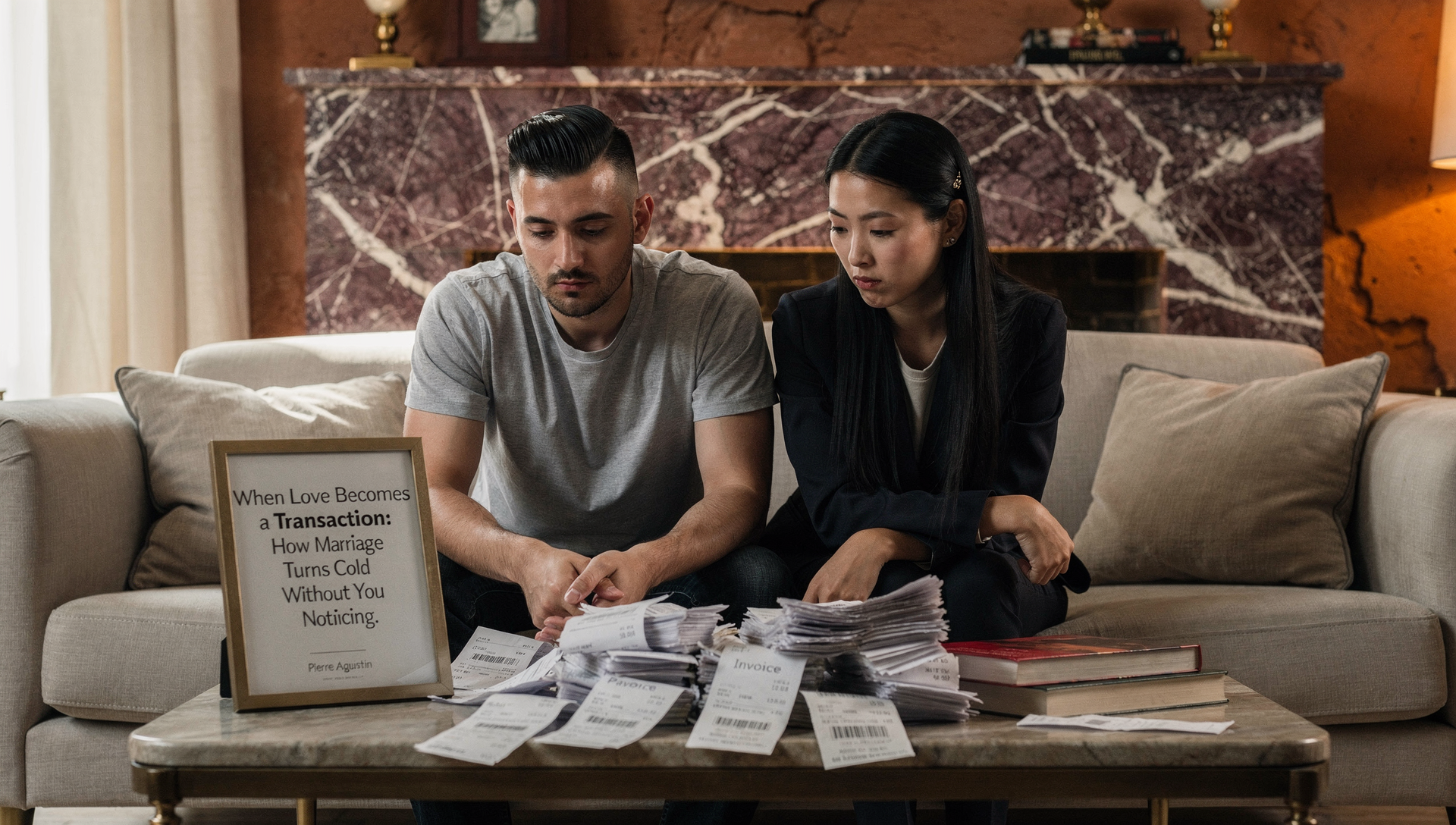
  • When Love Becomes a Transaction: How Marriage Turns Cold Without You Noticing

    When Love Becomes a Transaction: How Marriage Turns Cold Without You Noticing

    You don’t wake up one day and decide, “From now on, I’m going to treat my spouse like a means to an end.”

    That’s not how transactional marriage happens.

    It happens gradually, quietly, and almost always under pressure. Pressure to get through the week. Pressure to keep the house functioning. Pressure to manage kids, bills, schedules, work stress, health, family obligations, and emotional exhaustion.

    And in that pressure, something shifts.

    You stop relating to your spouse as a person and start relating to your spouse as a provider of outcomes.

    You start tracking who’s giving more. You start noticing what you’re not getting. You start withholding what you used to give freely. You start negotiating instead of connecting. You start protecting yourself instead of pursuing closeness.

    transactional marriage making love feel cold and disconnectedThat’s when love begins to turn into a transaction.

    Not because you stopped caring, but because you stopped feeling safe.

    Not because you hate each other, but because you’re trying to survive.

    Not because your marriage is doomed, but because your habits changed.

    This post will help you recognize the subtle signs that love has become a transaction, why transactional thinking makes marriages feel cold, and how to restore warmth, generosity, and emotional safety before the distance becomes permanent.


    Transactional Marriage: The Hidden Agreement You Never Meant to Make

    transactional marriage mindset turning love into a tradeA transactional marriage is not always obvious. It’s not always “If you do this, I’ll do that” spoken out loud.

    It’s often a silent agreement that forms when both spouses feel disappointed.

    It sounds like:

    I’ll be kind when you’re kind. I’ll be affectionate when you’re affectionate. I’ll help when you notice my help. I’ll listen when you finally listen to me. I’ll respect you when you earn it. I’ll give emotionally when I’m sure you won’t hurt me.

    This is the relationship version of emotional commerce.

    You exchange good behavior for good behavior. You exchange attention for attention. You exchange effort for effort. You exchange affection for affection.

    And if you feel like your “payment” isn’t being matched, you stop giving.

    At first, that feels reasonable. Even mature.

    But over time, transactional marriage doesn’t create fairness. It creates distance.

    Because love is not meant to be a bargaining chip. Love is meant to be the environment where bargaining becomes unnecessary.

    If you want the bigger picture framework for why this happens, the cornerstone post in this series explains it through the “goose and the golden eggs” metaphor and how chasing outcomes makes the relationship itself sick. It connects directly to what you’re seeing here: https://blog.liveyourbestmarriage.com/connection/goose-and-golden-eggs-marriage


    Signs Your Marriage Is Turning Transactional

    transactional marriage signs of emotional distance and coldnessMany couples don’t notice the shift because it feels normal. It feels like adulthood. It feels like “this is just marriage after kids” or “this is just what happens after years together.”

    Here are some signs that transactional marriage has taken root.

    You give affection only when things are going well. You keep mental tabs on who has done more. You feel resentful doing basic kindness. You interpret requests as demands. You ask, “Why should I-” more than “How can I help-” You feel like conversations are negotiations. You avoid vulnerability because it feels unsafe. You feel like you have to earn warmth. You feel like your spouse withholds until they get what they want. You do “nice things” with an expectation of payoff.

    Transactional marriage often shows up as a subtle emotional chill. The marriage still functions, but it doesn’t feel alive.

    You might still do family events. Still coordinate life. Still pay bills. Still show up.

    But the warmth is missing.

    The spontaneous affection is missing. The playful tone is missing. The “I’m on your side” feeling is missing.

    And that missing warmth is not random. It’s the natural consequence of a relationship becoming conditional.


    How Transactional Thinking Creeps In Without You Realizing It

    transactional marriage creeping in as emotional warmth disappearsTransactional marriage rarely begins with selfishness. It often begins with disappointment.

    One spouse feels unseen. The other feels criticized. One feels overworked. The other feels controlled. One feels lonely. The other feels rejected. One feels like they’re always giving. The other feels like nothing they do is enough.

    So both spouses start protecting themselves.

    Protection often looks like withdrawal.

    And withdrawal often looks like this:

    You stop doing the extra kind thing. You stop initiating affection. You stop sharing your inner world. You stop giving the benefit of the doubt. You stop being generous in interpretation.

    At first, you might tell yourself: I’m just not going to try so hard. I’m just not going to let myself get hurt. I’m just matching their energy. I’m just setting boundaries.

    But if what you call “boundaries” is actually withholding designed to make your spouse feel the loss, you’re not protecting yourself. You’re pulling the marriage into a transaction.

    This is why it creeps in so quietly. Most couples do not see it as transactional. They see it as survival.

    And that’s what makes it dangerous. Because you can feel justified while your marriage grows colder.


    Scorekeeping in Transactional Marriage: The Relationship Tax That Kills Generosity

    transactional marriage scorekeeping turning love into a ledgerScorekeeping is one of the strongest fuel sources for transactional marriage.

    Scorekeeping is not just remembering what happened. It’s tracking to justify withholding.

    I did the dishes three times, you only did it once. I initiated last time, you didn’t. I apologized first, you never do. I’ve been patient, you haven’t. I supported your dreams, you didn’t support mine.

    The problem is not memory. The problem is the emotional math.

    When you treat marriage like a ledger, you stop being generous.

    You stop giving freely. You give cautiously.

    You begin to feel that every act of kindness is a “cost” that must be paid back.

    This is one of the fastest ways a marriage loses emotional safety. Because generosity is what makes love feel abundant.

    When generosity disappears, love feels scarce.

    And when love feels scarce, spouses begin competing for it.

    That competition creates more coldness.


    Why Transactional Marriage Drains Emotional Safety

    transactional marriage draining emotional safety and intimacyEmotional safety is the sense that your spouse is for you, even when you’re imperfect.

    Transactional marriage removes that safety.

    It communicates:

    I’m kind only if you’re kind. I’m close only if you do it right. I’m warm only if I’m satisfied. I’ll be supportive only if I’m getting support. I’ll stay open only if you behave.

    When that becomes the emotional atmosphere, both spouses start walking on eggshells.

    Not always loudly. Sometimes quietly.

    They stop sharing honestly. They stop bringing up needs. They stop risking vulnerability.

    Because vulnerability becomes a negotiation tool rather than a gift.

    Emotional safety requires something that transactional marriage cannot provide: steadiness.

    Not perfection, but steadiness.

    A sense that love is not constantly being evaluated.

    This is why transactional marriage is not just a habit problem. It’s a safety problem.

    And safety is the foundation of intimacy.

    When safety goes down, intimacy goes down.


    Conditional Affection: The Moment Love Starts Feeling Like Leverage

    transactional marriage conditional affection making love feel unsafeOne of the most painful parts of transactional marriage is conditional affection.

    Conditional affection is when warmth, touch, kindness, or intimacy is offered as a reward or withheld as a punishment.

    It might look like:

    You’re only affectionate when your spouse agrees with you. You stop touching when you’re upset. You initiate sex only when you feel appreciated. You withhold sex to “teach a lesson.” You act cold until your spouse apologizes the way you want. You become warm only after you get what you need.

    Sometimes it is intentional. Sometimes it is subconscious.

    But your spouse experiences it the same way: love feels like leverage.

    When love becomes leverage, your spouse stops feeling safe with you.

    And when your spouse stops feeling safe, they stop feeling open.

    This is why transactional marriage often creates a cycle:

    One spouse withholds to protect themselves. The other spouse reacts with more withdrawal. Both feel justified. Both feel lonely.

    If you recognize that control and manipulation has become part of the dynamic, the next post in this series is designed to expose those patterns clearly and compassionately: https://blog.liveyourbestmarriage.com/communication/control-levers-marriage


    Negotiation Conversations: When Curiosity Gets Replaced by Strategy

    transactional marriage turning conversations into negotiationsIn a connected marriage, conversations feel like partnership.

    In transactional marriage, conversations feel like negotiations.

    Instead of “Help me understand,” you hear “Here’s why you should.”

    Instead of listening, you prepare your argument. Instead of validating feelings, you correct interpretations. Instead of seeking connection, you seek agreement.

    Negotiation conversations often include:

    Fine, I’ll do it, but you need to do this. I did that last time, so you owe me. If you want me to change, you need to change first. I’ll apologize if you admit you were wrong. I’ll forgive you if you do this to make up for it.

    Even when those statements sound fair, they create a subtle tug-of-war energy.

    And tug-of-war is exhausting.

    Marriage is not meant to feel like bargaining for basic care.

    When marriage becomes constant negotiation, both spouses start avoiding conversations. Avoidance then deepens the coldness.


    The Real Root: Transactional Marriage Often Comes from Pain, Not Greed

    transactional marriage rooted in pain and fear of vulnerabilityHere’s the truth that helps couples heal without shame:

    Transactional marriage is often built on fear and pain.

    People become transactional when they feel unsafe giving freely.

    That safety could be missing because of:

    Repeated disappointment Harsh criticism Broken trust Emotional neglect Unresolved conflict Feeling like efforts don’t matter Feeling like your needs are invisible Feeling taken for granted Feeling rejected

    So the heart starts protecting itself.

    Protection looks like conditions.

    I won’t give unless I know it’s safe. I won’t risk unless I know you’ll meet me. I won’t open unless you prove you won’t hurt me.

    This is understandable.

    But here’s the problem: conditions don’t restore safety. They create distance.

    So healing requires a different approach.

    Not pretending pain didn’t happen. Not ignoring boundaries. Not forcing quick forgiveness.

    But shifting the relationship out of extraction mode and back into protection mode.

    This is why the cornerstone framework “Protect the Goose” is so important in the overall journey. It gives couples a way to protect the relationship itself without losing truth or boundaries: https://blog.liveyourbestmarriage.com/foundation/protect-the-goose-marriage


    How to Warm Up a Transactional Marriage Without Becoming a Doormat

    transactional marriage warming up through kindness and emotional leadershipThis is the big question.

    If I stop being transactional, won’t I be the only one giving- If I stop withholding, won’t they take advantage- If I soften, won’t they stay the same-

    You can warm up transactional marriage without becoming a doormat by doing two things at the same time:

    1. Offer care without manipulating for a payoff
    2. Keep clear boundaries about what you will and won’t accept

    Those two together are powerful.

    Care restores warmth. Boundaries restore dignity.

    Here are practical ways to start.

    Start with one “free” kindness a day
    Do one act of kindness that is not designed to earn anything. This retrains your nervous system to give from love, not leverage.

    Use “I miss us” language instead of “you never” language
    “I miss feeling close to you” is an invitation. “You never care” is a courtroom statement.

    Ask for connection directly
    Instead of punishing with coldness, ask: “Can we have 10 minutes together tonight-” Directness reduces games.

    Repair quickly when you slip into coldness
    A short repair prevents the chill from settling into days.

    Protect your tone
    Tone is often the first sign you’re becoming transactional. Watch for sharpness, sarcasm, or cold efficiency.

    If you need help learning how to lead with care without losing yourself, the post “Emotional Leadership in Marriage: Caring First Without Becoming a Doormat” fits perfectly at this stage of the journey: https://blog.liveyourbestmarriage.com/communication/emotional-leadership-marriage


    Replacing Transactional Marriage with a Culture of Generosity

    transactional marriage replaced by generosity and teamworkThe opposite of transactional marriage is not being a pushover.

    The opposite is generosity.

    Generosity in marriage means:

    Assuming the best when possible
    Being kind without needing immediate reward
    Giving appreciation more freely
    Choosing warmth even when you feel tension
    Seeing your spouse as human, not as a problem
    Offering small courtesies consistently
    Being quicker to repair than to punish

    Generosity creates a culture.

    And culture changes everything.

    In a culture of generosity, spouses don’t have to earn basic respect. It’s the environment. That environment then makes growth possible.

    But generosity doesn’t happen by accident. It happens by intentional replacement.

    You replace:

    Scorekeeping with appreciation Negotiation with curiosity Withholding with clarity Coldness with repair Strategy with softness

    If you want to go deeper on how control gets replaced by care in real conversations, the post “Replacing Control With Care: The Shift That Restores Safety and Trust” expands this into practical steps and phrases: https://blog.liveyourbestmarriage.com/connection/replacing-control-with-care


    A Simple Transactional Marriage Audit: 10 Questions That Reveal the Coldness

    Take this quick audit. Answer honestly. You don’t need to share it with anyone unless you want to.

    1. Do I give affection only when I feel pleased with my spouse-
    2. Do I withhold warmth to make a point-
    3. Do I keep score in my head-
    4. Do I do nice things expecting something in return-
    5. Do I use silence as leverage-
    6. Do I assume negative intent quickly-
    7. Do I feel resentful when asked for basic support-
    8. Do I treat conflict as negotiation rather than connection-
    9. Do I feel safer being cold than being vulnerable-
    10. Do I avoid kindness because it feels like “letting them off the hook”-

    If you answered yes to several, it doesn’t mean your marriage is broken. It means your marriage has a pattern.

    And patterns can be replaced.


    What If One Spouse Is More Transactional Than the Other-

    transactional marriage healing by breaking the coldness cycleSometimes one spouse is clearly more transactional. They withdraw faster. They keep score more. They demand more. They withhold more.

    If that’s your situation, here’s what matters:

    Do not respond with equal coldness.

    That is how transactional marriage becomes permanent.

    Instead, choose a different posture:

    Be clear about what hurts. Stay consistent in your tone. Offer care without performing for approval. Set boundaries when needed. Repair when possible. Invite, don’t corner.

    And if you’re stuck in a cycle of proof hunting and constant justification, that’s often the engine behind transactional behavior. The post “Proof Hunting: Why Looking for Evidence You’re Right Is Poisoning Your Marriage” helps dismantle that engine: https://blog.liveyourbestmarriage.com/conflict/proof-hunting-marriage


    Bringing Back Warmth: The Small Courtesies That Make Love Feel Safe Again

    transactional marriage softened through daily kindness and courtesyWhen a marriage turns cold, couples often think the solution is something big.

    A vacation. A dramatic conversation. A major breakthrough. A grand apology. A new schedule.

    Those can help, but warmth usually returns through small courtesies.

    A gentle tone. A soft greeting. A brief touch on the shoulder. A sincere thank you. A playful comment. A quick repair. A compassionate question.

    These are not small. They are the building blocks of emotional safety.

    If you want to build this skill intentionally, the post “Kindness Is Not Weakness: Why Courtesy Is a Marriage Skill, Not a Personality Trait” is one of the most practical steps in this series, especially if kindness feels hard right now: https://blog.liveyourbestmarriage.com/connection/kindness-is-not-weakness


    Conclusion: Love Was Never Meant to Feel Like a Contract

    A healthy marriage is not a contract where you trade effort for effort like a business partnership.

    Marriage is a covenant relationship that thrives on trust, generosity, and emotional safety.

    If your marriage has been feeling cold, don’t rush to panic. Don’t rush to label it as hopeless. Often, coldness is a sign that both people have been protecting themselves in ways that created distance.

    The good news is that coldness can melt.

    Not by forcing outcomes, but by restoring the environment where outcomes become possible.

    That environment is warmth. It’s kindness. It’s repair. It’s curiosity. It’s emotional safety. It’s generosity. It’s leadership without control.

    And when that environment returns, love stops feeling like a transaction and starts feeling like home again.

  • Why “This Is Just How We Are” Keeps Couples Stuck

    Why “This Is Just How We Are” Keeps Couples Stuck

    “This is just how we are.”

    It sounds mature. It sounds like acceptance. It sounds like two adults who have come to terms with reality.

    But most of the time, that sentence is not acceptance. It is resignation.

    It is what couples say when they have tried to change something, failed, gotten tired, and quietly decided, “This is as good as it gets.” It becomes the line that protects you from disappointment, because if you stop hoping for better, you cannot be let down again.

    And that is exactly why it keeps couples stuck.

    This is just how we are keeps couples stuck through resignation and low expectations“This is just how we are” often hides a fixed narrative about personality, roles, or history that locks a marriage into low expectations. It turns repeated patterns into permanent identity. It makes unhealthy dynamics feel inevitable. It excuses behavior that should be addressed. It lowers the standard until dysfunction feels normal.

    The good news is that marriages are not trapped by identity labels. They are shaped by environment.

    When you shift the environment, you create space for new behavior without forcing change, controlling your spouse, or waiting for a magical personality upgrade.

    This post will show you how to spot resignation disguised as acceptance, how fixed narratives quietly train your marriage, and how redesigning your environment creates real movement.


    This Is Just How We Are Keeps Couples Stuck Because It Turns Patterns Into Identity

    This is just how we are keeps couples stuck by turning patterns into permanent labelsA pattern is something you do. An identity is who you believe you are.

    When couples say, “This is just how we are,” they are usually turning a pattern into an identity.

    Examples: “We just fight like this.” “I am just not emotional.” “She is just too sensitive.” “He is just a workaholic.” “We are just bad communicators.” “I am just an angry person.” “We have always been distant.” “Our marriage is just not romantic.” “We are just roommates now.”

    Do you hear the finality-

    Those statements do not describe behavior. They declare destiny.

    But marriages are not destiny. They are built. They are trained. They are reinforced by what gets repeated and rewarded.

    That is why this series starts with marriage culture and environment. Your marriage environment is training you, whether you notice or not: https://blog.liveyourbestmarriage.com/culture/marriage-environment-training.


    Why This Is Just How We Are Feels Comforting

    This is just how we are keeps couples stuck by offering comfort through resignationResignation has a strange comfort.

    If you believe change is impossible, you stop trying. If you stop trying, you stop risking disappointment. If you stop risking disappointment, you feel relief.

    So “this is just how we are” becomes a coping strategy.

    It protects you from: hope vulnerability new attempts possible failure hard conversations accountability

    But it also blocks: growth repair closeness teamwork fresh habits renewed feelings

    The cost of resignation is always the future.

    This is why builder mindset matters. Builders do not wait for perfect conditions, they build better ones. If you want the mindset shift that restores agency, it supports this section: https://blog.liveyourbestmarriage.com/mindset/victim-or-builder-marriage.


    This Is Just How We Are Keeps Couples Stuck Because It Lowers Expectations

    This is just how we are keeps couples stuck by lowering expectations and emotional warmthLow expectations feel safer, but they create low outcomes.

    When couples accept low expectations, they normalize things like: cold tone constant sarcasm lack of repair stonewalling disrespectful conflict no affection no appreciation emotionally lonely routines

    Then they say, “This is just marriage.” Or “This is just us.”

    But normal is not the same as healthy.

    A marriage can be normal and unhealthy at the same time, especially if the environment has trained both spouses to disengage.

    If you want to see how repeated behavior becomes a loop, and why it keeps repeating, this companion post fits naturally: https://blog.liveyourbestmarriage.com/culture/feedback-loops-marriage.


    Fixed Narratives That Keep Couples Stuck

    This is just how we are keeps couples stuck through fixed personality narrativesLet’s name the most common fixed narratives, because naming them is how you break them.

    Personality narratives

    “I am just not a talker.” “She is just dramatic.” “He is just stubborn.” “I am just blunt.” “We are just different.”

    Role narratives

    “He works, so I handle everything.” “She is the emotional one, I am the logical one.” “I am the planner, they are the free spirit.” “One of us always has to be the strong one.”

    History narratives

    “We have always been like this.” “After what happened, we cannot be close.” “We tried counseling, it did not work.” “We are too far gone.” “Too much damage.”

    Hopelessness narratives

    “Nothing ever changes.” “It is pointless to talk.” “They will never understand.” “This is as good as it gets.”

    These narratives sound like facts, but most are interpretations shaped by the environment.

    When the environment changes, the behavior changes, and the narrative loses power.


    This Is Just How We Are Keeps Couples Stuck Because It Excuses What Should Be Addressed

    This is just how we are keeps couples stuck by excusing disrespect as personalityThere is a difference between accepting a spouse’s temperament and excusing harmful behavior.

    Accepting temperament sounds like: “My spouse is quieter, so I will not demand constant talking.”

    Excusing harm sounds like: “My spouse is quiet, so they will never communicate and I just have to accept loneliness.”

    Accepting temperament sounds like: “My spouse is direct, so I do not interpret everything as an attack.”

    Excusing harm sounds like: “My spouse is direct, so they can speak harshly and I just have to take it.”

    A healthy marriage can hold both: acceptance and standards

    If you want a simple way to anchor this, values over feelings matters here. Values create standards that do not depend on mood or personality. That framework supports this section well: https://blog.liveyourbestmarriage.com/mindset/values-over-feelings-marriage.


    Environment Over Identity: The Truth That Creates Change Without Force

    This is just how we are keeps couples stuck until the marriage environment changesHere is the key truth:

    People respond to environments.

    If a marriage environment rewards sarcasm, sarcasm grows. If it rewards shutdown, shutdown grows. If it rewards repair, repair grows. If it rewards appreciation, appreciation grows. If it rewards calm honesty, calm honesty grows.

    Your marriage environment is training you.

    That is why you can create change without forcing your spouse to become a different person. You simply redesign what gets reinforced.

    This is exactly what the cornerstone environment article lays out in depth: https://blog.liveyourbestmarriage.com/culture/marriage-environment-training.


    This Is Just How We Are Keeps Couples Stuck When Feelings Lead the Marriage

    This is just how we are keeps couples stuck when feelings lead instead of valuesAnother reason couples resign is because they rely on feelings as leadership.

    They think: “If we do not feel close, we cannot act close.” “If I feel hurt, I am justified in shutting down.” “If I feel annoyed, I cannot be kind.” “If I feel nothing, love must be gone.”

    That is emotional thinking.

    And emotional thinking makes change feel impossible because it waits for emotions to cooperate.

    If you need the deeper explanation of how feelings hijack behavior, this post supports the whole point: https://blog.liveyourbestmarriage.com/mindset/i-dont-feel-it-anymore.

    The alternative is values-led marriage. Values anchor behavior when feelings are loud.


    What To Say Instead of This Is Just How We Are

    This is just how we are keeps couples stuck but new language creates space for growthYou do not have to pretend your marriage is perfect. You do not have to deny reality. But you do need language that leaves room for growth.

    Try these replacements:

    Instead of “This is just how we are,” say: “This is our current pattern, not our destiny.”

    Instead of “They will never change,” say: “We have not built the environment for change yet.”

    Instead of “We are just bad at communication,” say: “We have not practiced repair and listening skills consistently.”

    Instead of “We are too different,” say: “We need better teamwork and shared values.”

    Instead of “It is pointless to talk,” say: “We need a safer way to talk and a plan for repair.”

    Language matters because language trains expectation. Expectation trains effort. Effort trains results.


    A Practical Exercise: Identify Your Stuck Story and Rewrite It

    This is just how we are keeps couples stuck until the story is rewritten into a practice statementDo this tonight.

    Step 1: Write your stuck story This is just how we are because __________.

    Examples: Because we always fight about money. Because they shut down. Because we are not affectionate. Because we are too busy. Because of what happened in the past.

    Step 2: Identify the pattern underneath What do we repeat- What do we avoid- What do we reinforce-

    Step 3: Identify the reinforcer What is the payoff that keeps the loop alive- Relief Control Attention Silence Avoidance

    Step 4: Rewrite the story as a growth statement Instead of identity, name practice.

    Example: Old story: “We are just bad at communication.” New story: “We have practiced defensiveness and avoidance. We can practice repair and listening.”

    This connects directly to feedback loops. What gets repeated gets reinforced, so the change is not just discussion. It is reinforcement redesign: https://blog.liveyourbestmarriage.com/culture/feedback-loops-marriage.


    How to Shift the Environment Without a Big Talk

    This is just how we are keeps couples stuck but small environment shifts create connectionSome couples get stuck because every change attempt becomes a big emotional conversation.

    You do not always need a big talk. Sometimes you need a small consistent behavior shift.

    Here are small environment changes that create big results:

    Repair faster If you normally go cold for days, shorten it to hours, then to same-day repair.

    Lower the volume If conflict escalates, practice one calm reset phrase: “I want to talk respectfully.”

    Replace sarcasm with clarity Instead of jokes that sting, say what you mean kindly.

    Add daily appreciation One sentence a day changes warmth over time.

    Create phone down time Ten minutes of undivided attention daily is a culture shift.

    These are the same actions that rekindle love because they change the climate, not just the conversation: https://blog.liveyourbestmarriage.com/connection/actions-that-rekindle-love.


    This Is Just How We Are Keeps Couples Stuck From Feeling in Love Again

    This is just how we are keeps couples stuck but connection can return through new habitsMany couples have resigned to a low-expectation marriage and call it maturity, but their hearts quietly ache.

    They miss: warmth friendship laughter ease touch being known being pursued being safe

    Here is the hope: you can feel in love again, but not by trying to recreate the past.

    You feel in love again by redesigning your present environment through consistent values-led actions.

    That is why the series ending post exists and fits here naturally: https://blog.liveyourbestmarriage.com/connection/recapturing-love-feelings.

    Not instantly. Not magically. But reliably.

  • What Gets Repeated Gets Reinforced: The Feedback Loops in Marriage

    What Gets Repeated Gets Reinforced: The Feedback Loops in Marriage

    Marriages don’t stay stuck by accident. Patterns repeat because something is being rewarded.

    Sometimes the reward is attention. Sometimes it’s relief. Sometimes it’s control. Sometimes it’s silence. Sometimes it’s the feeling of being right. Sometimes it’s the comfort of predictability, even if the predictability is painful.

    That’s why a couple can swear they want change, have serious talks, read books, pray about it, even promise each other “never again”… and still find themselves repeating the same argument two weeks later.

    Feedback loops in marriage repeat and reinforce the same patternsBecause you can’t talk your way out of a loop you are still reinforcing.

    This article will help you identify the invisible feedback loops shaping your marriage and why breaking unhealthy cycles requires changing what gets reinforced, not just what gets discussed.

    If your marriage feels like it keeps returning to the same problems, this is not just about communication. It’s about training. What gets repeated gets reinforced, and what gets reinforced becomes your normal.


    Feedback Loops in Marriage: Why Patterns Repeat Even When You Hate Them

    Feedback loops in marriage keep patterns repeating through short term rewardsA feedback loop is a pattern that sustains itself because it produces a payoff.

    The payoff might not be good long-term, but it feels good short-term.

    For example: Withdrawing ends the conversation, so you feel relief Criticizing gives you a sense of control Defending protects your ego from shame Yelling finally gets attention Silent treatment punishes and creates power Overfunctioning prevents chaos, so you feel needed Avoidance prevents conflict, so you feel calm

    And because the payoff is immediate, the brain learns: Do that again.

    So the loop strengthens.

    That’s why marriage drift is rarely random. It’s trained.

    This concept ties directly into the cornerstone culture post that explains how your marriage environment trains you every day: https://blog.liveyourbestmarriage.com/culture/marriage-environment-training.


    What Gets Repeated Gets Reinforced: The Hidden Rewards That Keep You Stuck

    Feedback loops in marriage persist because unhealthy behavior is rewardedMost couples try to fix the wrong thing. They focus on the behavior, but they ignore the reward.

    Behavior changes when reinforcement changes.

    So instead of asking only, “What do we keep doing-” Ask, “What are we getting from it-”

    Here are common hidden rewards:

    Relief Avoidance ends tension quickly, so your nervous system calms down.

    Control Criticism and micromanaging make you feel less powerless.

    Attention Drama gets a response, even if the response is negative.

    Protection Defensiveness shields you from feeling wrong or ashamed.

    Power Withholding affection or silence can feel like leverage.

    Predictability Even painful routines feel safer than uncertainty.

    If you can identify the reward, you can change the loop.


    Feedback Loops in Marriage That Look Normal But Are Training Disconnection

    Feedback loops in marriage can train criticism withdrawal and disconnectionMany loops are so common they feel like personality. But they’re not personality, they’re patterns.

    The criticism loop

    One spouse criticizes The other feels attacked The other defends or shuts down The critic feels more alone and escalates Criticism increases

    Reward: control and emotional discharge

    The withdrawal loop

    One spouse brings up a problem The other shuts down or leaves The first feels abandoned and escalates The second withdraws more

    Reward: relief from conflict

    The overfunctioning loop

    One spouse takes over everything The other does less The overfunctioner feels resentful but also needed The underfunctioner feels incapable and avoids Inequality grows

    Reward: feeling needed and preventing chaos

    The drama loop

    One spouse explodes The other becomes anxious and tries to fix The conflict ends temporarily The explosion becomes the way to get change

    Reward: attention and immediate action

    The avoidance loop

    Both avoid hard topics Peace is maintained short term Resentment builds long term Distance grows

    Reward: calm and comfort

    These loops are exactly how marriages drift without one “big” betrayal. Small repeated signals become your environment.

    If you want the bigger framework for how daily patterns create your climate, this cornerstone post supports it: https://blog.liveyourbestmarriage.com/culture/marriage-environment-training.


    What Gets Repeated Gets Reinforced in Emotional Thinking

    Feedback loops in marriage are fueled by emotional thinking and reactive behaviorEmotional thinking turns feelings into facts and makes reactive behavior feel justified.

    I feel hurt, so I punish
    I feel stressed, so I snap
    I feel criticized, so I defend
    I feel hopeless, so I stop trying

    The loop becomes: Feeling triggers reaction, reaction triggers more feeling, more feeling triggers stronger reaction

    That’s why many couples feel like passengers in their own marriage.

    Breaking that requires a shift from feelings-led to values-led behavior.

    If emotional thinking has been hijacking your marriage, this post fits naturally here: https://blog.liveyourbestmarriage.com/mindset/i-dont-feel-it-anymore.

    And if you want the skill that stabilizes you inside emotion, values over feelings is the anchor: https://blog.liveyourbestmarriage.com/mindset/values-over-feelings-marriage.


    Feedback Loops in Marriage: The Four Reinforcers You Must Notice

    Feedback loops in marriage are reinforced by attention relief control and silenceTo change a loop, you have to notice what is reinforcing it.

    In marriage, reinforcement usually comes through one of four things:

    Attention

    What gets attention tends to increase, even if it’s negative attention.

    If complaints always get a response and calm requests get ignored, you train complaining.

    Relief

    What reduces discomfort quickly gets repeated.

    If stonewalling ends conflict, you train stonewalling.

    Control

    What gives you power gets repeated.

    If sarcasm or criticism makes you feel superior, you train disrespect.

    Silence

    What makes things go quiet can become addictive.

    If silence punishes and creates compliance, you train silence as a weapon.

    Once you see the reinforcer, you can redesign what you respond to and what you stop rewarding.


    What Gets Repeated Gets Reinforced: How Good Things Also Grow

    Feedback loops in marriage can reinforce appreciation repair curiosity and teamworkFeedback loops are not only negative. Healthy marriages also have loops.

    The appreciation loop

    One spouse expresses gratitude The other feels seen They become more willing and warm More appreciation happens

    Reward: warmth and closeness

    The repair loop

    Conflict happens Someone initiates repair quickly Safety increases Conflict becomes less scary Repair becomes normal

    Reward: emotional security

    The curiosity loop

    One spouse asks questions instead of assuming The other feels understood Defensiveness drops Connection grows

    Reward: closeness

    The service loop

    One spouse helps without scorekeeping The other feels supported Teamwork increases Resentment decreases

    Reward: partnership

    If you want practical actions that create these healthy loops, the “actions that rekindle love” post is a perfect companion: https://blog.liveyourbestmarriage.com/connection/actions-that-rekindle-love.


    How to Break a Feedback Loop Without Turning It Into a Power Struggle

    Feedback loops in marriage break when couples change what gets rewardedMany couples try to break loops through force: You need to stop doing that Why do you always do this I’m done talking if you are like this

    Sometimes boundaries are needed, but force often creates a new loop: control versus resistance.

    Instead, try redesign: Stop rewarding the unhealthy pattern Start rewarding the healthy alternative

    Here’s what that can look like:

    If yelling gets attention, stop engaging with yelling and engage with calm conversation. If sarcasm gets laughs, stop laughing and name the impact gently. If withdrawal ends conflict, create a plan for a pause with a return time. If criticism gets compliance, practice responding to respectful requests instead.

    You are not just trying to stop a behavior. You are trying to change what the environment rewards.

    This is where builder mindset matters. Builders focus on what they can influence instead of waiting in resentment. If you need that shift, it fits naturally: https://blog.liveyourbestmarriage.com/mindset/victim-or-builder-marriage.


    What Gets Repeated Gets Reinforced: A Simple Loop Audit You Can Do Tonight

    Feedback loops in marriage can be changed through a simple pattern auditYou can do this as a couple, or you can start alone.

    Step 1: Identify one repeating pattern What is the cycle you keep repeating-

    Example: I bring up an issue, you shut down, I escalate, you withdraw, we go cold

    Step 2: Name the trigger What usually starts the cycle- Time of day Tone Stress Topic Parenting Finances

    Step 3: Name the payoff What does each person get from their role- Relief Control Avoidance Protection Attention Power

    Step 4: Choose one replacement behavior What will you do differently next time-

    Step 5: Choose the new reinforcer How will we reward the healthier behavior-

    Example: We will respond quickly to calm requests We will take a timed break instead of stonewalling We will appreciate repair attempts

    This is how you change a loop without needing a miracle.


    Feedback Loops in Marriage During Parenting and Stress Seasons

    Feedback loops in marriage intensify during parenting stress but can be redesignedParenting seasons intensify loops because stress makes people reactive.

    Low sleep increases irritability. Mental load increases resentment. Noise increases overload. Time scarcity increases avoidance.

    So couples often default to whatever gives quick relief, which reinforces unhealthy loops faster.

    This is why parenting reveals love as commitment and can either deepen teamwork or deepen resentment depending on what gets reinforced. If that’s your season, this post supports the connection: https://blog.liveyourbestmarriage.com/family/parenting-reveals-love.

    The solution isn’t perfection. It’s designing new reinforcements: Reward calm requests Reward repair Reward teamwork Reward appreciation


    The Fastest Way to Reinforce the Right Things: Repair and Appreciation

    Feedback loops in marriage change fastest through repair and appreciationIf you want a shortcut, focus on these two reinforcers:

    Repair Appreciation

    Repair trains safety. Appreciation trains warmth.

    Many couples wait for feelings to return before they act. But feelings are often the result of a healthier environment.

    So if you want to feel close again, practice love before you feel it. That cornerstone hub applies directly here: https://blog.liveyourbestmarriage.com/connection/love-before-you-feel-it.

    And when you practice these changes consistently, love feelings often return in a steadier way. That’s why the final series article fits as a natural continuation: https://blog.liveyourbestmarriage.com/connection/recapturing-love-feelings.


    What Gets Repeated Gets Reinforced: Your Next Step

    Feedback loops in marriage can be redesigned to reinforce healthy connectionIf your marriage feels stuck, don’t just ask: What do we need to talk about

    Ask: What are we reinforcing

    Because your marriage is always learning.

    It is learning what works, what gets rewarded, what gets punished, what gets ignored.

    The good news is that you can redesign those reinforcements. And when you do, you change the culture. And when you change the culture, you change the feelings.

    Not instantly. Not magically. But reliably.

  • Your Marriage Environment Is Training You – Whether You Notice or Not

    Your Marriage Environment Is Training You – Whether You Notice or Not

    No marriage exists in a vacuum.

    Every tone, habit, reaction, and routine creates an environment, and that environment quietly trains both spouses on how to show up. It teaches you what’s safe to say. It teaches you what’s worth bringing up. It teaches you whether affection will be received or rejected. It teaches you whether honesty will be met with curiosity or punishment. It teaches you whether conflict ends in repair or distance.

    Most couples don’t drift apart because of one big mistake.

    They drift because the marriage environment keeps reinforcing the same small signals: A sigh that communicates contempt
    A sarcastic comment that “doesn’t mean anything”
    A phone that gets more attention than the person
    A shutdown that becomes normal
    A pattern of not repairing
    A routine of being roommates instead of friends
    A habit of “we’ll talk later” that never becomes talking

    Marriage environment training happens through daily habits and attention patternsThese small signals don’t feel dramatic, but they are training. And training creates culture.

    This cornerstone article reveals how marriages drift not because love is gone, but because the environment is shaping what love looks like in everyday life. Awareness is the first step to redesigning an environment where love can thrive, where connection grows, where warmth returns, where trust rebuilds, and where you can feel in love again without needing magic.


    Your Marriage Environment Is Training You: What “Environment” Really Means

    Marriage environment training shapes the emotional temperature of your relationshipWhen people hear “environment,” they often think of something external: a house, a neighborhood, a job. But your marriage environment is mostly invisible.

    Your marriage environment is the emotional climate created by repeated choices.

    It includes: tone of voice
    facial expressions
    body language
    how conflict is handled
    how repair happens (or doesn’t)
    how appreciation is expressed
    how affection is received
    how time is prioritized
    how phones and screens are used
    how stress is carried
    how parents and kids impact connection
    how humor is used (warm or cutting)
    how requests are made
    how needs are responded to

    The marriage environment is the air you both breathe.

    And just like physical air, you don’t always notice it, until it becomes unhealthy.

    If the air is warm, you relax. If the air is tense, you guard. If the air is critical, you shrink. If the air is safe, you open. If the air is cold, you withdraw.

    So when we say your marriage environment is training you, we mean: the climate you create is teaching you how to behave.


    How Marriage Environment Training Works: Repetition Becomes Normal

    Marriage environment training turns repeated habits into the default pathMost couples don’t choose distance. They repeat patterns until distance becomes normal.

    Training happens through reinforcement: What gets rewarded gets repeated. What gets punished gets avoided. What feels unsafe gets withheld. What feels pointless stops being attempted.

    For example: If you share a feeling and your spouse dismisses it, you learn not to share. If you bring up a problem and it turns into a fight, you learn not to bring it up. If you try affection and get rejected, you learn to stop initiating. If you apologize and your spouse keeps punishing you, you learn not to repair. If sarcasm gets laughs, sarcasm gets repeated. If avoidance ends conflict faster, avoidance becomes the default.

    This is how marriages drift: not through one catastrophe, but through small reinforcements that quietly create the culture.

    This principle is also why love as a verb matters so much. The feelings you want are often the fruit of the environment you’ve been practicing. If you want the foundational framework, it connects directly here: https://blog.liveyourbestmarriage.com/connection/love-is-a-verb-marriage.


    Why You Don’t “Feel in Love” in a Bad Environment

    Marriage environment training can reduce closeness and love feelings over timeMany couples say, “I just don’t feel it anymore.”

    Sometimes they interpret that as: “Love is gone.”

    But often it means: “The environment isn’t producing love feelings.”

    You cannot sustainably feel warm affection in an environment filled with: criticism
    contempt
    unpredictability
    withholding
    defensiveness
    stonewalling
    lack of repair
    resentment
    emotional neglect
    disengagement

    Feelings don’t grow in harsh weather.

    That’s why the “love before you feel it” cornerstone concept fits this article so naturally: feelings often return after actions change the environment, not before. If you want that cornerstone hub, it’s here: https://blog.liveyourbestmarriage.com/connection/love-before-you-feel-it.


    The Most Common Marriage Environment Training Signals

    Marriage environment training signals include tone, contempt, and repair avoidanceLet’s name the signals, because awareness is the first step to redesign.

    1) Tone

    Tone is one of the strongest training tools in marriage.

    A harsh tone trains defensiveness. A soft tone trains openness.

    Even if your words are “technically fine,” your tone trains the environment.

    2) Micro-contempt

    Eye rolls, sighs, smirks, mocking, sarcastic “jokes.”

    Contempt trains fear and shutdown. And it kills tenderness faster than most couples realize.

    3) Repair avoidance

    When you don’t come back after conflict, the marriage learns distance.

    No repair trains emotional insecurity. Repair trains stability.

    4) Phone-first habits

    Your attention trains value.

    When screens consistently come before your spouse, the environment trains: “I’m not the priority.”

    5) Scorekeeping

    Scorekeeping trains resentment and competition. It turns partners into opponents.

    6) Silent withdrawal

    Avoidance trains loneliness. It teaches: “We don’t face things together.”

    7) Lack of appreciation

    When effort is ignored, the environment trains: “Why try-”

    This is why small appreciation is not “extra.” It’s oxygen.

    Many of these signals are also addressed through the daily actions that rekindle love, listening without defending, serving without scorekeeping, sacrificing without applause. That post is a natural next read if you want practical actions after awareness: https://blog.liveyourbestmarriage.com/connection/actions-that-rekindle-love.


    Your Marriage Environment Is Training You Through Rewards You Don’t Notice

    Marriage environment training rewards withdrawal with short-term relief but long-term distanceHere’s what makes environment training tricky: the “rewards” are often invisible.

    Withdrawal gets rewarded by relief. Silence gets rewarded by avoiding conflict. Sarcasm gets rewarded by control or superiority. Defensiveness gets rewarded by not feeling blamed. Criticism gets rewarded by a temporary sense of power. Busyness gets rewarded by not having to be vulnerable.

    These “rewards” are short-term. They feel good for a moment. But they create long-term disconnection.

    This is why emotional thinking can hijack marriage. Emotional thinking chases short-term relief instead of long-term health. If you want a deeper look at that pattern, it fits naturally: https://blog.liveyourbestmarriage.com/mindset/i-dont-feel-it-anymore.


    The Two Environments: Performance Marriage vs. Safety Marriage

    Marriage environment training creates either performance or emotional safetyMost couples accidentally build one of two environments.

    Performance marriage

    People feel they must: be right be impressive win arguments avoid mistakes defend constantly manage optics keep score prove their point

    Performance marriage trains fear and concealment. It’s hard to feel “in love” when you’re trying not to fail.

    Safety marriage

    People feel they can: be honest be imperfect repair quickly talk without attack ask for help learn together be known

    Safety marriage trains vulnerability and closeness. This environment is where intimacy grows.

    If you want a simple way to describe this, values over feelings is the skill that stabilizes safety. When spouses lead with values, respect, kindness, honesty, repair, the environment becomes predictable and safe. That article pairs strongly with this cornerstone: https://blog.liveyourbestmarriage.com/mindset/values-over-feelings-marriage.


    Why Environment Drift Happens Even in “Good” Marriages

    Marriage environment training can cause drift in busy seasons without a crisisMany couples reading this are not in crisis. They’re not hateful. They’re not abusive. They’re just drifting.

    Drift happens because life is full.

    Drift happens because parenting seasons consume energy. Drift happens because work takes attention. Drift happens because stress reduces patience. Drift happens because routines become transactional.

    This is why the parenting lens is so important. Parenting reveals love as commitment and can either strengthen or strain marriage depending on how the environment is managed. If that’s your season, this article supports the bigger picture: https://blog.liveyourbestmarriage.com/family/parenting-reveals-love.

    Drift isn’t always a sign that love is gone. It’s often a sign that the environment needs redesign.


    Your Marriage Environment Is Training You Through Language

    Marriage environment training is shaped by daily language and repair phrasesLanguage isn’t just communication. It’s conditioning.

    Certain phrases train the environment in powerful ways.

    Phrases that train distance

    “Whatever.” “It’s fine.” (when it’s not) “I don’t care.” “Do what you want.” “You always…” “You never…” “Here we go again.” “Forget it.”

    Phrases that train safety

    “Can we reset-” “I want to understand.” “I hear you.” “I’m sorry for my tone.” “I don’t want distance between us.” “Help me understand what this felt like for you.” “I appreciate you.”

    If you want a simple identity shift, become the kind of couple that uses repair language. That’s one of the fastest ways to change the environment without needing a massive overhaul.

    This fits naturally with the emotional leadership concept, initiating repair without becoming a doormat: https://blog.liveyourbestmarriage.com/leadership/emotional-leadership-marriage.


    The Circle of Control: Redesigning What You Can Influence

    Marriage environment training can be redesigned by focusing on what you can controlMany couples feel stuck because they focus on what they can’t control: their spouse’s mood their spouse’s personality their spouse’s past their spouse’s willingness their spouse’s speed of change

    But environment redesign begins with what you can influence: your tone your attention your responses your repair attempts your boundaries your daily habits

    This is where the builder mindset matters. Builders don’t wait for perfect conditions; they build better conditions. If you want that mindset shift, it belongs in this series as a key turning point: https://blog.liveyourbestmarriage.com/mindset/victim-or-builder-marriage.


    How to Audit Your Marriage Environment Without Shame

    Marriage environment training audit helps couples identify patterns without blameBefore you change anything, you need clarity. But clarity must come without shame, because shame kills learning.

    Here are simple audit questions:

    Where do we feel warmth in our marriage environment-
    Where do we feel tension-
    What topics feel unsafe to discuss-
    What routines keep us connected-
    What habits make us roommates-
    How do we repair after conflict-
    What behaviors do we reinforce without realizing it-
    What do we avoid because it feels pointless-
    What do we do that rewards withdrawal or resentment-

    This audit is not about blame. It’s about design.

    If you want a companion article that ties design to love feelings returning, this one completes the loop: https://blog.liveyourbestmarriage.com/connection/recapturing-love-feelings.


    The Five Environment Levers That Change Everything

    Marriage environment training improves through tone, repair, attention, and appreciationYou don’t have to fix everything at once. Most marriages change by adjusting a few key levers.

    Lever 1: Tone

    Make tone a shared value. Even when you disagree, protect respect. Tone is the thermostat of the home.

    Lever 2: Repair speed

    Decide how quickly you return after conflict. Same day is ideal. No punishment distance. Repair is oxygen.

    Lever 3: Attention rituals

    Create “phone down” moments. 10 minutes daily of undivided attention changes a lot.

    Lever 4: Appreciation culture

    Small appreciation daily trains warmth. It reinforces goodwill.

    Lever 5: Service and teamwork

    Stop competing. Start building a partnership rhythm.

    These levers align with the unromantic actions that rekindle love: listening, serving, sacrificing. If you want that practical breakdown as a follow-up after this cornerstone, it fits here: https://blog.liveyourbestmarriage.com/connection/actions-that-rekindle-love.


    Your Marriage Environment Is Training Your Nervous System

    Marriage environment training impacts nervous system safety and intimacyThis is important and often overlooked: your marriage environment affects your body, not just your thoughts.

    In a safe environment, your nervous system relaxes. In an unsafe environment, your nervous system braces.

    That’s why some couples feel tense around each other even when nothing is happening. The body remembers patterns.

    If conflict usually ends in: punishment silence sarcasm threats unrepaired tension

    …your body anticipates danger, and closeness feels risky.

    But if conflict usually ends in: repair respect clarity teamwork reconnection

    …your body anticipates safety, and closeness becomes natural again.

    This is why values over feelings is so powerful, values-led behavior creates predictability, and predictability creates safety. That deeper explanation lives here: https://blog.liveyourbestmarriage.com/mindset/values-over-feelings-marriage.


    How to Redesign a Marriage Environment Where Love Thrives

    Marriage environment training can be redesigned by choosing new habits to reinforceNow let’s talk redesign. Not perfection. A new direction.

    Step 1: Choose the environment you want

    Name it in a sentence: “We want a marriage environment where it feels safe to be honest.” “We want a marriage environment where we repair quickly.” “We want a marriage environment where we speak with respect.” “We want a marriage environment where affection is welcomed.”

    Step 2: Pick two behaviors to stop reinforcing

    Examples: eye-rolling sarcasm phone-first habits stonewalling punishment silence public criticism scorekeeping

    Step 3: Pick two behaviors to reinforce

    Examples: daily appreciation repair language undivided attention gentle touch curiosity questions teamwork planning

    Step 4: Practice for 14 days

    Don’t wait for feelings. Practice the environment. Feelings often follow.

    This is the love-before-you-feel-it principle applied to culture design: https://blog.liveyourbestmarriage.com/connection/love-before-you-feel-it.


    When One Spouse Wants Change More Than the Other

    Marriage environment training can shift even if one spouse starts small firstThis is common. And it’s painful.

    If you’re the spouse who is eager, you may feel alone. If you’re the spouse who is skeptical, you may feel pressured.

    Here’s what helps: Start small. Avoid grand speeches. Let consistency speak. Invite collaboration gently.

    Try: “I want our home to feel softer. Can we try one small change this week-” “I’d love for us to repair faster. What would make that easier for you-” “I miss us. Can we do 10 minutes a day with phones down-”

    You’re not trying to “win” your spouse. You’re trying to improve the environment.

    Builder mindset is crucial here: builders focus on influence, not control. That post supports this section well: https://blog.liveyourbestmarriage.com/mindset/victim-or-builder-marriage.


    The Proof: Feelings Return in a Better Environment

    Marriage environment training can restore love feelings through safety and warmthMany couples fear: “What if we do all this and feelings still don’t come back-”

    Here’s what’s reliably true: Feelings rarely return in a hostile or cold environment. Feelings often return in a safe and warm environment.

    Not instantly. Not as a high. But as steady affection.

    That’s exactly what the final article in the first series teaches: you can feel in love again, but not the way you think, through intentional action and values-led love. It ties this whole environment concept together here: https://blog.liveyourbestmarriage.com/connection/recapturing-love-feelings.

    When the environment becomes safer, your marriage stops feeling like a battlefield or a business partnership. It begins to feel like a home again.

  • The Silly Reset: When Arguments Need a Comic Break

    The Silly Reset: When Arguments Need a Comic Break

    The Comic Emergency Brake Every Marriage Needs

    Married couple laughing together after using humor to break tension.Every marriage needs a “comic emergency brake”-a simple, lighthearted way to stop arguments before they spiral into something bigger. Not by ignoring the problem, but by changing the emotional temperature of the room. When tension starts to rise, a playful interruption-a funny face, a goofy voice, or a spontaneous dance-off-can remind both of you of something deeper: you’re on the same team.

    This isn’t about minimizing what matters; it’s about remembering what matters most. Because no argument, no matter how serious, is more important than the bond you’re protecting beneath it.

    The Silly Reset is a practical extension of The Humor Habit: How to Build Joy into Your Daily Marriage Routine. It’s about using humor strategically-not as distraction, but as connection. When you learn to laugh in the middle of conflict, you’re not being childish. You’re being emotionally wise. You’re choosing unity over ego.


    Why Arguments Need Interruptions

    Married partners using playful humor to de-escalate conflict.Every argument has a moment when it could still go either way-toward understanding or escalation. That’s the split second when a well-timed silly reset can change everything.

    Conflict activates your fight-or-flight response. Your heart races, your muscles tighten, and your brain prepares for defense, not listening. Once that chemical flood hits, reasoning becomes almost impossible. Humor, however, short-circuits that reaction.

    When you laugh, your body releases endorphins and oxytocin-the same chemicals that create calm and trust. You physically can’t stay in fight mode and laugh at the same time. The silliness becomes a reset button for both your nervous systems.

    Instead of talking about calming down, you actually do it-together.

    It’s not about avoiding the issue. It’s about saving the relationship from collateral damage while you work through it.


    What the Silly Reset Looks Like in Real Life

    Married couple using a dance-off to bring humor back during conflict.A silly reset doesn’t have to be elaborate. It just has to be authentic and safe for both of you. It could be as simple as:

    • Making a dramatic sigh followed by a funny face.
    • Pretending to call an imaginary “Marriage Referee Hotline.”
    • Switching to accents mid-argument (“Excuse me, ma’am, did you just raise your voice at me-”).
    • Turning on your favorite song and having a 30-second dance-off.
    • Saying, “Hold on, I need to check the rulebook,” and grabbing a random object as your “manual.”

    These aren’t about ridicule or sarcasm. They’re small, playful acts that interrupt your automatic patterns. They send a clear message: we’re safe here, even when we disagree.

    Laughter becomes the bridge between conflict and connection. And over time, it becomes your emotional muscle memory-a habit that helps you recover faster, fight fairer, and love better.


    Finding Your Couple Humor Language

    Married partners discovering their unique humor language through playfulness.Just like love languages, every couple has a humor language-a unique blend of what makes you both laugh. Maybe one of you thrives on witty banter, while the other loves slapstick silliness. The goal isn’t to copy anyone else’s dynamic; it’s to discover your own.

    Start with observation: What kind of humor makes your spouse light up- When do they laugh hardest- What inside jokes have stuck around through the years-

    You’ll probably notice a pattern. Some couples bond through shared absurdity (funny memes, ridiculous stories). Others find joy in gentle teasing or playful exaggeration.

    Once you know what kind of humor connects you most, you can use it intentionally during tense moments. Think of it as emotional CPR-Comedy, Presence, and Reconnection.

    And if you’re unsure, experiment. Try small, low-stakes acts of silliness. Let it feel awkward at first. Emotional safety often starts with shared awkwardness-it proves that laughter doesn’t need permission.


    The Science Behind the Silly Reset

    Married couple lowering stress through laughter and playful gestures.Research shows that laughter strengthens marriages by increasing positive sentiment override-the ability to see each other’s good intentions, even in conflict. When couples laugh together, they rewire their emotional baseline from defensiveness to warmth.

    Laughter activates the vagus nerve, calming the body’s alarm system. It lowers blood pressure, slows heart rate, and helps partners see each other as allies again.

    In essence, the Silly Reset works because it teaches your brain a new association: disagreement doesn’t equal danger. It can coexist with safety, humor, and even affection.

    That’s why couples who use humor regularly tend to argue less destructively and repair more quickly. They’ve built a “safety circuit” through laughter. It’s the difference between snapping, “You never listen!” and grinning, “Hold that thought-I’m still buffering.”


    Rules for Healthy Humor During Conflict

    Married partners rebuilding trust through gentle humor.The Silly Reset only works when humor is kind, mutual, and safe. Here are a few simple boundaries to keep it healing, not harmful:

    1. Never use sarcasm as a weapon. Sarcasm often masks resentment. The goal is to connect, not to score points.
    2. Avoid laughing at your partner. Focus on shared silliness, not personal jabs.
    3. Check for readiness. If your partner is too overwhelmed, wait. The reset should invite relief, not pressure.
    4. Apologize if needed. If your humor misses the mark, acknowledge it. “I was trying to lighten the mood, but I see it didn’t land right.”

    The point isn’t to be perfect-it’s to be playful with care. Healthy humor feels like grace, not mockery.

    As discussed in how to build joy into your daily marriage routine, joy is emotional discipline. Choosing laughter in hard moments isn’t about being funny-it’s about being safe for each other.


    How to Create Your Own Comic Emergency Brake

    Married partners using a shared funny cue to defuse tension in marriage.Every couple should have a go-to “silly signal” for when tension starts to rise. It’s your way of saying, let’s pause before we go too far.

    Here’s how to create yours:

    1. Choose a clear cue. It could be a phrase (“banana break!”), a hand gesture, or a silly prop like a funny hat.
    2. Practice it during calm times. Make it part of your routine so it feels natural later.
    3. Agree on what it means. It’s not a shutdown-it’s a reset. You’ll revisit the topic later, but with lighter hearts.
    4. Celebrate when it works. After cooling down, acknowledge how you used humor to protect your connection.

    This small ritual builds emotional trust. It reminds both of you that your relationship is more important than winning an argument.


    Turning Arguments into Inside Jokes

    Married partners remembering shared laughter and joyful memories.Once you start using humor to interrupt conflict, something magical happens-you build a library of shared laughs. Old arguments turn into inside jokes. What used to cause friction becomes a funny story you tell later.

    This is how lasting intimacy is built: not through perfection, but through recovery. Each laugh is a stitch that repairs what stress tried to tear.

    If you want to deepen this practice, consider creating your own laughter archive-a memory collection of funny moments, stories, or photos that remind you of your bond. In The Laughter Scrapbook: Collecting Joy for Hard Days, you’ll learn how couples can turn those memories into emotional fuel during difficult seasons.

    Until then, start noticing your laughter moments. Write them down, talk about them, revisit them. The more you remember, the easier it becomes to laugh again the next time life feels heavy.


    Why Playfulness Strengthens Love

    Married couple showing emotional maturity through playfulness.Playfulness is not the opposite of maturity-it’s proof of it. It shows that you’ve learned how to stay grounded in connection even when life feels chaotic.

    Couples who cultivate play in their relationship report greater satisfaction, higher trust, and quicker recovery after stress. That’s because play bypasses pride. It reminds you of what it felt like to love freely, without performance or fear.

    In many ways, the Silly Reset is less about comedy and more about courage. It’s the courage to be unguarded. To risk laughter when everything feels tense. To believe that lightness is still possible, even in hard moments.

    And that courage changes the atmosphere of a home. It replaces reactivity with resilience.


    When Humor Feels Out of Reach

    Married couple beginning to reconnect after tension, preparing for laughter again.There will be moments when laughter doesn’t come easily. Maybe the issue feels too raw, or the day has been too draining. That’s okay. The Silly Reset is a tool, not a demand.

    You can always start small. Even a half-smile, a gentle touch, or a deep breath together can begin to shift the tone. Sometimes, the best humor is simply not taking your frustration too seriously.

    If laughter feels impossible, focus first on safety. Reconnect through presence-sitting near each other, sharing a quiet meal, or watching something light. The joy will return when the heart feels safe enough to welcome it.

    Remember, humor isn’t denial-it’s recovery.


    Making the Silly Reset a Habit

    Married partners practicing laughter as a regular emotional reset.The Silly Reset works best when it becomes a consistent practice, not just an emergency response. The more often you use humor to de-escalate, the faster it works.

    Try scheduling light moments into your week: a goofy photo challenge, a “bad joke of the day,” or a shared funny video before bed. These micro-doses of humor strengthen the muscle that helps you stay calm and connected during harder times.

    And when conflict does arise, your brain already knows how to choose laughter instead of defensiveness. You’ve rehearsed it.

    That’s the beauty of turning humor into habit-it’s not random anymore. It’s a lifestyle of grace.


    The Real Purpose of the Silly Reset

    Married couple showing emotional closeness through humor during hard times.

    The goal of humor in marriage isn’t to avoid hard things-it’s to remember who you are while facing them. Arguments shrink your perspective; laughter widens it again.

    Every time you use a silly reset, you’re practicing a powerful form of love: humility. You’re choosing connection over being right. You’re reminding your partner that this argument is temporary, but the friendship beneath it is permanent.

    That’s how love stays alive through the years-not by avoiding storms, but by laughing together in the rain.