Disappointment feels like a stop sign.
It shows up as that sinking feeling in your chest when your spouse forgets. That tightness in your throat when you hear the same tone again. That quiet grief when you realize you’re carrying more than you thought you could. That frustration when you hoped this conversation would finally go differently… and it didn’t.
In the moment, disappointment feels like proof: “This is hopeless.”
It feels like a verdict: “This is who we are.”
It feels like a prophecy: “This will never change.”
But disappointment can also be something else entirely.
It can be a dashboard light.
 Not a sign you should panic, but a signal you should pay attention. Disappointment points to unmet needs, unclear expectations, and patterns you can actually work with. The danger isn’t disappointment-it’s the meaning you assign to it. When disappointment becomes prophecy, couples spiral. When disappointment becomes data, couples grow.
This cornerstone is here to teach you how to treat emotions as information instead of destiny-so you can respond with wisdom, not panic. And because this is cornerstone content for this emotions series, you’ll find natural connections to supporting posts throughout, including Stop the Spiral, Better Truth, and Victim or Builder-spread across different sections so you can follow the path that fits your situation.
Disappointments Are Data: Why This Cornerstone Matters in Real Marriage
 Most couples don’t break from one giant event. They break from accumulation-small disappointments that weren’t processed well, repaired well, or learned from well.
Over time, disappointment can turn into:
- resentment (“I’m always the one who cares.”)
- cynicism (“Why bother asking-”)
- defensiveness (“Here we go again.”)
- emotional shutdown (“It’s safer not to feel.”)
- hopelessness (“This is just our marriage now.”)
And what makes disappointment so powerful is that it doesn’t just hurt-it interprets. It tries to tell you what’s true about your spouse, your future, and yourself.
That’s why the goal of this cornerstone isn’t to teach you to “stop feeling disappointed.” Disappointment is normal. You’re a human who loves. You have hopes. You have needs. You have expectations. Of course you’ll feel disappointment sometimes.
The goal is to teach you to do something different with disappointment.
To treat it like data.
Because data can be used. Data can be studied. Data can lead to better decisions. Data can help you build a stronger marriage identity-one where hard emotions don’t control the story.
And if you want the foundational agency framework that supports this entire approach, it flows naturally to start with https://blog.liveyourbestmarriage.com/agency/victim-or-builder because it helps you see the difference between reacting from “this is happening to me” and building from “what can we learn and practice next-”
Why Disappointment Feels Like Proof (Even When It Isn’t)
 Disappointment doesn’t just report pain. It tries to explain it.
When you’re disappointed, your mind naturally asks:
- “What does this mean-”
- “Why did this happen-”
- “What does it say about us-”
- “What does it say about them-”
- “What does it say about me-”
That meaning-making is automatic. You don’t choose it at first. It shows up fast-especially when you’re tired, stressed, or carrying old wounds.
That’s why disappointment often feels like proof, because your brain loves closure. It wants to lock in a conclusion so you can stop feeling uncertain. Unfortunately, the fastest conclusion is usually the harshest.
A few common “proof meanings” people attach to disappointment:
- “They don’t care.”
- “I don’t matter.”
- “This relationship isn’t safe.”
- “Nothing ever changes.”
- “I’m alone.”
- “We’re not compatible.”
- “I married the wrong person.”
Some of those may contain a kernel of truth about a pattern. But they’re still not the best meaning to lock in, because they don’t lead to wisdom. They lead to panic, blame, and shutdown.
When you treat disappointments as data, you don’t deny the pain-you refuse to let pain become the author.
Disappointments Are Data, Not Prophecy: The Big Shift
 Here’s the cornerstone shift in one sentence:
Disappointments are data, not prophecy.
Prophecy says: “This will always be like this.”
Data says: “This moment reveals something we can work with.”
Prophecy says: “This is who they are.”
Data says: “This is what happened-and what it points to.”
Prophecy says: “There’s nothing we can do.”
Data says: “There’s something we can learn.”
This shift matters because most marriage conflict isn’t just conflict-it’s meaning conflict. Two people experience the same moment and assign different meaning:
- One sees the forgotten plan as rejection.
- The other sees it as stress and distraction.
- One sees silence as punishment.
- The other sees silence as overwhelm.
When disappointments are data, you stop arguing over conclusions and start working with reality.
What Disappointment Is Usually Pointing To
 If disappointment is data, what is it data about–
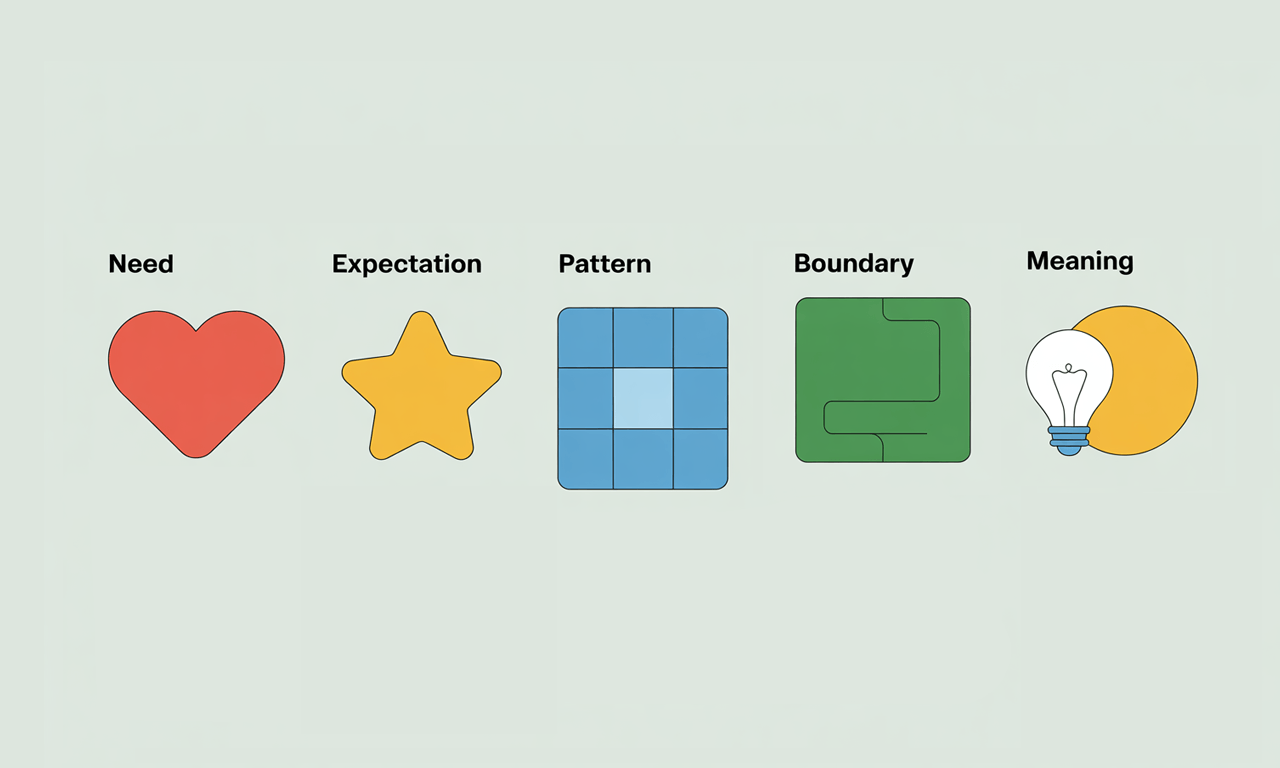
In marriage, disappointment often points to one of these:
1) An unmet need
Needs like:
- affection
- reassurance
- partnership
- rest
- attention
- emotional safety
- help
- respect
Disappointment may be your heart saying, “Something I need isn’t being met.”
2) An unspoken expectation
Expectations are not evil-but unspoken expectations create traps.
You expected:
- they’d notice
- they’d remember
- they’d respond differently
- they’d prioritize the same way
- they’d read your mood
- they’d “just know”
When disappointment hits, it often reveals an expectation that needs to become a request.
A helpful companion post for that conversion is https://blog.liveyourbestmarriage.com/agency/assumptions-to-requests because it teaches you to replace mind-reading with clean requests-turning disappointment into clarity.
3) A recurring pattern
Patterns like:
- sarcasm during stress
- shutting down during conflict
- defensiveness when corrected
- avoiding difficult conversations
- forgetting what matters to you
- prioritizing work/phone over connection
Patterns aren’t destiny. Patterns are something you can name and work on.
4) A boundary problem
Sometimes disappointment is your signal that something is not just “hard”-it’s unhealthy.
- disrespect
- contempt
- repeated broken agreements
- emotional neglect
- controlling behavior
When disappointment points to boundaries, the “data response” is protection and clarity, not more over-functioning.
5) A meaning problem
Sometimes the event is small, but the meaning you attach is huge:
- “This proves I’m not valued.”
- “This proves I’m alone.”
The “data response” is to slow the story down and ask better questions.
Disappointments Are Data: How to Read the Dashboard Without Panicking
 Here’s the problem: even if you agree in theory that disappointments are data, your body might still panic.
When disappointment hits, your nervous system can treat it like danger. That’s why couples spiral-because they’re not just processing a problem, they’re processing threat.
So you need a stop-the-spiral skill before you do the “data work.”
A powerful way to interlink this without clustering is to place it right here: “If you notice disappointment sends you into mental loops, the tools in Stop the Spiral at https://blog.liveyourbestmarriage.com/emotions/stop-the-spiral help you calm your body first so you can respond with wisdom instead of panic.”
Here’s a simple “dashboard reading” process:
Step 1: Name the emotion (out loud if you can)
“I feel disappointed.”
Naming reduces intensity. It turns fog into language.
Step 2: Name the sensation (body clue)
“I feel tight in my chest.” “My stomach feels heavy.” “My jaw is clenched.”
This keeps you grounded in reality instead of story.
Step 3: Separate facts from meaning
Fact: “They came home late and didn’t text.”
Meaning: “They don’t respect me.”
You’re not denying meaning-you’re separating it so you can test it.
Step 4: Ask the data question
“What is this disappointment pointing to-”
Step 5: Choose a next step (request, repair, boundary, or reframe)
Disappointment becomes useful when it leads to action.
The Most Dangerous Part Isn’t Disappointment-It’s the Meaning You Assign
 Let’s say it plainly: disappointment is not what destroys marriages.
Unexamined meaning destroys marriages.
Because meaning becomes identity:
- “They’re selfish.”
- “I’m invisible.”
- “We’re broken.”
- “We’re doomed.”
- “This is just how we are.”
When that meaning becomes identity, couples stop trying new skills. They stop making requests. They stop repairing quickly. They stop believing growth is possible. They begin living inside a story.
This is where Better Truth matters.
There’s a difference between “a true observation” and “the best truth to build on.”
For example: True observation: “We’ve struggled with communication.”
Hopeless meaning: “We’re terrible together.”
Better truth: “We’re untrained in a skill-and skills can be learned.”
A natural companion here is https://blog.liveyourbestmarriage.com/truth/better-truth because it helps you replace harsh conclusions with truths that are accurate and buildable.
Disappointments are data-but only if you stop turning them into identity.
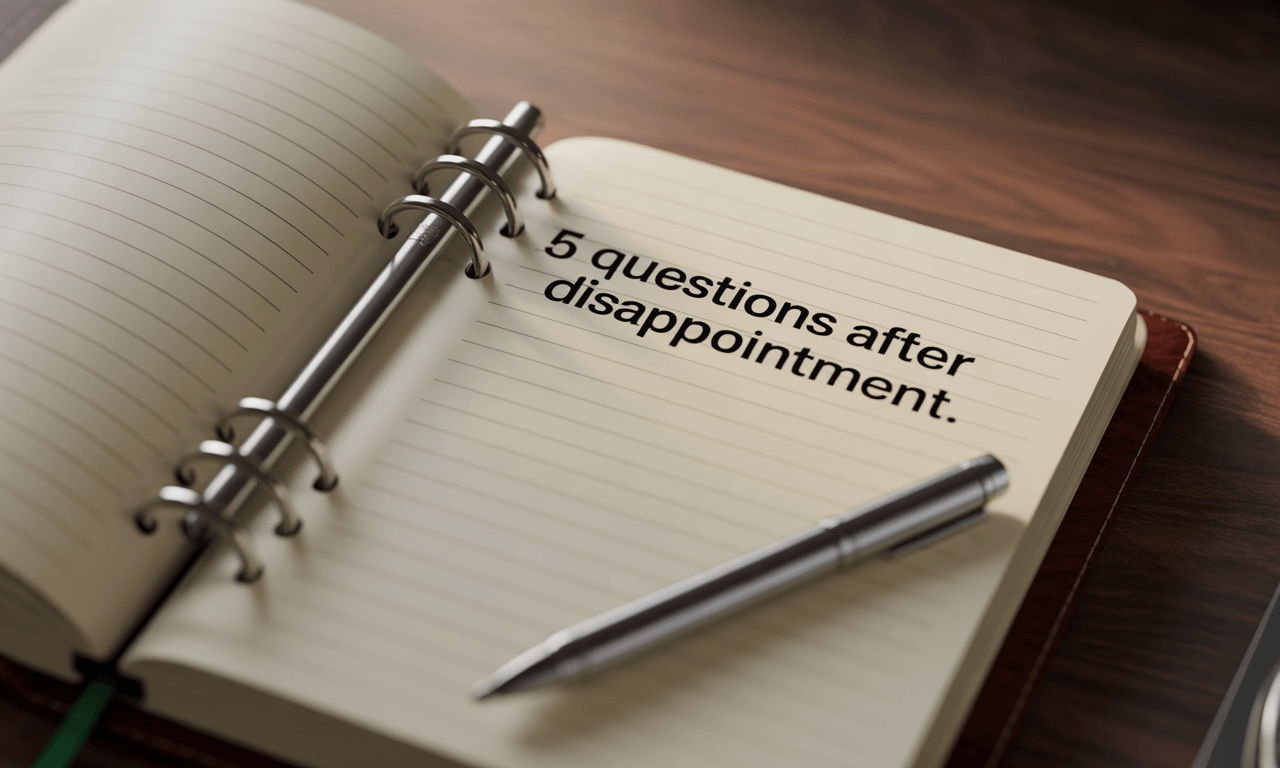
Disappointments Are Data: The 5 Questions That Turn Pain Into Wisdom
 If you want a practical framework, use these five questions after disappointment:
1) What exactly happened- (fact)
Keep it simple and observable. No mind-reading. “They didn’t respond to my text.” “They forgot the plan.” “They raised their voice.” “They dismissed what I said.”
2) What meaning did I immediately assign- (story)
Be honest: “I told myself I don’t matter.” “I told myself they don’t care.” “I told myself this will never change.”
3) What need is underneath my disappointment- (need)
Examples:
- reassurance
- partnership
- priority
- tenderness
- respect
- rest
- being heard
4) What request would move us forward- (request)
Requests are clearer than complaints. “Can you text me if you’re running late-” “Can we set a time to talk tonight-” “Can you repeat back what you heard me say-” “Can you hold me for a minute before we problem-solve-”
5) What pattern am I seeing-and what would one small practice be- (practice)
Instead of “we’re doomed,” choose: “This is the skill we practice next.”
This is how disappointments become data.
Turning Disappointment Into a Clean Request
 One of the highest-leverage moves you can make in marriage is converting disappointment into a request before it becomes resentment.
Here’s the conversion:
Disappointment + silence = resentment
Disappointment + accusation = defensiveness
Disappointment + clean request = teamwork
Try this simple script:
- “I felt disappointed when ______.”
- “The story I started telling myself was ______.”
- “What I really need is ______.”
- “Would you be willing to ______-”
Example: “I felt disappointed when you came home late and didn’t text. The story I told myself was that I’m not a priority. What I need is a heads-up so I can relax. Would you be willing to text me if you’re going to be more than 15 minutes late-”
That’s not dramatic. That’s mature.
And if requests feel awkward, the post at https://blog.liveyourbestmarriage.com/agency/assumptions-to-requests helps you build that muscle.
Disappointments Are Data in Conflict: Don’t Confuse Emotion With Emergency
 When couples get disappointed during conflict, they often treat it like an emergency:
- they escalate quickly
- they bring up the past
- they use absolutes
- they threaten the relationship
- they demand immediate resolution
But emotion is not always emergency.
Disappointment is a signal. Not a siren.
A builder response is slower:
- breathe
- name what’s happening
- make one request
- take a break if needed
- repair quickly
This is where the Victim or Builder framework becomes extremely practical. Victim posture reacts like the moment is destiny. Builder posture responds like the moment is information.
You can weave that in naturally here: “When disappointment tempts you to react like the relationship is doomed, revisit https://blog.liveyourbestmarriage.com/agency/victim-or-builder to reset into builder posture-owning what you can control and practicing the next skill.”
When Disappointment Points to Patterns: How to Fix the System, Not Just the Moment
 Some disappointments are one-off. Others are patterns.
If you keep feeling disappointed about the same thing, don’t just process the feeling-improve the system.
Examples:
Pattern: “They forget what matters to me.”
System fix:
- shared calendar reminders
- weekly planning meeting
- “important dates” list
- one weekly intentional date ritual
Pattern: “We fight the same way every time.”
System fix:
- one-topic rule
- time-out with return plan
- no problem-solving when flooded
- repair within 24 hours
Pattern: “We drift when life gets busy.”
System fix:
- daily 10-minute check-in
- phone-free hour
- bedtime connection ritual
- weekly walk
This is what it means to treat disappointments as data: you stop obsessing over the emotion and start building a better environment.
When Disappointment Is Really a Boundary Signal
 Not all disappointment should be “reframed.”
Some disappointment is your inner alarm saying: “This isn’t okay.”
Examples:
- repeated disrespect
- broken promises without ownership
- contempt
- emotional abandonment
- manipulation
- refusal to repair
- ongoing deceit
If disappointment keeps showing up around the same harmful behavior, treat it as data about boundaries.
A boundary is not a threat. It’s clarity plus protection.
Boundary language sounds like: “I’m willing to talk when we’re respectful.” “I’m not staying in a conversation with name-calling.” “I need honesty to stay connected.”
Agency includes boundaries. Builders protect love.
The “Better Truth” Way to Hold Disappointment Without Minimizing It
 Some people swing to extremes:
- Extreme 1: “My feelings are facts.” (prophecy)
- Extreme 2: “My feelings don’t matter.” (denial)
Better truth is the middle: “My feelings are real, and I still choose wisdom.”
Here are a few Better Truth statements you can practice:
- “This hurts, and it doesn’t define our future.”
- “This disappointment is data; I’m going to learn from it.”
- “I can request what I need without accusing.”
- “We can practice a better way.”
- “We are not doomed-we are learning.”
If you want a full set of these reframes, Better Truth at https://blog.liveyourbestmarriage.com/truth/better-truth fits naturally right here because it gives language for holding pain without turning it into a prophecy.
A Disappointments Are Data Weekly Check-In (15 Minutes)
 Since this is cornerstone content, I want to give you a repeatable tool you can use weekly. This is how the concept becomes culture.
Once a week (pick a consistent time), use this 15-minute check-in:
Step 1: What disappointed you this week- (2 minutes each)
Keep it gentle. One item per person.
Step 2: What need was underneath it- (2 minutes each)
Name the need without blaming.
Step 3: What request would help next week- (2 minutes each)
Make it specific and doable.
Step 4: What pattern are we noticing- (3 minutes together)
Not to shame-just to see.
Step 5: What one practice will we try- (4 minutes together)
Choose one small practice. Not ten.
This is how disappointments become data instead of drama.
When You Keep Spiraling: How to Stop the Loop and Return to Data
 Some couples don’t just feel disappointment-they spiral:
- overthinking
- catastrophizing
- replaying
- scanning for more evidence
- assuming the worst
- emotional flooding
If that’s you, don’t shame yourself. Just recognize: spiraling is a nervous system response. And you need a nervous system tool.
This is why Stop the Spiral matters-and why it belongs as a separate post in the series. Here’s a natural connection: “If your disappointment quickly turns into racing thoughts and worst-case conclusions, the exercises in https://blog.liveyourbestmarriage.com/emotions/stop-the-spiral help you calm your system so you can return to data and make a wise next move.”
A simple anti-spiral practice:
- breathe slowly (longer exhale)
- name 3 facts you know
- write 1 request you can make
- choose 1 repair if needed
- take a short walk before re-engaging
Spiral is not insight. Spiral is fear.
Disappointments are data-but spirals turn data into doom. Your job is to return to calm.
The Marriage That Wins Isn’t the One With No Disappointments
 Let’s land this cornerstone with a truth that matters:
The strongest marriages are not the ones with no disappointment.
They are the ones that know what to do with disappointment.
They don’t panic.
They don’t weaponize it.
They don’t turn it into identity.
They don’t treat it like prophecy.
They treat disappointments as data.
They read the dashboard.
They make clean requests.
They name patterns without shame.
They repair quickly.
They build better systems.
They choose better truth.
And over time, those choices create something powerful: emotional maturity as a couple.
So if you’re disappointed today, you don’t need to fear that feeling. You just need to learn from it.
Because disappointment isn’t a stop sign.
It’s a dashboard light-and you’re wise enough to read it.


 Disappointment in marriage is inevitable. Whether it’s a forgotten anniversary, a misinterpreted tone, or a repeated argument, these moments sting. But they’re more than emotional setbacks. Disappointments are data-they offer insights into where your heart and your relationship may need recalibration.
 When you visit a doctor with pain, they often order an X-ray-not because the pain itself is the problem, but because it reveals what’s happening beneath. In the same way, disappointment is your relational X-ray. It exposes:
 Many people treat disappointment as a sign that their spouse has failed them. But more often than not, disappointment is your need calling out-not your partner’s inadequacy.
 Frustration can be an invitation to stop avoiding what’s been simmering beneath the surface. It calls you to reflect, to engage, and to grow. When frustration is ignored, it turns into resentment. But when it’s explored, it leads to revelation.
 Too many couples aim for harmony by avoiding disappointment. But avoiding hard conversations or unmet expectations doesn’t preserve peace-it postpones growth.
 To turn disappointment into data you can actually use, you need a process. Here’s one to try:
 Every relationship is built on expectations-spoken and unspoken. But not all expectations are fair or realistic.
 Unexamined disappointment often turns into resentment. Resentment is what happens when we tell ourselves, “I can’t keep doing this,” but don’t take the steps to process what “this” actually is.
 Disappointment isn’t just something to survive-it’s something to steward. When processed with honesty and humility, it can bring couples closer than ever before.
 Disappointment is not a sign your marriage is doomed. It’s a sign you’re human. And it’s often the first doorway to deeper honesty and healing.