Peaceful Boundaries: Scripts for Cross-Cultural Couples Who Love Jesus
By Pesa Shayo ·
If you are in a cross cultural Christian marriage, you probably think about boundaries very differently than the books and podcasts you see online.
You love Jesus.
You love your parents and elders.
You love your spouse.
You want peace.
But when you even think about saying no, changing a holiday plan, or asking family to stop criticizing your spouse, your chest tightens.
Good sons and daughters do not talk like that.
People will say you forgot your culture.
Is it even Christian to set boundaries
 What your heart is really asking is:
How do we practice peaceful boundaries as a couple who loves Jesus, without becoming disrespectful or cold
This article is here to put actual words in your mouth.
You will not just read ideas. You will see specific scripts for peaceful boundaries you can adapt in your own voice as a cross cultural couple:
- Scripts with parents and elders
- Scripts with in laws in your home
- Scripts around money requests from family
- Scripts for parenting across cultures
- Scripts for when people say boundaries are not Christian
This post fits with other guides in the Cross Cultural Marriage series, like:
- How to Set Boundaries Without Being “Disrespectful”
- How to Set Boundaries Without Disrespecting Your Culture
- The United Front Conversation: Exactly What to Say
- The Loyalty War: Choosing Your Spouse Without Losing Your Family
Those articles lay the foundation. This one gives you Peaceful Boundaries in sentence form, so you can stop freezing in the moment and start speaking with calm, Christ centered clarity.
Why Peaceful Boundaries Feel So Hard In Cross-Cultural Christian Marriage
Before we practice any scripts, you need to understand why Peaceful Boundaries feel emotionally impossible sometimes.
You did not grow up with the word boundary.
You grew up with words like:
- Respect
- Obedience
- Sacrifice
- Family duty
- Honor
You heard phrases such as:
- You never say no to family.
- We were here before your spouse.
- A good child does not talk back.
Then you met Jesus, and the same Bible that calls you to honor your father and mother also tells you to:
- Leave and cleave to your spouse
- Speak the truth in love
- Guard your heart
- Live at peace as far as it depends on you
For cross cultural couples, there is another layer:
- One of you may come from a more direct communication culture.
- The other may come from a more indirect, harmony focused culture.
So when you try to practice Peaceful Boundaries together, you may accuse each other of being:
- Too soft
- Too harsh
- Too Western
- Too traditional
If you do not name this tension, you will keep fighting about tone instead of learning how to stand together.
This is why we talk about loyalty and united front in articles like The United Front: The Missing Skill in Cross-Cultural Christian Marriage and Marriage First Doesn’t Mean Family Last.
You are not selfish for wanting boundaries. You are not a traitor to your culture for wanting peace in your home. You are a Christian couple trying to walk out love in complicated spaces.
What Peaceful Boundaries Really Are
 If you want to use Peaceful Boundaries as a real tool, you need a better definition than social media gives you.
A boundary is:
A clear line that protects what God has entrusted to you so that you can love others with wisdom instead of burnout.
A peaceful boundary is:
A clear line you communicate with honesty, honor, and self control, trusting God with the outcome.
Notice what Peaceful Boundaries are not:
- Punishing
- Revenge
- Public shaming
- Silent treatment
- Cutting people off without explanation
They are also not endless explaining and apologizing.
Peaceful boundaries are:
- Calm
- Clear
- Short
- Kind
- Consistent
They protect your spouse, your children, your calling, and your own soul from being swallowed by unhealthy expectations, while leaving the door open for relationship where it is safe.
Preparing Your Heart For Peaceful Boundaries
Before you use any scripts from this article, Peaceful Boundaries need a heart posture.
Otherwise your words will sound right but feel sharp.
Here are three quick steps to prepare:
1. Align with Jesus
Before you talk to anyone, pray something like:
- Jesus, show me where I am speaking from fear or pride.
- Help me love you first, my spouse next, and my family from that place.
- Give me a soft tone and a clear mind.
You are not just practicing skills. You are following a Shepherd who knows all the personalities, histories, and pain points in your family.
2. Align with each other
Never go into a hard boundary conversation with family while you and your spouse are split.
Take time to agree:
- What is our shared decision
- Which phrases in these Peaceful Boundaries scripts feel most like our voice
- Who will speak first and who will back up
If you need help with this step, revisit The United Front Conversation: Exactly What to Say. It shows you how to talk as a team even when you feel nervous.
3. Release the outcome
Peaceful boundaries are not magic spells.
You can:
- Pray
- Prepare
- Speak with honor
And still have relatives who feel offended or confused.
You are responsible for your words and your tone, not for other people’s reactions.
Your prayer becomes:
- Lord, I will obey you and protect what you gave me. Help me love my family even if they do not understand right away.
Now let us get practical.
A Simple Framework For Peaceful Boundaries
You can build almost any Peaceful Boundaries script in four parts:
- Affirm
- Decide
- Reason
- Bless
Think of it as a gentle structure you can use in different situations.
- Affirm: Honor the relationship or good intention.
- Decide: State the boundary in simple, firm language.
- Reason: Give a brief reason focused on your responsibilities, not their failures.
- Bless: End with warmth that keeps the door open.
We will use this pattern in the scripts below.
Peaceful Boundaries With Parents And Elders
 Script 1: When you cannot follow a family expectation

Situation: Your parents expect you to travel every year or host every relative, and your spouse is exhausted.
Affirm:
- Mom, Dad, I love you and I am very grateful for everything you have done for us.
Decide:
- We have decided as a couple that we will visit every other year, not every year.
Reason:
- We need more time to build our own rhythm and to rest as a small family.
Bless:
- We still want to stay close, and we will call often and look for other ways to stay connected between visits.
Put together:
Mom, Dad, I love you and I am very grateful for everything you have done for us. We have decided as a couple that we will visit every other year, not every year. We need more time to build our own rhythm and to rest as a small family. We still want to stay close, and we will call often and look for other ways to stay connected between visits.
This is a classic Peaceful Boundaries script. Clear. Honoring. Firm.
Script 2: When advice becomes pressure
Situation: An elder keeps giving advice that turns into control.
Affirm:
- Uncle, I respect your experience and I know you care about our marriage.
Decide:
- For this situation, we have decided to follow the plan we agreed on as husband and wife.
Reason:
- It is important for us to learn to make decisions together and to take responsibility for the results.
Bless:
- We value your prayers and support as we walk this out.
This script protects your unity while still honoring elders.
Peaceful Boundaries With In Laws In Your Home
Having family stay in your home is usually where you most need Peaceful Boundaries.
Script 3: House rules around criticism
Situation: A parent or in law makes critical comments about your spouse in your home.
Affirm:
- Mom, I know you care about both of us and want our marriage to be strong.
Decide:
- In our home, we are not going to speak negatively about each other.
Reason:
- We want our children and our own hearts to see us supporting each other, not tearing each other down.
Bless:
- If you have concerns, you can always bring them to us privately and we will listen.
Put together:
Mom, I know you care about both of us and want our marriage to be strong. In our home, we are not going to speak negatively about each other. We want our children and our own hearts to see us supporting each other, not tearing each other down. If you have concerns, you can always bring them to us privately and we will listen.
Script 4: Length of stay
Situation: Family expects to stay for long periods that strain your marriage.
Affirm:
- We are happy you want to spend time with us and we love having you here.
Decide:
- At this stage, the longest we can host is one week.
Reason:
- We need space to rest, work, and keep our routine with the children.
Bless:
- We would rather have shorter visits where everyone leaves happy than longer ones where we are all exhausted.
These kinds of Peaceful Boundaries show up often in other posts, like Stop Letting In-Laws Drive Your Marriage, where we explore how to keep your marriage in the driver’s seat with kindness.
Peaceful Boundaries Around Money Requests From Family
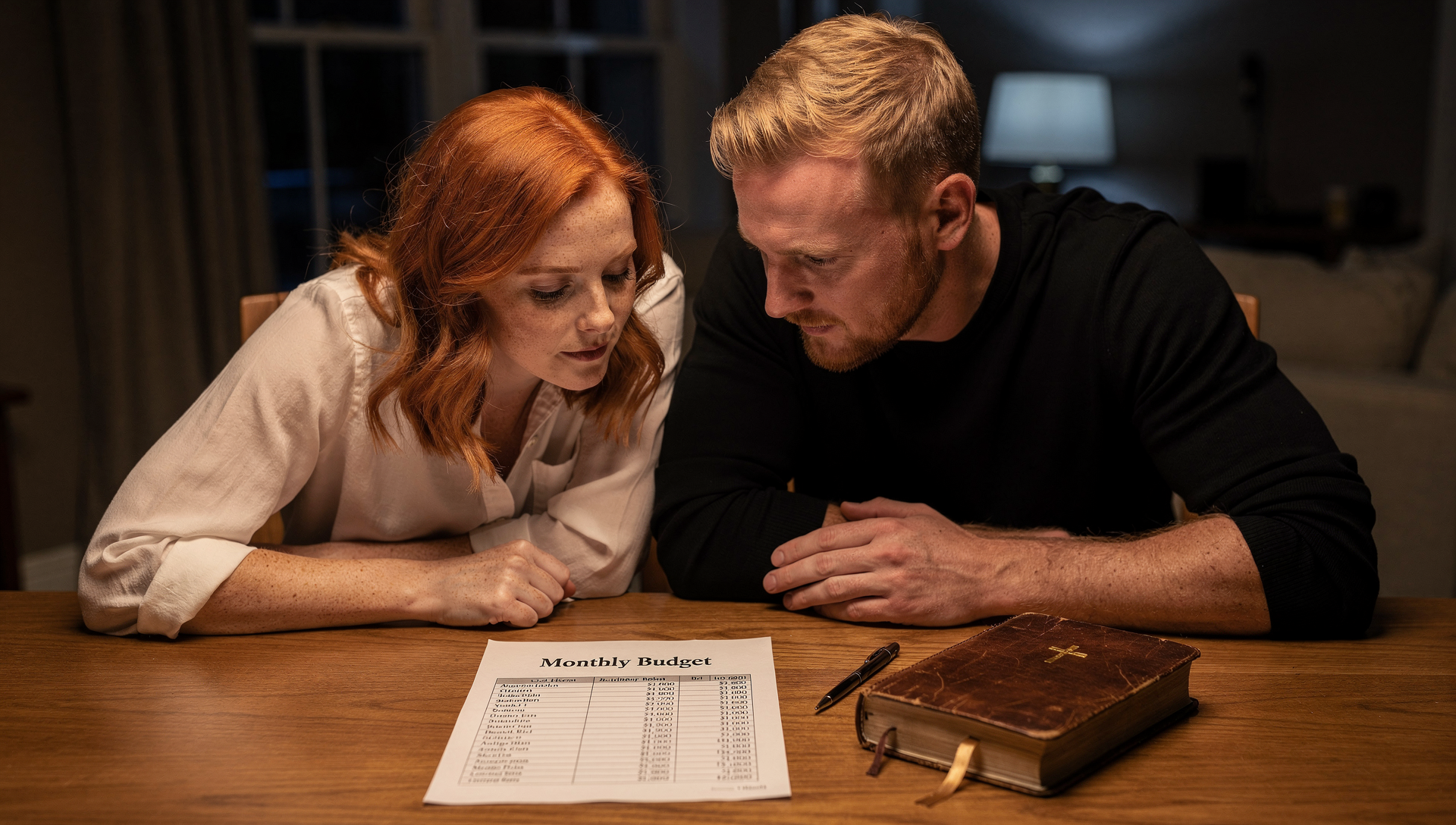 Money is one of the main places where cross cultural couples need Peaceful Boundaries that still feel generous.
Before you speak to family, use the process from Money Requests From Family – A Christian Way to Decide to create a giving plan as a couple.
Then use scripts like these.
Script 5: When the answer is no for this month
Affirm:
- We care about you and we understand this is stressful.
Decide:
- This month, we are not able to send money.
Reason:
- We have already used our giving budget and we need to keep our commitments here, so that we can keep helping over the long term.
Bless:
- We can pray with you and help you think about other options.
Put together:
We care about you and we understand this is stressful. This month, we are not able to send money. We have already used our giving budget and we need to keep our commitments here, so that we can keep helping over the long term. We can pray with you and help you think about other options.
Script 6: When you want to change an ongoing pattern
Situation: You have been sending regular support but it is now damaging your marriage or finances.
Affirm:
- We are grateful for our family and we are glad we have been able to help in the past.
Decide:
- From next month, we are changing how we give. We will send this specific amount for the next three months, and after that we will not be able to continue regularly.
Reason:
- We need to be faithful with the responsibilities God has given us here: our rent, children, and savings, so that we can stay strong enough to help in emergencies.
Bless:
- We hope this gives you time to adjust, and we will still care, pray, and help in other ways when we can.
These are Peaceful Boundaries because they are honest, specific, and rooted in stewardship, not in anger.
Peaceful Boundaries In Parenting Across Cultures
Parenting is another intense space where Peaceful Boundaries are needed.
Use the frameworks in Parenting Across Cultures: Who Gets a Vote, then practice scripts like these.
Script 7: Discipline style
Affirm:
- We appreciate that you care about how the children are raised and we know you raised us with love.
Decide:
- In our home, we are choosing not to use physical punishment with the kids.
Reason:
- We want to focus on calm consequences and teaching, and this is the approach we agreed on together.
Bless:
- You can still correct them and guide them, but we ask that you follow this discipline style while you are with them.
Script 8: Language and culture
Affirm:
- We want the children to know and love our language and culture. It is a gift you are giving them.
Decide:
- At the same time, we will speak the main local language at home during homework and school time so they can succeed here.
Reason:
- We are trying to balance both worlds so they can belong in both.
Bless:
- Your stories and traditions mean a lot, so please keep sharing them in your heart language.
These Peaceful Boundaries let you hold space for both cultures without surrendering your core decisions as parents.
When People Say Peaceful Boundaries Are Not Christian
One of the hardest parts of setting Peaceful Boundaries is when someone tells you:
- You are being selfish.
- This is not biblical.
- A real Christian would do more.
In those moments, it helps to have a simple script ready.
Script 9: When faith is used as pressure
Affirm:
- I hear that you see this differently and I respect your desire to follow God.
Decide:
- After praying and talking as a couple, we believe this boundary is what God is asking us to do in our marriage right now.
Reason:
- We want to be faithful with the spouse, children, and responsibilities he has already given us, not only with outside requests.
Bless:
- We hope you can respect our decision, even if you disagree, and we welcome your prayers for us.
This is a Peaceful Boundaries script because it stands firm without attacking their faith.
If you wrestle with this often, the post When “Respect” Becomes Control in Marriage can help you tell the difference between godly influence and unhealthy pressure.
How This Post Fits In Your Cross Cultural Marriage Journey
 You are not just collecting scripts for Peaceful Boundaries.
You are walking a guided journey from confusion and people pleasing to clarity, unity, and peace.
Taken together, this Cross Cultural Marriage series gives you:
- Language for the conflict in Cross Cultural Couples Keep Fighting: The Real Reason You Cannot Get Past the Same Arguments.
- A new loyalty order in The Loyalty Ladder: God, Spouse, Kids, Then Family.
- Courage for prioritizing your marriage in The Loyalty War: Choosing Your Spouse Without Losing Your Family.
- Practical conversations in The United Front Conversation: Exactly What to Say.
- Cultural sensitivity in How to Set Boundaries Without Disrespecting Your Culture.
This article, Peaceful Boundaries: Scripts for Cross-Cultural Couples Who Love Jesus, sits in the middle of that journey.
It takes the heart work and theology you have been absorbing and turns them into actual sentences you can speak in real living rooms, with real relatives, in real time.
You will not say them perfectly. Some conversations will still be messy. Some people will still be upset.
But each time you choose Peaceful Boundaries:
- You honor Jesus by telling the truth in love.
- You honor your spouse by standing beside them, not behind them.
- You honor your family by relating as a mature adult, not a scared child.
Over time, these scripts will become your own words.
And your home will slowly become a place where love, honor, and truth live together, not enemies of each other.