

The Balance Between Unity and Individuality
Marriage isn’t about winning—it’s about weaving two lives into one shared story. That takes compromise, not control. At Live Your Best Marriage, we believe that couples don’t have to agree on everything to have a successful relationship. But they do need to be flexible and willing to meet in the middle when it counts. Compromise isn’t weakness—it’s wisdom. It’s what helps two unique individuals stay connected, even when life throws curveballs.
In this blog post, we’ll unpack how healthy compromise works, why it matters, and how it actually protects your individuality while deepening your connection.
What Compromise in Marriage Really Means
 Contrary to popular belief, compromise doesn’t mean giving up who you are. It means honoring who you both are by finding middle ground that respects both perspectives.
It’s not about keeping score or sacrificing everything for peace. It’s about learning to say, “Your needs matter just as much as mine.” Compromise is mutual—not one-sided. It allows both partners to bring their full selves to the marriage without dominating or disappearing.
Why Flexibility Is a Superpower in Marriage
Rigidity can make any relationship brittle. But flexibility creates strength. Think of a tree in a storm—if it bends, it survives. If it stays rigid, it breaks.
The same is true for marriage. Flexibility means adapting to change, being open to feedback, and recognizing that what worked yesterday might not work today. It allows couples to grow instead of getting stuck in resentment or power struggles.
Benefits of flexibility in marriage:
- Reduced conflict and emotional burnout
- Greater emotional safety and trust
- Easier navigation through life transitions
- Improved communication and decision-making
- Deeper mutual respect
The Difference Between Compromise and Control
 Control says, “Do it my way.”
Compromise says, “Let’s find a way that honors us both.”
A controlling dynamic often leads to fear, silence, or resistance. But compromise invites partnership and cooperation. It says, “We are both valuable. We are both seen. We are in this together.”
Some warning signs of control:
- One partner always makes the final decision
- Disagreements consistently end with one person backing down
- There’s pressure to conform rather than contribute
- Emotional manipulation or guilt is used to win arguments
Healthy compromise avoids these patterns by fostering equality and listening.
How to Compromise Without Losing Your Identity
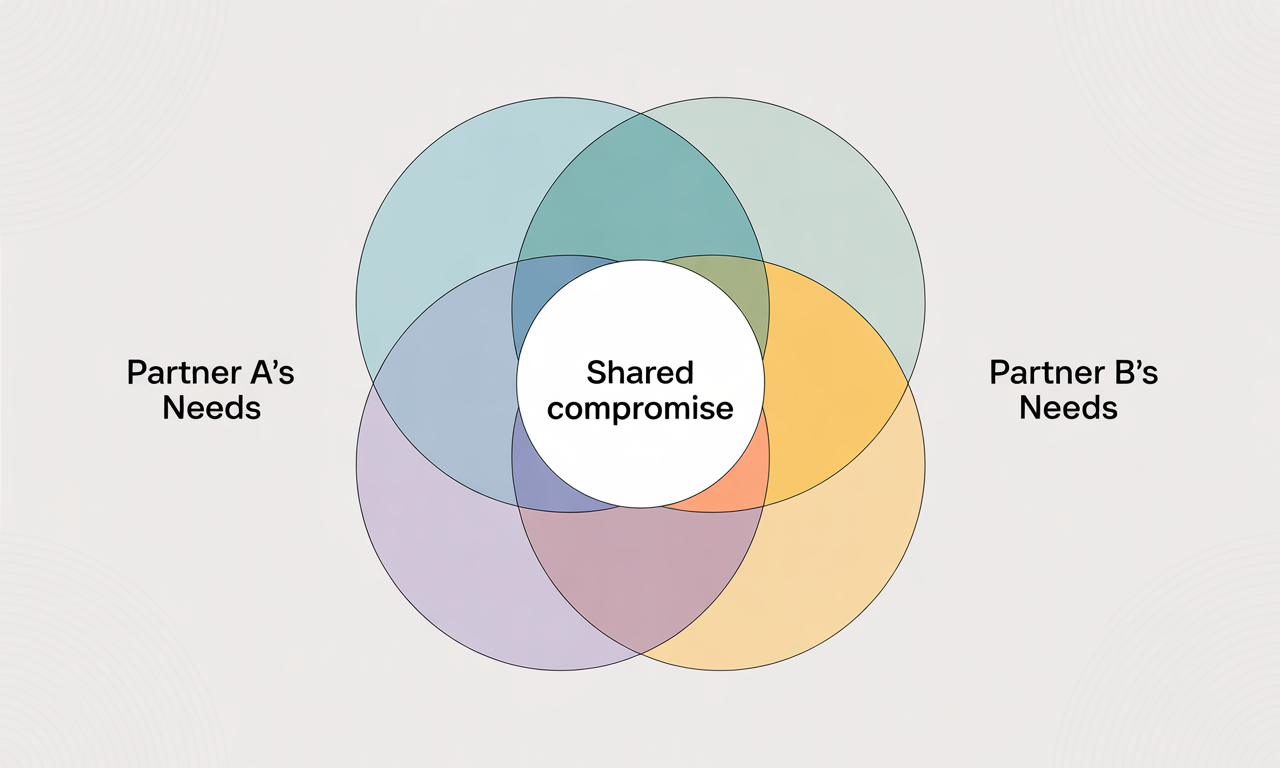 The fear many people have around compromise is that they’ll lose themselves. But real compromise doesn’t require you to abandon your values—it requires you to share them.
Here’s how to stay true to yourself while still being flexible:
- Know Your Non-Negotiables
Not everything should be up for compromise. Clarify your core values—faith, boundaries, life goals—and communicate them clearly. - Practice Empathy
Try to see the situation from your partner’s perspective. Empathy builds bridges where walls once stood. - Use “I” Statements
Instead of blaming or accusing, say, “I feel…” or “I need…” This keeps the conversation honest and respectful. - Focus on Shared Goals
If both partners are committed to the relationship’s success, they’ll be more willing to bend. Keep the big picture in mind. - Be Willing to Alternate
Sometimes, take the lead. Other times, support your partner’s preference. Balance over time matters more than one moment.
Everyday Examples of Healthy Compromise
Compromise happens in everyday decisions—not just the big moments. Here are a few examples of what it might look like:
- Vacation Plans: One wants adventure, the other wants rest. Compromise by planning two days of each.
- Budgeting: One prefers saving, the other enjoys spending. Agree on a monthly amount for guilt-free fun while prioritizing savings.
- Parenting Styles: One is more structured, the other more relaxed. Work together to create consistent rules with flexible grace.
- Household Chores: Divide tasks based on strengths, not stereotypes. Switch roles when needed.
- Intimacy Needs: One partner may want more connection—emotionally or physically. Compromise means prioritizing each other without pressure or shame.
These small, daily choices form the foundation of a flexible, thriving marriage.
Communication Is Key to Compromise
 You can’t compromise without communication. If you don’t talk, you can’t collaborate. And if you don’t feel heard, you won’t want to bend.
Healthy communication includes:
- Listening to understand—not just to respond
- Validating your partner’s perspective, even when you disagree
- Asking open-ended questions like “How do you feel about this?” or “What would make you feel supported?”
- Taking breaks if emotions run too high, then returning when calm
When Compromise Feels One-Sided
If you feel like you’re always the one compromising, it’s time to talk. One-sided sacrifice isn’t sustainable and can lead to resentment.
Try these steps:
- Gently express your feelings: “I’ve noticed I’ve been adjusting a lot lately, and I’m feeling a little off-balance.”
- Invite reflection: “What do you think we could both do to feel more supported?”
- Discuss patterns, not personalities. Stay focused on behaviors and solutions.
- If needed, consider speaking with a counselor or coach to guide the conversation.
A healthy marriage creates room for both partners to thrive—not just survive.
Flexibility During Life Transitions
 Major life changes—like having a baby, changing jobs, or dealing with health issues—require extra flexibility. In these seasons, expectations must shift. What worked before may no longer apply.
Compromise during transitions might mean:
- Reworking your schedule to care for each other
- Delaying a personal goal to support the family
- Letting go of routines that once worked
- Reimagining roles and responsibilities
Transitions test your adaptability. They also reveal your commitment to the shared journey—not just personal comfort.
Compromise in Faith and Values
One of the more delicate areas of compromise is around faith, culture, or core values. These require extra care, deep respect, and ongoing dialogue.
Here’s how to navigate:
- Recognize which values are foundational and which are preferences
- Look for common ground—shared principles like kindness, service, or integrity
- Agree to honor each other’s beliefs even if you don’t share them
- In cases of deep disagreement, seek wisdom from trusted mentors or counselors
Your differences don’t have to divide you—they can help you grow.
Protecting Intimacy Through Flexibility
 Emotional and physical intimacy thrive when both partners feel safe, seen, and supported. Flexibility plays a huge role in that.
It means:
- Being open to each other’s needs and love languages
- Adapting how you express affection over time
- Being willing to forgive and move forward when conflict happens
- Saying, “Even when it’s hard, I’m still in this with you.”
Compromise becomes a daily act of love that deepens your connection.
Final Thoughts: Bend Without Breaking
Flexibility doesn’t mean weakness. It means strength through softness. The strongest marriages aren’t the ones without conflict—they’re the ones where both people are willing to bend for the sake of the bond.
When you learn the art of healthy compromise, you stop fighting to win and start fighting for each other. You discover that meeting in the middle isn’t giving up—it’s growing up together.
At Live Your Best Marriage, we believe that love is real when it meets real life—and still chooses to show up. Compromise isn’t the end of your individuality. It’s the beginning of your shared life.
You don’t have to lose yourself. You just have to choose love, again and again.