Cross-Cultural Marriage Isn’t Hard – Disunity Is
By Pesa Shayo ·
Here is the truth nobody told you when you married someone from a different culture:
Cross-cultural marriage is not the problem.
Disunity is.
Yes, you two speak different heart languages.
Yes, your families see the world in completely different ways.
Yes, holidays, money, and parenting can feel like decoding a foreign manual.
But culture alone is not what is breaking your heart.
 What actually wears you down is this:
- Feeling like you are on different teams in front of family
- Having the same fight over and over after every visit
- Watching your spouse shut down because they feel outnumbered or misunderstood
- Knowing you love each other and love Jesus, yet somehow always ending up in opposite corners
This post is a “more direct” for a reason. The easy story is “cross-cultural marriage is hard.” The real story is Cross-Cultural Marriage Isn’t Hard – Disunity Is.
Once you understand that, everything changes.
Instead of trying to erase your differences, you start building unity in the middle of them. Instead of blaming culture, you start confronting patterns that keep you divided.
This article is part of our United Front series for Christian cross-cultural couples. It lines up with:
- Cross Cultural Couples Keep Fighting: The Real Reason You Cannot Get Past the Same Arguments
- The Loyalty Ladder: God, Spouse, Kids, Then Family
- How To Set Boundaries Without Being “Disrespectful”
- Stop Letting In Laws Drive Your Marriage
- Honor Your Parents Without Betraying Your Spouse
If those posts are the map, this one is the red circle saying “you are here.”
Why We Keep Believing Cross-Cultural Marriage Is The Problem

It is easier to blame culture than to face disunity.
If you say “cross-cultural marriage is hard,” you get sympathy. People nod and say, “Of course, you have different backgrounds.”
If you say “we are not united,” you have to face:
- Your own fears
- Your own habits
- Your own divided loyalties
So you tell yourself:
- “If we were from the same culture, this would be easier.”
- “If my spouse understood my language better, we would not fight so much.”
- “If their family was more like mine, we would have less pressure.”
But look around you.
Plenty of same culture couples are miserable.
They speak the same language, eat the same food, celebrate the same holidays, and still sleep back to back at night.
The real issue is not culture. It is unity.
In Cross Cultural Couples Keep Fighting, we talk about the “divided front” pattern. Culture is just the stage. Disunity is the script.
Cross-Cultural Marriage Isn’t Hard – Disunity Is.
Once that sinks in, you stop asking “Why did I marry outside my culture” and start asking “How can we fight for unity inside our covenant”
Cross-Cultural Marriage Isn’t Hard – Disunity Is When You Face Family Pressure
If you grew up in strong honor based cultures, family pressure is real.
There is the pressure to:
- Visit often
- Send money
- Raise children according to family expectations
- Keep old traditions alive no matter your new context
You might think:
- “This would be easier if we were from the same culture. My spouse just does not understand.”
But here is what is really happening.
You are not struggling just because you are different cultures. You are struggling because:
- You and your spouse have not agreed on whose vote matters where
- You do not have a united script when family asks for something
- You are still deciding whether you will protect each other in front of relatives
That is disunity, not culture.
Same culture couples can be just as divided when facing in laws. We see it clearly in:
Those couples share customs but still fall apart under pressure.
The difference with you is that culture gives you convenient blame language.
Instead of saying:
- “We are not united in front of our families.”
You say:
- “Cross-cultural marriage is hard.”
But Cross-Cultural Marriage Isn’t Hard – Disunity Is. The solution is not to share a passport. It is to share a plan.
The Real Problem Behind “We See Things Differently”

You will hear couples say:
- “We are just too different.”
- “In his culture, men do this. In mine, they do that.”
- “In her culture, parents always live with you.”
Differences are real. They matter. But differences are not destiny.
Two people from the same culture also see things differently. They simply do not have as obvious a label for it.
In a cross-cultural marriage, your differences are louder. That is all.
The question is not:
- “Do we see things differently”
The question is:
- “What do we do with the fact that we see things differently”
Disunity says:
- “My way is right. Your way is wrong. If you loved me, you would switch sides.”
Unity says:
- “We have different starting points. We are going to build a third culture for our home together.”
That is why Cross-Cultural Marriage Isn’t Hard – Disunity Is. Without unity, every difference becomes a battlefield. With unity, differences become data you work with.
In Parenting Across Cultures: Who Gets a Vote, we show you how to turn those differences into a clear structure for parenting instead of constant fights.
Disunity Looks Like This In A Cross-Cultural Home

Let us put real scenes to this idea that Cross-Cultural Marriage Isn’t Hard – Disunity Is.
See if any of these sound familiar.
1. You throw each other under the bus with family
In front of your parents, you say things like:
- “You know how he is. He does not understand our ways.”
- “She does not like our food. She is picky.”
You are trying to smooth tension. What you are actually doing is:
- Making your spouse the outsider
- Telling your family “I am on your side, not theirs”
That is disunity.
2. You negotiate with family, then inform your spouse
Your mom calls and asks about holidays. You say:
- “Sure, we will be there for two weeks.”
Then you tell your spouse later:
- “I already told them we are coming. You know how they are. We cannot say no.”
Culture is not the problem. Disunity is.
You did not treat your spouse as a teammate. You treated them like a co-worker you have to hand a schedule to.
3. You process with family about your spouse more than with your spouse about family
Every time something goes wrong, you run to your family chat. You tell them:
- “This is what he said. This is what she did. You see why I am struggling.”
They get one side of the story. You feel temporarily validated. Your spouse feels permanently betrayed.
Again, this is not uniquely cross-cultural. It is a disunity habit.
To turn this around, you combine this post with:
They will help you stop using your families as emotional referees and start talking to each other first.
What Unity Actually Looks Like In Cross-Cultural Marriage
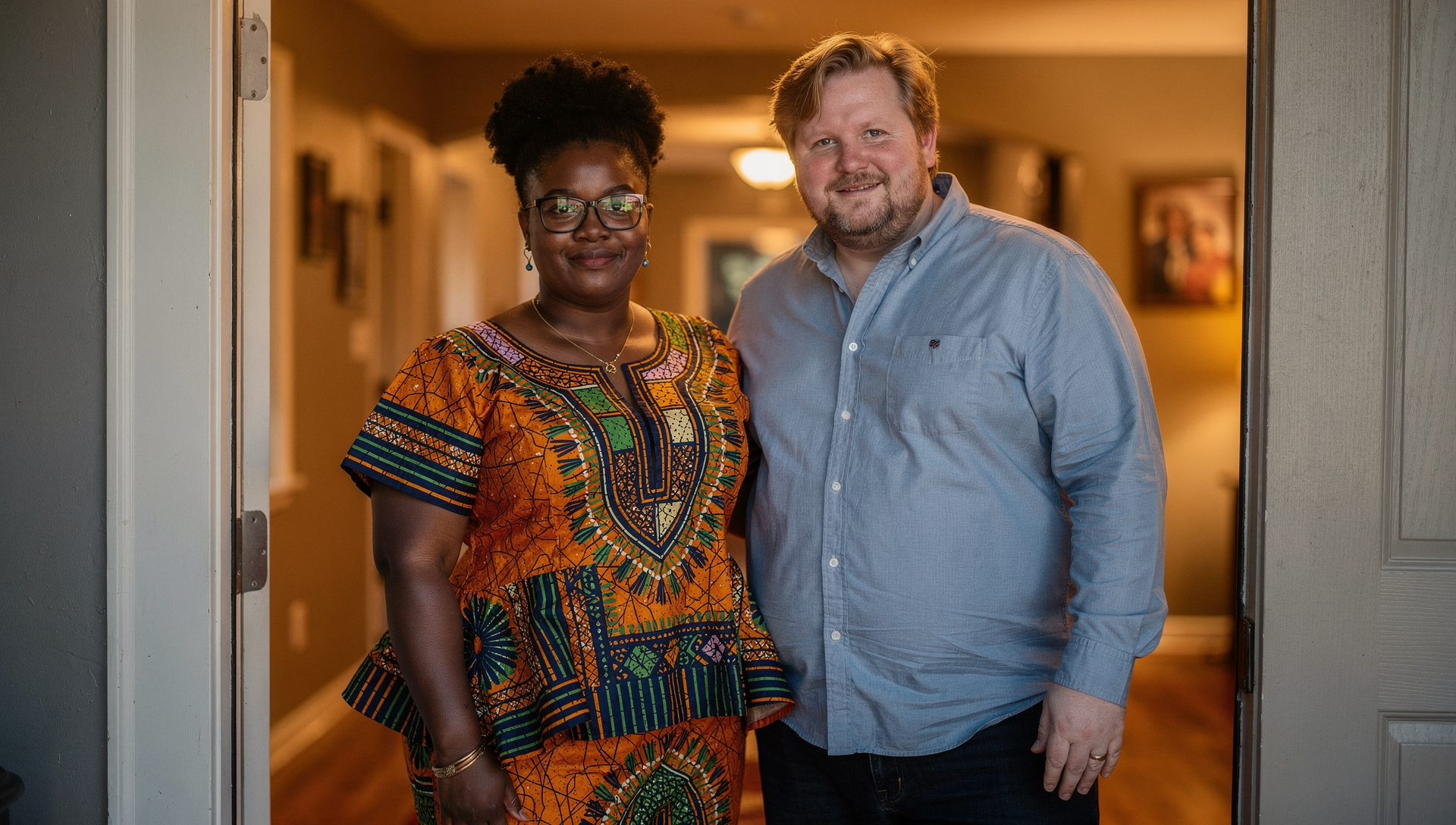
If Cross-Cultural Marriage Isn’t Hard – Disunity Is, then the target is not “less difference.” It is “more unity.”
Unity does not mean:
- One of you erases your culture
- One of you becomes the honorary member of the other’s family
- Nobody ever gets uncomfortable again
Unity means:
- You and your spouse see yourselves as one team before God
- You speak about decisions as “we,” not “I promised them”
- You are willing to disappoint people outside to protect the covenant inside
Here are a few signs of unity in a cross-cultural marriage.
1. You hold the same loyalty ladder
You both agree that:
- God is first
- Your marriage covenant is the first human priority
- Your children are next
- Parents and extended family are honored but not allowed to dominate
When a decision is hard, you go back to this ladder instead of back to family pressure. That is what The Loyalty Ladder is all about.
2. You present decisions as a couple
You stop saying:
- “My wife will not let me.”
- “My husband does not want to.”
You start saying:
- “We have decided as a couple.”
- “We talked and prayed and this is our decision.”
That shift alone can change how family sees you. They may not like it at first, but they will see that your cross-cultural marriage is not fragile. It is united.
3. You use shared scripts under pressure
In The United Front Conversation, we gave you concrete lines you can both use.
In a cross-cultural context, unity looks like both of you saying versions of:
- “We love you and we want relationship with you. We have made this decision together and we are going to stand by it.”
When both spouses use similar language, family learns that Cross-Cultural Marriage Isn’t Hard – Disunity Is, because they can no longer drive you apart with “he said, she said.”
How To Move From Disunity To Unity Step By Step

You do not become a united front just because you read one blog.
Here is a simple process you can follow.
Step 1: Name where disunity shows up
Sit together and answer:
- “Where do we feel like we are on different teams”
- “When do we tend to throw each other under the bus”
- “After what kinds of events do we always end up in the same big argument”
You will probably see patterns around:
- In-law visits
- Money requests from family
- Holidays and travel
- Child raising decisions
You can find specific support for each of these in:
- The Holiday War: How to Stop Dreading Family Time
- Money Requests From Family – A Christian Way to Decide
- Parenting Across Cultures: Who Gets a Vote
Step 2: Agree on two or three unity commitments
For example:
- “We will not make commitments to our families without checking with each other first.”
- “We will always back each other up in front of others, even if we have to disagree privately later.”
- “We will not let anyone, including our parents, talk disrespectfully about our spouse in front of us.”
They do not have to be perfect. They just have to be real.
Step 3: Practice the scripts together
Pick one or two lines from the United Front style posts and literally role play.
For example:
- “We love you and appreciate you. We have decided together that we cannot do that this time.”
- “I am not okay with us talking about my spouse that way.”
Practice until they feel slightly less awkward in your mouth.
Cross-Cultural Marriage Isn’t Hard – Disunity Is. So practice unity. Most of us have been practicing disunity for years. It will take time to rewire.
Step 4: Expect pushback and stay gentle, not guilty
When you start changing patterns, family may:
- Call you disrespectful
- Blame your spouse for “changing you”
- Use culture or Scripture to pressure you back into old roles
Remember:
- Feeling guilty does not mean you are wrong
- People’s discomfort does not mean you are dishonoring them
- It is possible to be respectful in tone and unshakeable in decision
You may need to revisit How To Set Boundaries Without Being “Disrespectful” more than once during this season.
What Happens When You Start Believing Cross-Cultural Marriage Isn’t Hard – Disunity Is
 When that phrase moves from your head to your heart, several things begin to shift.
1. You stop fantasizing about a different spouse and start building with the one you have
Instead of thinking:
- “If only I had married someone from my culture.”
You start thinking:
- “God has given us something unique. How can we build unity in this exact story”
Hope comes back. Blame loses its power.
2. You start using culture as a gift, not a weapon
Your different backgrounds become:
- More options for how to handle problems
- More empathy for your children’s future
- More lenses to see God’s faithfulness
Instead of:
- “In my culture, we do it right.”
You start saying:
- “In my culture we learned this. In yours, you learned that. What if we built something stronger that combines the best of both”
3. You give your kids a different inheritance
Children in cross-cultural homes often feel torn. They wonder:
- “Which side am I supposed to choose”
When you become a united front, they do not have to pick.
They get:
- Parents who honor both sides while protecting the home
- A model of how faith leads culture, not the other way around
- A story that proves Cross-Cultural Marriage Isn’t Hard – Disunity Is, and unity is possible
4. You become a quiet testimony to others
Other couples are watching you.
Some are scared to marry outside their culture because all they have heard is horror stories. When they see you:
- Still different
- Still cross-cultural
- Still under pressure
Yet more united each year, they hear a different message.
Maybe what makes or breaks marriage is not culture. Maybe it really is unity.
You Do Not Have To Be Less Cross-Cultural To Be More United
If you take nothing else from this post, take this:
You do not have to erase your culture to have a strong Christian marriage.
You do not have to erase your spouse’s culture either.
What you do have to erase is your agreement with this lie:
- “Cross-cultural marriage is just too hard. This is as good as it gets.”
Replace it with the truth:
- Cross-Cultural Marriage Isn’t Hard – Disunity Is.
- Unity is a choice.
- Unity is a skill.
- Unity is a path you can learn, one conversation at a time.
Use this article alongside the rest of the United Front series to walk that path:
- Start with Cross Cultural Couples Keep Fighting to see your patterns.
- Stack The Loyalty Ladder so your priorities are clear.
- Learn to Honor Your Parents Without Betraying Your Spouse.
- Stop Letting In Laws Drive Your Marriage so they no longer divide you.
- Practice The United Front Conversation until the words feel natural.
You cannot control your families.
You cannot control your cultures.
You can choose unity.
And when you do, you will find that your cross-cultural marriage was never the enemy. Disunity was.